To Save Public Sector, Need a Mass Movement Against Privatisation

0
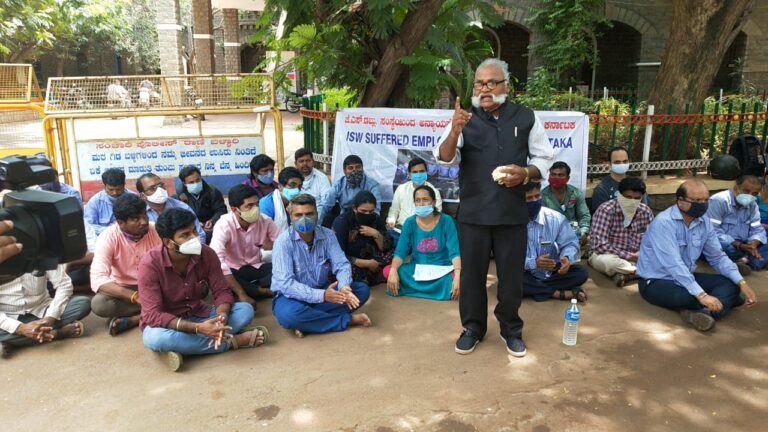
Since its first term, the Modi government has gradually pushed policies for increased privatisation, and sale of Public Sector Undertakings, the decision that is often directly against the demands of workers and peoples’ groups. The narrative that has been put forwards towards the push for privatisation is that of increased efficiency and productivity while the negative impact of privatisation is never discussed. But the privatisation of education and transport is for all of us to see. ā€˜Save Public Sector’, an initiative to oppose privatization, held a National Convention on the importance of the public sector for the welfare of the people on August 29. Speakers at the convention included employees from various public sectors such as telecom, railway, defense, shipping, pharma, insurance, coal, electricity, newsprint, airports, banking, and education, along with members of central trade unions, academicians, activists, and retired IAS officers. The speakers presented important ideas and strategies to put a stop to privatization by building a mass movement across the country.

For many years, the government has been trying to privatize the PSUs of the country by gradually disinvesting and making it harder for PSUs to function efficiently.

Importance of Public Sector

The public sector, meant to serve the people, delivers goods and services to the remotest areas of the country at the same cost as anywhere else, since it is not driven by considerations of profit. On the other hand, the private sector does not have a social responsibility to the people, and hence is driven only by profit, leading to ill-treatment of workers, exploitation of resources, and high prices of goods and services.

While PSUs were established after Independence, the core idea behind the public sector is much more historical. Starting from Adivasi movements like that of Birsa Munda, to the farmer’s satyagraha in Champaran- it is the idea that natural resources should be used for the welfare of all people rather than the profit of a few.

The public sector has been important for accelerating the growth of core sectors of the economy, for serving the equipment needs of strategically important sectors, to generate employment and income, and to provide goods and services to the people of the country. For many years, the government has been trying to privatize the PSUs of the country by gradually disinvesting and making it harder for PSUs to function efficiently.

The Public Sector Belongs to the Public

To sell these sectors to private players, especially without a referendum, is anti-people and anti-constitutional.

PSUs have been built using land and resources that belong to the people. In many cases, this has led to the displacement of local communities as well. All the assets of the public sector are the property of the people of the country, and PSUs are required to provide them with employment, and accessible goods and services. The land and resources used to build and run the PSUs belong not just to the present generation of people, but future generations as well.

The government that is in power at any given point of time is merely a representative. The current party in power represents merely 25% of the electorate, and at no point has the ruling party represented even 50% of the electorate. In this context, the government has no right to make a decision to sell the people’s property to private players. The people need to be reminded that the enormous amount of assets contained in the PSUs all belong to them and it is their money that has been used to develop the PSUs to the point at which they are today. It is their sweat, blood, and toil that has provided the labor for these PSUs to be developed and maintained. To sell these sectors to private players, especially without a referendum, is anti-people and anti-constitutional.

Myths about the Public SectorĀ 

There is a pervasive myth about the public sector that it is not efficient and that the private sector will be able to provide better services to the people. The private sector functions without any accountability. It does not invest its profits into the government and it receives a number of benefits when it comes to borrowing money from banks and public bail-outs when it is losing money. The private sector is given land and resources for low costs and is able to obtain labour in exploitative conditions. It is for this reason that the private sector can appear to be more efficient in certain contexts.

Before government interference, up to 2007, the public sector was neck to neck with the private sector. Even recently, public sector undertakings have by and large been extremely profitable and have paid dividends to the government.

Meanwhile, the public sector faces political interference, lack of funding, and a number of checks and balances from bureaucrats, and so on. The public sector delivers goods and services in locations where the private sector refuses to invest and continues to provide them during situations of crisis as well. The policies of complete privatization will lead to a monopoly of few players and the people will be at the mercy of their interests alone. This monopoly will be more harmful than any lack of efficiency that may have been seen in the past.

If the public sector is lacking inefficiency, it is the government’s responsibility to make it more efficient. Especially due to the impending economic and environmental crisis after the pandemic, the government should be paying more attention to strengthening the public sector. Before government interference, up to 2007, the public sector was neck to neck with the private sector. Even recently, public sector undertakings have by and large been extremely profitable and have paid dividends to the government.

Save public sector
Courtesy: Sushil Khanna

The Way Forward to Save Public Sector

While employees in different sectors have been agitating against privatization, it is important for all public sector employees to come together and form a united front against privatization. Employees also need to unite across hierarchies, so that the government finds it more difficult to implement its policies at the lower level. The government has been attempting to create a terrorizing atmosphere for workers trying to organize, but in turn, workers should be creating a terrorizing atmosphere for investors, showing them that if their sector is privatized against their wishes, they will not cooperate with the new owners.

Employees of the public sector must introspect on the public’s complaints towards them, so that they are not reacting to privatization policies and ā€˜saving’ the public sector, but rather reinvigorating the public sector so that the public can be served better. Employees need to understand why the public has not supported them. The struggle for the public sector needs to be reframed as a people’s question, stressing on their right to the assets of the public sector, their right to the country’s resources, and their right to be served by the government.

It is also important to go beyond discussions in elite spaces and to form a mass movement, like the one that had been built in the past year during the anti-CAA-NRC struggle. The movement must go beyond trade unions and factories, and involve local communities who are stakeholders in the public sector. The struggle to save the public sector should engage with the struggles of Adivasis, Dalits, women, students, and so on, and build a united mass movement.

This article is a summary of the webinar- National Convention on The Importance of the Public Sector For the Welfare of the People, organized by ‘Save Public Sector’.Ā 

Karnataka: 490 employees laid off at Jindal Steel Works in Bellary

Bellary: The Indian working class is facing a double whammy of three months of lockdown and the grave economic crisis which is resulting in huge job losses. The big industries and companies under the guise of COVID-19 pandemic have been sacking employees. The employees do not have any redressal mechanism for such unfair firings due to the dilution of many labour laws during the pandemic. Diluting of the labour laws and Industrial Dispute Act by the ruling Bharatiya Janata Party government at the centre is taking a toll on the labour community. Last week, Jindal Steel Works in Bellary district of Karnataka has laid off a large number of workers citing economic crises as the reason for the firings. The sacked employees staged a massive protest on August 31st under the banner of employees federation in front of the Deputy Commissioners Office premises in Bellary. The protesters alleged that the Jindal Steel Works had sacked 490 employees in the first phase despite the labours refusing to adhere to the deadline served for voluntarily quitting by August 31st. Jahanavi who worked as Manager said that she received a phone call from the HR department and was asked to quit stating that the company was under loss due to corona pandemic. She was also threatened with termination if she does not abide by the orders. ā€œI have been serving the company for the last 11 year and it was the only source of livelihood. The job loss had left me in limboā€ she added. Jahanavi efforts to reach out the higher-ups only added insult to the injury.Ā  She was told that she is a “non-performer” despite her prolonged service. Many of the employees who have been serving for the last 20-25 years have also been issued the pink slip. Karnataka Shramika Shakti Central Committee member Kariyappa Gudimani who led the protest spoke to gaurilankeshnews.com- ” The protesters have put forth the demand to reinstate the employees serving a week’s ultimatum, failing which the labours would launch and intensify the agitation”. “Transfer of employees to another plant, a move that would be aimed at suppressing the labours would not be acceptable”- he added. The corporate company such as JSW had contributed Rs 100 crore towards the PM Care fund with an intention to protect its interest at the government level. At the same time, the company is claiming to be going into loss due to economic crisis and lockdown and is firing its long term employees. The company has failed to safeguard the lives of its employees who have been working for the growth of the steel plant. The prime minister Modi had asked companies and establishments not to lay-off employees but contrary to this employees were being ruthlessly sacked without taking into account of their economic situation. This is not just the situation in Karnataka, but all over India, such retrenchments can be seen and in most sectors. The workers are slowly realising that they have no option but to fight for their rights and to intensify their struggle to decent employment.

Related Read: Ashok Leyland fires 5800 workers without notice

David Graeber, anthropologist and Author of Bullshit Jobs No More

David Graeber, a man who wore many hats, an anthropologist, activist, and author of best-selling books on jobs, economy, and society including Debt: The First 5,000 Years and Bullshit Jobs: A Theory has died aged 59 in a hospital in Venice, Italy. His wife Nika Dubrovsky informed about this death through twitter.   Graeber was until yesterday active on twitter and had posted a video on YouTube on 28 August saying that he had been feeling “a little under the weather” but that he was also beginning to feel better. Graeber was a professor of anthropology at the London School of Economics. He was one of the leading figures of the ‘Occupy Wall Street’ Movement also credited to have coined the famous ‘We are the 99%’. He has done extensive anthropological work in Madagascar, writing his doctoral thesis (The Disastrous Ordeal of 1987: Memory and Violence in Rural Madagascar) on the continuing social division between the descendants of nobles and the descendants of former slaves.

Debt: The First 5,000 years and Bullshit Jobs

Debt: The First 5,000 Years the book was published in 2011. The book explores the historical relationship of debt with social institutions such as barter, marriage, friendship, slavery, law, religion, war, and government; in short, much of the fabric of human life in society. It draws on the history and anthropology of a number of civilizations, large and small, from the first known records of debt from Sumer in 3500 BC until the present. The book won the inaugural Bread and Roses Award for radical literature, and the 2012 Bateson Award of the American Society for Cultural Anthropology. The New York Review of Books called the book “an encyclopedic survey...an authoritative account of the background to the recent crisis…an exhaustive, engaging, and occasionally exasperating book”. The Globe and Mail said, “This is a big book of big ideas: Within its 500 pages, you’ll find a theory of capitalism, religion, the state, world history and money, with evidence reaching back more than 5,000 years, from the Inuit to the Aztecs, the Mughals to the Mongols”. Much of Graeber’s recent scholarship has focused on the topic of nature of work and “bullshit jobs,” proliferated by bureaucracy and what Graeber calls “managerial feudalism”. One of the points he raises in his 2013 book The Democracy Project – on the Occupy movement – is the increase in what he calls bullshit jobs, referring to forms of employment that even those holding the jobs feel should not or do not need to exist. He sees such jobs as being typically “concentrated in professional, managerial, clerical, sales, and service workers”. In addition to his academic work, Graeber had a history of both direct and indirect involvement in political activism, including membership in the labor union Industrial Workers of the World, a role in protests against the World Economic Forum in New York City in 2002, support for the 2010 UK student protests and an early role in the Occupy Wall Street movement. He was a co-founder of the Anti-Capitalist Convergence.

Public Reaction to his Death

The news of his sudden demise saw an outpour of support from fans remembering him and how his impact on their lives.These include his colleagues, members of Labour party, UK to world leaders.
 

Also Read: Remembering Premchand writings amidst the rise of inequality and communalism in India

Activists demand withdrawal of 50 Lakh Surety Notice Issued to Suvarna Salve

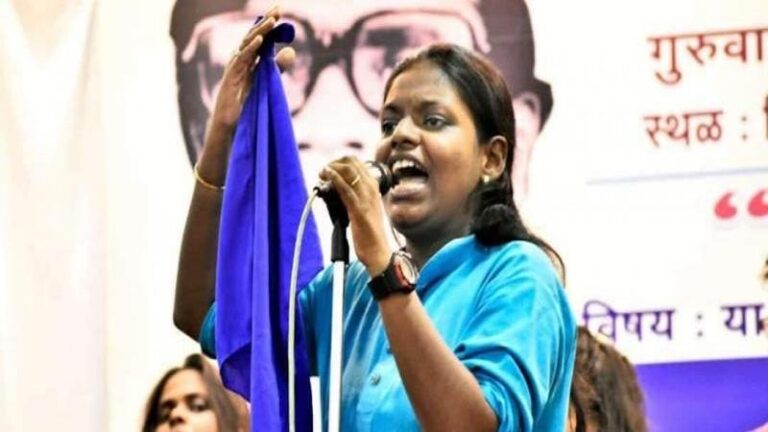
Suvarna Salve, a student and well-known anti-caste cultural activist, is the lead singer of the group Samata Kala Manch. She participated in a spontaneous protest march from Hutatma Chowk to Gateway of India in order to protest the bloody attack on students and faculty of Jawaharlal Nehru University (JNU) by members of the Akhil Bharatiya Vidyarthi Parishad (ABVP), student-wing of the BJP.

The Mumbai Police has registered an FIR against her and 31 other persons for taking out this peaceful protest at which the police was present, no untoward incident was reported, no violence broke out, and there was no breach of peace whatsoever, in the wake of the protest. A notice, issued on August 24, sought a surety of Rs. 50 lakh from her and two other persons to ensure Suvarna Salve’s ā€˜good behaviour’ for the next two years. The notice was issued under Section 110 (e) of the Criminal Procedure Code, 1973, and hence classified her as a ā€˜habitual offender’ and police have even said they will initiate proceedings to extern her from Mumbai. Many of the persons named in the FIR were not even present at the protest march and the Mumbai police have persisted with this case in spite of evidence of their lack of involvement. The notice clearly shows that the police are attempting to intimidate a young Dalit woman for expressing dissent and targeting her using a law that has its roots in the need to criminalize marginalized communities.

On Tuesday, activists in Maharashtra launched an online campaign to demand the quashing of FIRs and to free the activists without any ā€œsuretyā€ amount. They have termed the amount as ā€œabsurd, excessive and totally arbitraryā€.

A petition demanding the withdrawal of all FIRs against Suvarna Salve, signed by individuals and members of women’s organizations, student groups, civil liberties organizations, trade unions, and human rights groups is currently under circulation.

Sign it here.

The petition states,

ā€œIt is shocking that a student activist who has never been booked in any case so far can be classified as a ā€˜habitual offender’. Clearly, the police have targeted this young singer and anti-caste cultural activist with such a high amount as surety to intimidate her and anyone who comes forward to support her. Besides, the attempt to enforce arbitrary and ill-defined norms of ā€˜good behaviour’ is designed to curb her right to perform in public and will have a chilling effect on her right to freedom of expression.ā€

The petition demands that the notice be dropped and that the Mumbai police undertake no repressive measures against Suvarna Salve or attempt to censor her activities in any way. It also demands that the Maharashtra government withdraw all the FIRs related to this and other cases registered by Mumbai police against several activists and prominent citizens, named and un-named, in connection with the peaceful protests against the JNU attacks and the CAA-NRC-NPR across the city in January 2020.

No Action in the Multi crore MGNREGA scam in Gujarat: Jignesh Mevani

0

No action has been taken a month since MLA Jignesh Mevani had unearthed a multi-crore MGNREGA scam in Gujarat and an FIR was filed. Last month, the scam came to light after some villagers in Balundra village in Amirgadh tehsil went to seek work under the Mahatma Gandhi National Rural Employment Guarantee Scheme (MGNREGS). The villagers were told that their names were already registered under the scheme.

According to Jignesh Mevani, signatures and thumb impressions of the villagers were collected saying that it was so that they could get benefits of different government schemes. Their information was then used to make job cards in their name, open bank accounts, obtain bank passbooks and ATM cards, and siphon off their wages.

According to Mevani, this scam has been going on in Balundra for the last eight to nine years, and some government officials have swindled over 9 to 10 crore rupees. Similar scams were taking place in other villages of Gujarat as well, including in Mevani’s constituency Vadgam.

Later, it was found that five men who had signed on the musters and got their wages were dead, meaning that wages were also being siphoned off under the names of dead people from the village. Analysis of documents also revealed that at least six minors were also registered as workers.

Mevani criticized the lack of action for one month since such a huge scam has been exposed. There is clearly no sense of urgency amongst the police or the revenue department about a scheme that is so essential for rural employment being exploited for the profit of public officials. The inaction suggests that higher-ups must also be receiving some benefit from this scam. Prompt investigation is extremely necessary in such a case so as to not allow time for evidence of the scam to be erased.

The FIR was lodged on August 3 based on a complaint filed by deputy taluka development officer at Amirgadh, Dharmesh Kumar Vyas. Notably, the FIR has been classified under ā€˜sensitive content’, making it inaccessible to the public. The District Development Officer had said that a police probe and departmental inquiry would take place simultaneously.

Finland PM Rallies for Six-Hour Work Day, India suspends most labour laws

0

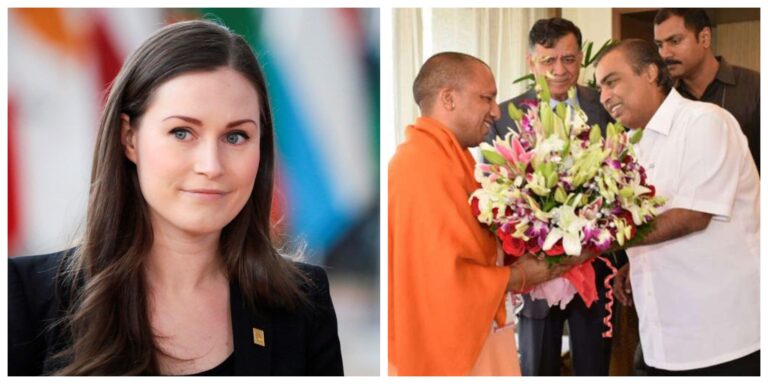
The Prime Minister of Finland, Sanna Marin, has recently called for a six-hour workday without loss of pay. Marin, who belongs to the Social Democratic Party (SDP) was elected as the party’s chair on August 24 and announced to the party members that Finland needs a clear vision and concrete steps as to how the country can proceed towards shorter working hours.

The eight-hour workday we now see as an infallible system was pushed for by worker’s movements after the Industrial revolution, who called for ā€œ8 hours for work, 8 hours for rest, and 8 hours for what we willā€, and reduced the earlier 10-hour, 12-hour, or 16-hour workdays.

While the party conference rejected her proposal to set a six-hour standard as a precise number, Marin has set up a working group to come up with specific measures over the next three years to reduce working hours across the country without a reduction in wages.

Workers’ movements have historically rallied for shorter work hours. The eight-hour workday we now see as an infallible system was pushed for by worker’s movements after the Industrial revolution, who called for ā€œ8 hours for work, 8 hours for rest, and 8 hours for what we willā€, and reduced the earlier 10-hour, 12-hour, or 16-hour workdays.

With the advancements in technology since then, and with the immediate impetus provided by the COVID-19 pandemic, Finland has recognized that reduced working hours is a political aim to ensure a long-term vision of equal access to participation in society, and worker’s well being and individual happiness beyond their contribution to the neoliberal economy. Certain models of alternating six-hour shifts that have been tried out in Finland also tackle the issue of unemployment and could be especially useful to India.

Similar experiments in other countries have tested the concept of reducing work hours as a way of improving individual productivity. In Sweden, a trial in the city of Gothenburg mandated a six-hour day, and officials found employees completed the same amount of work or even more.Ā  In a bid to improve well-being, employees were switched to a six-hour workday in 2015 with no pay cut. An audit of the program revealed that it has sharply reduced absenteeism, and improved productivity and worker health. Scandinavian countries has long been a laboratory for initiatives to strike a better work-life balance, part of a collective ideal that treating workers well is good for the bottom line. Many Swedish offices use a system of flexible work hours, and parental leave and child care policies there are among the world’s most generous.

Labour Conditions in India

However, India is taking the same global crisis that is prompting pro-people policies in Finland, as an opportunity to create more and more exploitative conditions for workers. During the pandemic, various states scrapped the existing labor laws that protect worker’s rights in the country, taking advantage of the widespread unemployment and precarity of the poor.

Laws relating to industrial disputes, wages of workers, occupational safety, workers’ health, and working conditions, working hours, trade unions, and contractual and migrant laborers, were suspended. The UP Government even attempted to increase the working period to 12 hours per day.

With the suspension of these acts, the employer can make the workers work overtime, for how many ever hours, without holidays, and without minimum wages. As many of the states barely impose the Unorganised Workers’ Social Security Act, 2008 even today, this suspension pushes the labour rights in India back by a hundred years. Hundred years ago India ratified the International Labour Organization convention.

Although the pandemic has revealed the failure of neoliberal economic structures, the Indian government is more concerned with ensuring the profits of the richest people in the country and more than happy to sacrifice the dignity and wellbeing of the majority of the population.

Media Hampering Investigation in Sushant Singh Rajput Case: Bombay HC

0

The Bombay High Court on Thursday passed an order stating that it urges and expects the media to show restraint while reporting the developments in the case relating to the death of Bollywood actor Sushant Singh Rajput.

The bench also said that the media should not report in a manner which hampers the ongoing investigation in the matter.

“We urge and expect the media to exercise restraint in reporting of the investigation with respect to the death, which should not hamper investigation in any manner”, the bench said.

A bench of Justices A A Sayed and S P Tavade passed the order in two PILs which sought directions for fair reporting by the media of the Sushant Singh Rajput case.

The bench also issued notice to the respondents in the two PILs and said that it will consider the further reliefs sought by the petitioners after hearing the CBI, which is handling the investigation in the case.

One PIL was filed by 8 former IPS officers who had served Maharashtra police contending that the media was carrying out a “malicious campaign against the Mumbai police”.

Second was a PIL filed through Advocates Rajesh Inamdar and Shashwat Anand seeking a direction to the Centre to enforce its program code against the TV channels to stop the “media trial” in the case. Nilesh Navlakha (filmmaker/producer), Mahibub D. Shaikh (editor of a regional newspaper) and retired civil servant Subhash Chander Chaba were the petitioners in this case.

Appearing for the ex-IPS officers – former DGPs PS Parsicha, K Subramanyam, D Sivanandan, Sanjeev Dayal and SC Mathur, along with former Commissioners MN Singh, DN Jadhav and KP Raghuvanshi – Senior Advocate Milind Sathe sought directions to the Union of India, Press Council of India, News Broadcaster’s Association and News Broadcasting Standards Authority to issue guidelines to restrain media from publishing any content that may jeopardize the reputation of Mumbai police.

Petitioners (former IPS officers) are not concerned with the accused or the victim; petitioners are not concerned about who should investigate. The petitioners are concerned about the manner of reporting of the case which is against the journalistic ethics”, Sathe submitted.

“Reporting by media, especially electronic media, is a parallel media trial. Ther is also vilification of Mumbai Police without any basis”, he submitted.

Referring to the order passed by the Supreme Court on August 17 to hand over the investigation to the CBI, Sathe submitted that the top court had not found any fault with the procedure adopted by the Mumbai police, and that the CBI probe was ordered in the peculiar circumstances of the case where the states of Bihar and Maharasthra were making allegations against each other.

“There is no castigation or stigma cast on the Mumbai Police”, Sathe said referring to portions of the Supreme Court order of August 17. Despite that, he said, the media was “falsely tarnishing” the Mumbai police.

Sathe also referred to several snapshots of the media reports against Mumbai police. He also said that the channel ‘Times Now’ displayed the dead body of the actor in a show anchored by Navika Kumar.

Sathe also submitted that the media was doing a parallel investigation in the case by calling the witnesses and asking them questions.

“This is an attempt to influence the investigation and to prejudice the case”, he said.

He highlighted that the Press Council of India has also expressed its disapproval of the manner of media reporting in the case. The reporting is in violation of the norms for “self-regulation” formulated by the News Broadcasters Association.

“The reporting is not fair, balanced, objective and neutral. They have taken over the trial and investigation. The media reporting has exposed material witnesses and crucial materials. This acts as a serious prejudice to investigation. Right to fair trial and fair investigation is part of Article 14 & 21”, he argued.

The senior counsel also made a reference to The Police (Incitement of Disaffection) Act 1922 and stated that the reporting violates the provisions of this Act.

Appearing in the connected PIL, Senior Advocate Devadatt Kamat submitted that the media had violated the norms laid down by the Press Council of India, and also the Program Code under the Cable TV act while reporting the case.

Kamat submitted that one channel termed Sushant Singh’s suicide ‘hit wicket’. One channel showed the corpse of the actor. Another channel circulated fabricated tweets as Sushant’s last message and later deleted the news on being exposed, he added. Channels are also discussing the private chats between Sushant and Rhea.

“A trial by press is the very antithesis of rule of law and can lead to miscarriage of justice”, he submitted.

“What is guiding the media is not the quest for truth but a quest for TRPs and more and more commercial gains”, he said.

Kamat referred to the order passed by the Supreme Court in the Arushi Talwar case to restrain media from publishing any matter which “interferes with investigation, sully the character of the victim and prejudice the defence of the accused”.

“When one of the witnesses came out of CBI office after interrogation, the media hounded him asking about the kind of questions asked. Is this the kind of reporting which the fourth estate should do?”, Kamat asked.

The Law Commission of India has also commented that such publications “directly impinge upon the administration of justice”, he said.

Law Commission of India has frowned upon publications on the character of the accused, comments reflecting on the merits of the case under investigation, photographs of crime scene, police investigation.

Additional Solicitor General Anil Singh, appearing for the Central Government, had sought for adjournment of the hearing to tomorrow by saying that copies of the petitions had not been served on the Centre, and that none of the channels had appeared before the Court.

Originally published on Live Law.

Ladeeda Farzana Serves Legal Notice to OpIndia

0

Ladeeda Farzana, Jamia Millia Islamia student who became the face of police violence in Delhi has served a legal notice to OpIndia for defamation on September 1, 2020.

In her tweet where she posted a copy of the legal notice, she wrote, ā€œIt’s been quite long since OpIndia, an RSS machinery has been spearheading hate campaigns throughoutā€. She said that now it is time for legal retaliation against these forces of fascism.

The legal notice posted by Ladeeda Farzana pointed out that OpIndia’s dishonesty in reporting news is evident, but their articles have been circulated widely across the country and have caused damage to her reputation and mental agony.

OpIndia has posted multiple articles, suggesting that Jamia students had doctored evidence of police violence or circulated staged videos. OpIndia especially targeted Ladeeda Farzana and Aysha Renna for the viral video where they protected a male senior from lathis of the police. In an article titled ā€œDelhi violence started after Ladeeda’s call to Jihad on 11th December, now, she has another message ahead of Ram Mandir Bhoomi Pujanā€, they called her a ā€œradical islamistā€ whose ā€œcalls for Jihadā€ caused the anti-Muslim pogroms in Delhi in February this year.

All of these articles are gross misrepresentations of the events as publicly documented. Numerous pieces of evidence, including pictures, CCTV footage, and witness accounts have shown the massive police brutality that took place against students of Jamia after protests against the Citizenship Amendment Act were held by the students. Ladeeda was one of many such students who encountered police violence, and remained at the forefront of the anti-CAA-NRC movement. The Delhi pogrom against Muslims was also triggered by a speech by BJP Leader Kapil Mishra who called for the forceful removal of anti-CAA-NRC protestors from a sit-in protest in Jafrabad.

Ahead of Ram Mandir Bhoomi Pujan, Ladeeda had posted a picture of the Babri Masjid, and captioned it ā€œInsha Allah. Never forget, Never forgive. Izzhathā€. This caption referred to the unlawful demolition of the Babri Masjid by Hindutva mobs, the land on which the Bhoomi Poojan took place, while the verdict on the demolition case had still not been made.

Ladeeda, in her legal notice, has demanded an unconditional apology from OpIndia and a compensation of 50 lakh rupees to be paid within one week, failing which, she will initiate legal action against the media platform.

Tamil Nadu: Rowdy Sheeter flees the BJP party ceremony on seeing Cops

0
By inducting Karnataka Singham K. Annamalai an ex IPS officer into the party fold Bharathiya Janata Party had shown high hopes to create ground in Tamil Nadu, where the Dravidian ideology is the main political force. It was a major embarrassment when party office bearers themselves tried to induct a rowdy sheeter. However, upon seeing police during the party function the notorious gangster fled away. Surya was wanted in a case under section 41 of CrPc which will enable the police to nab the notorious without a warrant. Notorious rowdy infamously known as Red Hills Surya was about to officially join the saffron party. Surya had intended to launch his political career under the patronage of state unit president L. Murugan at Vandalur that comes under the jurisdiction of the Chengalpattu district. The party president was about to hand over the party flag to welcome him but the situation became comical when the notorious gangster Surya fled the scene upon seeing the police. The Chengalapattu district police got tip-off of the history-sheeter and rushed to the spot to nab him. Although Surya managed to escape, the police were only able to catch hold of six persons who were in possession of knives.
Annamalai
PC: ANI
Popularly known as Singham of Karnataka K. Annamalai had recently joined BJP in Tamilnadu launching his political career. Ex IPS officer openly came into the support of Prime Minister Narendra and he was joining BJP only because of its nationalistic ideology. However, the recent attempt to induct rowdy sheeter into BJP expressively gives message that BJP has more interest in grabbing the power inducting people irrespective of their criminal antecedents rather than developing a nationalistic approach and sticking to its ideology. It is even more evident as recently gangster-like Khalavettu Ravi and Satyaraj were inducted into the party fold, all these party level developments were taking only after the Ex IPS officer K. Annamalai officially joined the Saffron party. Surya is accused in more than fifty criminal cases and is also facing serious charges of murder, attempt to murder, and use of explosives and is the most wanted person in Tamil Nadu. Subsequently, after the fleeing and arrest of the six persons, BJP party workers have protested in front of the police station seeking the release of two of its party workers. However party president L Murugan stated that he was not aware of the criminal antecedents of the persons joining the party.

Also Read: Suresh Chavhanke: RSS-BJP Backed Anti-Muslim Propaganda Machine

Dalits, Adivasis, Muslims Overrepresented in Prisons: NCRB Data

2

The latest data released by the National Crime Records Bureau (NCRB) shows the continuing over-representation of Dalits, Adivasis, and Muslims in prisons as both convicts and undertrials.

The 2011 Census put the share of Scheduled Castes in the total population as 16.6%. However, at the end of 2019, Dalits made up 21.7% of all convicts in jails across the country. The Census put the share of Scheduled Tribes at 8.6% of the population, but they made up 13.6% of the convict population, and 10.5% of all undertrials. Similarly, while Muslims make up 14.2% of the population, they form 16.6% of all convicts, and 18.7% of all undertrials.

Shadow of Caste in Criminal Justice

A 2019 report, Criminal Justice in the Shadow of Caste, prepared by the National Dalit Movement for Justice in collaboration with the National Centre for Dalit Human Rights, outlined the issues with the justice system which is heavily structured around caste lines. According to the report, a large number of cases are filed against members of Dalit or Adivasi communities as a counter-attack when they register atrocity complaints.

The endemic caste bias in police leads to delays in prosecution as well as unnecessary arrests. Due to a lack of access to legal remedies and inaccessible legal procedures, many continue to languish in jails as undertrials and are not able to secure bail. Police violence, torture in custody, and false implications are also common. The lack of access to legal remedies for members from these communities leads the police to exploit their situation by implicating them in unrelated cases to show progress in an investigation or enable someone else to escape accountability. Laws like the Habitual Offenders Act also enable the systematic police violence against members of Denotified and Nomadic Tribes.

Dalit activists, intellectuals, and journalists including Suvarna Salve, Anand Teltumbde, Hany Babu, and Prashant Kanojia have been especially targeted by the police in recent times for expressing dissent against the government as well.

Muslim ScapegoatsĀ 

A 2018 survey showed how a fear of false implications and mistreatment from the police is pervasive amongst Dalits, Adivasis, and Muslims. According to the survey, 27 per cent of Adivasis said they feared being framed for anti-state Maoist activities, while 35 per cent of Dalits held a similar fear regarding petty thefts. A startling number of 47% of Muslims said that they feared being falsely accused of terrorist activities.

This fear is not unfounded, and is based on the historical treatment of Muslims as scapegoats by the police, especially for crimes committed by right-wing leaders. After the Malegaon blasts that took place in a Muslim cemetery, claiming the lives of around 40 Muslim pilgrims, nine Muslim men had been arrested. Five years later, the National Investigation Agency had said that it has no proof against the accused. The nine men were acquitted only in 2016. In 2019, 11 muslim persons were found to be “innocent” after spending nearly 25 years behind bars for allegedly planning to avenge the Babri Masjid demolition and for attending terrorist training camps in Pakistan and Kashmir. Three Kashmiri men, Lateef Ahmad Waza, Mirza Nissar, and Muhammad Ali were arrested from Nepal, where they had migrated to escape the conflict of Kashmir, in 1996 for blasts in Delhi and Rajasthan to which they had no connection. They spent 23 years in wrongful imprisonment. More recently, Muslims have especially been falsely implicated in riots and cases of anti-Muslim violence during the anti-CAA-NRC movement, and assertive Muslim activists have been arrested under draconian laws like the UAPA.

At present, there are no legal remedies for wrongful imprisonment, although the Supreme Court has, in various judgements, highlighted the need for such a statutory right. The criminal justice system uses arrests of Dalits, Adivasis, and Muslims to create a culture of fear amongst communities which the powerful can exploit for their own benefit. By the time wrongful investigations and arrests are reversed, that too in exceptional cases, the victims have lost decades of their lives, and the concerned police officials are never held accountable. While some cases receive media attention, what is important to remember is that behind them are thousands of unnamed prisoners, languishing in overcrowded jails where prisoners rights are nonexistent and custodial violence is commonplace.