Monday, November 23, 2026

Remembering Emiliano Zapata and the Struggle for Land Rights in Mexico

0

2019 marked a hundred years since the assassination of the formidable Mexican peasant leader and revolutionary Emiliano Zapata. Born on 8 August 1879 to a mestizo farmer in Morelos but orphaned at the tender age of 17, he was one of the key figures of the protracted and fraught battle for indigenous land rights that is known as the Mexican revolution.

Confrontation With Plantation Owners as a Teenager

His first confrontation with the exploitative owners of the hacienda (enormous estates or plantations in Mexico) occurred in 1897 when the latter attempted to confiscate and appropriate the land of indigenous peasants in Morelos. At the time, Morelos was the third-largest sugar producer in the world.

Emiliano Zapata, still a teenager at the time, immersed himself headlong into this bitter struggle and vehemently protested against the institutionalized theft of indigenous land and consequent disenfranchisement of peasants, for which he was arrested.

Those in power perceived the threat that Emiliano Zapata’s revolutionary zeal and charismatic influence posed to the order of things in Morelos, and he was forced into military service in 1908. However, he was released six months later, with none of his fervour diminished, and was soon elected by the peasants as president of the board of defence for their village.

Reclaiming Peasants Land 

He renewed negotiations with the landowners but after these attempts were rendered fruitless on account of the latter’s absolute adamance, Zapata led the peasants to occupy by force the land that had been stolen from them by the hacienda owners, which they distributed amongst themselves. This was only the beginning of the powerful story of peasant rebellion that would shape the beating heart of the Mexican revolution, and Zapata would become an emblem of that indefatigable spirit, immortalized by his lifelong struggle for indigenous land rights in Mexico.

In 1910, a new political opposition was crystallizing in the nation against the ruling president Porfirio Díaz, whose policies openly favoured wealthy landowners and industrialists. Aided by numerous peasant guerrillas, Francisco Madero, who was leading this opposition, declared himself the president.

emiliano zapata
Porfirio Diaz | Courtesy: ThoughtCo

Zapata perceived a hope for institutional change in Madero’s alternative political vision and decided to support him. His small but organized peasant forces began to wage a fierce battle against the rural political bosses while Pascual Orozco and Pancho Villa in the north mobilized their armies and took over government garrisons. Finally, Zapata and the peasants seized the city of Cuautla which effectively blocked southern access to Mexico City, leading to Diaz’s resignation, and marking the beginning of the Mexican Revolution.

Losing Faith in Politicians and the Emergence of the Zapatistas 

Zapata urged Madero, soon to be elected, to exert pressure on the provisional president , appointed in place to Diaz, to hasten the return of land to the indigenous people of Mexico. But Madero began to falter on his promises, asking Zapata to disarm his guerrillas instead.

Soon after, Zapata prepared the Plan of Ayala, which declared a complete loss of faith in Madero’s ability to fulfill the aspirations of the revolution.

The signatories, who called themselves the Zapatistas, vowed to return the appropriated land to the peasants expropriating a third of the total area of haciendas with payment—those estate-owners who refused to comply would have their lands seized and reclaimed without compensation

Adopting the slogan “Tierra y Libertad” (“Land and Liberty”), Zapata organized thousands into peasant guerrillas that distributed land seized from the haciendas—he paid them by heavily taxing the wealthy in the provincial cities.

American Interference and the Assassination of Madero

In the meantime, however, the US government thought Madero was too lenient with rebel forces and wanted to regulate the volatile political situation in Mexico to protect American business interests in the country.

Accordingly, following a violent clash with Felix Díaz over the course of what is known in Mexican history as La Decena Tragica or the Ten Tragic Days, the federal government engineered a strategic alliance—formalized by the signing of the “Pact of the Embassy” between Victoriano Huerta, and the nephew of Porfirio Díaz, which would work towards displacing Madero from power.

emiliano zapata
La Decena Tragica | Courtesy: Wikipedia

Their machinations culminated in the assassination of Madero and Huerta becoming president in 1913. Zapata and his men rejected Huerta’s offer to unite in fighting against the Constitutionalist guerrillas of the north led by Venustiano Carranza who ultimately forced Huerta to flee the country in 1914. Well aware of the reach of his reputation, Zapata invited Carranza’s Constitutionalists to accept his Plan of Ayala and made it clear that he would continue fighting independently until the plan was executed, no longer willing to place the future of the peasant movement in the hands of politicians. Along with some other intellectuals who were drawn to his vision and struggle, among them Antonio Díaz Soto y Gama, Zapata went on to establish an agrarian party as well.

Carranza decided to call an assembly of all the revolutionary forces, including the Villistas and the Zapatistas, but no consensus could be reached between the Constitutionalists and the revolutionaries about the appointment of a provisional president, and soon civil war erupted and swept the nation.

Redistribution of Agrarian Land

On November 24, Zapata led his forces, now called the Liberation Army of the South with 25,000 men, to occupy Mexico City. A fortnight later Zapata and Pancho Villa pledged to present a united front against Carranza.

This was followed by a period of revolutionary execution: not only did Zapata create agrarian commissions to swiftly distribute the land to its rightful peasant owners and cultivators, but also ensured that there was no corruption of favouritism towards particular interest groups and landowners.

Constantly driven by a mission to empower dispossessed Mexican farmers, Zapata tried to reorganize the sugar industry in Morelos into cooperatives, and set up a Rural Loan Bank which was the country’s first agricultural credit organization.

Isolation of Zapata by US-backed Carranza

However, Carranza, whose government had been recognized by Woodrow Wilson in 1915, continued to wage war, until his generals defeated Villa in 1917 and politically isolated Zapata. He was subsequently elected president of Mexico by a convention that passed a new constitution, to which Emiliano Zapata was not even invited.

Zapata’s legacy and brilliant, egalitarian governance was brought to the attention of international media finally when William Gates, a U.S. envoy published a series of articles that juxtaposed the harmony in the areas controlled by Zapata with the chaos of Carranza’s domain, concluding that “the true social revolution can be found among the Zapatistas.”

The Legacy of Emiliano Zapata

After a lifetime of independently fighting for the peasants of Mexico, Zapata was finally ambushed and shot to death by Carrancista soldiers in 1919. This tragic event was portrayed with acute poignancy in the 1952 film by Elia Kazan called Viva Zapata! Of course, one of the many liberties taken with historical facts in the film is illustrated in the decision to have Emiliano Zapata portrayed by a very Caucasian Marlon Brando with taped up eyelids.

emiliano zapata
A scene from Viva Zapata! | Courtesy: Turner Classic Movies

But in its final images, the film suggests that the resistance of the Zapatistas does not end, and that hopeful rumours have blossomed everywhere that the fearless leader never died but is continuing to fight from the hills.

Emiliano Zapata’s tremendously heroic and tragic legacy has had a rich and varied afterlife in the cultural imagination of his own nation—Mexican Golden Age cinema is replete with characters who look exactly like him, and in 1970 Felipe Cazals directed his biopic.

In Mexican politics too, there is a distinct presence of his influence, with Mexico’s current president Andrés Manuel López Obrador pledging to revive the rural economy and declaring 2019 as the year of Emiliano Zapata.

However commentators and Zapata’s grandson himself have viewed this as a disingenuous appropriation.

Zapata’s legacy lives on most powerfully today among the Zapatistas who launched a rebellion in 1994—their recent resurgence has given rise to a phenomenon among tourists and travellers in Mexico called zapaturismo.

Adreeta Chakraborty is a student of literature at Delhi University.
Why the Right is Winning: Shiv Visvanathan

1
To ask why is the Right succeeding needs to begin with an essay on the Left but not as an act of breast-beating or nostalgia. It is the self-inflicted injuries of the Left that help the Right consolidate itself. The Left still suffers from a lingering Stalinism which makes it destroy the best of its dissenting imaginations. It needs an Ojha to exorcise itself before it can resume politics. Such an analyst would tell the left that class as a category turned wooden and ethnocentric. The Left had no sense of margins, of ecology of livelihood as its response to the Narmada and fishing struggles in Kerala showed.

The Left created a dream of the future while the Right allowed everyman to recreate his own past through an act of video violence. You murdered a Muslim and felt you had avenged Rana Pratap or Padmini.

While the left was destroying itself, the Right found in the Nation-State and the idea of Youth two aspirational categories. The nation-state allowed the Right to march in uniform while it pretended to create a model the idea of youthful aspiration, the dream of the small town helped create myths of mobility, next to which class as a promise of change looked glacial. The Right could cannibalize democracy with the cunningness that the Left lacked. In a deep sense, the Right had a better sense of the inventive nature of violence and evil. Violence was used as a historical cleanser but through the lenses of consumption. The rightest sense of violence as a lynch mob squad gives the masses an involvement in history that the left cannot provide. The Left created a dream of the future while the Right allowed everyman to recreate his own past through an act of video violence. You murdered a Muslim and felt you had avenged Rana Pratap or Padmini. The Right, thus, had a more brutal but satisfying theory of violence as exorcism. The Right’s choice of the nation-state provides a collective sense of machismo, an aesthetic solidarity, a moment of romance which class as a sociological category lacks. Populism earned more weight than class warfare. Modi’s chaiwala for all its hypocrisy earned more connection than any proletarian slogan. Populism has protean flexibility that the Left does not understand. The Right understood that cadres are important but only as an ancillary to the mob. Between mobs and majoritarianism, the Right can brutalize democracy in a way the Left cannot dream of. The symbolic push through the Nation-State and through populism, the Right stirs and captures the imagination while the Left looks inert. There is an illiteracy to the Left as it gets out of touch with the debates on science, creating the scientific temper, misunderstanding Bernal and Needham. Needham wanted Marxism to speak Welsh, he understood vernacular in a way the left did not, with the exception of Mahashweta. The Right had no interest in science as an ideology. It was purely instrumental. It captured the high ground of ancient science and saw science in instrumental terms. Science was technology and technology was a substitute for politics. With these two shifts, the Right captured science by black-boxing it.

The Right understood that cadres are important but only as an ancillary to the mob. Between mobs and majoritarianism, the Right can brutalize democracy in a way the Left cannot dream of.

The Left, except through liberation theology, was inept about religion. Its secularism is empty and has no sense of dialogue. The Left’s failure to understand religion has cut it off from one of the great civilizing imaginations. As a result, it is crass about superstition and illiterate about science. A dialogue of Left and religious movements would have been transformative, even welding Bhakti and Marxism. But the Left is timid about religion, so it is weak on the communalism of the Right. The Right can make an instrumental use of spirituality and religion while the Left watches inertly and ineptly. The Right has a way of appropriating history that the left does not grasp. Modi’s attempt to join Gandhi in the KVIC Calendar is a move the Left cannot imagine. Eventually, it is a battle between two mediocrities but the Right as mediocrity blends the second rate with authoritarianism and democracy. It is more instrumental about evil than the Left is. A tactic of appropriation, populism, and machismo has given it power while the Left stands ineptly navel-gazing on its ideological mistakes. Maybe a renewed IPTA could stage a new theatre mirroring the ineptness of the Left. Sadly, the right has a sense of using media in a way the Left cannot dream of. Modi is mediocre but a designer created Karat is outdatedly a taxidermists’ dummy. He is no match for the crassness of Modi.
Shiv Visvanathan is an Indian academic best known for his contributions to developing the field of science and technology studies, and for the concept of cognitive justice a term he coined. He is currently a Professor at O P Jindal Global University, Sonepat. 
Related Read: Past, Present, and Future of Secularism

Sudan Ends 30 Years of Islamic Law by Separating Religion, State

0
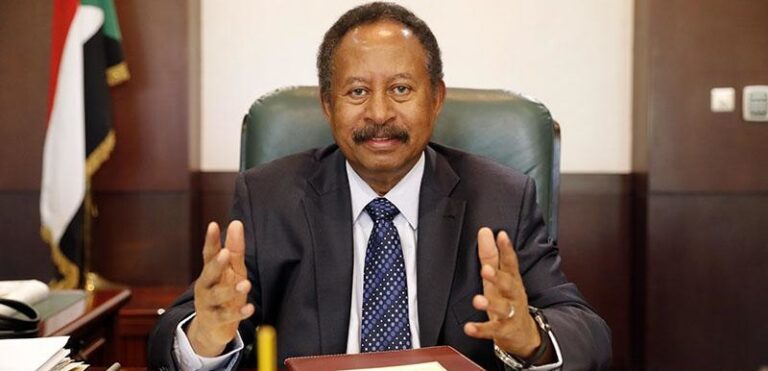
Sudan’s transitional government agreed to separate religion from the state, ending 30 years of Islamic rule in the North African nation. Sudanese Prime Minister Abdalla Hamdok and Abdel-Aziz al-Hilu, a leader of the Sudan People’s Liberation Movement-North rebel group, signed a declaration in the Ethiopian capital, Addis Ababa, on Thursday adopting the principle. “For Sudan to become a democratic country where the rights of all citizens are enshrined, the constitution should be based on the principle of ‘separation of religion and state,’ in the absence of which the right to self-determination must be respected,” the document states. The accord comes less than a week after the government initialed a peace deal with rebel forces that’s raised hopes of an end to fighting that ravaged Darfur and other parts of Sudan under ousted dictator Omar al-Bashir. The larger of two factions in the Sudan People’s Liberation Movement-North, which has fought Sudanese troops in the nation’s border states, has refused to sign any agreement that doesn’t ensure a secular system. Sudan is emerging from international isolation that began soon after Bashir seized power in 1989 and implemented a hard-line interpretation of Islamic law that sought to make the country the “vanguard of the Islamic world.” Al-Qaeda and Carlos the Jackal settled there; the U.S. designated Sudan a terror sponsor in 1993, later imposing sanctions until 2017. Since the beginning of 2019, the countries of Sudan and South Sudan have been in a state of turmoil. Sudan has been seeing waves of nonviolent popular protests leading to the stepping down of its prime minister, Omar Al Bashir after nearly thirty years of rule. Also Read: Guns, Borders and IMF : The History of conflict in Sudan

The Shape of the Beast Called Unemployment in India

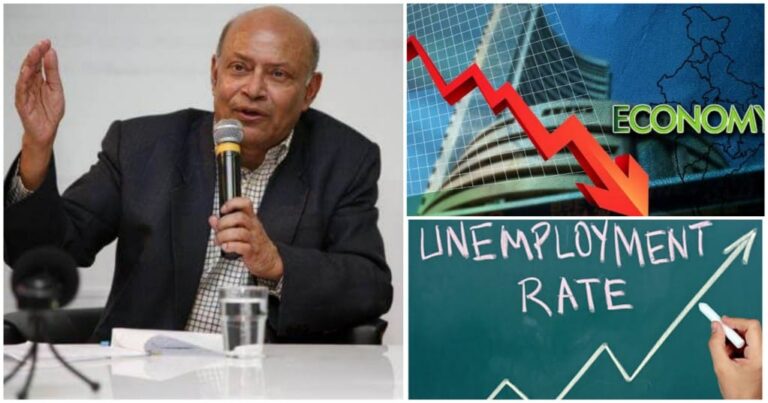
During the period of high growth in Indian GDP from the early 1990s to about 2012, I was often reminded of a story I had heard in Mexico about one of the many military dictators ruling then at the mercy of the CIA in Latin America after the right-wing take over in Chile (1973). During one of his regular reporting trips to the U.S, he was asked by the U.S president about the situation in his country.  His reply was: “The economy is doing well, but not the people.” This remark more or less also sums up the high growth phase of the Indian economy. During the years of high growth when Indian GDP grew at double the world average at more than seven percent, regular employment grew by slightly less than one percent even according to official statistics.  In the pre-liberalization (pre-1991) period output growth on average at about half that rate (3.5-4) percent but employment grew at 2 percent, double the average of the liberalization phase.
LPG model of Liberalisation, Privatisation, and Globalisation
Output growth has increasingly got delinked from employment growth post liberalization because, output per employed worker goes up sharply due to mechanization, and the type of industrialization that kills far more livelihoods of the rural poor than jobs created to absorb workers in the organized industry. An obsessive preoccupation with international competitiveness under globalization drove these compulsions. Thus output rises while the number of employed falls, as happened in many large corporations during this phase.  Liberalization of trade and foreign exchange regulation provided easy access to foreign goods which made the middle class happy, and dismantling of many suffocating regulations of a ‘police –inspector raj’ was welcomed by both business and the people. The industrialists were happier because liberalization put them effectively in charge of industrialization; it gave them incentives with almost free gifts of land, water bodies, rivers, mountains, forests, and seashore by killing the livelihoods of millions, a disproportionately high proportion of them were Adivasis and Dalits. My personal rough calculation suggests that the probability of being displaced was nearly three times higher for them. Nevertheless, the big private corporate sector performed by raising economic growth while the media cheered. Only it was seldom mentioned that the gap between the rich and the poor grew wider, while experts continued to debate whether extreme poverty had really decreased significantly. And now, the economy is on a downward spiral with no end in sight. Even the government no longer has the courage to say that the economy is doing well; the best it can do instead is to suppress or manufacture official numbers hoping it will soften the blow through paid news.  The poor, many of them daily earners in the informal sector were first dazed by the shock of demonetization that hit them suddenly. The earning dropped, purchasing power suddenly evaporated from the market. The comforting claim of the annihilation of ‘black money’ through demonetization coupled with an earlier election promise to put fifteen lakhs in the bank account of each Indian with the recovered black money did not take long to sound like a cruel joke.
Youth frying pakodas as Modi’s idea of jobs
So the home minister assured it was an election joke, not a promise! Other similar jokes continue to follow with an unending series of announcements every second day about the great things the government is doing for the poor. Indeed such promises have become the hallmark of this government.  Reporters who question it on the basis of ground-level reporting are entirely out of favour, suspected anti-nationals going against the grand narrative of nation-building based on promises not to be kept. For example, the particular one who investigated into the dismal results of the promise of doubling of farmers’ income soon lost his job. Journalists like the rest of us are not meant to be heroes but reasonably honest. This is increasingly difficult, so it did not take most of them long to learn which side of their bread is buttered. And, a lot of butter is offered by the government and the corporations who own most of the media provided the news channel falls in line. This means for example loud commitment repeating uncritically official versions of threats to our nationalism from China, Pakistan, unban Naxals even JNU  students, the anti-CAA protesters, in short everybody who dissents. At the same time, the obedient news channel needs to emphasize the singular importance of ram mandir for national harmony and, of Rafael jets for national defense, and omit inconvenient news about growing unemployment,  fleecing of the nationalized banks by a handful of borrowers, environmental degradation willfully caused to help contractors and industrialists. Most of our media have been excellent learners, mastering the sins of both commission and omission. The central government was far too busy with entertaining Trump, amending citizenship law, and subverting opposition governments in states until late March in 2019 while the monster of a pandemic was knocking at the door. Except for Kerala, no other state paid attention. Then came the sudden announcement of a severe lockdown with just four hours notice just like with the earlier demonetization exercise. Like promises galore not meant to be kept, this abruptness too is the style of the government that rules us.
migrants
migrants waiting to go home
The suddenness of the lockdown left the economy reeling. It is no longer a question of slower growth, not even of no growth but how deep the economy would fall. The so-called migrant workers were its first visible victims. The total number of regular jobs in the organized part of the economy has begun to decline rapidly. The latest unemployment figures suggest for the first time huge reduction in regular salaried jobs. This will hit middle class the hardest. While huge and rising unemployment, open and disguised, stares the poor in the face as never before, there are some curious statistics to show some jobs are coming back in the informal and semi-formal economy of small and middle enterprises with the easing of the lockdown. The simplest explanations are usually the last one you hear from learned experts. The small enterprises that have run through all their savings during the lockdown cannot afford to remain closed; the daily workers cannot survive without their daily attempt at earning something in odd jobs. The poor cannot afford to be unemployed, that’s why the unemployment figures are absurdly low for that category. I recall Indian data where the least educated landless have the lowest unemployment rate, while those with the education level of class 12 and above have the highest rate of unemployment, exactly the opposite of say America. The reason in India is simply because the more educated are usually from higher income groups, and can wait longer in search of acceptable employment. The really poor cannot afford to be unemployed. If detailed data ever becomes available, it might even show them to be time-wise even more employed, but income-wise less employed with dramatically lower earnings per hour. And yet, liberalization is the name of the game. Indeed it is the only game in town this government wants to continue to play by giving unstinted support to big industrialists. No matter lockdown or pandemic, it changes labor and environmental laws to help the industry. It gave them tax break in terms of foregone government revenue which is almost double the money it spends today on MGNREGA. It turns a forgiving eye to the known looters of bank money. You had heard about black money from the prime minister, did you hear him ever being specific about what ails Indian banking? Why is the media which can speculate so freely about an actor’s suicide, terrorist connections of social activists remain so silent about the 28 known names that have surfaced who cheated nationalized banks of ten lakh crores (27 of them from Gujrat, except Vijay Mallya)? The Indian economy is in a desperate situation as never before. The government could have started on a rescue package long ago even if its by injecting half the amount of money looted from banks and advancing it to the poor and unemployed to revive demand at a time when our stock of grains is high and agricultural production has been good, and fear of inflation propelled rising food price is remote. There is no need to detail such a package here, because it is sadly irrelevant. The government is not interested in the economy. Instead, the government is interested in protecting and augmenting the fortune of its selected group of industrialist friends who in turn would help it in times of election. The stock market is more important than the economy of the vast majority. Do not fool yourself that this government is less clever; that the government does not understand what needs to be done. Instead face the fact that it wants this to be only a game of give and take between it and its selected industrialist friends in the would-be Hindu Rashtra. Only, if it has its way.

More from the Author: Unemployment : What Could Be Done But Would Not Be Done

Prof. Bhaduri is currently teaching at Pavia University, Italy. He is a visiting professor at the Council for Social Development, Delhi University.

IISER Kolkata Scientist Dr.Partho Sarothi Ray summoned by NIA over Elgar Parishad Case 

In a recent development, noted molecular biologist and human rights activist Dr. Partho Sarothi Ray of IISER Kolkata has been served a notice by the National Investigating Agency to appear for questioning in Mumbai over the Elgar Parishad case on 10th September. Dr. Ray is one of the founding members of Sanhati, a magazine highlighting human rights issues. He is also the convener of a collective called ‘Persecuted Prisoners Solidarity Committee’ formed to provide legal aid to people belonging to the marginalized sections who are suffering from state persecution, especially Adivasis and Dalits. In 2012, the West Bengal state government incarcerated him for participating in a demonstration against eviction of slum dwellers in Kolkata. A letter condemning his arrest was sent to the then PM Manmohan Singh demanding his imminent release by numerous intellectuals and activists including the likes of Noam Chomsky, Aruna Roy, Nikhil Dey etc. He was later acquitted of all charges [1]. In November last year Dr. Ray’s Yahoo email account received the following message from the tech company, ”We believe your Yahoo account may have been the target of government-backed actors, which means that they could gain access to the information in your account.”[2]. Despite the raging pandemic, the NIA has been actively hounding academicians, activists, and lawyers like Hany Babu, Stan Swamy, Nihalsing Rathod, Viplav Teltumbde, PK Vijayan etc. for questioning over the Elgar Parishad case, Dr. Ray happens to be the most recent addition in this list. In June this year, Nihalsing Rathod, PK Vijayan, and Partho Sarothi Ray were named in a joint report published by Amnesty International and the Citizen Lab as individuals targeted by a coordinated spyware campaign in India, besides 6 other human rights defenders.

Also Read: Dr Hany Babu arrested by NIA in Bhima Koregaon Case


The targeting of Journalists who speak truth to power: Felix Padel

We live at a time when ordinary people find it increasingly hard to differentiate fake news from real, as journalists come under draconian restrictions in many countries. Especially in times of ideological conflict and war, journalists have often been dragooned into manufacturing consent, churning out propaganda portraying US wars and regime changes in Vietnam, Chile, Nicaragua, Indonesia and many other countries as justified, against demonised ‘enemies’. Increasingly, we’re told we live in a ‘post-truth’ world. Yet the reality is that corporate media increasingly distort reality in ways that present solid investigative journalism as ‘fake news’, and sell fake news as real. As an anthropologist, concerned with how different social constructions of reality are created and maintained, I offer here a brief overview to try and put present times in perspective.    
atomic
Source: Wikipedia
Starting in 1945 during the last days of the 2nd world war: Hiroshima and Nagasaki have been bombed, Japan has just surrendered, and a handful of reporters who try to bring out news about the terrible radiation sickness are vilified: ‘No radioactivity in Hiroshima ruin’ read the New York Times headline on 13th September, in response to a report by Leslie Nakashima (same paper, 31st August) and Wilfred Burchett in the Daily Express (5th September). Japanese police facilitated Burchett’s visit, despite their fury, understanding his intention to bring out the truth. But in a hospital housing patients, families and doctors all dying from radiation sickness, a doctor finally said to him:  ‘I can no longer guarantee your safety. These people are all marked down to die. 1 will also die. I was trained in America. 1 believed in Western civilization. I’m a Christian. But how can you Christians do what you have done here? Send some of your scientists at least…’  But scientists like Oppenheimer who had been part of the Manhatten project were aiding the disinformation campaign. John Hersey added his voice a bit later, writing up survivors’ accounts in anthropological detail. These journalists were vilified in US-controlled media, as ‘the official lying began’, insisting there was no radiation sickness.  As sociologist JPS Uberoi has highlighted, the bombing of Hiroshima and Nagasaki represents ‘the end of modernity’ in terms of a ‘scientific experiment’ that no-one would take responsibility for.
Kashmir
Peerzada Ashiq (L), Gowhar Geelani (C), and Masrat Zahra (R) are all Kashmiri journalists targeted by India’s far-right regime. | Photo: Twitter
Gauri Lankesh is by no means the only journalist to be assassinated in India in recent times. In Jharkhand we have the unsolved murder of Amit Topno in December 2018 – an Adivasi journalist who covered the Pathalgadi movement. We have at least 19 journalists assassinated in Kashmir during 1990-2019, and numerous fabricated cases, such as that against Assif Sultan in August 2018. We have many reports of recent intimidation of Kashmiri journalists, and evidence of government spokesmen trying to control the narrative in Kashmir by branding stories that expose uncomfortable facts as “fake news”
caravan journalists
Caravan reporters Prabhjit Singh and Shahid Tantray, Prabhjit Singh were attacked in North East Delhi for their reporting post Delhi Riots.
Similarly, journalists investigating the February violence in Delhi were attacked a few days ago (11th August), and over 130 anti-Citizenship Act protestors have been jailed on what many claim are spurious charges, as it happened in the Bhima Koregaon / Elgaar Parishad case in Maharashtra. Regarding social media, we have Awesh Tiwari targeted on 16th August by Ankhi Das, facebook-India policy director, for defamation, with evidence that the definition of ‘hate speech’ has been twisted in favour of hindutva forces on facebook in India. The international Committee to Protect Journalists lists 51 journalists killed in India since 1992, compared with 61 journalists assassinated in Pakistan – an acceleration, since another source lists 33 journalists assassinated in Pakistan 2013-2019. This list includes  Anwar Kethran killed in Bolochistan in July 2020, with suspicion directed against a Minister whose corruption was being exposed by Anwar. More than 1,000 people gathered in Anwesh’s hometown in anger three days after his death.
index
80 journalists of Independent News Website, Index.hu quit over Government Interference
China, Turkey, Saudi Arabia and Egypt are presently listed as the worst countries for the jailing and killing of journalists. India (142) ranks slightly above Pakistan (145) and Turkey (154) in the Press Freedom Index (out of 180 countries). In Hungary, journalists are similarly protesting a new crackdown against the free press.  In Turkey a new social media bill targets independent journalism. Reporting about a Turkish intelligence agent’s death in Libya has been especially clamped down upon, as has any criticism of Turkish troops’ occupation of northern Syria, and associated atrocities there. Hundreds of critics of Turkey’s war in Syria have been arrested, including journalists. Peace solutions offered over years by the jailed leader of the PKK, Abdullah Öcalan have gone ignored by Turkish as well as world media. Intimidation of Kurdish journalists follows an all-too-familiar pattern, with an ever-harsher crackdown on Kurdish and other independent journalists jailed in Turkey.  I was part of an international peace delegation to Turkey in February this year; and have written about the Kurdish situation. World media has been shockingly silent on Turkey’s invasion of Afrin in March 2018, and atrocities by Turkish-linked forces ever since; despite repeated revelations about not-so-covert Turkish military aid to ISIS and other extremists.  By contrast, Assad’s Syrian forces are under constant attack by world media. The Syrian white helmets have played a consistent role in manufacturing propaganda, from areas controlled by extremists. Vanessa Beeley is one of several journalists who have exposed this organisation, which has been funded with millions of dollars by the UK and US governments – even according to Wikipedia, which dismisses all criticism of the SWH as ‘conspiracy theory’. An article in The Guardian in December 2017 similarly dismissed all criticism of the White Helmets, refusing to publish several articles written in response, that amplify evidence of the organisation’s links with extremists.  
Julian Assange, founder of Wikileaks
The Guardian was one of the first recipients of Julian Assange’s wikileaks material. Leant on by UK intelligence agencies in June 2013, it destroyed this material and went on to host the first public interviews with the heads of MI5 and MI6 in 2016-2017. Mark Curtis, a consistent critic of UK’s role in fomenting wars, is one of those who have exposed this. How much has corporate media everywhere come under increasing control by intelligence agencies?  Back in 2008, the compromised fourth estate of journalism in the UK was already highlighted. If journalists cannot freely function as a public check on abuses of power by governments, how can the public tell false news from real? The targeting of Julian Assange in British courts has overstepped all normal democratic bounds and puts a question mark over the independence of the fourth estate everywhere. Mainstream journalists have joined in vilifying his name; while for many independent journalists, his case represents the undermining of their continuing right to speak truth to power.  Felix PadelProf. Felix Padel is a renowned Anthropologist trained in Oxford and Delhi universities, author of numerous articles and books. He was Professor of Rural Management at the Indian Institute of Health Management Research, Jaipur and has been visiting Professor at JNU,Delhi.

The Past, Present, and Future of Secularism

0
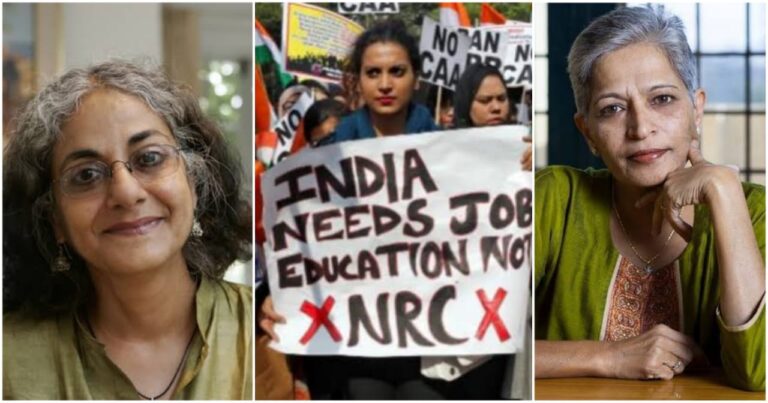
This article is part of a special edition to mark three years since Gauri Lankesh’s martyrdom. 

Secularism emerged in the mid-19th century in a Western post-Enlightenment context denoting an ideology and movement concerned above all with morality and seeking to ground this no longer on transcendent principles associated with religious systems but on the good of humans in this life.

It sought to give a new answer to the eternal question ‘How am I/We to live?’ (since there is no ‘I’ separate from a ‘We’). The vital sub-set of that larger question was ‘How am I/we to politically live?’ Which automatically raises the question of what then should be the character of the state and its relationship to individuals, groups, to religions? Ever since then, the crucial referent of secularism has been the state just as the crucial referent for secularization and its processes has been civil society.

Secularism, the State, and the Individual in Modernity

Secularism as a set of values/ideals could not be disassociated from other emerging values, concepts, and changes arising in modernity. These included the emergence of a stronger and more self-reflexive sense of individual subjectivity i.e. liberal individualism; later of nationalist sentiments/doctrines/movements where rulers now had to, formally speaking, derive their ultimate legitimacy from claiming to serve the interests of their respective peoples constituted as separate legal and sovereign nationalities. These were no longer to be understood as passive subjects but were now deemed citizens with citizenship rights. In brief, understanding secularism as it exists, for better and worse, cannot be separated from understanding the values, beliefs, institutions associated with modernity such as liberal individualism, democratic politics, the nation-state, and nationalism. Variant paths to modernity have meant there are variant forms of secularism, nationalism, and democratic polities.

The Basic Principles of Secularism

These variant forms of secularism must share some basic principles however abstract and general these may be. One reasonable starting point for identifying key common features of secularism is the simple working definition that secularism is about the separation of the state from the control of religious institutions and personnel, and equality of citizenship rights irrespective of religious affiliation. It should be noted that those rights may not include various democratic liberties. So a state can be secular but not democratic. Also, there is no claim here that religion must be separated from all politics. As a starting point let us look at the three relationships of importance regarding the secular state- between the individual and religion, between the individual and the state, between the state and religion.

To better address, these relationships let us first recognize the modernist impact in developing for better or worse a more dynamic and self-reflexive subjectivity/individualism. This has meant that greater value than in the past is to be given to autonomy, self-development, privacy, dignity i.e. people equally are worthy and therefore deserving of respect. Furthermore, modernity has meant the emergence of a rights discourse (absent in the past) whereby these values must be enabled to flourish through the institutionalization of legally enforceable rights by the state to protect, preserve and promote these four value components.

But in seeking to do this, tensions and contradictions as well as the existence of large grey areas will unavoidably arise. It is partly this that gives rise to variant forms of secularism. The variant forms of secularism emerge when it comes to how best to interpret and therefore institutionalize these various value components of individualism. This is because a sense of personal self-worth cannot be separated from the historically constituted and different cultural communities (including religious communities) in which people actually live and derive meaning from.

The Individual and Religion

Actual laws and practices for protecting, preserving, and promoting these value components cannot but be contextually based and therefore some of these will vary from society to society, from cultural community to cultural community. One is not advocating a complete cultural relativism either within a society or between societies. Take the relationship between the individual and religion: two rock-bottom principles that must be institutionalized in law everywhere should be freedom to religiously convert (without force) and freedom of exit from any or all religious communities.

There can be no equality between the besieged and those besieging them, especially if the latter have the support and connivance of the powers that be!

The Individual and the State

Take the next relationship of the individual to the state. Here a rock-bottom principle laid down in law must be equal citizenship rights for all regardless of religious affiliation. A state which does not have this at least in law should not even in principle, let alone in reality, be considered or designated as a democracy, although it does not automatically follow that a state which provides by law equal citizenship rights regardless of religion is necessarily democratic.

An authoritarian state that is uniformly authoritarian over all its citizens without bias towards any particular religious community can qualify as secular but not democratic.

The State and Religion

As far as the relationship between state and religion is concerned, even if for historical reasons there exists a formal affiliation between a church and a state e.g., the Anglicanism of the British state, much more important for assessing its secular character is the legal enshrinement of the principle of equal citizenship i.e., not having structurally rooted and sanctified biases in favour of any particular religious community while respecting religious liberty.

Here it is a question of striking the right balance between respecting freedom of religious choice and behaviour yet opposing what many would see as denigrating practices rationalized in the name of religious affiliation and more importantly, the particular forms that opposition to such practices should take. For example, banning the wearing of hijab in public, as advocated by some European countries in the name of secularism, is absurd and a violation of the freedom to dress as one wishes. The proper measure would be to have a law that bans the forcible imposition of the hijab on those who do not wish it, i.e., protecting the principle of exit. So in this regard, India provides lessons to others in how to operate in a multi-religious society. But India in the past and today can learn a lot from the secular principles and practices in other countries where religious conversion does not arouse the same hostility let alone regular assaults from majoritarian communal forces.

History and Future of Indian Secularism

There is too little self-criticism of the failings of Indian secularism because too many people think it means tolerance which in turn is supposedly rooted in Hinduism’s uniqueness. But ancient passive coexistence of religious communities is not the same as a modern conception of tolerance which is always connected to a rights discourse including minority rights, cultural and political.

For too many Indians secularism is supposed to arise from tolerance when actually modern tolerance arises from first being secular, the stronger the better, and then becoming democratic, the stronger the better.

Yes, we must allow for state intervention in religious affairs, and in any secular society, faith cannot be above the law as the ultimate arbiter. But laws and the courts and governments must also be capable of changing in the face of newer cultural and social understandings. The Indian state has often intervened when it shouldn’t have and not intervened when it should have. Before the rise of the Sangh Parivar, Indian governments have tried to appease and to balance between different religiopolitical communalisms. The end result is that though all communalisms benefit, the greatest beneficiary has been majority communalism. A powerful State-Temple-Corporate nexus has emerged, greatly benefiting the forces of Hindutva.

Finally, in talking of the future of secularism, surely seeking to promote greater dialogue between different understandings of secularism, to try and create greater sensitivity to the fact of religious and cultural belongings, is necessary. But let us not fool ourselves.

Those who most strongly exercise political, judicial, governmental, cultural, and social power will very occasionally be moved by the power of the better argument or the more sensitive, graded, and nuanced moral position.

Far more important, however, will always be the power of practical political mass mobilizations in pursuit of the collective needs of ordinary Indians across religious faiths for democratic rights and freedoms; for jobs health, education, social security; against caste, gender, religious and regional discriminations – in short for another kind of transformative project opposed to that of Hindutva, one that those like Gauri Lankesh were committed to all their lives.

Achin Vanaik is a writer and social activist, a former professor at the University of Delhi, and a Delhi-based Fellow of the Transnational Institute, Amsterdam. He is the author of The Painful Transition: Bourgeois Democracy in India and The Rise of Hindu Authoritarianism.

Gauri Speaks in 2020: Githa Hariharan

0

On September 5th, 2017, Gauri Lankesh was assassinated in her home in Bengaluru. Why? The only possible answer seems to be this: she was shot because she did her job well – whether as a journalist or as an activist. Gauri worked hard at being a voice of reason. She insisted on being a voice of dissent. When she saw injustice and inequality, she insisted on speaking up; doing something about it. And for this, she was brutally silenced – just as other rationalists, scholars, and activists were before her. Narendra Dabholkar, Govind Pansare, MM Kalburgi. Then Gauri Lankesh. May we never forget these names. May we never forget what these people did, and what they stood for.

Actually, there is no danger that will happen. For two reasons, one bad, one good.

Three years later, in 2020, the times remain the same. To be honest, they seem worse.

Poets, scholars, lawyers — human rights activists all — were hounded; their homes searched; their books and computers and phones examined for those ‘rebellious thoughts’, usually personified by a ‘link with Maoists’.

Consider the clamping down of all opposition. Consider 2018. January 1, 2018, marked the bicentennial of the Battle of Bhima Koregaon, a powerful symbol of dignity for the Dalit community, as well as a rallying call. A large event was planned; the convenors of the event were the respected retired Judges from Pune, BG Kolse-Patil, and PB Sawant. They had organized public events before, whether against communalism or in defence of the Constitution. This time, they decided that they would call the event Elgar Parishad. The word Elgar was apposite for the moment. It means a declaration made aloud. And the ‘declaration’ the organizers had in mind was a response to the increasing violence from Hindutva groups, especially the ‘cow vigilantes’. This was the response: Fight communal forces. This was the declaration: The right-wing forces do not accept the Constitution. They do not believe in the democracy it promises, or the socialism it hopes to build, or the secularism it rests on. And this was the ‘Elgar’ that rallied citizens around the foundation of the Indian republic: Save the Constitution. Save the Indian people.

The Sangh brigade was also at the event, not to save the Constitution, but to attack it – by attacking the citizens the Constitution protects. The story changed shape. It became a malignant fiction imagined by the Pune police. ‘Rebellious thoughts’ and revolutionary speeches had led to violence according to them. In case this did not seem weighty enough, a conspiracy to assassinate the Prime Minister was added as a footnote. Poets, scholars, lawyers — human rights activists all — were hounded; their homes searched; their books and computers and phones examined for those ‘rebellious thoughts’, usually personified by a ‘link with Maoists’.

Bhima Koregaon
Bhima koregaon 11

We have yet another list of names we live with now. Poet Varavara Rao; ‘people’s lawyer’ Sudha Bharadwaj; other scholars and writers and activists who serve as cruel examples, warning each one of us to keep silent: Don’t criticise the government. Don’t question Hindutva. Don’t talk about people’s rights.

In 2019, the election results emboldened the Hindu supremacists to go all out. One after the other came the assaults on the already torn promises made to the Kashmiri people – Article 370 was abrogated, statehood taken away.

Plans were afoot to conduct an all-India National Register of Citizens despite the terrible costs of the NRC exercise in Assam.

CAAThen came the Citizenship Amendment Bill, passed as the Citizenship Amendment Act or CAA. The CAA has changed, fundamentally, the notion of citizenship by linking it with religion. It has changed the Citizenship Act 1955 to expedite the process of naturalisation for non-Muslim ‘minorities’ from Bangladesh, Pakistan and Afghanistan: ‘Hindus, Sikhs, Buddhists, Jains, Parsis and Christians’. The exclusion of Muslims is not innocuous; it holds, like a sword over every Muslim’s head, the possibility of being diminished to the second-class citizen Golwalkar had imagined. And this implicit threat has to be seen side by side with the plan to extend the NRC across India. Altogether, every move of the Hindu supremacists since the elections in April 2019 has taken one more step toward excluding more and more of our citizens from the contract between them and the state.

Also Read: Anand Teltumbde: Remembering Gauri Lankesh in these times of fascist onslaught

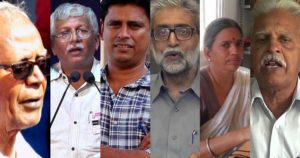
Meanwhile, the crushing of all dissent – all freedom of speech – continues. The list grows, stretches, rolls forward, from Sudha Bharadwaj and Varavara Rao to Anand Teltumbde and Gautam Navlakha.

In 2017, Anand Teltumbde had said of Gauri and her newspaper: ‘Lankesh Patrike was a platform for the oppressed and all marginalised sections of the society including dalits and women, and pioneered a brand of journalism that became an inspiration to many others. It became a mouthpiece for many progressive movements such as “Raitara Chaluvali” (farmers’ agitation), Dalit movement, and Gokak movement.’

In other words, this is what journalists must do. This is what citizens, engaged citizens, do.

And for believing this, for practising this, Anand Teltumbde too has gone to jail. Along with other activists, he remains incarcerated. Our list of political prisoners grows, though the ‘evidence’ against them reeks of fabrication; though there is no talk of a trial; though many of them are old and ill; though COVID19 stalks the prisons.

Is all lost then? Is the narrative completely dark, do we have nothing but bad news for Gauri?

Of course not.

How Gauri would have participated with every bone and muscle in her body in the anti-CAA protests that let the people’s voices, women’s voices, be heard everywhere in this country!

Since 2017, there have been many scenes of resistance we could show Gauri, on campuses with the young people she loved so much; in the courts; online; on the streets. 2018: how Gauri would have loved the sight of farmers marching, filling up roads and maidans, making their way from villages to cities, and reminding corporate Mumbai and governing Delhi who feeds them all!

And there was more to come in 2019, much more. People we had not met before, young students and old grandmothers, led us in speech and slogan and song. How Gauri would have participated with every bone and muscle in her body in the anti-CAA protests that let the people’s voices, women’s voices, be heard everywhere in this country! Marches, art on the streets, women and children on the streets; the tricolour and the Constitution taken back by the people. People saying No to NRC with poetry: ‘Hum kaagaz nahin dhikayenge!’ People taking back their India: ‘Kisi ke baap ka Hindustan thodi hai…’ And people promising each other and themselves – and the Hindu supremacists: We are here, we are watching. Hum Dekhenge. Naam paarpome. Navu Nodonna.

Gauri Lankesh performed her duties as a journalist and a citizen with uncompromising honesty. She was guided by democratic, secular values that insist on an India in which speaking up against division and hatred is every citizen’s right. In 2020, despite horrific violence, despite the avalanche of attacks on diversity, on Muslims, on dalits and adivasis, on women – on equality – we still have voices that speak up. Voices that speak up despite the threat of NIA, UAPA, sedition charges, hounding, trolling. With Covid-19, since March 2020, the powers that be must have hoped that voices could be muted more efficiently. But people are finding new ways to make themselves heard. On the day Prashant Bhushan’s contempt case was heard in court, people made their presence felt, even if it was online. And now, in the run-up to Gauri’s death anniversary, over 70 organisations have endorsed a call from PUCL for a Protest Week from August 28 to September 5. August 28 marks two years since several human rights activists were arrested in the Bhima Koregaon conspiracy case. September 5 marks three years since Gauri was silenced with a bullet.

If we speak, Gauri will continue to speak.

In 2017, when Gauri was assassinated, writer Boluwaru Mohammad Kunhi said to her: ‘Everyone is with you now, wherever you are. Think that, just as you thought when you were with us.’

If we speak, Gauri will continue to speak through us. Our voices will come together as they should, strengthen our practice of democracy. This is why once again, in September 2020, we pledge to continue Gauri’s fight against the haters of free speech and a plural India. We will continue to speak on her behalf and ours. They cannot silence us all.

Githa Hariharan is a distinguished Indian novelist, essayist, cultural commentator, and activist who has written novels, short fiction, and essays over the last three decades. Her highly acclaimed work and her first novel “The Thousand Faces of Night” which won the Commonwealth Writers Prize for Best First Book in 1993.

West Bengal: Jadavpur University Professor Faces Casteist Abuse on Social Media

3

On September 2, Maroona Murmu, an Associate Professor at the History Department of Jadavpur University, was barraged with casteist abuse on social media when she expressed her views regarding the postponement of exams due to the pandemic. Since then, trolls have started targeting her as well as many who have released statements in her support.

Maroona Murmu is a scholar who did her undergraduate studies at Presidency College and received her M.A, M.Phil, and PhD degrees from Jawaharlal Nehru University, New Delhi. She is the author of Words of Her Own: Women Authors in Nineteenth-Century Bengal. She has written extensively about gender studies in colonial India, environmental issues, and caste in Bengal.

Last year, she had written an op-ed on the popular Bengali newspaper, Ananda Bazaar Patrika, where she debunked the myth, created by upper-caste Bengalis who have hegemony over all domains, that caste does not exist in Bengal. She wrote about the discrimination faced by her and other Adivasi academics in the education system, starting from early education where both teachers and classmates isolated them, practised untouchability against them, and denigrated them in the classroom. This was not different at all from the casteist environment in Jadavpur University, which is known to be a bastion of progressive politics, where she wrote that professors would dismiss candidates as being academically worthless based on their surnames and that once, some students had said that they did not have much to learn from her classes because she looked like an “African”.

She has pointed out throughout her writings, the stigma around reservation that is weaponized by the Bengali Bhadralok to insult, isolate, and humiliate Adivasis and Dalits. Denigrating reservations, a constitutional right of communities who have been historically underrepresented in fields like education, often becomes a common point of abuse. Two years ago, Dr Payal Tadvi, an Adivasi medical student, was forced to commit suicide due to the constant bullying she faced regarding reservations.

It was this pervasive form of abuse that Maroona Murmu faced when a student of Bengali from Bethune College, Paromita Ghosh, saw her post about the postponement of exams.

Students across the country have, in recent times, raised the issue of exams during the pandemic being dangerous to the health and safety of students and being exclusionary towards marginalized students. Online exams too, are marked by extremely unequal access. Defences for conducting exams have said that if exams are not conducted, students will lose out on one year. Maroona Murmu’s post was responding to all of this discourse when she wrote that one year out of one’s life cannot be more valuable than one’s life itself.

Maroona Murmu
Courtesy: Maroona Murmu (Facebook)

In response, Ghosh wrote that her ideas were based on ‘quota’ centred thinking and that the issue was not losing out on one year. Rather, the issue for her was that in spite of being deserving, students like her were apparently losing out throughout their lives, to “worthless” and “unqualified” students who got ahead in life, due to the “wealth of caste”. Later, she posted on her own wall, that she had shown to a “Santhal” that after all, she was an “Adivasi”, and suggested that she had held back on using more abusive language.

While the Bethune College Students’ Committee issued a statement in support of Maroona Murmu and condemned the actions of Paromita Ghosh, many other accounts began to troll Maroona’s supporters and anti-reservation Savarnas began to collect and write under the hashtag #StandWithParomita. Sumita Mukhopadhyay, the head professor of the Bengali Department of Bethune College put up a post in support of Maroona but was heckled by a group of students to the point of being forced to remove her post.

Maroona Murmu
Courtesy: Maroona Murmu (Facebook)

The misinterpretation of the purpose of reservation is a deliberate tactic for casteist abuse that has been pervasive amongst Forward castes across the country for years. Reservations challenge the domination and over-representation of privileged castes in all sectors, domination that is obtained not through any inherent form of ‘merit’ but rather historical access to resources and social and cultural capital. Even under reservations, a minuscule amount of opportunities are available to marginalized castes, and after gaining entry into any institution, people from marginalized castes face constant discrimination, isolation, abuse, and harassment whether or not they have availed of reservations. This abuse cuts across differences in positions in an institution, as clearly, even students from upper-castes feel justified in denigrating a distinguished academic and professor, as long as she is from a marginalized community.

Recently, it has become increasingly common for social media to become a tool for further targeting of Bahujan individuals, especially those who are outspoken and politically assertive. The vilest forms of abuse are unloaded from thousands of troll accounts upon a single individual. Social media content moderation does not have any effective method of dealing with this, as reports are often only addressed when they come from a number of accounts, and the redressal of complaints is opaque and arbitrary. Recently, a similar hate speech campaign was faced by the artist Priyanka Paul.

Dalit Camera has called for help from organizations and individuals who can and will publicly and legally move forward with this case. For details, please contact [email protected]

Karnataka: Calls to Stop Telecast of Mahanayaka Serial based on life of Ambedkar

“Mahanayaka”  serial based on the life of the architect of constitution of India Dr. B.R. Ambedkar will not be stopped- clarified Zee5 Business Head Raghavendra Hunsur not heeding to the threat calls against telecasting of the popular Kannada tv serial. Mr Hunsur taking to twitter handle disclosed that he had received threat calls from unidentified persons who sought for stopping the telecast of the serial. In his tweet Hunsur said “There are loads of messages and midnight calls to stop Mahanayaka serial. Though it sounds threatening…we personally don’t care for it.. Mahanayaka will continue. And we continue to say “it’s our pride”. It’s my personal love aswell. Those who think it’s an issue for d society, You are actually the ISSUE for this society. Get Well Soon…Jai Bheem”. The serial being telecasted on Saturday and Sunday in Zee TV Kannada channel has become very popular for it is based on the life of Dr Ambedkar. Ever since the serial in being telecasted the people particularly in several villages in Karnataka erecting the banners and buntings have celebrated it as fest and have welcomed the move. But, the telecasting of the serial on the life of the visionary has not gone well with a section of people. Hunsur clarified that the serial would not be stopped and continue to be telecasted despite the threatening calls and messages. His tweet has been retweeted by several people who have expressed solidarity with Hunsur and have also stressed the need for taking legal action against the people in view of the threat. The popularity of the show is such that people from a village in South Karnataka had requested officials, by submitting a plea, not to cut power when the show is on air. After power outages were reported in a village, they even staged a protest. Mahanayaka is the Kannada version of the Hindi show Ek Mahanayak. The article as first published in kannada at naanugauri.com. It is translated into English by Nagraj Tuppad. 

Also Read: Fraternity: Ambedkar’s forgotten gift