Justice Arun Mishra Helps Adani Profit For Seventh Time in a Row

3

Justice Arun Mishra, in his last judgement before retirement, ruled in favour of the Adani group, leading to a gain of almost 5,000 crore rupees for the company, owned by the second richest man in the country. This was the seventh case in the last two years involving the Adani group that was heard by a bench led by Justice Arun Mishra, in which the verdict was in favour of Adani.

In August 2019, a letter by senior advocate Dushyant Dave written to the then CJI, Ranjan Gogoi, alleged various irregularities of procedure in cases involving Adani group heard by Justice Arun Mishra.

The Long History between Justice Mishra and Adani

An extensive report by Abir Dasgupta and Paranjoy Guja Thakurta on Newsclick.in outlines the series of judgements in which Justice Arun Mishra has favoured the Adani group, and the discrepancies in the manner in which each of these judgments was made. The report makes the following points.

  • On January 29, 2019, an SC bench led by Justice Arun Mishra ruled in favour of Adani. He led the bench even though other judges who had prior history with the case were available, and this category of cases had been assigned to a different bench.
  • On May 2, 2019, the Justice Mishra’s bench took over a case and ruled in favour of Adani Electricity Mumbai Limited. Under extant SC procedures, it should not have done so. The same bench on July 16, 2019, dismissed a review petition against its earlier decision.
  • On May 7, 2019, a case involving an Adani company engaged in mining coal in northern Chattisgarh, was listed before a summer vacation bench headed by Justice Mishra, which ruled in favour of Adani. A different bench that was originally hearing the case did not give any order that it be so listed.
  • On May 23, 2019, the same bench took up an early hearing application made by Adani, the very next day after the application was made. In another order on July 2, 2019, it again ruled in favour of Adani. Both these cases, according to Dave, were listed, taken up, and heard without any justification and in a hurried and improper manner. 
  • On July 22, 2020, an SC bench presided over by Justice Arun Mishra ruled in favour an Adani group company again.

In all of these hearings, which allegedly took place under suspect conditions, SC benches led by Justice Arun Mishra ruled in favour of Adani, causing thousands of crores of profit to the company from public funds.

In another report on Newsclick, Abir Dasgupta and Paranjoy Guha Thakurta outline the details of the current case, in which the SC bench has now ruled in favour of Adani Power Rajasthan Limited (APRL). In this case, Adani made a claim for compensatory tariffs from public-owned power distribution companies. Dasgupta and Thakurta explain in their report that APRL had won contracts from the Rajasthan government to supply electricity by bidding, while Adani Enterprises Limited (AEL) attempted to secure allocation of a coal block or coal linkages with the Central Government, which fell through.

In 2013, APRL made a claim for a compensatory tariff on the ground that it had to generate power by using coal imported from Indonesia, which was more expensive than domestic coal. While the State Electricity Regulatory Commission allowed the claim, Rajasthan Distribution Companies filed an appeal before the Appellate Tribunal for Electricity. The SC bench led by Justice Arun Mishra, upheld this decision, going against a landmark ruling by Justice Rohinton Nariman in 2017.

Justice Nariman had, delving into the legislative intent of the Electricity Act, 2003, determined that a company that bids a certain tariff level, is assuming the risk of fluctuations in the cost of inputs, including fuel, and therefore cannot seek later compensations for increases in input costs (Dasgupta and Thakurta, Newsclick.in)

Justice Mishra and the BJP

Recently, Justice Arun Mishra also led the bench that convicted Prashant Bhushan of contempt of court for suggesting links between the CJI and the BJP and accusing former CJIs of corruption.

Justice Arun Mishra, who was elevated to the Supreme Court soon after the BJP-led NDA government came to power in 2014, has had documented links to the BJP and has been involved in a number of controversial judgements. In 2015, he was part of a bench that dismissed the petition by Sanjiv Bhatt regarding the 2002 Gujarat Pogrom. Bhatt had accused the then Chief Minister of Gujarat Modi to have instructed top police officials to allow the violence to take place. In 2017, Justice Mishra dismissed a petition into the “Sahara-Birla papers” which showed large payments made to various public servants, including payment of 25 crore rupees by a Senior Executive in the Sahara Group to Modi, while he was the Gujarat CM.

On July 5, 2019, a bench led by Justice Arun Mishra had reversed the acquittal of the 12 accused in the Haren Pandya murder case. Haren Pandya, a BJP member and Home Minister of Gujarat at the time, was shot dead in 2003 in Ahmedabad. 12 Muslims were convicted of his murder by a special court convened under the Prevention of Terrorism Act (POTA) in a closed trial inside Sabarmati Jail without public or media access. In 2011, the Gujarat High Court had reversed the conviction, saying that CBI investigation was botched up, there was a lack of evidence, and most of the conviction relied on the inconsistent account of one eye witness. This acquittal was reversed by the Supreme Court bench led by Justice Arun Mishra, shortly after the Lok Sabha elections that swept Narendra Modi back into power. While doing so, Justice Arun Mishra fined the Centre for Public Interest Litigation, that was being represented by Prashant Bhushan, Rs 50,000 for “wasting” the Supreme Court’s time.

Justice Arun Mishra’s tendency to rule in favour of the BJP and corporates like Adani is one of many complaints against multiple Supreme Court judges who have allegedly engaged in various forms of corruption. This betrays a lack of accountability enjoyed by the Supreme Court and its judges, and the ability to target anyone who makes such a critique. Justice Karnan, who had attempted to point towards the structural corruption and caste discrimination in the judiciary was convicted of contempt and imprisoned for 6 months, while the media was barred from publishing his statements. While Prashant Bhushan enjoyed a sham sentence of 1 rupee due to his own caste privilege and elite connections, the SC also wasted time and public resources in convicting him of contempt for critique of SC judges, and established a pattern where someone with fewer privileges in the future can be imprisoned for similar exercises of their freedom of speech. The manner in which the SC has prioritised the targeting of individuals who critiqued the court shows the attempt to distract from the serious problem of pervasive corruption in the SC.

Dr. Kafeel Khan released at midnight: thankful to Judiciary and people of India

0
Yesterday morning, Allahabad High Court dismissed the NSA charges against Dr. Kafeel Khan and ordered his release. Despite the high court order the District magistrate refused to follow the court order and did not release him until midnight. After the court verdict, when the jail authorities did not free the doctor for hours, his family had said they would file a contempt petition in the Allahabad High Court.

I would also like to thank UP Special Task Force that brought me from Mumbai to Mathura and not killed in Encounter.-  Dr. Kafeel Khan

Dr. Kafeel Khan was working at BRD Medical college when the Gorakhpur oxygen cylinder tragedy happened where more than 1000 infants died due to a shortage of oxygen cylinders in 2017. Dr. Kafeel Khan who had helped arrange oxygen cylinders at his own expense was made the scapegoat for the entire incident. Even after he was cleared of all charges his suspension was not revoked. He was arrested in January 2020 and charged in NSA in relation to his speech in Aligarh on Citizenship Amendment Act. He was accused of giving inflammatory speeches and arrested by UP Police. Allahabad High Court in its order declared that Dr, Kafeel Khan’s speech was against the policy of the government. It was not instigating any form of hatred instead he spoke of national unity and integrity.   After he was released from the Jail he spoke to the press briefly. He thanked the people of India who were with him during his time of struggle. He also said I am thankful to the judiciary that gave such good order and said that the UP government has put false, fictitious, and baseless cases and was kept in jail for 8 months. “ I was kept in this jail for eight months. They tortured me by denying food and water for five days.” He also told the press that he was kept hungry for five days. I always spoke of uniting the country but I was kept in jail for 8 months under false cases. Talking about the Government, he said the king is not following ‘Rajdharma’ ( the duty of king) but is doing’Balhath’ ( stubborn like a child). In March 2018, Khan volunteered to provide medical assistance during the outbreak of the Nipah virus in Kozhikode district in Kerala. His offer of aid was accepted by the Chief Minister of Kerala, Pinarayi Vijayan. He has been putting medical relief and awareness camps in flood afflicted areas of the country and in Bihar during the last year’s Encephalitis outbreak. He intends to continue his work in flood-affected areas of the country.      

Facebook Should Be Co-Accused in Delhi Violence: Legislative Committee

1

The Delhi Legislative committee on Peace and Harmony has found Facebook to be prima facie guilty of a role in the violence that took place in Delhi in February.

“Facebook has tie-ups with non-accredited news channels whose only aim is to produce content that deepens fault lines. The content that is harmonious in nature and promotes brotherhood is removed by Facebook and one that gives rise to communal disharmony is promoted,”

A report by a Fact-Finding Committee on the North-East Delhi Riots of February 2020 constituted by the Delhi Minorities Commission had identified BJP leader Kapil Mishra’s speech about forcefully removing anti-CAA protesters from Jafrabad as the trigger for the anti-Muslim violence by Hindu mobs. However, Kapil Mishra is one of at least 3 BJP leaders, who were protected from Facebook’s hate speech rules by Ankhi Das, according to a report by the Wall Street Journal. The report had revealed close ties between Ankhi Das, the current Policy Director of Facebook India, and the BJP-RSS.

The Delhi government had constituted the Peace and Harmony Committee in March, in the wake of the pogrom. The Committee included Saurabh Bhardwaj, Atishi, Raghav Chadha, Abdul Rehman, Ajay Kumar Mahawar, BS Joon, Dilip Pandey, Jamail Singh, and Kuldeep Kumar.

After the Wall Street Report, the Committee on Peace and Harmony announced that it will be summoning officials of Facebook, including Ankhi Das, in relation to their alleged deliberate and intentional inaction to contain hateful content in India for vested reasons. On August 25, the Committee spoke to two journalists to examine the role Facebook played in the Delhi Violence. The committee talked to Paranjoy Thakurta, co-author of ‘The Real Face of Facebook in India’, who pointed out that over the last 6-7 years, almost each and every instance of mob-lynching in India have had behind them a Whatsapp message or Facebook post, but Facebook refuses to disclose the identity of the original poster, citing end-to-end encryption, free speech, and privacy.

In a press conference, Raghav Chadha on behalf of the committee demanded that Facebook be treated as a co-accused in the case, as it hosted “incriminating material” despite receiving complaints from users. He said, “Facebook has tie-ups with non-accredited news channels whose only aim is to produce content that deepens fault lines. The content that is harmonious in nature and promotes brotherhood is removed by Facebook and one that gives rise to communal disharmony is promoted,”

Devangana Kalita Granted Bail by Delhi HC in Delhi Riots Case

2

The Delhi High court on September 1 allowed the bail plea filed by Devangana Kalita in a case related to the Delhi Riots filed against her by the Delhi Police.

Devangana Kalita, an M.Phil student at Jawaharlal Nehru University, was one of the founding members of Pinjra Tod, a collective of women students and university alumni from across Delhi, who seek to lessen restrictions, such as curfews, placed on female students.

She was actively involved in organizing and protesting against the CAA since it was passed in December 2019. She was arrested, along with another Pinjra Tod member Natasha Narwal, for taking part in an anti-CAA sit-in protest at Jafrabad in February this year.

The Jafrabad anti-CAA protest had prompted BJP leader Kapil Mishra to give an incendiary speech demanding that the protestors be made to leave, following which, anti-Muslim violence had broken out in north-east Delhi. The protest Kalita and Narwal were involved in was peaceful.

They were first arrested in May, released on bail, and then arrested again within one day. An Additional Sessions Judge Amitabh Rawat had rejected their bail pleas on June 14, on the ground that there was no merit in the applications.

Kalita, who is an accused in as many as 4 FIRs relating to the anti-CAA protests and Delhi riots was granted bail in FIR No. 50/2020 and is subject to her furnishing a bond of Rs. 25,000. She had argued that there was no evidence to show her participation in rioting or violence and did not feature in the CCTV footage collected by the Delhi Police, and was not named by the co-accused in his statement either. The Delhi Police said that the demonstrations in which she had participated were part of the “conspiracy to lower the country’s image” when US President Trump was visiting India.

The Single Judge Bench of Justice Suresh Kumar Kait granted bail to Devangana Kalita, observing that her participation in a peaceful agitation was a fundamental right guaranteed under Article 19 of the Constitution of India, and that the Delhi Police had failed to provide any evidence to prove that the acts she was accused for had taken place.

Allahabad Court orders release of Kafeel Khan, NSA to be revoked

1
The Allahabad High Court Tuesday dismissed charges filed against Dr. Kafeel Khan under the National Security Act (NSA) and ordered his immediate release. Khan was arrested on January 29,2020, for delivering the speech at Aligarh Muslim University on December 10, 2019. The Allahabad Court deemed the detention of Dr. Kafeel Khan under National Security Act (NSA) for a speech against the Citizenship (Amendment) Act or CAA, as “illegal” and ordered his immediate release. The high court was hearing a habeas corpus petition filed by Khan’s mother, seeking his release on grounds that he had been detained illegally. This is the second time his detention under the stringent law has been extended by another three months, this time beyond August 13. Under the NSA, people can be detained without a charge for up to 12 months if authorities are satisfied that they are a threat to national security or law and order. Khan was accused of delivering a provocative speech at the Aligarh Muslim University (AMU) on December 10, 2019 during the anti-Citizenship (Amendment) Act (CAA) protests. In an order dated August 4, the UP Home Department said the NSA was invoked against Khan on February 13, 2020, on the orders of the Aligarh District Magistrate. The matter was then sent to the advisory council, which in its report, said there are “enough reasons” to keep Khan in jail following which orders were given on May 6, to extend his detention under the NSA by three months, that is till August 13, the order said. Acting on the report of the council and the report from the District Magistrate, Aligarh, Governor Anandiben Patel, using the powers vested in her, directed that the detention of Kafeel Khan be further extended by three more months. In mid-August, the UP government extended Khan’s detention by another three months. Khan was booked under IPC section 153A (promoting enmity between different groups on grounds of religion). The FIR registered against him states that his speech threatened to disrupt the harmony between the communities and was also likely to create a law and order situation. Later, sections 153B (imputations, assertions prejudicial to national integration) and 505(2) (statements creating or promoting enmity, hatred or ill will between classes) of the Indian Penal Code were added to the FIR. The doctor, who is currently lodged in Mathura jail, had first hit the headlines in August 2017 when several children died at the BRD Medical College in Gorakhpur, where he worked as a pediatrician. Though he was later given a clean chit in a departmental probe, the government did not reinstate him.                    

Adani Acquires 6 Profit-making Airports, Strongly Opposed by Kerala Govt

0

Last week, The Cabinet, chaired by Prime Minister Narendra Modi approved the proposal for leasing out the Jaipur, Guwahati and Thiruvananthapuram airports to Adani Enterprises that won these in an auction last year.

“Granting the airports to a single business entity and group would lead to monopoly and the group will squeeze the extra revenues from passengers and airlines”. Trade organisations wrote in a joint statement condemning the move. 

Till now, Adani has won bids to operate and manage the development of six airports, Ahmedabad, Lucknow, Manguluru, Jaipur, Guwahati, and Thiruvananthapuram for the next 50 years, and is set to acquire a 74% stake in the Mumbai International Airport. This would make Adani the largest private airport operator. At present, the largest private airport operator is the GMR group which operates the Delhi and Hyderabad Airports, while most of the remaining airports are run by the Airports Authority of India.

The six airports given to Adani are all the profitable ones and not one of the 109 out of 123 airports in India that are suffering losses according to official figures. The privatisation of profit-making airports has been opposed by The AAI Employees Joint Forum, which has pointed out in a letter to the Civil Aviation Minister last year, that privatisation has not brought about any good to the country or the people at large, insofar as infrastructural facilities or generating employment are concerned. Instead, privatisation has encouraged monopolistic operation, exploitation of employees and putting an additional burden on the general public. Ten central trade unions, INTUC, AITUC, HMS, CITU, AIUTUC, TUCC, SEWA, AICCTU, LPF and UTUC condemned the privatisation of the airports on August 25. In a joint statement, they wrote, “Granting the airports to a single business entity and group would lead to monopoly and the group will squeeze the extra revenues from passengers and airlines”.

The decision to privatise the Thiruvananthapuram airport has in particular been opposed strongly by the Kerala government, including the opposition. The Centre, which in 2003, had assured Kerala that the state government would be included in the decision-making process for privatisation of the Thiruvananthapuram airport, has now taken a unilateral decision regarding the privatisation. Although Adani outbid the Kerala government’s bid for the airport, the Kerala government offered to match Adani’s bid in order to avoid privatisation. On August 24, the Kerala Assembly unanimously passed a resolution moved by chief minister Pinarayi Vijayan, urging the Centre to reconsider the decision to hand over the Thiruvananthapuram international airport to Adani through the public-private partnership model.

The Centre’s negligence towards the Kerala State Government’s offer to match Adani’s bid, the lack of involvement of the State government in making the decision of privatisation, and the push to privatise airports that are making profits, shows that this is a larger attempt to privatise public sector undertakings in order to appease the business interests of major private players, in this case, Adani. A similar move was seen with respect to the Indian Railways, which is not only a crucial public service but was earning revenues worth 429 crore rupees even in the time of the pandemic. This was in stark contrast to the government’s claims that it needs to be privatised in order to avoid losses so that better services can be provided to the public.

Former President Pranab Mukherjee passes away at 84

0
Pranab Mukherjee, former President and one of the veteran politician of the country passed away at 84. He was tested positive for coronavirus, had been in a coma after brain surgery earlier this month. His son informed the public about the sad news through twitter. “With a Heavy Heart , this is to inform you that my father Shri Pranab Mukherjee has just passed away inspite of the best efforts of Doctors of RR Hospital & prayers, duas and prarthanas from people throughout India ! I thank all of You,” his son Abhijit Mukherjee tweeted. Mr Mukherjee was admitted to hospital on August 10 and had surgery the same day for the removal of a clot in the brain. He had tested positive for COVID-19 in hospital. “On a visit to the hospital for a separate procedure, I have tested positive for COVID-19 today. I request the people who came in contact with me in the last week, to please self-isolate and get tested for COVID-19,” he had posted. He developed a lung infection and a renal dysfunction over the past few days, according to doctors. There was outpouring of condolences messages on social media on the demise of Pranab Mukherjee across the political spectrum. Mr Mukherjee was President of India from 2012 to 2017.

Must Read: Suresh Chavhanke: RSS-BJP Backed Anti-Muslim Propaganda Machine


Suresh Chavhanke: RSS-BJP Backed Anti-Muslim Propaganda Machine

#Beware Muslim infiltration of the biggest positions in the the most important pillar of democracy, the Executive, exposed.

#UPSC_Jihad #Bureacracy_Jihad

This series that will leave the country shaken will be regularly broadcasted everyday at 8 pm, starting from Friday, August 28, only on Sudarshan News

This was the tweet made by Suresh Chavhanke, editor-in-chief of Sudarshan News on August 25, that brought back attention to the communal news channel that has been spreading religious hatred and fake news for years. In the tweet, he tagged the Prime Minister, as well as the twitter account of the RSS.

Chavhanke, who joined the RSS when he was only 3 years old, reported for the pro-RSS daily Tarun Bharat, before becoming a journalist, and founding Sudarshan News in 2005 with the slogan ‘desh (ko) number ek banana”. Chavhanke was arrested in April 2017 by the Uttar Pradesh police on charges of inciting communal hatred between two communities, hurting religious sentiments and spreading rumours. Residents of Uttar Pradesh had filed a complaint against his show Bindass Bol. He was booked under various IPC sections and section 16 of the Cable Television Network (Regulation) Act, 1955. He continued his channel after being released on bail.

His connections to the BJP and Sangh Parivar are well documented and he has received support from major BJP leaders. He was invited for PM Narendra Modi’s swearing-in, he has been spotted with BJP leaders often, and he has attended a party for select journalists hosted by Information and Broadcasting Minister Prakash Javadekar. In fact, the UP Government under Yogi Adityanath sponsors the channel, hence spending taxpayer’s money to spread communal hatred.

An extensive report by Meghnad S on Newslaundry shows how in recent times, the channel has spread fake news about MP Asaduddin Owaisi and blamed Muslims for the murder of Hindutva leader Kamlesh Tiwari. The channel has given airtime to callers inciting violence and hatred against Muslims as well. In 2019, Chavhanke was fined Rs. 50 lakh by a Kozhikode court after he was found guilty of spreading fake news against Malabar Gold, a diamond company run by M.P. Ahammed.

The most recent trailer tweeted by Suresh Chavhanke used abusive language against Muslims, and demonised them for being selected to the civil services. In the video, he called those passing out of Jamia’s Residential Coaching Academy (RCA) and clearing the Union Public Service Commission (UPSC) as “Jamia ke Jihadi”.

Not only is Jamia Millia Islamia one of the foremost central universities of the country, but such language is also especially disturbing in the aftermath of the immense violence that took place against students of Jamia only a few months ago. The University wrote to the Union Education Ministry asking them to take action against Sudarshan News channel and its editor-in-chief Suresh Chavhanke for tarnishing the image of the university, and the Jamia Teachers’ Association demanded that a criminal defamation suit be filed by the administration against Chavhanke.

Suresh Chavhanke and Sudarshan News were condemned by the Indian Police Service (IPS) Association, and the Indian Police Foundation (IPF). Several IAS and IPS officers also demanded action against Chavhanke, and a petition signed by over 1,700 citizens, including prominent journalists, film directors, lawyers, and civil society members, wrote to seven chief ministers, demanding that an FIR be registered against him for spreading hate speech.

A Supreme Court bench of Justices D Y Chandrachud and K M Joseph refused to impose a pre-broadcast ban on the show. However, the Delhi High Court issued a stay order on the airing of the programme, after advocate Shadan Farasat, representing students from Jamia who had filed a petition against the show, argued that the trailer that had been released already showed that the programme would be in complete violation of the Programme Code.

Chavhanke, however, announced that he would go ahead with the broadcast of the show.

Later, after beginning the broadcast, he had to stop in between after saying that he received the High Court order. The High Court will be hearing the matter on September 7, and the Supreme Court has fixed the next date of hearing on September 15.

Chavhanke has maintained that he intends to investigate a recent “spike” in the number of Muslims in the civil services. Going by official data cited by N.C. Asthana, the percentage of Muslims amongst the selected candidates in the UPSC exams has been 5.06% in 2017, 2.64% in 2018, and 4.22% in 2019. The percentage of Muslims in the total population of the country according to the 2011 Census is 14.2 per cent. Not only is the claim regarding a “spike” in selections of Muslims a patent lie, but Muslims have been massively under-represented in the civil services. Further, Jamia trains not just Muslim but also Hindu students for the civil services exams.

By creating alarm about Muslim “infiltration”, this islamophobic propaganda conveniently obscures a larger agenda of the RSS, to train and inject RSS-backed candidates into the civil services. According to a July 2020 report by Sameer on Siasat Daily, the RSS runs 14 ‘Samkalp’ centres where it trains candidates for the UPSC exams. In July, the joint secretary of the RSS, Krishna Gopal, held a meeting addressing more than 600 candidates who passed the exams after being trained by Samkalp. According to Samkalp spokespersons, 60% of successful candidates of the UPSC were associated with Samkalp, and 5000 serving bureaucrats have been coached by Samkalp in some form. RSS leaders themselves have outlined the objective of training civil servants, saying “Now each state and cadre has civil servants who owe their success to Samkalp. In the next 10 years, we hope to have a bureaucracy that will genuinely contribute to nation-building with true Indian values and ethos. This is what we are working towards,”

Prashant Bhushan Contempt Case: 1 Rupee fine for two tweets

0
The Prashant Bhushan’s contempt case that has kept the supreme court in a fix for more than a month has come to an end. The bench headed by Justice Arun Mishra has sentenced him to pay a fine of Rupee One, which is to be deposited with the Supreme Court Registry within September 15.
In case of default to deposit, Bhushan will have to undergo imprisonment for three months and will be debarred from practice for three years.
Prashant Bhushan was on trial for for contempt of court because he has put out two tweets criticising Chief Justice of India SA Bobde and the Supreme Court.

Also Read: Contempt of Criticism: Prashant Bhushan contempt case

Justice Arun Mishra, reading out the operative portions of the order of the sentence, observed that the statements given by judges to press are irrelevant for the consideration of the sentence, as judges are not supposed to go to the press.
“Freedom of speech cannot be curtailed,” said the Supreme Court while handing down the sentence, referring to “sane advice” from Attorney General KK Venugopal to the court and to Prashant Bhushan. Prashant Bhushan, photographed holding up a Re 1 coin, told reporters he would reveal later today whether he would pay the fine or confront the other options. “My lawyer & senior colleague Rajiv Dhavan contributed 1 Re immediately after the contempt judgement today which I gratefully accepted,” the 63-year-old tweeted. The Court further deprecated Bhushan for publicizing his statements in media before they were considered by the bench. According to the reports from livelaw.com, The Court said that it not only gave an opportunity for him to apologize but also “directly and indirectly, persuaded the contemnor to express regret. This was not heeded to by the contemnor and he gave wide publicity to his statements and gave media interviews, which further brought down the dignity of the Court, the bench observed. The bench also said that it has taken into account the “sane advise” given by the Attorney General. “If we do not take cognizance of such conduct it will give a wrong message to the lawyers and litigants throughout the country. However, by showing magnanimity, instead of imposing any severe punishment, we are sentencing the contemnor with a nominal fine of Rs 1 instead”, the bench said. The Court said that from the very beginning, it was desirous of giving quietus to this matter. “Directly or indirectly, the contemnor was persuaded to end this matter by tendering an apology and save the grace of the institution as well as the individual, who is an officer of the Court. However, for the reasons best known to him he has neither shown regret in spite of our persuasion or the advice of the learned Attorney General. Thus, we have to consider imposing an appropriate sentence upon him”, it said. In the last hearing, Attorney General KK Venugopal had suggested that Mr Bhushan be let off with a warning. “Bhushan’s tweets seek the improvement of the administration of justice… Let democracy follow in this case when he has exercised his free speech… It will be tremendously appreciated if the court leaves it at that,” he had said. In one of the tweets, Mr Bhushan had said four previous Chief Justices of India played a role in destroying democracy in India in the last six years. Another tweet reacting to a photo of Chief Justice Bobde on a Harley Davidson last month had flagged that he was without a helmet and face mask while keeping the court in lockdown and denying citizens their right to justice. The Supreme Court had said during arguments that freedom of speech is not absolute. “You may do hundreds of good things, but that doesn’t give you a license to do ten crimes,” the court had said. On the last day for tendering an apology, Bhushan filed a statement in SC stating that an apology would be a “contempt of his conscience”. He stressed that as an officer of the court, he has a duty to “speak up” when he believes that the Judicial institution is deviating from its sterling record.      

Kalburgi literary volume release to mark the veteran’s birthday

0
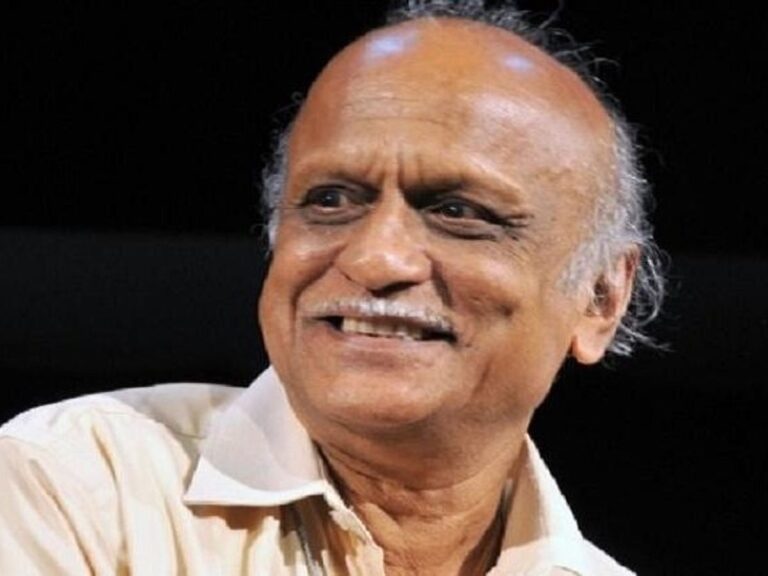
Belagavi: Owing to the present corona pandemic the disciples, students of scholar M M Kalburgi offered online tributes to the rationalist on the occasion of his fifth death anniversary here on Sunday. The ardent followers of Kalburgi have been offering their tribute to the rationalist on his death anniversary for the last five years ever since the veteran was gunned down at point-blank range at his Kalyan Nagar residence on August 30, 2015. In view of the pandemic, the disciples could not personally visit to offer their tributes and resorted to offering online to mark the occasion. Senior journalist Litterateur Sarjoo Katkar said “COVID 19 scare had hampered physical contact and had distanced people the current year. However, this would not deter their desire to offer tributes to the scholar”. Dr. Ramakrishna Marathe, Dr. A B Ghatge, Satish Kulkarni, Chandrakant Pokale, and others also paid tributes on the occasion. Umadevi, wife of the rationalist had revealed that on the occasion of the birth anniversary of Kalburgi a literary event would be organized wherein complete literary works of Kalburgi comprising altogether 40 volumes of 25,000 pages would be released in Dharwad on November 28. The COVID 19 crises have also hampered the investigations in connection to the murder of Kalburgi that is still underway.

Read More: This government has all but actually declared war on its own people