Andhra Pradesh HC to Govt: If you can spend on religious festivities, why withhold Widow Pensions?

0
The Andhra Pradesh High Court on September 8 made important observations on social security spending while hearing two pleas challenging the Andhra Pradesh Government’s halt of pension payments to single women, the widowed, and the elderly, Bar and Bench reported.

The first petition was regarding the arbitrary stoppage of pension payments by the Andhra government for single and widowed women from families below the poverty line. Their pensions were discontinued after political interference. The State said that there was no official record of single or widowed status and hence argued they were not actually widowed or unmarried. The pensions were stopped for 170 such women.

Justice Battu Devanand in response to this argument said that no married woman would misrepresent herself as unmarried for financial aid unless dire financial circumstances forced her to take such a step since marriages held great sanctity in Indian culture and married women were accorded a certain level of dignity and respect in society.

The second petition was regarding the stoppage of pensions of five senior citizens, who belonged to families below the poverty line. Their old-age benefits were stopped, according to the State government, because some of their children were salaried government employees and others owned pieces of land.

Ordering the unpaid dues of the petitioners to be disbursed, the Andhra HC stressed on the need for the Government to deal with such issues with sensitivity and a ‘human touch’. Justice Devanand said,

“it has to be noted that the government is the trustee of the public money. The government is empowered to utilize the public money in a proper manner for the benefit of the public at large. The government is not supposed to spend public money as per their whims and fancies as this public money is accrued from the payment of the taxpayers. This public money is the property of every citizen.”

He also emphasized that the modern welfare state had to act for the public good, and could not give or withhold largess in its arbitrary discretion. Especially as the State government was continuing to spend crores of public money for different activities in the state, especially for religious events. Justice Devanand said,

“This Court is of the opinion that while spending crores of rupees of public money for all the programmes as stated above, it is unreasonable to stop payment of meager amount being paid towards social security pension in favour of the petitioners…”

The HC also directed that beneficiaries whose benefits were canceled by the government should be allowed to defend their claims before the Gram Sabha in the future.

Kabir Kala Manch Activist Jyoti Jagtap Arrested by NIA

0

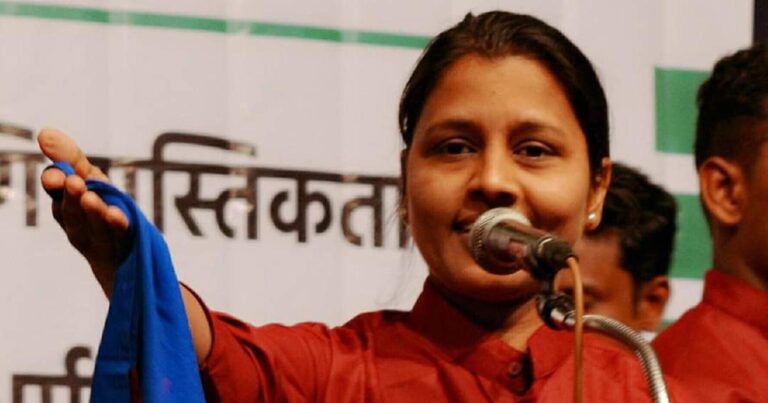
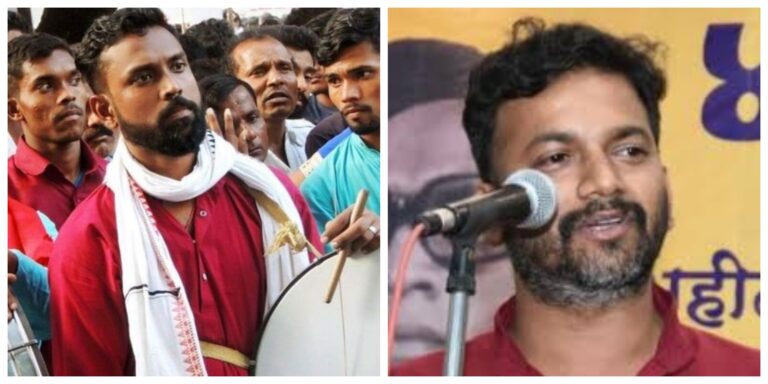
Jyoti Jagtap, an anti-caste cultural activist associated with Kabir Kala Manch, was arrested by the National Investigation Agency (NIA) on September 8. Jyoti Jagtap was arrested a day after the arrest of Sagar Gorkhe and Ramesh Gaichor, who were both arrested on September 7 after days of questioning.

The arrest was in relation to the Elgar Parishad and Bhima Koregaon case. Jyoti Jagtap, along with Gorkhe and Gaichor, was amongst the organizers of the event held at Elgar Parishad on December 31, 2017, a day before the commemoration of the Battle of Bhima Koregaon, where Mahar soldiers of the British Army defeated the Peshwa army in battle in 1818. They had organized the event under the banner of ‘Bhima Koregaon Shaurya Din Prerana Abhiyan’.

The Elgar Parishad event was held in Pune’s Shaniwarwada area, a symbol of Peshwa rule and a historically Brahmin dominated area. To The Wire, Gorkhe and Gaichor said that in spite of upper-caste resistance to the event, the support of Ambedkar-loving people made it possible. An FIR was filed in which the three of them had been named by a Pune-based realtor named Tushar Damgude for making ‘inflammatory speeches’.

Sukanya Shantha of The Wire has reported that the NIA has accused Kabir Kala Manch of being a frontal organization of the banned Communist Party of India (Maoist). Gorkhe and Gaichor have been handed over to NIA custody where they will remain until September 11. Jagtap, who is in custody, will be produced at the NIA court on September 9. The NIA has accused them of undergoing “weapon and explosive training and awareness programmes on various topics related to the Maoist movement” and has said that KKM is a frontal organization through which the CPI(Maoist) has been inciting violence.

The targeting of a group like Kabir Kala Manch has for years been in the agendas of those in power. In 2013, Kabir Kala Manch artists were accused of being Maoists and arrested by the Maharashtra Anti-terrorism Squad. They were granted bail by the Supreme Court in 2017.

Kabir Kala Manch stands strongly against caste and communalism and represents Bahujan’s resistance to state repression, violence, and inequality.

The arrest of Jyoti Jagtap now makes fifteen people arrested in the Bhima Koregaon case, all of whom have been powerful voices of dissent and tirelessly fought for the interests of the oppressed. Most recently being Prof Hany Babu. Meanwhile, many others have been summoned for interrogation, including anti-caste scholar Prof. K Satyanarayana, senior journalist K.V. Kurmanath, and IISER scientist Partho Sarothi Ray.

Women’s organisations condemn the Misogynist Bullying of Rhea Chakraborty in Name of Justice for SSR

0
Women organisations condemn the Misogynist Bullying of Rhea Chakraborty in Justice for Sushant Singh Rajput Name  

The All India Progressive Women’s Association (AIPWA) has released a statement in support of Rhea Chakraborty, the partner of the late Bollywood actor Sushant Singh Rajput, who committed suicide in June this year.

AIPWA has expressed their grief over Rajput’s death and the loss of the people of Bihar, and emphasized that all progressive people in the country do want justice for Sushant and his family. But the attacks and smear-campaigns against Rhea Chakraborty by the media, before the courts have decided whether or not she is guilty, is a shameful and criminal act.

AIPWA condemned the manner in which media personnel pushed and shoved Rhea Chakraborty on September 6 while she was arriving at the Narcotics Control Bureau, and asked for action to be taken against those who did this. AIPWA appealed to the media to stop its media trial and interfering with the legal process, as it is doing injustice to all people involved, including the memory of Sushant Singh Rajput.

Pointing out the role of government propaganda in this entire case, they wrote,

“This issue is being utilized to divert attention from burning issues like growing unemployment and economic distress in the country; in view of the forthcoming Bihar Assembly election they are trying to divert attention from the plight of migrant workers from Bihar, the distress of farmers, the rising morale and confidence of criminals in Bihar, and the spate of instances of rape and violence against women in Bihar and in India.
We should also note that just yesterday the Bihar BJP Cultural Cell stated that the Sushant Singh matter would be made an election issue for the Bihar Assembly election. It is also to be noted that the same forces which were hostile to Sushant Singh during the violent Karni Sena attacks on the Padmavat film cannot be Sushant’s well-wishers today. The truth is that they are simply trying to gain political mileage out of his death.”

AIPWA asserted that in a fair legal process, Rhea Chakraborty must be given the opportunity to present her side of the story, and investigative agencies should do their work impartially, irrespective of whether she is found guilty later. They wrote,

“The media trial is vitiating the climate to the extent that will make a free and fair process by investigative agencies and even judiciary difficult.”

In the statement issued by Meena Tiwari, Rati Rao, and Kavita Krishnan, AIPWA appealed to the courts, the National Women’s Commission, and the News Broadcasting Standards Authority to intervene strongly in this issue and stop the media’ spear campaign against Rhea, which is based on misogynist language and ideology.

Finally, remembering Sushant Singh Rajput, they wrote,

“Sushant was a sensitive and progressive-thinking young man, who would certainly not have approved of such public shaming of a woman in his name. Therefore, we appeal to all people who respect Sushant to voice their dissent against the way in which the media is acting in this matter.”

Govt Failures Have Left People Hopeless: Human Rights Body COVID-19 Report

0

The National Confederation of Human Rights Organisations (NCHRO), based in New Delhi, has recently published a report concerning the impact of COVID19 on society and expectations of a post-COVID world. The report is a compilation of survey results taken from different states in India, conducted in 9 languages both online and offline and encompasses a reasonably diverse group of respondents.

To begin with, the NCHRO report makes it amply clear that the people by and large are dissatisfied with the way the central government has handled the crises, with 77% of respondents claiming it was handled poorly. Additionally, food packages did not reach the poor (55% claimed it did not) and that government packages had a little positive impact on the lives of people (58% claiming it did not have any positive impact).

Food Security

46% of people have survived the pandemic because of assistance or borrowed money from neighbours and relatives, 22% from local aid groups, and a meagre 9% from the government.

30% of people responding to NCHRO said that they ran out of food in the last month, a staggering figure. This clearly indicates how pervasive the decay in state machinery is, that the government could barely feed or care for the vast majority of its population. This is also amplified by the fact that 46% of people have survived the pandemic because of assistance or borrowed money from neighbours and relatives, 22% from local aid groups, and a meagre 9% from the government. It is starkly visible that the massive privatization project undertaken by successive governments in the past 30 years has left no social safety net or food and income security for people, and has left the most marginalized to fend for themselves.

Suppression of Dissent During Crisis

81% agreed that organized hate campaigns have increased. 82% of people get their information from social and mainstream media, and 59% from SMSs and WhatsApp, and it appears that the government is unconcerned with regulating either, which is why any average consumer can see a marked change in the content being aired.

Beyond that, it is clear that the ruling dispensation is attempting to use the crisis to subvert judicial and democratic procedures, with 77% of people agreeing that the excuse of the pandemic has been used to suppress dissent and protest. This is especially clear given the extent of financial ruin facing the country and the hate and vitriol regularly endorsed by mainstream media houses.

The NCHRO report estimates that 85% have been affected by the financial crisis, and 79% have entirely or partially had their business disrupted. With disrupted business, skyrocketing costs of medical care, and low social security, the marginalized barely have any chance of making it past this pandemic. To add to that is the increasing hate content and fake news peddled by the mainstream media, with 81% agreeing that organized hate campaigns have increased. 82% of people get their information from social and mainstream media, and 59% from SMSs and WhatsApp, and it appears that the government is unconcerned with regulating either, which is why any average consumer can see a marked change in the content being aired.

Crumbling Healthcare System

This is in lieu of focussing on problems of a crumbling healthcare system across states, with 44% claiming that states did not have adequate facilities to treat COVID patients. 71% of people said that they demanded better healthcare from the government, and most mental health concerns are related now to the health and well being of loved ones and the state has left them to fend for themselves. Additionally, 79% of people have found it difficult to get any other treatment as resources have been diverted towards addressing the pandemic. This displays the extent of decay in one of the most important public services in the country, and a massive overhaul of the system will be required once COVID has been eradicated.

Vulnerable Left to Fend for Themselves

The worst-hit have received the least support, with 75% agreeing that the migrant crisis was badly managed, 42% conceding that crimes against women have shot up, and 66% acknowledging that the elderly and disabled have been neglected. 41% of parents do not have the infrastructure to offer their children a chance at online education, another specific agenda of this regime. However, the community has come together in this time of crisis, with an increase in interpersonal communication, and 73% of people stated that they have done some form of COVID volunteering in their communities.

When we conceive a post-COVID world, it is important to recognize that a vast majority of families will emerge from the crisis gravely set back, and while the pandemic, being a first of its kind, posed many new challenges, it is imperative to take our local elected representatives to account to ensure there is equity in the new world and communities can bounce back. This involves a clear restructuring of the public health system and ensuring better wages and job security for people. A lack of the required decisive leadership required to do this is clear from the fact that 22% of people felt hopeless about the future compared to the 18% that was positive. The people will have to think of new ways to organize and demand accountability if we want to emerge from this crisis stronger.

Disclaimer: Given that the form is anonymous, one cannot estimate the number of respondents which makes it difficult to assess the size of the data group involved. The outcomes of the survey and what that can mean for an overall impression of how the people of the country have risen to the occasion.

Anushka Ganguly is a graduate student at Delhi University. 

200+ Eminent Citizens Condemn the ‘Fascist Regime’s Witch-hunt’ over NIA Notice to Dr. Partho Sarothi Ray

0

Dr Partho Sarothi Ray, a well-known scientist and civil liberties activist, has been summoned by the National Investigation Agency (NIA) in connection with the Elgar Parishad-Bhima Koregaon case. He was asked to be present before the investigators in Mumbai on September 10. The notice was served to Dr Partho Sarothi Ray, Associate Professor of the Indian Institute of Science Education and Research (IISER), Kolkata on September 5.

More than 200 eminent academicians, writers, intellectuals, activists, filmmakers, singers, playwrights, organizations and members of political parties have issued a statement condemning the ‘harassment of Dr Ray by the NIA’. The Association for Protection of Democratic Rights (APDR) has called a meeting on September 10 in central Kolkata to protest. APDR will place its protest and demands before the Union Home Minister through West Bengal Governor Jagdeep Dhankhar.

Although this is the first time Dr Partho Sarothi Ray has been summoned by the NIA, he was, last year, a target of a malware attack. In November last year, Dr. Ray had received a suspicious email which later, in a detailed joint investigation conducted by Amnesty International’s digital team based in Berlin and The Citizen Lab, a research organization which works out of the University of Toronto, was found to be a part of a larger surveillance conspiracy “specially crafted to bait journalists or activists”. Yahoo Mail had also sent a warning to Dr. Partho Sarothi Ray stating that his email account “may have been the target of government-backed actors” which tried to gain access to his information.

42-year-old Dr Ray has been an activist for the past two decades and is the convener of rights’ group Persecuted Prisoners’ Solidarity Committee. He has been demanding the release of political prisoners and working towards the same for long. He is one of the founding members of a left-leaning magazine Sanhati. In 2012, he was arrested by the West Bengal police for his participation in the movement against the uprooting of a large number of slum-dwellers in Nonadanga of Salt Lake.

In recent times, Ray was among the community of scientists who engaged with the World Health Organisation (WHO) to study the COVID-19 virus and also has been actively involved in setting up a COVID-19 facility at Nadia district in West Bengal. Dr. Ray says he will be leaving crucial work behind to attend to the NIA’s summons.

In response to the NIA notice, Dr. Ray said, “This is nothing but a tactic to harass and intimidate me, as is being done with academics and intellectuals all over India. I am a biomedical scientist who has been involved in the battle against COVID-19. I have also stood consistently on the side of the persecuted and disadvantaged. It is very unfortunate that I’m being harassed in this manner at this critical time.”

While the notice only classifies Dr. Ray as a witness, it is worrisome after what happened with Delhi University Associate Professor of English, Hany Babu M.T. The NIA had summoned Babu as a witness in the case and he was later arrested on July 28.

Here is the full text of the solidarity message by more than 200 eminent academicians, writers, intellectuals, activists, filmmakers, singers, playwrights, organizations, and members of political parties:

STATEMENT IN SOLIDARITY WITH DR. PARTHO SAROTHI RAY

We have come to know that our dear friend and comrade Dr Partho Sarothi Ray, Associate Professor, Indian Institute of Science Education and Research (IISER), has been summoned by the National Investigation Agency (NIA) in connection with the Elgar Parishad-Bhima Koregaon case. He has been asked to present himself before the investigators in Mumbai on 10 September at 11 am.

Partho has been pro-actively involved with peaceful, democratic people’s movements, especially the struggles for the rights of poor and marginalized Dalits and Adivasis. He is an active member of the Persecuted Prisoners’ Solidarity Committee as well as the Joint Action Committee for Social Justice. His tireless work in defence of civil liberties and for the release of political prisoners is exemplary. Partho has been ever-present in marches, rallies, and other street programs with his stirring but lucid speeches and an endearing smile.

At IISER, Partho has been carrying out extensive and useful research on molecular biology. His pioneering work on viruses has taken him to the lecture-halls in universities and scientific gatherings across the globe. He is a front-runner in the present battle against COVID-19 and his idea of community participation has been successfully implemented in Nadia district, inviting widespread interest. He was among the scientists consulted by the World Health Organization (WHO) to understand the character of the Coronavirus and formulate a policy to tackle the pandemic.

The harassment of Dr Ray by the NIA is yet another sinister attempt in the fascist regime’s witch-hunt at silencing the voices of dissent and protest. We, the undersigned, strongly condemn this brazen assault on democratic activities and demand immediate withdrawal of NIA’s menacing, threatening interrogation notice. We stand hand-in-hand with Dr Partho Sarothi Ray.

Signed
1. Aamra ek Sachetan Prayas 2. Aamra Monbhashi 3. Aashita Dawer, Professor, OP Jindal Global University 4. Abhijit Roy, Professor, Jadavpur University 5. Achin Chakraborty, Professor, Institute of Development Studies, Kolkata 6. Achin Vanaik, Professor (Retd), University of Delhi 7. Adibashi Gaonta 8. Adibashi Juan Mahal 9. Adibashi Samanyaya Mancha 10. Aditi Chowdhury, Citizen 11. Aditi Roy Ghatak, Journalist 12. Aditya Nigam, Professor, CSDS, Delhi 13. AJC Bose, Professor, SRCC, University of Delhi 14. Alik Chakraborty, CPI (M-L) Red Star 15. All India Central Council of Trade Union (AICCTU) 16. All India Federation of Trade Unions (AIFTU – new) 17. All India Kshet Mazdoor Kisan Sabha (AIKMKS) 18. All India People’s Forum (AIPF) 19. All India Peoples’ Science Network 20. All India Progressive Women’s Association (AIPWA) 21. All India Revolutionary Students’ Organisation (AIRSO) 22. All India Revolutionary Women’s Organisation (AIRWO) 23. All India Sanjukta Kisan Sabha 24. All West Bengal Sales Representatives’ Union (AWBSRU) 25. Aloke Mukherjee, CPI (M-L) 26. Amal Sanyal 27. Ambedkar Periyar Study Circle, IIT Madras 28. Ambedkar-Periyar-Phule Study Circle, IIT Bombay 29. Ambikesh Mahapatra, Educationist 30. Amit Bhaduri, Professor (Retd), JNU 31. Amitabha Chakraborty, Activist 32. Aneek Patrika (Bengali Monthly) 33. Anik Dutta, Filmmaker 34. Aniket Chattopadhyay, Filmmaker 35. Anindita Sarbadhikari, Filmmaker 36. Anindya, Blogger 37. Anindya Sengupta, Professor, Jadavpur University 38. Anish Vanaik, Professor, OP Jindal Global University 39. Anomita Sen, Citizen 40. Anup Gampa, Asst Professor, Harvey Mudd College, Claremont, California 41. Anuroop Mallik, Folk Singer 42. Anwesha Sengupta, Institute of Development Studies, Kolkata 43. Arijit Mitra Smarak Committee 44. Arundhati Dhuru, National Alliance of People’s Movements 45. Arundhati Roy, Writer 46. Arup Dasgupta 47. Ashani Natyam 48. Ashok Choudhary, All India Union of Forest Working People (AIUFWP) 49. Asit Basu 50. Avishek Konar, Professor, OP Jindal Global University 51. Avishek Mukherjee 52. Ayodhya Buru Bachao Andolan 53. Azad Gano Morcha 54. Badshah Moitra, Actor 55. Baidyanath Sengupta, Editor, Samaj Bignan o Prakriti Parichay Patrika 56. Bandi Mukti Committee 57. Bharatiya Adibashi Ekata Mancha 58. Bikash Ranjan Bhattacharya, MP & Former Mayor, Kolkata Municipal Corporation 59. Bimal Chakraborty 60. Dr Binayak Sen 61. Bodhisatya Ray, Radical Socialist 62. Central Convening Committee (CCC), No NRC Movement 63. Chanchal Chakraborty 64. Chandan Sen, Playwright 65. Charoibeti 66. Chittaroopa Palit, Narmada Bachao Andolan 67. Committee for the Release of Political Prisoners (CRPP), West Bengal 68. Confluence, IISER, Mohali 69. CP Geevan, Former Senior Environmental Scientist, Independent Researcher 70. Das Theke Das Hazaar 71. Debdoot Ghosh 72. Debdutta Paul 73. Delhi Science Forum, Delhi 74. Dhritisree, Theatre Activist 75. Doyeeta Majumder, Professor, Jadavpur University 76. Ebong Bisongbad 77. Prof. Felix Padel 78. Feminists in Resistance 79. Forum Against Monopolistic Aggression (FAMA) 80. Freny Manecksha 81. Dr Fuad Halim, People’s Health Activist 82. Ganatantrik Sangrami Udyog 83. Gautam Chakraborty 84. Gorky Chakraborty, Institute of Development Studies, Kolkata 85. Goutam Seal 86. Hosiery Workers’ Unity Centre 87. Indian Federation of Trade Union (IFTU) 88. Indira Ghose, University of Fribourg, Switzerland 89. Indu Chandrasekhar, Publisher 90. J Devika, Feminist Historian 91. Jadavpur Commune 92. Jai Bhim India Network 93. Jayati Ghosh, Professor, JNU 94. Joint Action Committee for Social Justice 95. Joint Platform of Academicians 96. Jomi Jibika Bastutantro o Poribesh Raksha Committee 97. Joyraj Bhattacharya, Theatre & Social Activist 98. Kaushik Sen, Playwright & Actor 99. KP Fabian, Ambassador (Retd) 100. Kranti Shilpi Sangha 101. Krishna Bandyopadhyay, Activist in Women’s Movements 102. Kumar Rana, Social Activist 103. Kunal Chattopadhyay, Professor, Jadavpur University 104. Kuntal Rudra 105. Little Magazine Samannaya Mancha 106. Manoj Bhattacharya, RSP 107. Masood Akhtar 108. Mazdoor Kranti Parishad 109. Megha Unwer, Professor, Purdue University, Italy 110. Mitra Sengupta 111. Moinak Biswas, Professor, Jadavpur University 112. Nagarik Udyog 113. National Alliance of People’s Movements (NAPM), West Bengal 114. New Democratic Students’ Front 115. New Trade Union Initiative (NTUI) 116. Nikhil Banga Mahila Sangha 117. Nilanjan Dutta, Writer, Filmmaker, Human Rights Activist 118. Nisha Biswas, Activist 119. Nitish Roy, Singer 120. Nivedita Menon, Professor, JNU 121. Nupur Basu, Bachik Shilpi 122. Pamela Philipose, Journalist 123. Partha Chatterjee, Professor, Columbia University 124. Partha S Banerjee, Writer & Retired Journalist 125. Paschim Banga Khet Majoor Samity 126. Paschim Banga Ganasanskriti Parishad 127. People’s Film Collective 128. People’s Study Circle 129. Persecuted Prisoners’ Solidarity Committee 130. Prabhat Patnaik, Professor Emeritus, JNU 131. Pradip Chatterjee, Activist 132. Prakriti Sebasram Sangha 133. Pramod Gupta, Social Activist 134. Pranab Kanti Basu, Professor (Retd), Vishva-Bharati 135. Prantajan 136. Pratip Nag, Activist 137. Progressive Democratic Students’ Federation (PDSF) 138. Progressive Plantation Workers’ Union 139. Progressive Students’ Union (PSU) 140. Progressive Youth League (PYL) 141. Purbasha Auddy, Jadavpur University 142. Purulia Bauri Samaj Kalyan Samiti 143. Rajashri Dasgupta, Social Activist 144. Ranjana Padhi, WSS 145. Ranjit Sur, Human Rights Activist 146. Ratan Khasnabis, Former Professor, Calcutta University 147. Ravi Pallur, Political Activist 148. Revolutionary Cultural Forum 149. Revolutionary Youth and Students’ Federation 150. Revolutionary Youth Federation of India (RYFI) 151. Revolutionary Youth Front (RYF) 152. Right to Food & Work Campaign, West Bengal 153. Rimi B Chatterjee, Professor, Jadavpur University 154. Ritam Bhaumik, INRIA, Paris 155. Ritam Palit, Student Activist 156. Romar Correa, Professor, University of Mumbai 157. Sabyasachi Chakraborty, Actor 158. Sabyasachi Chatterjee 159. Sabyasachi Deb, Poet 160. Sachetana 161. Sahaman 162. Sailendra Nath Bhattacharya, ECL Colliery Sramik Union 163. Sajni Mukherjee, Professor, Jadavpur University 164. Samantak Das, Professor, Jadavpur University 165. Samar Bagchi, Science, Education, Environment & Social Activist 166. Sampradayikota o Fascibad Birodhi Ganatantrik Mancha 167. Sandeep Pandey, Socialist Party (India) 168. Sanjay Kak, Filmmaker 169. Sanjeeb Mukherjee, Calcutta University 170. Saswata Ghosh, Professor, Institute of Development Studies, Kolkata 171. Satya Sagar, Journalist 172. Dr SC Byne, Gana Adhikar Mancha, Durgapur 173. Shakti Pada Badyakar, SC-ST-OBC & Minority Employees’ Federation, Durgapur 174. Dr Sharmistha Dutta Gupta, Independent Researcher 175. Shramajibi Swasthya Udyog 176. Shamim Ahmed, Writer 177. Shuddhabrata Sengupta, Delhi 178. Shukla Bhowmick 179. Sipra Mukherjee, Professor, Jadavpur University 180. Sitansusekhar, Na Hanya Te 181. Soma Marik, Associate Professor, RKSM Vivekananda Vidya Bhavan 182. Dr Soumya Sahin, Asst Professor, National University of Juridical Sciences (NUJS) 183. Souvik Mukhopadhyay 184. Sramajibi Mahila Samiti 185. Srikanta Mohanty, CPI (M-L), Odisha 186. Students for Change 187. Subhasis Bandyopadhyay, Associate Professor, IIEST, Shibpur 188. Sugata Ray 189. Sukanta Chaudhuri, Professor Emeritus, Jadavpur University 190. Sukumar Muralidharan, Journalist and Journalism Instructor 191. Sumit Sarkar, Historian 192. Sumit, Filmmaker, Writer 193. Sunandan Chakraborty 194. Supriya Chaudhuri, Professor Emeritus, Jadavpur University 195. Sushanta Mukherjee, Activist 196. Sushil Khanna, Professor (Retd), Indian Institute of Management Calcutta (IIMC) 197. Sushovan Dhar, Trade Union Activist 198. Susmit Bose, Singer-Composer, Activist 199. Suvrat Raju, International Centre for Theoretical Sciences, Bengaluru 200. Swastha Siksha Nirman 201. Tanika Sarkar, Historian, Professor (Retd), JNU 202. Tarun Bhartiya, Imagemaker & Union Activist, Shillong 203. Tobu Banglar Mukh 204. Trade Union Centre of India (TUCI) 205. Tuhin Maparu 206. Umar Awais, United Forum for National Integrity (Rajabazar Shireen Bagh) 207. UTUC 208. Vandana Misra, Civil Liberties Activist 209. Vanessa Chisti, OP Jindal Global University 210. Women Against Sexual Violence & State Repression (WSS)

Sagar Gorkhe, Ramesh Gaichor from Kabir Kala Manch Arrested by NIA

0

Sagar Gorkhe and Ramesh Gaichor, cultural activists associated with Kabir Kala Manch, have been arrested by the National Investigation Agency (NIA) on September 8 after being questioned for several days.

Sagar Gorkhe and Ramesh Gaichor, both well-known singers and anti-caste activists, had performed at the Elgar Parishad event held on December 31, 2018.

In a video recorded by The Wire, they say that the event took place due to the support of the Ambedkarite public, in spite of upper-caste resistance.

According to them, the revenge for this was taken at Bhima Koregaon the next day in violence organized by Milind Ekbote and Sambhaji Bhide.

The BJP government in Maharashtra at the time, instead of holding Ekbote and Bhide accountable, started targeting anti-caste activists.

The NIA, which has been investigating the case currently, has been interrogating human rights activists and intellectuals across the country. In relation to this, Gorkhe and Gaichor were both called in for interrogation last month. On September 4, they were called in again, and asked to confess that they had Maoists links. Sukanya Shantha from The Wire reported, that they believe that the officials wanted them to implicate others arrested in the case and since they refused, they are likely to be arrested.

Including Sagar Gorkhe and Ramesh Gaichor’s arrest, a total of 14 people have been arrested in the Bhima Koregaon case, and countless others have been called for interrogation across the country, most recent being Prof. K Satyanarayana from EFLU and Partho Sarothi Ray from IISER.

Sagar Gorkhe and Ramesh Gaichor were among Kabir Kala Manch artists who had been targeted as Maoists and arrested in 2013 by the Maharashtra Anti-terrorism Squad. They were granted bail by the Supreme Court in 207.

This continual targeting of artists who sing against caste, about resistance and rationalism, who have tirelessly spread the message of equality, solidarity, and harmony for years, and who have stood by the people irrespective of who is in power, reveals only how much all of these ideals go against the ideology of those in power.

Fighting Fascism, Facing Failure : Kavita Krishnan

For the past several years, it has felt as though every battle is a losing battle. India is ruled by a regime that is waging war on every vestige of democracy. Kashmir has been caged, gagged, and muzzled. Universities face a daily onslaught – physical and ideological. Dread in the pit of one’s stomach – about Muslim minorities being killed, friends and comrades being jailed or worse – has become a familiar sensation. Gauri Lankesh was killed: and we keep wondering which friend will be next. It is impossible to watch television news any more – the choice there is between unrelenting Islamophobic and anti-democratic poison and liberal “both sides” pusillanimity. labourThe coronavirus crisis has, as Arundhati Roy observed, served as an x-ray for our society. Our rulers met the health crisis with the same cruelty and callousness that they bring to all other issues. They tried to spread Islamophobia and blame the virus on Muslims. They reached out to the old template of untouchability to treat Dalit sanitation workers, and also doctors, nurses, health workers during the pandemic. And they extended the untouchability template to Muslims, subjecting them to social boycotts. Migrant workers were subjected to unspeakable cruelty: forced to walk hundreds of kilometers to get home, dodging the police who would mete out beatings to them for “violating the lockdown”. Our public health systems are weak, private hospitals are trying to make a killing offering healthcare at a steep price, even as most of India’s citizens have no access to the most basic means of hygiene and safety. The lockdown is now in unlock mode, but democracy is still locked down. Protests are forbidden. But during the lockdown, activists and intellectuals and students continue to be arrested and jailed. The Bhima Koregaon case, and now the Delhi pogrom against Muslims, are being used as pretexts to arrest innocent activists under the draconian UAPA and jail them without bail and without trial. In the mind game that the fascists play with us, they jeer at our utter irrelevance and triumphantly flaunt their victory over democratic values. In such times, despair is tempting and even comforting. Many have found it easy to “give up” on India’s people, to say “India is irredeemably communal, casteist, patriarchal” and the fascist Hindu Nation was inevitable for the past century. While the impulse to “give up” on our people is tempting, I also think it is lazy and politically defeatist. And defeatism is a luxury we cannot afford. Berating Modi voters, and the country itself as immoral and fascist is inaccurate and politically unsound.
Related Read: Why the Right is Winning: Shiv Visvanathan

People hold contradictory forms of consciousness – multiple versions of themselves. Hindutva politics calls out to people to identify as Hindus, defining “Hindu” identity as hatred for Muslims and other minorities, and pride in Brahminical patriarchy. It asks people to identify as loyal subjects of a benign, all-powerful state – and to view dissent against the state as disloyalty to the country. Left movements and other people’s movements call out to people to identify as workers or peasants, as women, as Dalits, as Indians committed to transforming India by challenging its oppressive structures and ideologies. These movements ask Indians to be the best version of themselves, as individuals but especially as collectives. In these times of profound failure, then, what is the best posture for anti-fascists to adopt? The first step must probably be to resist self-congratulation, and admit that right now, the enemy is winning. Next, we should avoid despair and its comforts – that sweet ache like worrying a wobbly tooth. Resist the temptation to say, as a friend and very fine activist once did to me, “logon mein hi locha hai” (the fault/flaw lies in people). We can’t afford petulance, can’t stamp our feet in disgust at the “bigoted multitudes” who voted Modi and deserve what they get. Instead, we need to invite ourselves, and all our fellow fighters to summon up greater empathy for those who don’t share our sense of urgency about the rise of fascism in India.
Anti-CAA protests at Chennai
I spent a good part of February in Bihar, campaigning against the CAA, NPR and NRC. We campaigned mainly amongst non Muslims, who had tended to accept the BJP propaganda that only Muslims need fear this corpus of policies. The campaign had a considerable degree of success. Nationwide, too, the Government propaganda over NPR, NRC and CAA has not got the success it hoped for. The government has been forced to take a step back – dilute NPR and put NRC on the back burner, in order to save the CAA. I also took time to speak at some of the Shaheen Baghs in Bihar. In conversations, I would hear the question, “We Muslims are out here protesting. But why are so few Hindus joining us?” I asked them to approach the problem differently. When Dalits or Adivasis or landless workers held protests on “their” concerns, how often did we join them, I asked. Was it any surprise that they too do not join this protest when they think they may not be directly affected by the new citizenship measures? Instead of berating Hindus for staying away, it is on us to reach out to all sections of vulnerable Indians. We can ask them what their concerns are, offer solidarity and support them and also explain how the CAA NPR NRC threatens to disenfranchise Muslim Indians and dangle the Damocles sword of “Doubtful voter” status on all other Indians, effectively putting us all at the mercy of the State and the ruling party. Empathy and solidarity are infectious. So in effect, the posture I find useful, effective, and ethical is not one of a brave lonely voice of sanity going down fighting even as they are betrayed by foolish masses. This posture, I would venture to say, is elitist and fundamentally undemocratic even when adopted by the victims of fascism who may indeed be fighting a lonely battle right now. Instead, we need a posture of openness and empathy, believing that even those who may possibly have voted for the BJP, or who may not have felt the need to join the protests yet, have a capacity for openness and empathy. We need to find ways to call out to that capacity in ourselves and in everyone else.
people
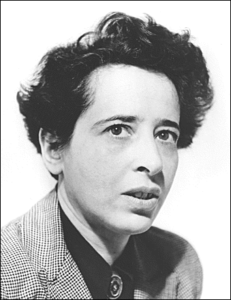
Hannah Arendt
I will end with a passage from an essay titled “The Urgent Relevance of Hannah Arendt” (Richard J Bernstein, philosophermag.com) – a passage that serves as a sort of mantra for me these days: “The deepest theme in Arendt is the need to take responsibility for our political lives. She warned against being seduced by nihilism, cynicism, or indifference. She resisted false hope and false despair. She was bold in describing the darkness of our times – lying, deception, self-deception, image-making, and the attempt to destroy the very distinction between truth and falsehood.” The bravest and best of us need to resist false hope and false despair, refuse to be seduced by nihilism and cynicism. We need to gently remind ourselves to put in the hard work of empathy and openness, of working to build the solidarities we need, rather than succumbing to angry, petulant despair. Kavita Krishnan, CPIML Liberation Politburo member, AIPWA Secretary (This is an updated version of a write up originally written in March in English for Aroop magazine, for an issue themed “Failure”).

Mohammed Zubair of AltNews Hounded by Frivolous FIR under POCSO

0

Two FIRs have been filed against Mohammed Zubair, co-founder of AltNews under the Protection of Children from Sexual Offences Act under questionable charges. 

Mohammed Zubair had, on August 6, replied to a tweet by @JSINGH2252, fact-checking the source of a video he had posted. @JSINGH2252 then replied with abusive language. In response, Zubair posted a picture of the user with a child who was presumably his girlfriend, which was his profile picture. Mohammed Zubair blurred out the face of the girl, and wrote, “Hello Jagdish Singh. Does your cute granddaughter know about your part-time job of abusing people on social media? I suggest you to change your profile pic.” The identity of the child was protected and no abusive language was used, the picture was public as it was the profile picture selected by @JSINGH2252. 

An account named ‘Forum for Indigenous Rights- North-East India’ filed a complaint with the National Commission for Protection of Child Rights. The organisation by this name does not have any online record of its activities nor any official website. There is also no information available online about its members or office bearers. The twitter account for this organisation was opened in November 2019. The first activity on the account was a retweet of a post which said, “IAS officer comitting treason to our nation offering citizenship to rohinya refugees in Hyderabad @AmitShah”. Since then, the account has been filing complaints, especially against various Muslims, accusing them of ‘love jihad’ and so on. 

More recently, they retweeted the following tweet. 

Who forms the membership of this organisation and what are their credentials on the basis of which they have named themselves ‘Forum for Indigenous Rights’ is unclear.

The complaint by the organization was then taken up by the NCPCR, which wrote to the Delhi deputy commissioner of police and the nodal cyber cell officer, seeking action against Zubair for “stalking” a minor girl on Twitter, according to a report on Scroll.in.  

The Chairperson of the NCPCR, Priyank Kanoongo, who filed the complaint, has in the past been associated with the BJP-RSS, according to a report on the Times of India. Recently, in a letter to the District Magistrate of South-East Delhi, he had asked the DM to “identify” children seen opposing the CAA and NRC at Shaheeh Bagh and call them in for counselling. Under him, the NCPCR also refused to investigate into child rights abuses in police custody during the massive violence against Muslims in Uttar Pradesh in the midst of the anti-CAA-NRC movement. 

Pratik Sinha, co-founder of AltNews, later revealed that @JSINGH2252, had earlier posted various sexually abusive tweets about various women, including photoshopping their faces on pornographic images and posting sexual coloured remarks along with the images of women, including that of Shehla Rashid. 

The NCPCR has not yet responded to this. @JSINGH2252 has now changed his account status to private. 

AltNews has released a statement pointing out that this is an attempt to hound Zubair for his work in fighting the fake narratives of the BJP, and that this is a misuse of legal apparatus. 

Zubair has said that he will be responding to this legally. 

It is clear that the complaint has been made by questionable individuals and organizations, and that the NCPCR, under a person with a history of support for the RSS, is paying undue attention to the complaint in order to discredit Zubair and target him for his critical work in fighting against RSS-BJP propaganda. The legal protections from sexual assault, harassment, and pornography for children under the POCSO are extremely important, and such clear misuse of the law is extremely questionable on the part of the chairperson of the NCPCR.

Prof. K. Satyanarayana Summoned by NIA to Mumbai on September 9

0

Prof. K. Satyanarayana has been summoned by the National Investigation Agency (NIA) to appear at their office in Mumbai on September 9. In a statement to Dalit Camera, he shared that he has been summoned as a witness under Section 160 and Section 19 the Criminal Procedure Code.

K. Satyanarayana is an Associate Professor at the Department of Cultural Studies at the English and Foreign Languages University, Hyderabad. He is a distinguished scholar and one of the most prominent academics of Dalit and anti-caste studies in India. He was active in the Andhra student movement during the 1990s and was also the founder-general secretary of Kula Nirmoolana Porata Samiti (Forum for Caste Annihilation).

In August 2018, Mumbai and Hyderabad police had raided and searched his and his wife Pavana Rao’s house for nearly 9 hours in connection with the Bhima Koregaon violence.

The police had arrived with a warrant written in Marathi, which they only later found out claimed that Varavara Rao, Pavana’s father, resided with them. However, the Pune police were simultaneously raiding Varavara Rao’s house as well.

The police seized computers, academic manuscripts, and other personal belongings, and took pictures of all books containing words like Ambedkar, Marx, caste, and Hindutva. In a report on The Hindu, Prof. K. Satyanarayana told Kalpana Kannabiran, “The assaultive gaze moved from me to my university, my students, my cultural life, my values; they wanted me to be somebody else. It was very clear they wanted to humiliate me, and to book me. My real worry is that they will frame me in the Bhima Koregaon case.” In another report on The Wire, he pointed out that the police were able to humiliate and harass within his university campus in this way only because he is a Dalit.

Prof. Satyanarayana’s relationship with Varavara Rao has been used to harass him in the past as well. In the report on the Hindu, he recalled that when he had applied for a passport in 2000, the process was held up by a police report against him, on which was the single line, “He is Varavara Rao’s son-in-law”.

Prof. Satyanarayana has reiterated again and again that he has no relation with Bhima Koregaon whatsoever. Varavara Rao’s health has been steadily deteriorating during his incarceration in relation to the same case, and the pandemic has hit Mumbai very strongly.

Yet, at this time, the NIA has summoned Prof. Satyanarayana to Mumbai in a case with which he has absolutely no relation. No doubt, in order to harass him and intimidate him, and as Prof. Satyanarayana has said, to “destroy the creation of Dalit knowledge by delegitimizing, isolating, stigmatizing and criminalizing people like him”.

PIL to revoke Kanhaiya Kumar citizenship Dismissed, Petitioner fined Rs. 25,000

0

The Allahabad High Court on September 6, dismissed a Public Interest Litigation (PIL) to revoke citizenship from Kanhaiya Kumar, The HindustanTimes reported.

The PIL was filed by one Nageshwar Mishra from Varanasi. It sought revocation of citizenship from Kanhaiya Kumar in connection with the events at Jawaharlal Nehru University in 2016.

In February 2016, students at JNU had held a protest against the capital punishment meted out to Afzal Guru and Maqbool Bhat. Students from ABVP had objected against this protest and this had led to clashes between the two groups.

A video on Zee News had shown some students shouting “anti-India” slogans, but it was later found that those were outsiders to the University. Kanhaiya Kumar, who was the president of the Students Union at the time, was arrested for sedition a few days later, followed by the arrests of Umar Khalid and Anirban Bhattacharya.

The petitioner alleged that Kumar and his associates were supporting the “freedom struggle of terrorist groups” who are “working on the instigation of Pakistan to destabilize unity and disturb the peace and tranquility of our country”.

This was in reference to the anti-national slogans made at the JNU campus in 2016, but the Central Government has not taken any action against Kanhaiya in that case yet.

The bench comprising of Justice SK Gupta and Justice Shamim Ahmed dismissed the petition saying that it was ‘devoid of merit’ and ‘wholly misconceived’. The petitioner relied on Section 10 of the Indian Citizenship Act, 1955, which only applies when a non-citizen is given Indian citizenship by the Central government.

The bench highlighted how serious the deprivation of citizenship is, as it would affect the person’s right to live in India and may also result in making the person stateless.

The court also imposed a fine of 25,000 rupees on the petitioner for filing the plea to gain “cheap publicity” and wasting the resources of the court. The Court pointed out that it was working on limited strength due to the pandemic and hence this PIL was especially wasteful of the court’s time.