Private Companies Can Set Their Own Train Fares With No Limits

0

Private companies who start operating train services will be allowed to set their own passenger fares by the Indian Government. There will be no upper limit for these fares and the private companies will require no stamp of approval from the government for the fares they decide on.

Earlier, under under the Railways Act, only the Union government or the Railway Ministry could decide fares for passenger trains in India.

The move towards increased privatisation of the Indian Railways began in July when the Ministry of Railways invited Request for Qualifications (RFQ) to private players for the operation of passenger train services. Before this, in 2018, the government had begun outsourcing commercial and on-board services to private players.

Private players had been invited to invest in 151 passenger trains that will run in over 109 routes and in modernising railway stations in New Delhi and Mumbai.

This is part of a large scale privatisation project that the Modi government has implemented during the COVID-19 crisis when there is more difficulty in opposing the move. The government has announced that all sectors except 18 strategic sectors will be completely privatised and even in the strategic sectors, there will be a maximum of 4 PSUs in operation. Crucial public services like the railways, electricity, coal, banking, etc are moving towards complete privatisation.

Swati Krishna writes, “Indian railways are the largest public enterprise and the largest employer in the country.” The massive infrastructure of the Indian railways, although endangered in its quality due to its underfunding by the government, is the property of the people of India, build on their lands, using their resources and labour. It is the right of every Indian to access the railways as the most widely connected and affordable means of transport connecting different parts of the country.

The majority of the population of the country will not be able to access the private railways which will probably be operated along profitable routes. On the other hand, the remaining government trains will become more and more overcrowded, slow, congested, and low in quality. In a post-pandemic world, this will result in only the privileged sections of society being able to access safe and hygienic travel, hence risking the health and lives of the poor and marginalized passengers and their communities.

Government Denial of Migrant Workers Deaths Data is Blatantly False:SWAN

0
On the first day of the parliament session, the Centre responded that the question of compensation for the families of dead migrant workers does not arise because of lack of data on the matter. The ministry response was -There is no data on migrant deaths so the “question does not arise” of compensation. The response from the Ministry has not only baffled the opposition but the people of this country in general who have been seeing continuous visuals of migrants going home for almost a month and many dying on railway tracks or on roads out of exhaustion. Their response has been met with critique and anger from activists as well as the opposition. When the lockdown was announced on March 24th, The Stranded Workers Action Network (SWAN) started a helpline to address stranded migrant workers’ needs. While coordinating relief efforts, they also documented the distress induced inadequate government and judicial response to the crisis.  They have responded to the GOI’s statements on the migrant worker’s crisis. In their statement, they gave detailed reports on many of the questions raised to the GOI.

SWAN showed recorded data of at least 971 migrant workers who died during the period.

Moreover, when asked if they gave compensation to any families, GOI said that there was no data available. However, the railways refused a family of exhausted workers who died on tracks relief as it is a crime to sleep on railway tracks. Media reports as of June also show that the GOI did not provide compensation on the 80+ shramik train deaths. They Government also cited lack of data when ask if it has done any assessment of the job loss among migrant workers due to the COVID-19 crisis. SWAN provided study reports on the same from the Centre for Sustainable Employment at Azim Premji University. Finally, when questioned if migrant workers returned home walking because of lack of provisions from the state, the GOI responded that more than 4611 Shramik trains were provided. They said that more than 63.07 lakh migrant workers were shifted and that free food and water was provided for the journey. However, SWAN responded that the Shramik trains were provided one month after the total lockdown was imposed without any relief. Moreover, by this time thousands had already reached home by foot. They also criticised the GOI for vague instructions and protocols, which differed across states. This resulted in a second exodus of migrant workers; many began walking home, and tragically died on the way.

Thousands had already begun walking or reached home on foot, in what will be remembered as one of the largest movements of people since partition.

It is a matter of national shame and a continued assault on the dignity of the estimated 45 crore informal workforce that even five months after the lockdown, the GoI has no data on deaths and distress.

They also point out that the numbers provided in the parliament are similar to those presented by the Solicitor General in the Supreme Court during a hearing in May. The Finance Minister had also announced a relief package assuming that there are 8 crore migrants. The office of the Chief Labour Commissioner stated that there are 26 lakh migrants. The report presents that GoI’s apparent lack of access to data is blatantly false. Instead, it is simply an attempt at hiding the Ministry of Labour and Employment’s  “utter incompetence and callousness…for the lives of the very workers it is mandated to protect” Also Read: Monsoon Session of Parliament: First Two Days Without Question Hour  

Punjab: Farmer who consumed poison in protest to Modi´s Anti Farmer Bills dies

1

On Friday, a farmer died in Punjab after consuming poison while protesting the Modi Government’s Agriculture Bills. Pritam Singh, from Akkawali village, was protesting outside the house of former Chief Minister Parkash Singh Badal. He had consumed poison in anger to express his dissent. Soon after, he was admitted to Bathinda Hospital for treatment, where he died.

Farmer’s organisations in Punjab have declared the 60-year-old the first martyr of the Anti Agriculture Bills movement.

On Thursday, the Narendra Modi government passed two agriculture-related bills through the majority vote in the Lok Sabha: The Farmers’ Produce Trade and Commerce (Promotion and Facilitation) Bill 2020 and The Farmers (Empowerment and Protection) Agreement of Price Assurance and Farm Services Bill, 2020. Because of this, the anger of the farmers in the country has increased; they are partaking in organised demonstrations, especially in Punjab and Haryana. Chhattisgarh Chief Minister Bhupesh Baghel has said that though farmers’ protests are going on in Punjab and Haryana right now, soon it will be in the whole country.

In protest of these bills, the Shiromani Akali Dal (SAD) resigned from the Modi government. Harsimrat Kaur Badal has resigned as the Union Minister. Sukhbir Singh Badal has also said that they will review their allyship with the BJP, and whether to stay in the NDA or leave it.

Swaraj India leader Yogendra Yadav termed Harsimrat Kaur Badal’s resignation the first victory of the farmer’s fight. He has said that this is the turning point of the struggle of the farmers against the company rule in agriculture.


Prime Minister Narendra Modi has declared that farmers are being falsely instigated and they should not listen to these instigators instead they should listen to Narendra Singh Tomar’s speech in the parliament “to know the truth”.

But after the agitations intensified on September 18, Modi himself came to forefront. In a video message about the Bill, he criticised those who ruled the country for years and defended the government’s moves.

The Congress says that it will launch a nationwide movement against the Modi Government’s Agriculture Bills.  In a press conference, Cngress spokesperson Randeep Singh Surjewala compared the situation to Mahabaharata battle where anti farmer Modi government is the Kuravas and antagonists, and the farmers and farm labourers of this country are Pandavas. The Congress stands with the Pandavas.

Congress has also been pressurizing Haryana’s Deputy Chief Minister Dushyant Chautala, who has been diplomatic about the situation since Harsimrat Kaur Badal resignation. Surjewala said, “Dushyant ji, either stay with the farmers or with Kursi, choose power or the welfare of the farmers.” He demanded that Dushyant withdraw support from the Khattar government and remember that democracies follow the people’s will. It should be noted that Khattar government of Haryana is resting on the support of Dushyant Chautala.

The Congress and other parties will hold an agitation against the Agriculture Bills. The BJP has also doubled down on the bill, and will not step back based on pressure. Instead, it will carry out a nationwide campaign in favour of this bill.

Also Read: Peasant Organizations Call for Bandh & Resistance on September 25 against 3 Ordinances


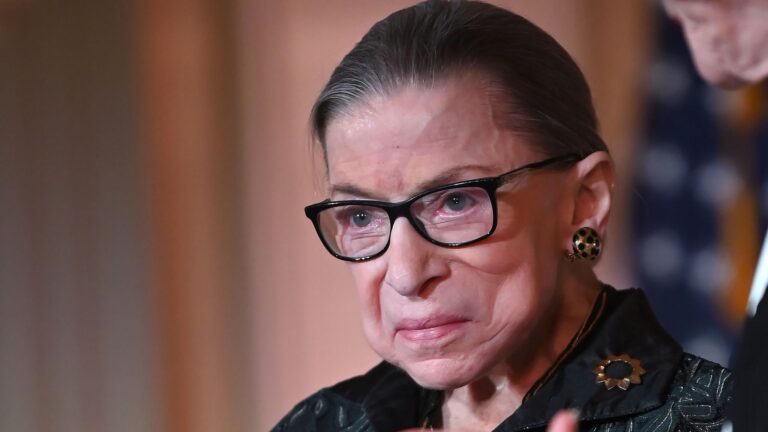
Ruth Bader Ginsberg, US Supreme Court Justice and feminist Icon dies at 87

0
 
Late in her court tenure, she became a social media icon, the Notorious RBG, a name coined by a law student who admired Ginsburg’s dissent in a case cutting back on a key civil rights law. In 2018, Ginsburg was the subject of a documentary and a feature film ‘On the Basis of Sex,’ in which the actor Felicity Jones portrayed her.


#OnThisDay- German Jews Stripped of Citizenship: The Nuremberg Laws

Siddaramaiah and HD Kumaraswamy send sarcastic Birthday greetings to PM Modi

Bengaluru: The massive unemployment crisis that India is staring at amid this economic downturn is bringing the youth to the streets. The simmering anger of youth has come out on streets in the form of sporadic protests now and then due to privatisation, lack of government jobs,non-recruitment after exams, contract jobs, and massive retrenchments. 

The Modi led government ahead of the election had given assurance of generating two crore jobs annually. But contrary to the assurance of creating jobs, the people have lost existing jobs and are facing hardship while uncertainty is looming large over getting jobs in view of the high unemployment rate in the backdrop of April-June quarter GDP contracted to a historic low of -23.9 percent.

On 17th September, when the BJP and its followers celebrated PM Modi´s 70th birthday, the youth celebrated National Unemployment Day.

Also Read- National Unemployment Day on PM Narendra Modi’s Birthday

BJP is celebrating PM’s birthday for a week-long period as ‘Seva Saptaha’ from September 14-20th sept. But the youth of the country who are still waiting for Modi`s promise of 2 crore jobs every year in 2014 was not amused by the continuous Modi celebration and took to twitter to remind the former of their joblessness and rising unemployment rate.

Hashtags like #national unemployment day, #Jumla Diwas, #17Sept 17hrs 17Minutes, #Rashtriya Berojgar Diwas were top trends on Twitter yesterday.

Some condemned that “Prime Minister instead of giving 2 crore employment every year. He has been delivering worthless speeches to the nation for six years”. Leaders of the opposition party in the state also took the occasion to hit out at the prime minister.

Some condemned that “Prime Minister instead of giving 2 crore employment every year. He has been delivering worthless speeches to the nation for six years”. Karnataka ex-Chief Minister Siddaramaiah also took the occasion to hit out at the prime minister.

Siddaramiah`s tweet says- Narendra Modi came to power and assured generation of 2 crore jobs annually. But he is now responsible for the highest unemployment in last 45 years. The youth of the country have started a campaign against this and I support it.

In his series of a dig against the PM, Siddaramaiah said the youths with a lot of hope had voted the Prime Minister @narendramodi now the same youths without jobs were disillusioned.

“More than 2 crore salaried jobs and 12 crore overall jobs were lost in the last six months,” Siddaramaiah said using the hashtag said he strongly supported the campaign launched by the youths who were asking the prime minister on his vision and actions for creating the assured jobs.

Former Chief Minister HD Kumaraswamy while wishing the Prime Minister on his birthday said “I pray to God to bless you the ability to overcome COVID, Chinese aggression, economic downturn, and employment crisis.

RJD´s Manoj Jha Slams Government for COVID-19 Response in Rajya Sabha

0

Manoj Jha, in his Rajya Sabha speech on September 16  slammed the government over the various ways in which it has mishandled the COVID-19 pandemic. In his speech he criticized the scapegoating of Tablighi Jamaat attendees, the migrant crisis that arose due to the lockdown, the PM cares fund, and recent push towards privatisation.

Manoj Jha is the spokesperson of the Rashtriya Janata Dal. In 2018, he was elected unopposed to the Rajya Sabha from Bihar. He has been the head of the Department of Social Work at the Delhi University between 2014 and 2017, and been a professor of Social Work at DU, Jamia Millia Islamia, Delhi School of Social Work, and School of Planning and Architecture, Delhi.

‘Social’ Distancing and Tablighi Jamaat

Manoj Jha points out that we should call the COVID-19 prevention strategy ‘physical distancing’ instead of ‘social’ distancing, especially since we have enough social distance in India already due to the social stratification systems in the country.

तब्लीग़ी जमात को बदनाम करने का मामला

तब्लीग़ी जमात को बदनाम करने का मामला, संसद में मनोज झा ने उठाई आवाज़

Posted by Millat Times on Wednesday, September 16, 2020

So much so, that the entire spread of COVID-19 was initially blamed on the Tablighi Jamaat congregation held in Delhi before the lockdown, even as similar congregations took place at the behest of the BJP. Including the massive ‘Namaste Trump’ event held in Gujarat during US President Trump’s visit to India, and BJP’s attempts at toppling the Kamal Nath-led Congress government by continuing the function of the Parliament and the Madhya Pradesh State Assembly even after the COVID-19 outbreak began, and demanding a floor test as well.

Nationwide Lockdown

Manoj Jha questioned the decision of enforcing the lockdown. He asked whether it was taken by one person or collectively by the Cabinet as it should have been. If it was a collective decision, he asked what measures had been taken to prepare for the lockdown that was enforced suddenly without any notice. Although the middle and upper classes were able to transition comfortably into the lockdown, the poor and vulnerable were left to fend for themselves.

The Union Labour Ministry said to the parliament that since there were no figures about migrant worker’s deaths amidst the lockdown, there was no question of giving compensation. To this, Manoj Jha said, that the migrants of this country are not just figures or data, but rather, someone’s father, someone’s mother, and if the government does not have figures of these deaths then it actually shows that the government does not have the capacity to empathize with its people.

He proposed that the Parliament should extend an apology to the workers and migrants of the country about whom the government did not stop to think during the lockdown.

Healthcare Response to Covid-19

Jha said that he has always opposed privatisation and liberalisation, and expressed concern over the privatisation of health and education. In spite of this, it was the public health infrastructure that dealt with the brunt of the pandemic. The government should not only commend the public health workers but reconsider its economic decisions about the public health infrastructure. The government should not only pay its tribute to those it has termed as ‘covid warriors’ but to everyone.

Manoj Jha appeals to the government to stop the rhetoric of national pride over there being fewer deaths in India compared to other countries. This, he says, is an extremely inhumane and unempathetic response to such a crisis. He says that the government should try going to a person whose father has died due to COVID-19 and telling them that India has had fewer deaths than other countries and see if that is of any consolation to that person.

Instead, the government should open its hands, be it 7000 rupees or 8000 rupees, but it should give financial assistance at least to poor families who earn below the taxable limit. The government should act according to the name it has used for the un-audited PM Cares Fund.

Finally, he slams the unscientific mindset of the government, which ignored prevention strategies and healthcare, thinking the lockdown on its own would be a vaccine for the pandemic.

Manoj Jha has outlined some of the major problems with the way the BJP government has dealt with the pandemic, sacrificing the people’s well being and dignity for rhetoric and unscientific grandstanding. His simple appeal for sensitivity and a humane outlook from the government towards its own people is rarer than it should be in any democratic country.

Peasant Organizations Call for Bandh & Resistance on September 25 against 3 Ordinances

0
AIKSCC (All India Kisan Sangharsh Coordination Committee) GIVES CALL FOR ALL INDIA BANDH & RESISTANCE PROTESTS BY FARMERS ON 25TH SEPTEMBER The Working Group of AIKSCC (All India Kisan Sangharsh Coordination Committee) has decided to forcefully go ahead with its opposition to the 3 Agriculture Ordinances brought by the Central Government on June 5 and the new bills based on these or under consideration of the Parliament. AIKSCC shall launch a massive resistance against these new Acts on September 25th with a call for an All India Bandh and Resistance Protests by Farmers as well as observe this year’s 114th birth anniversary of Shaheed-e-Azam Bhagat Singh on September 28th to highlight the Pro-Corporate, Anti-Farmer acts of the Central Government – the 3 Ordinances, the New Power Bill 2020 and the steep hike in Diesel and Petrol prices. These 3 Bills/ Acts will completely stop Government procurement of crops, bringing to a grinding halt the price security for peasants as private mandis shall be set up and price and trade regulation of all cereals, all pulses, all oilseeds, onion, and potato shall be removed from coverage under Essential Commodities. Sri Nadda’s assurance that MSP will continue is a blatant lie as the Shanta Kumar committee appointed by this BJP govt declared that only 6% farmers enjoy the benefit of MSP, that it should be wound up, that FCI and NAFED procurement should stop and that food grain supply under PDS should stop. World over, in all countries, barring none, price security for farmers’ produce is always provided for by Government, not by companies, which only buy cheap to sell dear and earn huge profits. Crop once produced has to be sold, otherwise, it will perish and lose value. BJP claims that food grain production has increased in India. More food grain requires more Government procurement, without which companies will bring down prices even faster. This BJP govt is batting strongly for the Corporate profit by opening up the entire food chain for them. Farmers’ indebtedness has grown during the BJP rule and is rising faster as input prices are being raised by the Government, as in Electricity and Diesel and by the Companies which will have the freedom to contract peasant land and force them to buy dear under the new laws. Indian peasants and landless are committing suicide in huge numbers, almost two every hour, but despite the slogan of ‘atmanirbharta’, the Government is selling their interest to big companies. AIKSCC has appealed to all patriotic forces to oppose these Bills/Acts and to launch struggles to force the Central Government to pass the two bills proposed by AIKSCC for “Karja Mukti, Poora Daam”.

Also Read-National Unemployment Day on PM Narendra Modi’s Birthday

Regulate Digital Media Instead of TV: Centre to SC on ‘UPSC Jihad’ Issue

0

The Ministry of Information and Broadcasting submitted an affidavit to the Supreme Court Bench ruling in the case of Sudarshan News, the television channel which came under the radar for its ‘UPSC Jihad’ show, asking it to regulate digital media instead of electronic media.

Sudarshan News and Hindutva Propaganda

The editor-in-chief of the channel, Suresh Chavhanke, who has strong ties with the BJP-RSS, had released a trailer, in which he called those passing out of Jamia’s Residential Coaching Academy (RCA) and clearing the Union Public Service Commission (UPSC) as “Jamia ke Jihadi”, saying that Muslims in the civil services are mere “infiltrators”.

The channel and this show, known as Bindass Bol, received widespread opposition, including especially from teachers, students, and alumni from Jamia Millia Islamia University, and former members of the civil services.

Initially, the Delhi High Court issued a stay order on the broadcast of the show after a petition filed by students of Jamia. At the time, the Supreme Court bench of Justices D Y Chandrachud and K M Joseph had refused to impose a pre-broadcast ban on the show but noted that the petition highlighted that the expression of views derogatory to a particular community had a divisive potential and had raised significant issues bearing on the protection of constitutional rights.

Supreme Court Restrains Broadcast of the Show

On September 15, the Supreme Court bench directed Sudarshan News to defer the broadcast of its program until further orders, citing Rule 6 of the Programme Code under the Cable TV Act which notes that cable TV programs cannot show anything that targets a particular religion or community.

Slamming Suresh Chavhanke, Justice Chandrachud said that he is “doing a disservice to the nation and is not accepting India as a melting point of diverse culture” and rejected the argument that this was a matter of journalistic freedom, warning him instead to exercise his freedom with caution.

The Supreme Court bench also called for the setting up of a committee of five citizens, including people of commendable stature without having any politically divisive orientation, who can come up with standards for electronic media.

“Regulate Digital Media Instead”: Why the Deflection? 

In response to this, the Centre pointed to digital media instead. According to the Ministry of Information and Broadcasting’s affidavit, digital media has a faster reach and wider readership, with digital media content having the potential of going viral.

That the Centre has brought this up in response to the case of a TV show propagating extremely Islamophobic rhetoric while not taking any measures when say, Facebook was implicated in the spread of hate speech that led to riots in Delhi, shows that this affidavit is nothing but an attempt to deflect from the issue at hand.

The Supreme Court had identified an important part of the issue of propaganda on electronic media, observing that the ownership of the visual media needs to be looked into. Justice Joseph said, that the “entire shareholding pattern of the company must be on site for the public. The revenue model of that company should also be put up to check if the government is putting more ads in one and less in another.” Sudarshan News itself, for instance, had been sponsored by the Uttar Pradesh government under Yogi Adityanath.

Why is the government trying to deflect from television media? Recently, through propaganda and hate campaigns, the BJP-RSS has been using television channels to create a captive audience that can be fed distractions that will keep them from questioning the government. Extremely biased channels like Republic TV broadcast hours upon hours of coverage on issues like the Sushant-Rhea case or Kangana Ranaut and so on, ensuring that people don’t receive news about issues like rising unemployment or the economic crisis.

According to the latest report by BARC India and Nielsen, TV consumption has especially had a huge rise during lockdown. What was already a massive reach of television media at 560 people daily, has now risen to 627 million people per day. In a week in April, Indians spent 1.27 trillion minutes, the highest ever in a week, watching TV.

Due to the nature of television channels’ ownership and advertisement structures, it is much easier for the BJP-RSS to build a complete hegemony over what is shown on TV, and is broadcast to millions of people every day. Progressive groups, individual dissenters, or marginalized communities do not have the funds to buy advertisements on such channels and their views are almost completely absent from television media. On the other hand, digital media, even with all of its shortcomings, is still more democratic compared to television.

Dissent and Hate on Digital Media 

Expressions of dissent have the potential to be distributed and communicated more freely over digital media, as has been the case in recent mobilisations, be it during the anti-CAA-NRC movement, the widespread anti-Modi sentiment that has expressed itself in the celebration of ‘National Unemployment Day’ on Modi’s birthday itself, or the thousands of dislikes on Modi’s videos on youtube. Independent media platforms which are not stifled by television and newspaper funding structures find themselves thriving on digital media, with multiple anti-caste and progressive news portals commanding thousands of viewers and readers.

It is true that digital media also needs to be regulated, with the monopoly of organizations like Facebook with its documented ties with fascist parties all over the world, the dominance of the BJP IT cell, the trolling and hate speech especially directed against Dalit women, Adivasi women, and Muslim women, the circulation of violent visuals and incitement of violence including that of lynch mobs and rape, and so on. But it is the BJP-RSS’s own use of digital media that would come into question here, whose outfits have even supported people like Shambhulal Regar, who hacked a Muslim man to death in Raj Samand and posted a video of it on Whatsapp that went viral.

This affidavit and the Centre’s request for the regulation of digital media then, is simply an attempt at escaping accountability for the core problem here that is RSS control over all media, be it print, or electronic, or digital, through their funding of and collusion with media companies.


Harsimrat Badal Quits Union Govt; “Resignation too Late”- Kisan Mazdoor Sangharsh Samiti

0

On Thursday, September 17th, Shiromani Akali Dal’s leader and Cabinet Minister for Food Processing Industries Harsimrat Kaur Badal resigned from the Union Government. This was in protest the controversial “anti-farmer” agricultural legislations and was supported by SAD. However, according to Sarwan Singh Pandher, General Secretary of the Kisan Mazdoor Sangharsh Committee, the resignation is “too late” and only a tactic to quell the farmers’ anger. Sukhbir Singh Badal also stated that the party will have to review its ties with BJP.

The Lok Sabha had passed two controversial legislations: The Farmers’ Produce Trade and Commerce (Promotion and Facilitation) Bill, 2020 and The Farmers (Empowerment and Protection) Agreement of Price Assurance and Farm Services Bill, 2020. The government claims that these reforms will accelerate agricultural growth by increasing private sector investment. However, farmers fear that the increased freedom given to the private sector will also increase exploitation from corporates.

While the move may be a good move for agriculture, farmers fear they will no longer get paid at MSP, and commission agents fear they’ll lose commission. Punjab has atleast 12 lakh farming families and 28,000 registered commission agents. Moreover, easing regulation of food items could undermine food security as exporters, processors and traders could hoard farm produce during the harvest season, when prices are generally lower, and release it later when prices increases. 

Harinder Singh, general secretary of Bhartiya Kisan Union Lakhowal, described the three agriculture bills as being worse than coronavirus. He stated that if they are implemented, farmers, jobbers, and agricultural laborers will be badly affected.

In her letter of resignation, SAD leader Harsimrat Kaur Badal stated:

“In view of the decision of the government of India to go ahead with the Bill on the issue of marketing of agricultural produce without addressing and removing the apprehensions of farmers and decision of my party, Shiromani Akali Dal, not to be a part of anything that goes against the interest of farmers, I find it impossible to continue to perform my duties as a minister in the union council of ministers.”

Badal said that this decision symbolises the party’s vision and legacy of “safeguarding interests of farmers”, but farmers, as well as unions, seem to be skeptical and unaffected by the impact it would have on them.

On the 18th, despite the resignation, in Chandigarh, a 60 year old farmer attempted suicide at a protest site in Badal village by consuming poisonous substances, where the Badal family are active. He had feared that the bill would be against farmers and is now in critical condition.
 

Meanwhile, farmers’ organisations claim that this resignation came too late. Punjab’s Kisan Manjadur Sangharsh Samiti general secretary Sarvan Singh Pandher has said that Harsimrat’s resignation is a move on the Akali Dal’s part to calm the anger of the people. He continued, “If Sukhbir Singh Badal accepts the farmers’ problem in the true sense, then he should surround the Parliament with his millions of workers.” Instead, he says that the movement against this bill will be led by them. Pandher said that the Kisan Mazdoor Sangarsh have decided to hold a ‘rail roko’ agitation from September 24 to 26 in the state against the farm bills.

Also Read:‘Save India’ on Quit India Day: Nationwide Farmers, Trade Unions protests

Women Activists Express Concern Over Suppression of Dissent Under the Current Regime

0

Several women activists, who gathered at the Press Club of India on September 15, as a part of Agar Hum Utthe Nahin Toh (If We Do Not Rise) campaign to mark the third death anniversary of journalist Gauri Lankesh, expressed serious concern over suppression of dissent by the government and labelling all such people as “anti-national”, Syed Ali Ahmed of India Tomorrow reported.

Speaking about the campaign, activist Shabnam Hashmi of ANHAD (Act Now for Harmony and Democracy) said to India Tomorrow that the campaign launched from September 5, was in fact a “festival of resistance” during which the activists reached out to over 15 lakh women all over the country to “challenge the authoritarian forces” under the current political dispensation in the country.

Stating that “there is widespread destitution, hunger and starvation owing to lockdown amid rising cases of Covid at an alarming rate all over the country”, Anjali Bhardwaj of the Satark Nagrik Sangathan (SNS) expressed concern over “the government leaving no stone unturned to curb all forms of dissent”.

“The government has used all situations, lockdown or near-lockdown, to curb all forms of dissent”, she said.

Stating that in the last six years, the government has passed “anti-people, anti-poor laws like Citizenship (Amendment) Act, abrogation of Article 370 and very regressive trans-gender laws”, she said that “it is very clear in all this that the government has no intention to be answerable or accountable to the people of this country. We have a situation where there is absolutely no scope for people to question those in power”.

Stating that “there is continuous assault on Constitutional and democratic rights”, Bhardwaj said, “We are also seeing an attack on all those who raise their voices, who dissent, who raise questions. We are seeing attack on all institutions that can hold government answerable and we are seeing an attack on all instruments that can question the people in power”.

Pointing out that economy of the country had been totally destroyed with GDP growth at minus 24 per cent due to lockdown, she said that lakhs of daily wagers and labourers have lost their employment owing to these reasons.

National Federation of Indian Women’s (NFIW) representative Annie Raja demanded food security due to hunger deaths being reported from different parts of the country. She pointed out that lakhs of women, domestic workers, agriculture labourers, daily wage workers and labourers have lost their jobs due to pandemic.

Kavita Krishnan from All India Progressive Women’s Association (AIPWA) said that hallmark of democracy was protection of the weak and restrictions on those in power but all this had now become things of the bygone days. “We see no accountability from those in power”, she said.

In a charter of demands released on the occasion, the women groups sought accountability and transparency from the government. The group also demanded restoration of all liberties and personal freedoms, protection of land rights and natural resources and restoration of the dignity of the people of Kashmir as also restoration of Article 370 and 35A and finding a political solution to the problem in Kashmir. The group also sought restoration of 4 G and access to internet services in Jammu and Kashmir.

The Charter further demands the scrapping of the Unlawful Activities (Prevention) Act (UAPA) and other draconian laws such as AFSPA, NSA, State Security Acts and Sedition Law which are being blatantly misused for the suppression of dissent. It also demands immediate release of political prisoners who are languishing in jails or are under house arrest.

It also condemned the arbitrary arrest of women activists and students in Delhi and other parts of the country on fabricated charges.

The charter also asked the government to ensure recognition of women in informal sectors as workers and a provisioning of rights and social security to women workers. It also demanded financial support of Rs 10, 000 per month to all those women in unorganized sector who lost their livelihood because of Covid lockdown. The government should implement the Unorganised Sector Social Security Act, on priority basis.