The Labour Ministry on Saturday introduced three new labour codes in the Lok Sabha. These three codes, along with the Code on Wages passed in 2019, are meant to consolidate all existing labour laws.
The three new labour codes include the Industrial Relations Code Bill, 2020, Code on Social Security Bill, 2020 and Occupational Safety, Health and Working Conditions Code Bill, 2020 and were introduced by BJP Labour Minister Santosh Gangwar amidst strong opposition.
Under the Industrial Relations Code Bill, 2020, companies with upto 300 workers will not require any government approval for arbitrary hiring and firing of workers. Under the current laws, this allowance is given only to companies with less than 100 workers.
The Standing Committee of Labour had made this recommendation earlier this year, citing the example of Rajasthan. The Committee had said that companies with up to 300 workers should be given the power to cut their workforce or shut down companies without government permission.
According to the Committee, doing this had led to an increase in employment and a decrease in retrenchment in the state.
Under this Code, companies with up to 300 workers will also no longer need to issue a standing order, i.e. rules of conduct for workmen employed in industrial establishments, Aanchal Magazine from the Indian Express reported.
The Code will also change the conditions for a legal strike, where no worker can go on strike without a 60-day notice and during the pendency of proceedings before a Tribunal or a National Industrial Tribunal, and sixty days after the conclusion of such proceedings.
Under the current laws, only workers in public utilities need to give notice at least 14 days before going on strike.
Even the Standing Committee of Labour had recommended against increasing this time period, or applying this mandate to workers in other industrial establishments.
The Code on Social Security, although being touted as a welcome change to improve the conditions of gig workers, will relax penal provisions for employers who violate labour laws, Moushumi Das Gupta of The Print reported.
Under this code, employers who fail to make contributions to Employees’ Provident Fund Organisation or Employees’ State Insurance Corporation, will no longer serve a jail term of three years, which will be reduced to two.
Employers who reduce wages/benefits admissible to an employee, or deduct wages of an employee, etc, will no longer face imprisonment, but only a fine of Rs 50,000.
Employers who commit repeat offenses such as failing to make contributions to provident funds and insurance, not paying maternity benefit and gratuity, etc, will no longer face imprisonment for five years, which will be reduced to three.
The Occupational Safety, Health, and Working Conditions Code has scrapped the earlier provision for temporary accommodation of workers near worksites, instead of introducing a lump sum as a travel allowance.
Under this code, limits on hours of work will no longer be mandated to be eight hours. Instead, State governments may notify a new limit to hours of work.
Even under the current laws, it is easy for employers to exploit workers who are not aware of their rights or do not have the resources to take legal action against their employers. Now, workers will find it next to impossible to strike for their rights legally while employers will have the legal freedom to exploit. For instance, in the case of arbitrary retrenchment, how can workers wait for 60 days before striking? Many will simply be forced to look for other sources of earning a livelihood.
What all of the three new labour codes reveal is a move towards reducing regulation and increasing flexibility for employers, and a dilution of workers rights that is whitewashed as ‘ease of doing business’. The supposed simplification of laws into four codes is an attempt to remove or modify the various protections that ensure the basic rights of workers to employment security, safety, social security, and the right to protest.
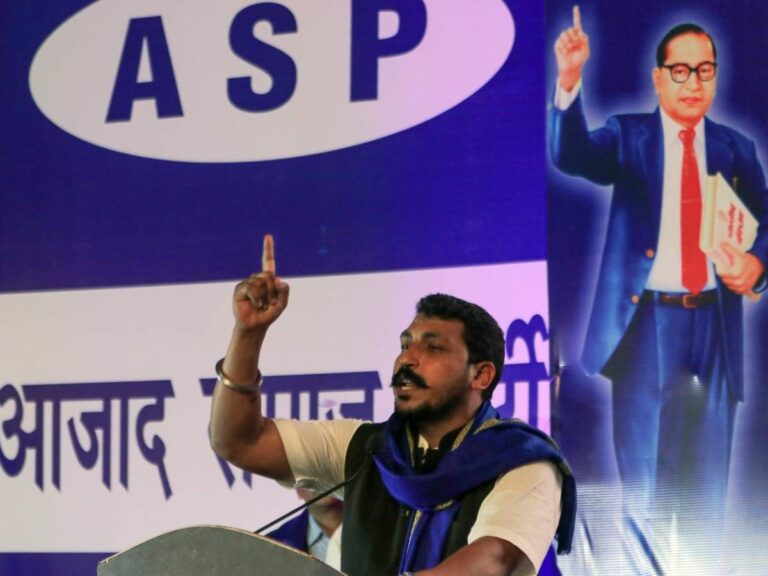
Bhim Army Chief and founder of the Azad Samaj Party, Chandrashekhar Azad Ravan arrived at Noida on Saturday Morning to lend support to the sanitation workers’ protest. Six of these workers had been arrested. Azad stated that if they are not released by 24th September, he will call for a nationwide agitation.
The sanitation workers, most of whom come from Dalit backgrounds, have been protesting the contract system that the Noida authorities had devised since September 1st. Income disparity and alleged mistreatment by contractors are their main concerns. They had been working for over 10 years and only earning ₹11,000 and have no other benefits. The contract labour system breeds job insecurity and makes them especially vulnerable despite working for so many years. They have been asking the authorities to regularise their jobs, increase their salaries and give an annual bonus.
The protests intensified when two days ago when Anil Kumar (35) was driven to suicide after authorities sent notices threatening to fire the workers if they continue protesting.
Chandrashekhar Azad, along with the local party workers from the Azad Samaj Party, met protestors outside the office. The party sent its demands to the Noida Authority CEO Ritu Maheshwari. Their main demand is to abolish the contractual employment system and employ the workers directly by Noida Authority. Azad stated:
Only our people get as little as Rs 6,000. In meerut too, sanitation workers are being made to work without PPE kits. this is the ugly truth behind privatisation, which PM is implementing in Delhi in the garb of COVID.
While urging the authorities to release arrested workers, Azad said “People from the entire country will come to Noida to protest like they did in Delhi if the workers are not released at the earliest. Jai Bhim slogans will reverberate even in Lucknow.”
Responding to a tweet posted by PM Modi on the much-contested Agricultural Bills, Bollywood actress Kangana Ranaut said that farmers protesting the Bills were “terrorists.”
प्रधानमंत्री जी कोई सो रहा हो उसे जगाया जा सकता है, जिसे ग़लतफ़हमी हो उसे समझाया जा सकता है मगर जो सोने की ऐक्टिंग करे, नासमझने की ऐक्टिंग करे उसे आपके समझाने से क्या फ़र्क़ पड़ेगा? ये वही आतंकी हैं CAA से एक भी इंसान की सिटिज़ेन्शिप नहीं गयी मगर इन्होंने ख़ून की नदियाँ बहा दी. https://t.co/ni4G6pMmc3
In it, she writes, “PM Modi ji,those who are sleeping can be woken up,if someone has misunderstood,one can make him understand, but if someone is acts like she doesnt understand, then what can one do? Not even a single person lost their citizenship from CAA and it is these same terrorists, who have shed rivers of blood (for that act).”
The recent bills that have been passed in the parliament by the Modi Government have been heavily criticised for being anti-farmer and pro-market. While Modi stated in his tweet that Minimum Support Prices will continue, farmers and critics have other concerns as well; the Bill could undermine food security and increase hoarding by traders, which would profit the market but not farmers. There’s no mechanism for price fixation and it would increase cooperative federalism.
Kangana’s statement reads as ignorant as well as insensitive. Firstly, it ignores the plight of Muslims in the country by blatantly falsifying the existence of detention camps as well as the extent of state violence that Muslims faced. Secondly, it also undermines the concerns of farmers at a time where India has one of the highest numbers of farmer suicides in the world. One farmer had already lost his life protesting the Bills. It also uses existing Islamophobia to create a bias against the farmers.
Farmer Pritam Singh 60, who gulped poisonous substance at protest at vill Badal against agri bills, dies, farmer organisation terms him as first shaheed of protests against bills @_YogendraYadav@kkurugantipic.twitter.com/wDIqmE1h9d
We need to save the industry from various terrorists 1) Nepotism terrorism 2) Drug Mafia terrorism 3) Sexism terrorism 4) religious and regional terrorism 5) Foreign films terrorism 6) Piracy terrorism 7) Labourer’s exploitation terrorism 8) Talent exploitation terrorism
The statement is especially ironic since Kangana had been recently calling the exploitation of labourers in Bollywood “terrorism”. The selective allyship for only some unions exposes her opportunistic activism.
Bengaluru: Progressive organisations condemning the dilution of the land reforms act and opposing the ‘anti-labor’ and ‘anti-farmer’ legislations of the government launched a massive protest on the first day of the legislative session that began on Monday.
Karnataka Rajya Raita Sangha ( karnataka state farmers organisation), Dalit Sangharsha Samiti, labour organisations and a total of 29 organisations have launched a joint struggle under the banner of “Aikya Horata” (United Struggle).
Swaraj Abhiyan leader Yogendra Yadav and Kavitha Kuruganti of Alliance for Sustainable & Holistic Agriculture (ASHA) have also joined in the protest against the anti-farmer policies of the government.
The protesters who have strong objections against the ruling Bharatiya Janata Party government policy of adopting an ordinance route to bring in legislation have decided to hold a parallel session against the current legislative session.
The government taking advantage of the present COVID-19 situation has been pursuing anti-people policies and has taken the ordinance route. The changes brought to the Karnataka Land Reforms Act were against the spirit of the land reforms. These reforms were detrimental to the interest of the farmers and had been brought only to favor the capitalists, the protesters alleged and took out a massive protest rally at Freedom Park.
ಬೆಂಗಳೂರು ಫ್ರೀಡಂ ಪಾರ್ಕ್: ಬಿಜೆಪಿ ಸರ್ಕಾರಗಳು ರೈತ, ದಲಿತ ಹಾಗೂ ಕಾರ್ಮಿಕ ವಿರೋಧಿ ಸುಗ್ರೀವಾಜ್ಞೆಗಳ ವಿರುದ್ಧ ಐಕ್ಯ ಹೋರಾಟ
Posted by Naanu Gauri on Monday, September 21, 2020
The ruling government without holding any discussion regarding the amendments to APMC (Agriculture Produce Market Committee) Act and Karnataka Land Reforms Act had been subverting the democratic principles. These amendments would result in small and marginalized farmers becoming labourers.
The protesting organisations will continue protesting until the government withdraws the changes brought to the said Acts.
The parallel people´s session will start at 2.30 PM today.
[Note by the translator: The twin daivas of Koti and Chennaya are one of the most popular folk deities of Tulunadu. Along with other daivas or bhutas such as Kallurti, Bobbarya, Maisandaya, Alibhuta, Koragajja, etc., Koti-Chennaya get venerated in the length and breadth of the Tulu region. Numerous studies suggest that most daivas are reminiscent of the folk heroes of that name, who were subjected to oppression of different sorts to maintain the hierarchical status-quo of the traditional Tulunadu. When they became mayaka (or perished fighting that oppression), they started getting venerated. Being born in the Billava¹ caste, Koti-Chennaya were subjected to constant treachery and harassment, even though they came close to power centres. It is roughly estimated that the twin brothers lived in the seventeenth or the eighteenth century. The following story of Koti and Chennaya is a translation based on the story written by Shri Panje Mangesha Rao, an early litterateur in Kannada. Panje himself got several (Tulu) versions of the story – one of them from Hermann Moegling of the Basel Mission. Comparing and contrasting, he finally arrived at the following story in the early twentieth century.]
This is Part I of the 14 part Koti- Chennaya series
Long long ago, the Tulunadu was divided among several small dynasties. Bangas were ruling from one corner of the Tulu region. Another part was governed by the Chautas. Ajila dynasty was strong in another portion. Every village had a gurikara² as an administrator. Four to five such villages were under a Ballala, who looked after the administration. Many such Ballalas made up regions each of which was governed by Banga, Chowta, Ajila, Savantha, and such chiefs. One such Ballala was in Padumale; another one was in Panja and the third one, in Enmooru³.One fine day, the Perumaalu Ballala of Padumale set out on a hunting expedition with his accomplices. While chasing a wild boar, a big, sharp thorn of kasarka(4) plant pierced into his feet, causing enormous pain. Even as his assistants were wondering what is to be done, he admonished “Why do you stare at me like that?! Call Boodi Bommaya of…”, before he could finish his words Ballala fell unconscious. No sooner did he faint than his servants rushed into the forest, prepared a wooden stretcher, and carried him to Boodi Bommaya on it. The news of Ballala falling ill spread across Padumale. People wanting to render a helping hand tried several ways: they tried plucking out the thorn; they tried with mantra; they tried with a variety of medicines. Bommaya tried with his tricks; Ammanna Baidya tried with his treatments – but all in vain! Day by day, the pain simply increased and the ailment merely worsened. Ballala could neither eat nor sleep. Suffering from agony, he was clueless about what to do. People from around the place visited him and shed tears at his plight. One among them said slowly and hesitantly, “such sores used to be cured by our Sayina Baidya. Now he is blind. But his sister Deyi could do the job.” Another one added, “Yes, Deyi’s medications are effective. But how could she come now? She is pregnant and is expecting anytime!” “It is not even three months since her husband Kanthanna Baidya passed away”, said the third one. No sooner did Ballala hear about Deyi, than he ordered his servants to fetch her in his palanquin. They set off instantaneously. Deyi saw the palanquin the servants of Perumaalu Ballala brought. She was not happy with the turn of events this indicated; yet, she could not deny helping the Ballala. Deyi collected the necessary medicines, herbs, coconuts, etc. and put them in the palanquin. The Bovis carried the palanquin to the Ballala. In Padumale, the Ballala was impatiently looking for Deyi’s arrival, not really knowing if she agreed to treat him. In some time came Deyi! She got down from the palanquin and with evident modesty came and sat beside the Ballala. Ballala earnestly begged her, “Amma, Baiditi… please save my life! I came from the womb of my mother; now let me be reborn from your womb! I will honour you with rewards that you haven’t heard of; I will give you gifts that nobody has given!Upon his request, Deyi started attending to him: she washed off the medicines on the wound applied by Ammanna Baidya; smeared it with medicines prepared by her; chanted the mystic mantra; cooled it off with the herbs she brought with her. With Deyi’s medication, day by day and hour by hour, Ballala recovered. He got his appetite back! He was unable to sleep for many days. Now, he could sleep too! He was the very same Ballala as before! Ballala and his family regarded Deyi Baiditi with great respect for the service she rendered. Meanwhile, some people were jealous at Baiditi, looking at this turn of events. One among these was the minister of Ballala, one Mallaya Buddhivantha.Deyi saw that the Ballala was normal again. One day she said to him, “Ballala, I would like to return home. If you intend to gift me anything, please do so!”“For sure you may go! However, Mallaya Buddhivantha isn’t here. I need to talk to him before I give you the gifts”, Ballala said.“Oh, is it so?! You needed me when you were losing your life! Now you need Buddhivantha when I remind you of the gifts!” Deyi responded wryly and started off. At this instance, Ballala’s wife sarcastically commented, “Huh! What an honour for saving his life!” Ballala heard this and called Deyi back. Ballala put a plate in her hand and said, “take this Deyi! These are for you, the Ole, Bugudi, Koppu, and Mooguti(5). All these are for you! Rest, I would give to your children”, he assured her. “I have a daughter, Kinnidaaru”, Deyi said. “Is she at home?” Ballala asked. Deyi said, “When she was seven, she was married off to Payya Baidya of Panja. During the Aayana of this year, we intend to call her again here.” Upon this, Ballala said, “this silk saree, this satin blouse and this golden bangle… these are for your daughter”, he said, giving some more ornaments. Deyi went down the stairs and off she went from the Ballala’s beedu (6).
Kannada version is written by Shri Panje Mangesha Rao (“Koti Chennaya”, from Panjeyavara Kritigalu: Sanna Kathegalu mattu Kadambarigalu, Ed: Panje Ramaraya, Madras: Orient Longman Ltd, 1973)The Kannada version is translated into English by Shashikantha Koudur (Professor in Humanities at National Institute of Technology Karnataka, Surathkal
Glossary of Kannada and Tulu words
A community in coastal Karnataka with almost one-fifth of the population in that region. The traditional occupation of the community was toddy tapping and working as agricultural help.
headman
And many more. But our story is concerned with these. At present, these are in Puttur and Sullia Taluks of Dakshina Kannada district.
“Should we not do something to remove caste from people’s minds? The only way is to act against caste discrimination,”
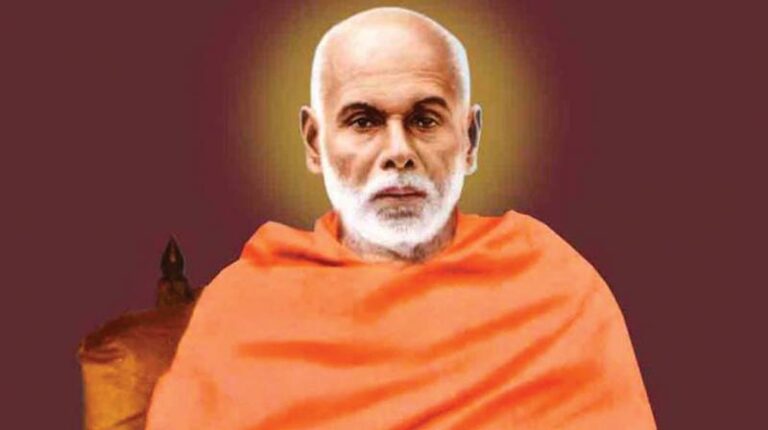
92 years ago, on 20 September 1928, Narayana Guru passed away at Sarada Mutt in Thiruvananthapuram. He was a spiritual leader, philosopher, and social reformer who led the anti-caste movement in Kerala in the 19th Century.
Narayana Guru was on 28 August 1855 to Madan Asan wife Kuttiyamma, belonging to the Ezhava caste (former untouchables; now classified as OBC), in village Chempazhanty in Thiruvananthapuram. At 15, while he was studying under Chempazhanthi Mootha Pillai in a Gurukula, his mother passed away. At 21, he went to central Travancore and learnt the Vedas, Upanishads, and Sanskirt from Raman Pillai Asan. He was a good student and wrote eloquent Sanskrit poetry. He returned to his village in 1881 when his father was seriously ill, and started a village school where he taught local children who affectionately called him Nanu Asan.
A year after his father’s death, he married Kaliamma. By then he had adopted the Advaitha philosophy, made wife her understand it as his life’s purpose. He renounced worldly attachments became an Avadhootha who roamed forests and hills, studying and philosophizing. Narayana Guru became the “Guru of the people.”
Early Encounters With Casteism
Even though he was able to achieve this because of his family’s position, Nanu (as he was called) was aware of and frustrated by the way Brahmins and Nairs treated Ezhavas and the practices Ezhavas had to conduct to avoid “polluting” upper castes. He was even more frustrated by their own role in graded inequality, and how Ezhavas ran a mile away from “impure” castes of Holeyas, Paras, Nayadis.
So, at a young age, he became mutinous, he would intentionally touch people from the Holeya caste and then go stand with people from his own caste to spite them:
Young Nanu also learned Ayurveda and treated people without caste barriers.
“Guru of the People”: the Anti-Caste Ascetic
After leaving home, Naanu traveled through Kerala and Tamil Nadu. He learnt meditation and yoga from Ayyavu Swamikal from whom he learned meditation and yoga. At the Pathadam caves, he set up a hermitage and practiced meditation for eight years. After this, he meditated in Arrivipuram for some time. There, he consecrated a piece of rock as the Shiva linga, which became the Aruvippuram Shiva Temple in what would be known as the Aruvipuram Pratishta act. This was met with great opposition from Brahmins, who questioned Guru’s right to consecrate the idol. To this, he famously replied:
This is not a Brahmin Shiva but an Ezhava Shiva
After this incident, Narayana Guru consecrated forty-five temples across Kerala, Tamil Nadu, Karnataka, and Sri Lanka. These were meant to be places for worship for those who were denied access to Brahmin-controlled temples. These were not necessarily conventional, brahminic idols; one of them was a slab inscribed with the words, Truth, Ethics, Compassion, Love. Notably, in 1912 he built Sarada Mutt for the Goddess Saraswati in Varkala, after trying for seven years. After falling ill, Narayana Guru returned to this Mutt, where he died at the age of 73.
At the same place, on 15 May 1903, the Ezhava leader, Dr. Padmanabhan “Palpu” and founder-president Narayana Guru created the Sree Narayana Dharam Paripalana Yogam for the betterment of the Ezhava community. After the consecration of the Sree Bhavaneeswara temple, its main institution, the two also built a lower primary school.
After shifting his base to Varkala, Narayana Guru created another school for students from lower strata of society, which gave free education to children regardless of their caste background.
Narayana Guru & the Vaikom Satyagraha
Memorial of the Movement at Vaikom
Narayana Guru and the anti-caste reformer and poet, Kumaran Asan were walking in front of the Shiva temple in Vaikom when they were stopped by Brahmins who told them “you are not allowed here. This is for Savarnas”. At the same temple, in 1800, 200 Ezhavas were massacred by a Brahmin when they tried to break the temple entry ban. Guru’s disciple T. K Madhavan, with his guidance, took the movement forward. Under SNDP, they organised Ezhava and Holeyas in thousands to fight the ban in what was known as the Kerala Paryatanam movement. Kumaran Asan wrote poetry for the movement.
Madhavan believed that the movement should highlight Kerala’s caste system to the nation, and therefore he invited the Indian National Congress and M. K Gandhi to join the movement. Following Gandhi, they started a Satyagraha on 30th March 1924 which went on for a year.
Narayana Guru was dismissive of this, urging the followers to jump across the temple gates and eat the Prasada with the Savarnas. However, Gandhi saw this as encouragement of violence. Periyar Ramaswami, who had defied Gandhi, also joined the movement and went to jail alongside Madhavan and came to be known as “the Vaikom Hero”. Meanwhile, Gandhi wanted to increase the participation of Savarna and called the Savarna Jatha. Thousands of Nairs and some Namboodiri Brahmins joined in on the movement. However, when the temple association held discussions, the Namboodiris made Gandhi wait outside as he had become “impure” by the touch of lower castes.
Despite these issues, the movement got mass appeal and was recognized nationally. It also influenced the Temple Entry Proclamation. This movement, and especially Narayana Guru, also inspired trade unionism in Kerala.
Since its establishment, the RSS and its organisations have been trying to rewrite various anti-caste icons, especially those who are considered regional heroes as part of the Hindutva fold. This is part of an effort of bringing in Bahujans into the RSS. These icons include Shivaji, Buddha, Ambedkar, and, of course, Narayana Guru.
The attempt at “Hinduising” these figures is twofold; firstly, instead of human beings or social reformers, they’re termed as Hindu Gods. Dominant Vaishnavite groups claim both Buddha and the Guru are avatars of Vishnu. Most images of him also create a “Godlike” halo around his head.
The second is by making them into icons that the RSS follow and protect. The venue of Jan Sangh’s first national meeting in Kerala was christened after the Guru. Narendra Modi’s visit to Sarada Mutt in 2015, was also extensively covered by media outlets for PR purposes, to connect him and the BJP to Naryana Guru. In 2016, 3 days prior to his Death Anniversary, the BJP in Kerala also posted a series of tweets in his praise. One of these blatantly made an attempt at saffronising him into their Brahmanic fold:
Sree NarayanaGuru was a Hindu saint who worked towards reforming Hinduism staying w/in the frames of the religion. #SreeNarayanaGuruJayanti
Moreover, they wrote “We should oppose any move to distort his vision and take him out of the mainstream” and that Narayana Guru was a conforming Hindu. This was met with backlash, and Chief Minister Pinarayi Vijayan called this “offensive” to his legacy and reminded people of Guru’s “No Caste” proclamation. He also noted that Narayana Guru never aspired to live as a particular caste or religion.
To term him a Hindu saint is decontextualisation; “Hindu” as a religious and personal identity was not as concrete as it is today, and largely existed as a colonial legal category. It is true that Narayana Guru followed the Vedantic Advaita philosophy, but he worked to reform the caste system, which required challenging Brahmanical laws. He did not identify himself as a Hindu, or with any religion; in 1924 he convened the All Religions Conference in Aluva, Kerala. At the conference, it was a Brahmin from Madras who represented the Hindu religion. Moreover, in his Universal Prayer for the masses, Narayana Guru wrote:
“Several sections of the media have misportrayed the incident in a communal light by spinning conspiracy theories and targeting the Muslim community.”
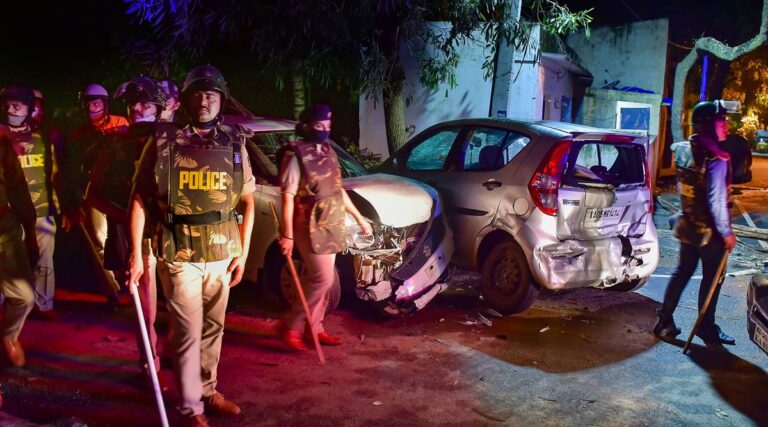
On August 11th an offensive Facebook post by P. Naveen Kumar triggered a chain of events that would result in violence at Kadugondanahalli (K.G. Halli) and Devarajeevanahalli (D.J. Halli) police stations and in other places including Kaval Byrasandra in Bangalore.
A fact-finding report from civil society groups called “Communalising Violence in D.J Halli” shows that the police did not follow due process to identify those involved in the Bangalore violence on August 11th, 2020. The report also states that the police arbitrarily arrested, isolated young Muslim men in the area. The report also counters false narratives that emerged since the incident, that communalize the incident and disproportionately attack vulnerable people.
The Incident
On August 11th at 5:46, Naveen Kumar (nephew of a Congress MLA, Akhanda Shrinivas Murthy) posted an incendiary image of the prophet. Shortly after Kumar’s post was published, a handful of people approached police at K.G. Halli and D.J Halli to register for an FIR against Naveen for his Facebook post, which could be legally considered hate speech. The report explores two versions on this: the people’s narrative following eye witnesses and community leaders, as well as the police narrative, based on 53 FIRs (21 were filed by the police).
By all accounts, the mob largely consisted of youths between the ages of 18-25. Many were not from the local area; as P.M Muzammil notes, community leaders did not recognise the people in the crowd, and at D.J Halli none of them could run into the mohallas when the firing or lathi charge began, or tear gas released. At both stations the crowds gathered separately from those who had filed the complaints. They were also initially peaceful and less in number, but swelled over the hours to around 2000, especially in areas like Kaval Byrasandra, where Naveen lived.
The response of State Forces
Police Inaction
A major reason why the violence escalated was because of police inaction on two fronts. Firstly, there was a delay in the initial filing of the complaint, despite promises made to those filing complaints that Naveen would be arrested immediately. The crowd gathered in greater numbers as time passed, and became agitated as vehicles entered and exited the compounds without attempts at arrest. The Social Democratic Party of India (SDPI) also suggested that the police delayed filing the FIR to protect Naveen, an MLA’s nephew. Members in the crowd also felt the same, and that other MLAs who were trying to pacify them were also protecting Naveen.
Secondly, the police did not respond as soon as the crowd started gathering, which allowed them to vent and grow increasingly angrier. Instead, the burden was placed on community leaders who had come to file the complaints, or after hearing of the violence. The police already had a tense relationship with the local community as, in the past, there had been two custodial deaths and one judicial death. The police also used to torture the locals, making it difficult to trust them. At D.J Halli, eyewitnesses described them as “confused and lacking in leadership”. They did not intervene until the Commissioner arrived almost two and a half hours after the crowd had become agitated, and they immediately lathi-charged, released tear gas, and fired at the crowd. Similarly, at K.J Halli the police waited for too long before taking action, before using violent measures to control the crowd.
2. Arbitrary Arrests of Muslims Youth- Section 144 & UAPA
“Rashida narrated that they came out of their house at 9.30 PM on August 11 when they heard noises, they saw a lot of people running. They then learnt of the Facebook post. She said that there was no electricity between 12.00 am and 1.00 am and they heard firing in the area. “The policemen were spread out in groups of five in the neighbourhood. About 140 youths were picked up that night,” she said.
On August 12th, a prohibitory order of Section 144 was established and extended every day till 6 am on August 16th. This prohibited people from carrying arms, gathering in groups of three or more, and even singing, playing music, displaying images, signals, posters. Anyone breaking these could be arrested for “rioting”.
Through the imposition of Section 144, the police were able to create a toxic and anxiety-inducing environment. They verbally and physically harassed people for stepping out of the house. They cut off electricity from the people in their jurisdiction one day. When people of the Secular Advocates Forum brought food as it would have been difficult for people to purchase food grains, the police barred them, saying, “We want to punish them and you want to feed them?”
This, along with the UAPA, proved to be a way for the police to “punish” people who lived in those areas, and vent their frustrations on vulnerable young, Muslim boys. The report explains that the UAPA is a draconian law which turns all basic principles of criminal jurisprudence on their head and don’t allow the possibility of a fair trial.
According to all accounts, innocent bystanders were arrested. Many of them were minors, and picked up by plainclothes officers. Other than in 1-2 cases, most of the arrest occurred between 1-4:30 am, creating a tense atmosphere. This was often without the family’s knowledge. In many cases, the families did not know about their whereabouts even after they were informed of the arrest. The police also did not explain why they were arresting these boys. One 16 year old, a car mechanic, had to give Rs. 1,60,000 to the police to release him.
Doors broken by police/RAF on August 11th
At Zafrulla Layout, which the police raided on the night of August 11, the police barged into people’s homes and broke their windows, doors, etc. The police were very clearly targeting muslims, as they let a family go back into their homes when they realised they were Christian. Most of the men picked up were working class and two were studying. One woman who had been going to the Police Station to find out about her family recounted that the police beat them up and sent them away multiple times.
“They just put them all in a bus and took them away. We hear stories about jails being overcrowded. During times of the Covid-19 illness we are afraid for them. They went away healthy, we don’t know in what state they will return. There will be no one to take care of them in case they fall ill.”
Narratives Around the Incident
Since the incident, various narratives were being created, especially to politicise the issue. Three fact finding teams were announced: by Congress, BJP, and “Citizens for Democracy” group. The third included many RSS members. Through close reading, the report shows that it lacks objectivity, and is biased towards a conspiracy theory created by the media and state government: that the violence was communal and pre-planned. The report deconstructs these ideas and shows how the media and government made it mainstream.
1. Media Fuelled Islamophobia
Barring a few media outlets, coverage of events of August 11th was biased. English and Kannada news outlets fuelled Islamophobic suspicions through unsubstantiated speculations.
Viewers are gaslighted into forming an opinion, where they introduced suspicions into viewers’ mind by adding quotations to factual elements. Most news channels would only add these when speaking of the derogatory nature of the post, making the violence seem as if they came out of nowhere.
There seems to have been a conscious effort by mainstream media to make it seem as if Naveen’s post was a response; they fabricated a reply to an image shared by Adyar Basheer which allegedly targeted Hindu Gods and Modi. However, media outlets that fact-checked the post were not able to find evidence of this, but this has not been as sensationalised or visible as the former claim. Even if Naveen did not mean to incite violence, they along with the police failed in assessing his motivations, instead gave him a free pass.
Besides this, news media such as Zee News, The Free Press Journal picked up narratives from twitter posed by the BJP It Cell and posited them as facts. They called the incident pre-planned, created links to “Islamic” terror, and implied connections between the Delhi Riots and Bengaluru Riots. Finally, the groups presented were alienated by the state, with Revenue Minister R. Ashoka deeming protestors “traitors”.
Kannada Media also followed similar patterns, but as it happened in the State’s capital, media coverage was extensive. Though narratives used national and international elements to link the crowd to the aforementioned forces, they emphasised local details to criminalise and create long-term repercussions for residents of D.J Halli and K.G Halli.
2. Political Conspiracies
Political ambitions fuelled conspiracy theories. Media outlets conspired that the violence was a result of local rivalry between corporators and MLAs, and infighting within the Congress. Early investigations, sensationalised by the media, also suggested a pre-planned conspiracy by the SDPI.
3. Role of Social Media
Even though they moderate content, Facebook and Instagram did not take action against Naveen’s post, which can be considered as hate speech. Nevertheless, Facebook regularly takes down posts that are not in support of the current political regime, and anti-Hindutva personalities being taken off the platforms.
The images analysed by the group show that several popular Muslim social media handles urged people to stay indoors and not to add to the existing tensions. However, these platforms lacked regulation, and misinformation and selective facts rapidly spread. This combined with people’s existing basis, increased hate towards Muslims.
Besides this, after the incident, the BJP IT cell was able to regularly create conspiracy theories that were not being fact-checked or self-regulated by the platforms.
Validity of Communal Violence
There isn’t evidence suggesting that mob violence was communal in nature. It wasn’t pre-planned or meant to target Hindus. While some members did attack the private property of some Hindus, it seems to have been based on personal vendettas. Notwithstanding, Firdos Pasha registered the first FIR against Naveen, and at 9:00 his vehicle was also torched.
Many Muslims also protected Hindu temples by making human chains around them.
Many Muslims also protected Hindu temples by making human chains around them. Munigowda, who lived near Naveen and whose home was burnt when their family was away, said that Muslim locals slept near the house to protect it. Other residents such as Arun Gowda echoed similar stories of solidarity. Munigowda also mentioned that CCTV footage caught some people distributing money to rioters, and alleges that they might have torched the place to frame Muslim locals.
However, according to all eyewitness accounts, there was also no visible leadership controlling the crowd. The locals identified were unemployed youth who felt alienated by the increasing institutionalised Islamophobia in the country. In fact, many Muslim community leaders spent 3-4 hours trying to ease the crowd, while the police did not intervene until late. Some accounts also state that the police instigated people, trashing members of Swaraj India with lathis after they left, around 2:00 am.
They recall that one person in the mob was very angry and was saying, “Yejmaan how much more can we take? Babri masjid, CAA, how much more?”
They report that though the area around D.J was largely dominated by Muslims, people there lived harmoniously. However, many felt that the RSS and BJP have been using discontent amongst Muslim youth for personal gains, and have been providing assistance only to Hindus in the area. While chronic neglect by the state has led to deprivation for all community members, the RSS has increased presence in Dalit pockets in these areas to divide the area along communal lines, and to appropriate Dalit voices into a Hindutva fold. Therefore, even though frustrated Muslim youth took part in the violence because of continued attacks on their religion, they weren’t inciting communal tensions.
Key Suggestions:
Widen the scope of investigation against Naveen’s post
Investigate intelligence failure in predicting the violence as well the police’s failure in to communicate with the mob.
Take forward a socio-economic survey in the two police stations
Implement the Justice Rajinder Sachar Committee Report and 15 Point Programme for the Welfare of Minorities.
Steps must be taken against the spreading of Islamophobia through mass media as well as in person.
Media should be self-regulating and not sensationalise the news.
UAPA charges must be dropped, families of the arrested must be informed.
Adhir Biswas was born in 1955 in a village called Magura in the Jessore district of erstwhile East Pakistan, now Bangladesh. He arrived in India in 1967 and completed his schooling and graduation in Calcutta. Like many refugees from East Bengal, he lived precariously for many years, eking out a livelihood through various means. But all the while, he pursued his passion for writing. He contributed stories and prose pieces to various little magazines and periodicals. The year 2012 saw the publication of Allahr Jomite Pa (Setting Foot on Allah’s Land), the first of his series of books on refugee memories. It was awarded the Suprabha Majumdar Memorial Prize by the Bangla Academy of the Govt of West Bengal in 2014. Udojahaj (The Aeroplane), Biswas’s four-volume collection of stories, novellas and novels for young readers, was awarded the Vidyasagar Memorial Prize in 2017 by the Govt of West Bengal. Adhir Biswas runs Gangchil, a small artisanal press in Kolkata, which has been successful in making a mark in the world of Bengali publishing.
Adhir Biswas has also contributed through these books to social history. His books tell us about a time, from the lived experience of a marginal man. Rarely is the voice of such people heard in literature.
I met Adhir in early 2016. He knew of me, as the translator of Subimal Misra, the Bengali anti-establishment and experimental writer. Gangchil has republished all of Misra’s books in nine volumes. Adhir gave me some of his books, to read and translate if I felt up to it. My friend and adviser on Bengali literature, Mrinal Bose, spoke well of Allahr Jomite Pa. It was only in 2018 that I could start translating the book. I completed it – but actually the book was only the first of a series of four books, which forms a kind of quartet. The other books are Udbastu Ponjika (A Refugee Almanac), Chalo India! (Let’s Go to India!) and Gorchumuk (A Sip of the Calcutta Maidan). This quartet, completed in 2018, is about refugee remembrance. Chalo India! is about Bengali cinema as seen through the eyes of a refugee boy, and Gorchumuk is about Calcutta’s Maidan, the heart of the city, once again, seen through the eyes of a newly arrived refugee boy.
chala India book by Adhir Biswas
Adhir had once told me, “I don’t forget anything.” In these books, he tells us what he remembers, or rather, he gives us bits and fragments. In the process, he creates a composite picture, something that needs to be viewed at a ‘distance’. Drawing on his memories of his childhood, when he lost his mother, his growing up years, his adolescence and his school and college years, he tells us the story of his impoverished family and their journey to India in the late-1960s and their subsequent fortunes in this country. While giving a sensitive, touching and moving account, the author also reveals his own distinctive mien and sensibility. Adhir Biswas has also contributed through these books to social history. His books tell us about a time, from the lived experience of a marginal man. Rarely is the voice of such people heard in literature. For me, the personal story of Adhir is like a parallel story to that great novel of Bengali literature, Aporajito, by Bibhuti Bhushan Bandopadhyay, which was also made into a renowned film of the same name by Satyajit Ray. That novel was about the journey of a poor brahmin boy from a village into the world of learning, and to the city of Calcutta. In Biswas’s quartet, it is about a dalit boy from across the border who survives poverty, adversity, ill-health and disregard with an indomitable spirit. But he forms and never refuses to disavow a personal aspiration, to be a writer. These books may be read as an expression of that aspiration. And because this story is so different from Aparajito, it is told in a different style. Biswas’s writing is terse and cryptic. That describes his sentences. His words are merely a means to tell a tale. With which he creates a larger picture.
udojahaj, book by Adhir Biswas
He defines subalternity and marginality, and he gives us a glimpse into the formation of subaltern consciousness, and the making of an organic intellectual. The writing is non-fiction, but notwithstanding the author’s modesty of expression, the work is of a ‘literary’ nature, rather than ‘academic’.
Indian literature is being turned upside down with the subaltern speaking, and I feel it is vital to capture this phenomenon via English translation. I completed translating the final book of the quartet in the end of 2019, and am currently editing the manuscript for submission. The books will appear in a single volume, and will be published by Stree-Samya Books.
V. Ramaswamy lives in Kolkata. His translations of the short fiction of Subimal Misra include, The Golden Gandhi Statue from America, Wild Animals Prohibited, and This Could Have Become Ramayan Chamar’s Tale: Two Anti-Novels.
Recently, the Netflix film The Social Dilemma received great attention and positive reviews because of its critique of mechanisms developed to monopolise user attention for-profit and their harms. It does so by interspersing interviews from tech gurus, industry experts, and academics along with the fictional story of a boy who becomes increasingly radicalised and alienated from his family because of social media. While we follow the boy, we also see three men who exist as a visual metaphor of AI who use the boy’s personal data to increase engagement for profit.
So why would Netflix stream and extensively advertise a movie which critiques the way tech companies use and store private data to track people’s movements? Why would any platform work against their own interests?
Of course, they aren’t. The documentary appropriates critiques of mass media and the culture industry and fuses it with liberal anxieties surrounding social media. These anxieties are especially with regards to the mainstreaming of the radical right and left-wing discourses. What emerges is an ahistorical and ideologically lacking movie that induces moral panic. Because of its endorsement of the neoliberal-capitalist social order, SocialDilemma also fails to posit any real solutions to the issue of surveillance capitalism.
Editing and Storytelling
Throughout theSocialDilemma, there are barely any quiet moments where the viewer can listen to the dialogue without visual and audio cues manipulating their responses. We also extensively follow Tristan Harris in staged scenes which make him appear more authentic and real. He does a magic trick, talks about his childhood, practices a Ted talk for no one. Other interviewees who are prominently featured- white industrialists and tech engineers- seem baffled at the start, as if they’re just grappling with their role. This creates an “authenticity hoax”, making them more trustworthy. Netflix describes the background music as “eerie” and the continued use of it along with additional sound signalling danger creates a sense of doom.
Screengrab from the Netflix Movie: The Social Dilemma
Of course, every film uses these, but not to the extent astheSocialDilemma. In the first half of the film, after each sentence from one interviewee, it cuts to a different interviewee. If this continues for more than a few minutes, they cut to a visual graphic. The documentary almost reads as if it was made like a social media platform in itself; the lack of continued and focused dialogue is meant to cater to the short attention spans of its viewers, making every moment as gratifying as possible, which the movie itself describes as “attention economy”. Because of this, other than a few repeated core concepts, the documentary uses many keywords in hopes that at least some of them will grab our attention. Very little time is actually spent on most of these concepts or their implications. Because of this people would come out of the film reaffirming their existing beliefs, and not be challenged.
Moral Panic vs Confronting Neoliberal Individualism
One of the repeated concerns of the film is the “addictive” nature of social media for young teens, and how it fuels their depression and makes them less “human”. As Eva Illouz notes, critiques of technology revolving around “humanness” come from a “longing for purity”. This is especially dangerous since such notions of “pure humans” do not serve disenfranchised groups. At one point, the movie compares social media to drug dealers. This uses the people’s paranoia around drugs because of anti-black and anti-Latinx propaganda and policies to induce moral panic.
This moral panic is furthered by the imagery used in the clips that follow the young boy. His propaganda hating older sister, who is disillusioned with social media, is left alone by her family after then pre-teen child breaks open glass to get her phone out after a minute of not using it. The family- and particularly the heterosexual white family- becomes “broken” because of their children’s alienation owing to social media.
As the movie suggests, there is definitely an issue with increasing social media addiction amongst teens. The Social Dilemma especially does an excellent job in explaining how seemingly normal aspects of social media, such as endless scrolling or notifications (addictive interface elements) fuel alienation. It also examines the dangers of automated changes, as well as how social media apps which are meant to “tweak” parts of your body body has increased cases of body dysmorphia.
But it misses that -much like the war on drugs- the issue cannot be confronted without confronting social structures as a whole. Here, individualisation of people occurs through late capitalism and is related to people’s increasing disconnect from our material reality, community (and not family), and politics. Social media is certainly part of this as it transforms average citizens into consumers in every aspect of their lives, but it is not unique.
Future of the Internet: Still Corporates?
Though the film spoke about how corporations are inherently designed for profit, and therefore will not care about the effects it has on people, they could that the internet should still be profit-driven. This isn’t surprising since the men who had most screen time are still making money in the industry. The few women or people of colour interviewed are mostly academics who barely got any screen time and their views were likely misrepresented. So, what these men pose is an internet with “more regulations and more competition”, where consumers can choose what’s right for them and their families.
If corporates are still making a profit off the Internet and privatising websites, what would be their source of income? The Social Dilemma gives the example of Wikipedia as a website that is “fundamentally good”, but Wikipedia exists on the principle that knowledge should be free and available to all. So, would they use advertisements? This doesn’t seem like a move in the right direction as the film itself critiques the model where users are both consumers as well as the product. Surely regulation of ads doesn’t change the way social media targets its users?
The second option would be the Netflix model, where everything exists behind a paywall, but with regulations prohibiting storing user data. However, media history already tells us why this would be a dangerous idea, with the story of Aaron Swartz; Swartz was on the CIA watchlist for his activism against privatisation of online data (stopping the Online Piracy Act) and free internet. After being targeted for two years for mass downloading articles from JStor, Swartz committed suicide. The state pursued Swartz for resisting privatisation to the point that he felt that the only option he had was death.
Ahistoricism and Misunderstanding Power Structures
TheSocialDilemma takes an ahistorical approach in understanding how social media functions. Swartz’s case is a pivotal moment in media history as privatisation took a complete hold on the Internet since his death in 2012, but it’s not even mentioned in the documentary. One of the interviewees states that depression rates and the way people used social media changed drastically in the 2010s. She says that before, the internet was a “fun place for weirdos”, but doesn’t connect this shift to laws released at the same time that increased privatisation. This romanticisation of the “old internet” as a tool created for fun is ahistorical as well as it erases the internet’s origins as a surveillance tool created by the U.S Government in the 70s.
The documentary doesn’t look at history because of its lack of incentive to explore how oppressive structures function. It does highlight oppressive Governments’ use of social media for targeting people. But it also labels people who don’t believe in their Governments as “delusional”. Throughout the documentary, we follow a young white boy as he shifts from a loveable football player to a “radical centrist”- an amalgamation of both radical left and right positions. He doesn’t vote because he was targeted with advertisements (with a black lives matter symbol that says “don’t vote!”).
As the documentary reaches its final act, the boy is completely cut off from his family and goes to a protest where he is violently arrested. This is paralleled with videos of violent protests from different countries. Bizarrely, the conclusion that the Social Dilemma makes is that the violence is a result of echo chambers and that this is unique to this decade. At a conference, an unnamed man intervenes and states that while social media is a new tool of control, its effects are a continuation of mass media under late capitalism. The humanised Tristan, however, deems this “naive”, and so the audience does too.
In the end, the Social Dilemma is unable to grapple with the idea that the fundamentals liberal conception of “freedom”-the freedom of competitive markets which gives its consumers choices- might in itself be the cause for many of the issues we face.
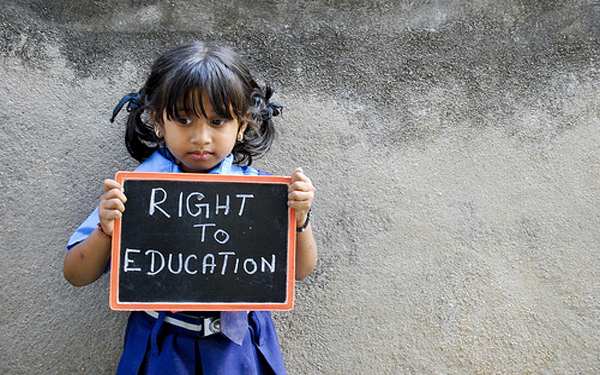
The National Statistical Organization (NSO) recently presented its detailed findings from its nation-wide survey on household social consumption of education in India. The survey collected information on various aspects of education such as literacy levels, accessibility, cost of education, attendance, and so on.
The survey covers the whole of the Indian Union except the villages in the Andaman and Nicobar Islands which are difficult to access.
Literacy Rates
Overall, the NSO education survey found that the literacy rate in rural areas was 73.5% compared to 87.7% in urban areas. The female literacy rate was 70.3% while the male literacy rate was 84.7%. Kerala recorded the highest literacy rates amongst both men and women in rural and urban areas. Other states with high literacy rates were Uttarakhand and Himachal Pradesh.
The 90.8% literacy rate amongst men from general castes was much higher than the 77.5%, 80.3%, and 84.4% literacy rates amongst men from Scheduled Castes, Scheduled Tribes, and Other Backward Classes, respectively. While women from all castes had lower literacy rates, the 80.6% literacy amongst women from general castes was a contrast to the 61.3%, 63.9%, and 68.9% literacy rates amongst SC, ST, and OBC women respectively.
Out of the different religions, literacy rates were the lowest amongst both men and women who follow Islam, pointing to the exclusion of Muslims from the education system.
Access to Education
The time and cost of travelling to and from educational institutions can have a huge impact on the ability of students to continue attending classes.
According to the NSO education survey, while 92.7% of households in rural areas and 87.2% households in urban areas had a primary school within 1 km of their house, the percentage drops as one goes higher up in the education system. 68.1% of households in rural areas and 80.4% of households in urban areas had a school with primary/middle-level classes within a distance of 1 km. Only 37.5% of households in rural areas and 69.9% of households in urban areas had a school with secondary level classes within a distance of 1 km.
63.6% of students in rural areas, and 50% of students in urban areas travelled to school on foot.
Access to online education, as promoted by the NEP, is questionable as only 4.4% of rural households and 23.4% of urban households owned a computer of any kind. 14.9% of rural households and 42.0% of urban households had access to an internet facility. However, only 16.5% of male and female population above the age of 5 from rural and urban areas are able to operate a computer, and 20.1% are able to use the internet. Only 17.6% had used the internet in the last 30 days.
Enrollment Patterns and Drop Outs
Only 7.4 percent of the male rural population and 3.9 per cent of the female rural population had successfully completed education at a graduate level or above. In urban areas, the male population for the same was 24.6%, and the female population was 18.6%.
97.1% of male population and 98.3% of female population were pursuing general courses in rural areas, while the population for the same in urban areas was 91.7% and 93.7% for men and women respectively. Out of those who pursued technical/professional courses, the maximum students were pursuing engineering amongst both rural and urban men and women.
Enrollment in government educational institutions as compared to private institutions is higher at the primary level compared to higher education and in rural areas compared to urban education. As few as 13.9% of urban population is enrolled in government primary schools. The high enrollment in private institutions is mostly due to government schools’ quality of education not being perceived as satisfactory enough, as can be seen from the following table.
Courtesy: NSO
42.7% of rural and urban male students and 42.2% of rural and urban female students had enrolled at some point but are currently not attending educational institutions. The biggest reason for stopping their education amongst male students is engagement in economic activities and for female students it is engagement in domestic activities. All the other reasons can be seen in the table below.
Courtesy: NSO
Free and Affordable Education
The NSO education survey found that only 32.6 % of all students, rural and urban, are enrolled in primary education institutions where they receive free education. While the percentage is at 72.3% in rural areas, it is merely 14.2% in urban areas. 13.8% of all students, rural and urban, received any scholarship/stipend/reimbursement etc from any educational institution. 45.4% of all students, rural and urban, received free/subsidized textbooks from educational institutions. Only 9.2% of all students received free/subsidized stationery. Most of the students receiving free education, scholarships, free or subsidized textbooks, and free or subsidized stationery, belonged to government schools.
Only 41.8% of all students reported receiving midday meals from their educational institutions. Out of these 98.6% said that the government provided for these meals.
19.8% of all students had attended private coaching. The numbers were highest in the primary level, middle level, and higher secondary level in urban areas, being between 24% and 38%. In rural areas, the highest enrollment was at the secondary and higher secondary levels at 27.2 and 23.1% respectively. Such high percentage of enrollment in private coaching and tuition centres points to the low quality of education in schools.
While the measures set up in the public education system to increase access to education are a stark contrast to private education which leaves students to fend for themselves, the falling quality of education in government schools leads to those students who can afford it to choose private institutions, hence creating a disparity in the kind of education received by students.
Rather than promoting the privatisation of education, the government should be paying attention to improving the quality of government schools as the services provided by the public education system are crucial to the wellbeing of poor and marginalized children and students in the country.





 The protesters who have strong objections against the ruling Bharatiya Janata Party government policy of adopting an ordinance route to bring in legislation have decided to hold a parallel session against the current legislative session.
The government taking advantage of the present COVID-19 situation has been pursuing anti-people policies and has taken the ordinance route. The changes brought to the Karnataka Land Reforms Act were against the spirit of the land reforms. These reforms were detrimental to the interest of the farmers and had been brought only to favor the capitalists, the protesters alleged and took out a massive protest rally at Freedom Park.