The California State Senate on Thursday cleared a bill to outlaw discrimination based on caste in the State. The bill passed with a 34-1 vote and will now go to the State Assembly for consideration.If it passes in the State Assembly and is enacted, California could become the first state in the the United States to outlaw caste discrimination by adding oppressed castes as a protected category in the state’s anti-discrimination laws.Earlier in February, the Seattle city council added caste to its anti-discrimination laws with a vote of 6-1, becoming the first US city and the first jurisdiction outside South Asia to ban caste discrimination. Several colleges and universities have also enacted similar policies barring caste discrimination on campuses, including University of California, Davis. Two weeks ago, striking students and workers in Rutgers University, New York, demanded that caste-based discrimination be banned on campus.
According to a report by Equality Labs from 2018, caste discrimination is rampant in the United States. 25% Dalits surveyed faced verbal or physical assault based on their caste, 60% Dalits faced derogatory caste-based jokes, 40% Dalits and 14% Shudras were made to feel unwelcome in places of worship, and 20% Dalits felt discriminated against at a place of business. Carnegie Endowment for International Peace found that 5% of Americans face caste-based discrimination, with high discrimination in areas with a large South Asian population.
State Senator Aisha Wahab, the first Muslim and Afghan American elected to the legislature, introduced the bill in March. On April 25, hundreds on both sides of the issue came to voice their opinions during a Senate Judiciary hearing on the matter. Proponents said that caste discrimination is a reality in California and that clarifying the state’s anti-discrimination laws will help protect caste-oppressed communities. Opponents maintained that the law will single out Hindus and people of Indian descent.Only Sen. Brian Jones voted against the legislation saying that he had heard concerns from numerous constituents and agrees with them that the legislation unfairly targets a specific group. He contended that caste bias is already covered under existing anti-discrimination laws.In April, the California Civil Rights Department voluntarily dismissed its case alleging caste discrimination against two Cisco engineers, Sundar Iyer and Ramana Kompella, while still keeping alive its litigation against the Silicon Valley tech giant. The case of caste discrimination goes back to 2016 when the complainant had reported Iyer to Human resources in November 2016 for outing him as a Dalit to colleagues. Iyer allegedly retaliated, but Cisco determined caste discrimination was not illegal and issues continued through 2018, the lawsuit states. Cisco reassigned and isolated the employee, rejected a raise and opportunities that would have led to one, and denied two promotions, according to the lawsuit.Thenmozhi Soundararajan, founder and executive director of Equality Labs, told Associated Press that the dismissal of the case against Iyer and Kompella does not change anything as the case “has given so many Dalits the courage to come forward with their stories about caste discrimination in education, the medical and tech industries”. She further added that “This is not a loss, but progress. The Dalit community owes [the engineer] and the Civil Rights Department gratitude for having the courage to bring such a historic case forward.”Read Also: California: Cisco sued over job discrimination based on caste of an Indian EmployeeSimilarly, Seattle Councilmember Kshama Sawant, in reference to the California bill, told the Indian Expressthat the fight does not end here. “We will be looking at going all the way to the US Congress for a similar Bill at the Federal level,” she stated.Source: Associated Press
Pakistan Tehreek-e-Insaf (PTI) Secretary General Asad Umar wasarrestedon Wednesday from Islamabad High Court premises by the Anti-Terrorist Squad of the Islamabad police. This came a day after PTI Chairman and former Prime Minister Imran Khan was arrested by Rangers outside the Islamabad High Court.
Umar was at the Bar Association Office with PTI leaders such as PTI Vice Chairman Shah Mahmood Qureshi, Senator Saifullah Sarwar Khan Nyazee and Ghulam Sarwar Khanalong to prepare to file a plea for a meeting with Khan.
Khan was arrested in connection with the Al-Qadir Trust Case, in which the Al-Qadir Trust run by Khan and his wife Bushra Bibi received Rs. 5 billion and hundreds of kanals of land from real estate firm Bahria Town as a “donation”. It was allegedthat the money was sent in return for legalising a laundered amount of Rs. 50 billion and that the settlement between the two caused a loss of 190 million pounds to the national exchequer. Following Khan’s removal from power in last April, hundreds of cases have been filed against him, including charges of corruption and terrorism. Just hours before Khan’s arrest on Tuesday, an anti-terrorism court in Pakistan had approved his interim bail pleas in multiple cases.Noting, among other things, that Khan’s arrest warrants were issued by the National Accountability Bureau (NAB) and that the investigating officer from NAB was present during the arrest, the Islamabad High Court on Tuesday night declared Khan’s arrest as legal. The court also issued show-cause notices to the interior secretary and Islamabad IG, and directed the court registrar to get an FIR registered over the circumstances of Imran’s arrest. Khan is likely to remain in NAB custody for 4-5 days.During the court hearing for the same, Barrister Gohar Khan alleged that the former PM was “tortured” by the rangers and hit on the head and injured leg, and his wheelchair was tossed aside. Barrister Safdar added that the lawyers who came to assist him were also beaten up.
Following his arrest, PTI gave an immediate call for staging protests in the country. Largescale protests broke out in several cities such as Quetta, Karachi, Gilgit, Peshawar, Rawalpindi and Lahore. PTI workers stormed the Corps Commanders’ residence in Lahore and the Pakistan Army headquarters in Rawalpindi. The protestors smashed into both establishments by breaking the front gates, and destroyed property such as furniture. The Corps Commanders’ residence was later set on fire and a canon was taken.
People also took down army monuments and statues and many raised slogans against the army. This is the first time that Pakistan has seen a large-scale popular struggle against the military.
This is a mile away from my home, people in Sargodha contentment broke down the army honours they used to look up with pride for decades. Pure chaos. Pure pain. The damage you idiots have done is unparalleled. pic.twitter.com/25G83cV4IV
The Pakistani diaspora also held protests in New York, London, Toronto, Washington DC, Dallas, Chicago, Manchester, Wales, and other regions.
Imran Khan protest goes global – A large number of Pakistanis are protesting Imran Khan’s arrest in front of Nawaz Sharif’s house in London. pic.twitter.com/34V68Ak46G
The police imposed Section 144 in Islamabad, Peshawar and Punjab and other big cities. In Peshawar, Section 144 has been imposed for thirty days and authorities have warned strict action in case of violation. Police fired tear gas against protestors in Islamabad, Reuters reports. Authorities report that 43 protesters were arrested in Islamabad and 23 PTI workers were arrested in Karachi. One protester was killed and six were injured. Six police officers were also injured in Quetta. The PTI twitter handle accused the police of abducting Ali Haider Zaidi, PTI President of the Sindh chapter. Social media sites such as Twitter, Facebook and YouTube have been suspended in some parts of the country. Mobile internet services have also been suspended in major cities. All Pakistan Private Schools Federation announced that all private schools would remain closed on Wednesday.
Former Pakistan prime minister Imran Khan was arrested from outside the Islamabad High Court by Rangers on Tuesday, Pakistan media reported. Khan, the chairman of the Pakistan Tehreek-e-Insaf (PTI), was taken into custody from a court premises in Islamabad in a corruption case, the reports indicated.
“Imran Khan’s car has been surrounded,” Khan’s aide Fawad Chaudhry said without confirming his arrest. Information minister Marriyum Aurangzeb did not immediately respond to news agency Reuters request seeking confirmation of the report.
Another PTI leader Azhar Mashwani alleged that 70-year-old Khan had been “abducted” from inside the court by the Rangers. He said that the party had given an immediate call for staging protests in the country.
“They are torturing Imran Khan right now […] they are beating Khan sahib. They have done something with Khan sahib,” Cheema said in a video message posted on the party’s Twitter handle.
Khan’s arrest comes a day after the Pakistan Army slammed the former PM for “highly irresponsible and baseless” allegations by him against a serving ISI officer without any evidence as a fresh war of words broke out between the powerful military and the former prime minister.
In a strongly worded statement, the Inter-Services Public Relations (ISPR) – the media wing of the military- also said that Khan’s “fabricated and malicious allegations are extremely unfortunate, deplorable and unacceptable”.
“This has been a consistent pattern for last one year wherein military and intelligence agencies officials are targeted with insinuations and sensational propaganda for the furtherance of political objectives,” it said.
The statement came two days after the 70-year-old former cricketer-turned-politician at a rally on Saturday accused spy agency ISI Gen Faisal Naseer of orchestrating plans to murder him.
Earlier, Prime Minister Shehbaz Sharif took the PTI chief to task for “maligning and threatening” the army and intelligence agencies.
(With inputs from agencies)
It is an absolute tragedy that the Kukis and the Meeteis in Manipur have clashed and killed each other in the the early part of May 2023. This is now followed-up by what was a prelude to the crisis in terms of political articulations, free for all statements, allegations and what not. Whereas the usual understanding of such crises is in terms of explaining the process and the outcome of what has just happened, I feel strongly that such an approach would be very inappropriate to understand and explain the present crisis – we need to have an idea of the ethnicity building-ups at least during the previous few decades, the emergence of new shared feelings within each ethnicity, the qualitative as well as quantitative dynamics of demographic characteristics of each ethnicity, and the unfolding overall development dynamics of the economy and society.
I prefer to look from this larger and longer-term perspective to analyse what has just happened in Manipur instead of a common approach to bring in a recent order of the High Court of Manipur directing the provincial government to put recommendation for inclusion of the Meeteis in the Scheduled Tribes of India. While this directive and the demand for inclusion of the of the Meeteis have been there for some time, these would not be the ultimate flame for the recent clash.
So let us look at the potential causes. During the last two decades or so, a very healthy and positive social strength of the Kukis has become visible. Increasingly, we are witnessing robust youths – both boys and girls – among the Kukis becoming competent professionals ranging from plain academic to professional degrees. This has invariably enhanced the Social Aspirations of their community. This transformation must definitely have had a kind of behavioural implications for them. During the last thirty/forty years, the Kukis have been manifesting the preference to settle in a location in a rather permanent way and in a way different from their earlier social habits. In this, the fast decline in the coverage of the Protected Forest Areas of the governme nt must naturally have attracted their attention; while the geographic size remains the same, the trees (as huge as they are) in the Protected Forest areas have been the easy targets of the powers that be and the high-ranking officials. So when the Kukis express their preference for these areas for settlement, the moral ground for rejection is naturally weak.
This reality has been coupled by the establishment of military rule in the neighbouring country of Myanmar. There are signs that the Kukis on both sides of the country have been able to augment their interactions with potential encouragements from China. Since the borders are porous and significant political developments are happening across the border, it is imperative that India has a Myanmar Policy with the North East, particularly Manipur, in the background. But does India have a Myanmar Policy? NO.
With the different ethnic groupings constituting the society of Manipur, and with the inter- and intra-ethnic qualitative and quantitative dimensions undergoing changes, it is of utmost significance that there is a Demographic (Population) Policy keeping in mind the domestic as well as international political economic implications and also reflecting the socio-cultural dimensions. Does India (for that matter, Manipur) have one? NO.
Since there has been different property rights regimes in an otherwise small region like Manipur, it is imperative that a land policy is evolved to ultimately align the varied interests of the ethnicities. Does Manipur have a Land Policy? NO.
Because of history of association, the affiliation of the Kukis to the social sector structure of Manipur, both in terms of participation and alliance, is more robust than elsewhere.
In this more-ethnicity oriented social complex, there has recently emerged a more rigorous religious-oriented political arrangement.
These unfolding are happening in a context of Manipur where there has not emerged any long-term dynamics of development and for socio-political endeavors for shared development. This is a convenient atmosphere for various agents to maneuver for upmanship. During the last few months, groupings of the various ethnicities – the Kukis and the Meeteis – have been making fairly provocative statements reflecting rising intentions of engagements. This is the moment for the governance to come in and put in place the desired lines of action and compliance. While Government has been there, the Governance has not been visible.
Thus the twin absence of Policy and Governance have led to a crisis of inter-ethnic conflict in Manipur. But the inherited general strength of the population has been there for sharing and appreciation for ages across ethnicities, and it does possess elements for continuous sustainability.
Read also: Manipur Burns Over Question of ST Status For MeiteisProf. Amar Yumnam is a Fellow / Visiting Professor at the Centre for Economic and Social Studies (CESS). Views expressed here are personal.
Karnataka Elections are two days away and we can see already the level of discourse going down in the election speeches where instead of issues that affect daily lives of people the leaders are talking about Ram and Hanuman.
Even though BJP has not ruled the state for long, Karnataka has been battling the saffron onslaught for decades now. After BJP came to power again in 2018 by Operation Lotus, it has been vehemently and shamelessly pushing its communal agenda making the state a communal cauldron.
Over the last two years only, BJP government in Karnataka has managed to pass most anti people bills like anti cow slaughter bill and Anti conversion bill. These bills are used to harass the minority population and there have been several cases of Muslim and Christian places of worship being vandalised and prayer meets being disturbed across Karnataka.
Last one year the state was not in news for its IT sector but for Hijab politics. Throughout the year Muslim girls were harassed and made to remove hijab to attend classes and exams. Many girls quit studies altogether.
Economic boycott of Muslim traders and violence by sangh elements were very much visible throughout social media. All this while the state was reeling from post covid economic crisis like the rest of the country. It this was not enough the government was in news for one after another scam earning the nickname of 40% commission Sarkar.
Eddelu Karnataka
The events of last 4 years had shaken up the progressive sections of the society that has always believed in the secular syncretic traditions of Karnataka.
“Garden of peace for all races” as Karnataka was called by the many saints that have come from the states was being poisoned. Many could not believe what was happening in front of their eyes. MLAs who were bought and sold to form government. It is not chosen by the people.
What is Eddelu Karnataka?
Eddelu Karnataka or Wake up karnataka or Jaago Karnataka is a non-partisan civic campaign that was born with the bold decision to ensure that Karnataka does not fall prey to this evil plot once again.
Eddelu Karnataka is a joint platform of many individuals, organisations, civil society groups with a common aim to defeat BJP in this elections. The campaign is being led by many eminent intellectuals from the state like Purushottam Bilimale, Tara Rao, Du Sarawathi, Rahamat Tarikere, Devanur Mahadeva, G.N. Devy and AR Vasavi.
The idea of such a campaign came into being in January 2023 and by March 5th a consulting meeting was held in Bangalore which was attending by 150 organisations from 21 districts.
While intervening in the political arena as a civic forum, we have to be realistic as we, the common people, do not have many political options. Politics itself has sunk to an unprecedented low. From this, we have to find a solution based on reality. The main point is to prevent this extortionist government from regaining power. The party that gave the misrule should be defeated first. Then fight with the victors for the restoration of the people’s interests must continue – this is the only way to preserve democracy says Purushottam Bilimale.
Rejecting BJP is not enough. It is our responsibility to defeat them in such a way that they do not come to the market to buy MLAs again. Most of the people agree that this government which has brought untold suffering to the people should be removed. But who do we root for? People should vote for the candidate that can defeat BJP. If we are divided, only the party that splits us will benefit says Yogendra Yadav who has also backed the campaign.
The campaign has decided to not take financial aid from any political party and is not affiliated to any political party. We are also standing by the principles of not supporting any of the opposition parties per say but insisting that they agree to peoples major issues around and abide by them. This is a different experiment the fruits of which need to be properly assessed says Noor Sridhar.
Eddelu Karnataka has refined their demands to three principles of voting that everyone should follow:
No vote should be wasted. Everyone must vote without fail or excuse.
Vote should not be divided. Consultations and consensus should be built to iron out differences.
Vote only for the candidate who can defeat BJP. No point in voting for a candidate who is unlikely to win against BJP as such a vote will only help those whom we want to defeat.
Eddelu Karnataka’s sole aim is to deliver the message “Votes should not be wasted”, “Votes should not be divided”, “Vote for the candidate who can defeat the BJP”.
The campaign if successful would be a model for other states and for the participation of civil society to participate in voter awareness and demanding opposition candidates to do better and not only rely on anti incumbency wave.
As part of the campaign, the forum has been conducting a series of zonal, district and constituency level workshop for last one month conducting almost 110 workshops. The campaign also released a booklet exposing BJP’s misrule and 2 songs for the campaign.
As part of the campaign voter awareness, enrollment of voters was of prime importance. More than 1 lakh 58 thousand voters [1,10,000 Muslims and 48,000 Christians] were reenrolled, who were missing from the voters list.
Eddelu Karnataka also received support from Karnataka Rajya Raitha Sangha, State trade unions, Dalit Sangharsh Samiti, OBC federation, Muslim and Christian organisations and worked in coordination with the team.
Eddelu Karnataka (EK) campaign also managed to make some smaller parties and independent candidates who would act as vote splitters to sit out.
In response to Samyukt Kisan Morcha’s call for protests, farmers’ and workers’ organisations have joined the protesting wrestlers at Jantar Mantar or held separate protests in the border regions of the National Capital. Farmers from over three hundred Khap Panchayats and several farmers’ unions joined the wrestlers’ indefinite protests at Jantar Mantar over Sunday and Monday to demand the arrest of WFI chief and BJP MP Brij Bhushan Sharan Singh over several sexual harassment charges, including child sexual harassment charges. Farmers’ unions such as Bharatiya Kisan Union (BKU) and Samyukt Kisan Morcha (SKM) reached Jantar Mantar on Sunday and more unions such as BKU (Krantikari) joined the protest on Monday. They have come from across Punjab, Haryana, Rajasthan and Uttar Pradesh. It was announced that moving forward, Khap Panchayats will be joining the wrestlers’ at Jantar Mantar every day until the demands are met. The wrestlers have been protesting at Jantar Mantar for action to be taken against Singh since April 23. They have given the government till May 21 to arrest Singh and meet their demands.On Sunday, several farmers from BKU (Ekta Ugrahan), including the women’s contingent, were stopped by the police at Tikri border to prevent them from entering the National Capital and reaching the wrestlers’ protest. The Delhi Police deployed over 2000 personnel at Jantar Mantar and at the borders to prevent farmers from joining the protest. They did not allow any buses or tractor trolleys that held farmers to go through. Image Source: https://www.tribuneindia.com/news/haryana/tight-security-arrangements-at-tikri-border-505830Despite this, around 350 women farmers met with the protesting wrestlers to extend support. Farmers across organisations such as BKU and SKM reached Jantar Mantar in large numbers and filled up the area. The Delhi Police used heavy barricading to thin the crowd and subjected all the entering protestors to facial recognition technology and high surveillance through a mobile CCTV control room equipped with 13 HD cameras. Johinder Singh Ugraha, Rakesh Tikait, Darshan Pal, Baldev Singh Sirsa and other farmers’ leaders joined the wrestlers on the dais and spoke out against the BJP government’s complicity in the matter. They demanded that Singh be arrested immediately. Tikait told the crowd that this will be a long fight but they will not back down. He pointed out that once a case is registered under the The Protection of Children from Sexual Offences (POCSO) Act, 2012, the offender is to be arrested immediately. However, in the case of the wrestlers, no action has been taken yet. He further said that it is of great sadness that those who brought pride and international repute to the country are having to undergo such injustices. A roadmap is being prepared for the upcoming protests. Wrestling star Vinesh Phogat added that the committee investigation into this matter has made a joke out of very serious sexual harassment allegations. They also took out a candle march in the evening.
VIDEO | "The protest will continue till these kids (protesting wrestlers) get justice but how we take it forward, that will be decided by all of us today," says Chaudhary Surender Solanki, Khap president Palam, on mahapanchayat at Jantar Mantar today. pic.twitter.com/D4AurXXNP8
Other organisations showed support for the wrestlers by holding protests and rally’s in their respective localities. Jan Sangarsh Manch, Haryana, held a demonstration at the old bus stand Thanesar, Kurukshetra, to demand the immediate arrest of Singh. JSM leader Chandra Rekha addressed the crowd and stated that despite the case being registered under the POCSO Act, Singh has not even been removed from any positions of power, let alone arrested. Meanwhile, Singh has openly threatened and pressurised the seven women wrestlers who have registered complaints against him.
Student leader Kavita Vidrohi further pointed out that the Home Minister Amit Shah and Sports Minister Anurag Thakur have given complete political protection to Singh, who is a member of their party. She condemned the Delhi Police for cutting off electricity supply to the wrestlers sitting at the dharna, removing mobile toilets and preventing them from accessing beds in the rain, and demanded strict action against the police officers who harassed the wrestlers. The whole affair has exposed the Modi government does not actually care about women empowerment, despite the slogan – “Beti Bachao, Beti Padhao” (Save the Girl, Educate the Girl).
The protest was attended by many groups. Workers from MNREGA Mazdoor Union and Construction Work Mazdoor Mistry Union also participated in large numbers.Image Source: Jan Sangarsh Manch FacebookImage Source: Jan Sangarsh Manch FacebookRead also: SKM Announces Nationwide Agitation In Support Of Wrestlers’ Protest
On 30 April 2023, the results of the Paraguayan general elections were declared. Colorado party candidate Santiago Peña and his Vice Presidential candidate Pedro Alliana won the election beating Paraguayo Cubas and the Concertación candidate Efraín Alegre. Peña will take office later this year on 15 August 2023. He won with 43% of the vote. The conservative, right-wing Colorado party continues to rule Paraguay despite a stagnant economy and major allegations of corruption. The Colorado Party also won heavily in congressional and governor races, consolidating its power.
Who is Santiago Peña?
Santiago Peña is a Paraguayan economist. Peña was a member of the Board of Directors of the Central Bank of Paraguay. He started his career as a member of the opposition Authentic Radical Liberal Party from 1996 to 2016 before joining the Colorado Party. Peña has opposed the legalization of abortion and same-sex marriage and promised to create 500,000 jobs without raising any taxes.
Paraguay’s Situation
While the election results demonstrate the Colorado Party’s continued dominance, there has also been a strong shift towards outsider candidates in Latin America. Paraguayo Cubas, an outsider in the political arena, secured almost a quarter of the vote, coming in third place. This suggests that the people are frustrated with the mainstream parties.
The Colorado Party ruled Paraguay as the only legal party from 1947 to 1962. It has also controlled the presidency since 1948 almost exclusively, except for 2008 and 2013.
The opposition is the Authentic Radical Liberal Party (Partido Liberal Radical Auténtico, PLRA), a coalition of centre and left parties in Paraguay. Since 1989, the PLRA has been the primary opposition to the Colorado Party. However, the alliance fell apart after their only presidential candidate, Lugo, was impeached in 2012, and the PLRA has been in opposition since 2013. The Colorado Party and the PLRA are the two major establishment parties. The PLRA has been criticized for not having a clear political programme and is dominated by internal factionalism based on a network of locally powerful personalities.
Read Also:Brazil’s Lula De Silva Proposes BRICS Currency to Replace Dollar in Foreign Trade
The Last Time Paraguay Elected A Left Leader
The only time Paraguay had a left-wing President was from 2008-2012. Fernando Armindo Lugo Méndez was the only non-Colorado Party leader of Paraguay in the past 75 years. He was originally a Catholic bishop and served as President of Paraguay from 2008 to 2012. Before entering politics, Lugo was a Roman Catholic priest and bishop and served as Bishop of the Diocese of San Pedro from 1994 to 2005. His presidential election in 2008 ended 61 years of rule by the Colorado Party.
Lugo was known as “the bishop of the poor.” He entered the national political arena by supporting peasant claims for better land distribution. Despite his left-wing politics at home, he distanced himself from the other leftist leaders in Latin America. Lugo led a coalition of opposition parties and social movements in 2008 called the Patriotic Alliance for Change. As president, Lugo prioritized tackling corruption and encouraging land reform, implementing initiatives to improve the lives of Paraguay’s poor, such as low-income housing investments, free treatment in public hospitals, and cash transfers for impoverished citizens.
The legality of Lugo’s candidacy was questioned due to the Paraguayan Constitution’s prohibition of clerics holding elective office, and the then Pope Benedict XVI’s rejection of Lugo’s resignation from the priesthood. However, the Pope eventually removed Lugo from the clergy in July 2008.
Lugo was already impeached and removed from office by the Congress of Paraguay in June 2012. Lugo said that he was denied due process as he did not have enough time to prepare a defence. Several Latin American governments considered the impeachment as a coup d’état. Lugo himself formally accepted the impeachment but referred to it as a parliamentary coup.
The impeachment followed an incident on 15 June 2012 involving a police operation to evict landless farmers, which led to the death of six police officers and eleven farmers. Many countries criticized Lugo’s removal from office, comparing it to a coup d’état. Some countries, including Brazil, Argentina, Chile, Colombia, Peru, and Mexico, withdrew their ambassadors to Paraguay in response.
Following the impeachment of Lugo, the PLRA has had difficulty maintaining a clear and consistent platform. This is owing to the vast difference within the Paraguan Parliamentary left, which often can be centred around individuals.
A Tale Of Two Rights?
The Colorado Party secured victory in the recent election, but it was their weakest performance since 2003. This outcome reflects a growing trend of anti-establishment populism on the right in Paraguay, demonstrated by the strong showing of candidate Cubas. Paraguayans are increasingly frustrated with crime, corruption, and traditional politicians, creating opportunities for alternative political forces.
The left in Paraguay continues to struggle with establishing a cohesive platform to rally the people, contributing to its inability to capitalize on the current frustrations. As a result, Paraguay may lean towards the anti-establishment right in the coming years.
International media has framed the election around Paraguay’s stance on Taiwan and China, which will have significant implications for the nation’s trade future, economy, and international relations. President-elect Peña aims to maintain ties with Taiwan, while his opponent, Alegre, advocates for developing connections with China. The outcome of this election and the subsequent direction of Paraguay’s foreign policy will be instrumental in shaping the country’s future in a rapidly evolving global landscape.
If things continue like this, it is possible that Paraguay will go through a phase, where its political leadership will be stunt-driven reactionary right-wing politicians, as was seen in the USA, India, and Italy. There does not appear to be a strong cohesive left-wing presence in the country on the scale of Peru, Chile or Brazil. Most people see political leadership as corrupt but do not see any viable alternatives. In the one case, where they got a competent leftist leader, the political elite conspired to depose him making the traditional right-wing Colorado Party the best option for the time being.
Samyukt Kisan Morcha (SKM) on Saturday announced a nation-wide agitation program in support of the women wrestlers who are protesting against the BJP government’s inaction on the sexual harassment allegations against WFI President and BJP MP Brij Bhushan Saran Singh. The wrestlers have been on an indefinite protest at Delhi’s Jantar Mantar since 23rd April 2023. In light of the Supreme Court’s dismissal of their petition as well as harassment by the Delhi Police, the protesting wrestlers have formed two committees to decide further course of action.In their press release, Senior leaders of SKM from Punjab, Haryana, Delhi and Western Uttar Pradesh stated that hundreds of farmers will be visiting the protest site at Jantar Mantar on May 7 to extend support and solidarity to the wrestlers. Public meetings and protest marches will be held from May 11 to May 18 in all state capitals and in district and taluk headquarters. They plan to burn the effigy of Singh and his supporters during this agitation.Demanding the immediate arrest of Singh, SKM Leaders will also lead a deputation to important administrative and political persons such as the Commissioner of Police, Delhi, Union Sports Minister and Home Minister.The statement further condemned the Delhi Police’s inaction and insensitivity in dealing with the matter and ensuring in-camera proceedings. The Delhi Police has denied basic civil rights to the protesting sportspersons, such as cutting out access to water and electricity, denying access to bedding and subjecting them to harassment.Earlier last week on April 30, SKM held a National Meeting at Delhi where more than 200 farmers leaders of constituent organisations attended. During this meeting as well, SKM extended firm and unequivocal support to the protesting wrestlers and demanded that Singh be arrested immediately.Read also: SKM launches All Year Round Agitation Program of Farmers and Farmworkers
The State Bank Of India (SBI) sold electoral bonds worth Rs 970.50 crore between April 3 and April 12 in the 26th tranche of sales under the Electoral Bond Scheme, 2018. This is nearly nine times the value of electoral bonds sold ahead of the previous polls in 2018, reports Indian Express. The 2023 Karnataka Assembly Elections will be held on May 10. The information was received on Tuesday in response to an RTI filed by transparency campaigner Commodore Lokesh Batra (retd.). Electoral bonds are a financial instrument that can be bought by citizens and corporations to be donated to political parties. It was introduced by the government in 2018 in the name of keeping a tab on black money funding elections. These bonds can be purchased from designated branches of SBI in multiples of Rs. 1,000, Rs. 10,000, Rs. 1 lakh, Rs. 10 lakh, and Rs. 1 crore. The identity of the donor is kept anonymous, and the bonds can be redeemed by the political party within 15 days of the issuance. The parties must open dedicated bank accounts at designated SBI branches to receive electoral bonds, The RTI shows that 25 parties had opened such accounts as of the latest tranche of sales. Bonds were available in 13 SBI branches in April 2018 and SBI sold 256 electoral bonds worth Rs 114.90 crore in the second tranche of sales that took place right before the previous Assembly polls in Karnataka. Bonds are currently available in 29 branches. The Hyderabad branch has the most sales with electoral bonds worth Rs 335.30 crore being sold. This is 34% of the total bonds sold in the country. Following Hyderabad, Kolkata (Rs 197.40 crore), Mumbai (Rs 169.37 crore), Chennai (Rs 122 crore) and New Delhi (Rs 55.65 crore) had high sales. About 58% of the total bonds sold were encashed in the New Delhi branch of SBI (Rs 565.79 crore), where national parties are likely to have their bank accounts.
Latest Updates:A ‘shoot at sight’ order in Manipur on Thursday in light of the growing violence across the state since yesterday. Signed by Commissioner (Home) of Manipur T Ranjit Singh, the order was issued under provisions of the criminal procedure code, 1973, and allows all magistrates to issue the order when “ all forms of persuasion, warning [and] reasonable force” have been exhausted.The violence followed soon after a massive ‘Tribal Solidarity March’ held the day before by the All Tribal Students’ Union of Manipur Students’ Union of Manipur (ATSUM) against the inclusion of the Meitei community into the list of the state’s Scheduled Tribes (ST). Fifty five columns of the Army and Assam Rifles were deployed across the state and fourteen columns have been kept on standby. The Centre also dispatched the Rapid Action Force (RAF) in violence-hit areas. The Army and Assam Rifles carried out flag marches in the areas hit by the violence. On Wednesday, the government suspended mobile internet across the state for five days and Section 144 of the CrPC was imposed in eight districts: Bishnupur, Pherzawl, Jiribam, West Imphal, Thoubal, Tengnoupal, Kakching, and Kangpokpi. The carrying of stones, sticks, firearms and any objects that can be used as weapons has been prohibited. Currently over 9000 people have been displaced from their villages, some of whom were moved to shelters set up in open areas while others are moving to forested areas or neighbouring villages. The army is evacuating whole villages in violence-hit parts of Imphal district, Churachandpur, and other regions.As reported by East Mojo, eighty people were brought in to the Churachandpur District Hospital of whom thirty three are still admitted and three passed away. The deceased were all young men who suffered from bullet injuries to the abdomen, chest and arm. The available hospital staff may not be able to handle the situation if it continues to remain tense. East Mojo further reported that the violence has led to entire villages being burnt down with hundreds of people coming in from outside to attack the villagers. One can hear cylinders bursting in the background. Sources claim that local police stations have distributed guns to civilians in the name of protecting their villages. Other videos circulating online depict trucks full of men carrying guns, bodies littered across the highways, and sounds of bullets going off in the distance. Read also: Manipur: Violence Breaks Out in Churachandpur as Protests Against BJP Survey Continue
Understanding What Meitei ST Status Means To Different Groups In Manipur
Since 2012, the Scheduled Tribes Demand Committee of Manipur (STDCM) has been leading an organised campaign for the inclusion of the Meitei community into the state’s Scheduled Tribe list. They arguedthat they lost their tribal status when the Constitution (Scheduled Tribes) Order, 1950 was drafted and that ST status was needed to “preserve” the community, “and save the ancestral land, tradition, culture and language” of the Meiteis, who’s population percentage has declined from 59% in 1951 to 44% in 2011. ST recognition provides access to affirmative measures such as reservations in government offices and colleges, etc., and ST status within a tribal area would further grant reserved seats in a “tribal council”, special land and inheritance rights, etc. In light of the marginalisation that Northeastern states like Manipur face within India and with growing foreign investment under the ‘look east’ policy, there is a sense of insecurity among the people regardless of ethnicity. Given that ST status has become the most tangible way to access legal entitlements, it has become a sensitive demand for the Meiteis, especially for non-Hindu Meiteis who identify as tribal. On March 27, the Manipur High Court, while hearing a petition filed by members of the Meitei Tribe Union, directed the state government to consider the request within four weeks and send a recommendation to the Union government for its consideration. This directive was opposed by several hill tribal groups, such as the United Naga Council and the Kuki Inpi Manipur, as Meiteis are a dominant community that have control over the state apparatus, as 40 out of 60 constituencies are in the valley and the Meiteis are the largest population within the state. They also already have access to affirmative action through inclusion in the Other Backwards Classes and Scheduled Caste categories. The hill tribes fear that if Meiteis are given ST status, they will enter the hill region, further dispossessing the hill tribes and displacing them from their land.Image Source: https://www.eastmojo.com/manipur/2023/05/03/thousands-participate-in-tribal-solidarity-march-in-manipur/The timing of the directive coincides with a period already fraught with anxieties around land loss following the issuance of notices to 38 villages in the Churachandpur-Khoupum Protected Forest area by the Manipur government under the claim that they are “illegal settlements”. As the state pushes for a land and revenue survey to be carried out in the so-called Protected Area, people fear that more land will be snatched from them under the pretext of environmental protection. While the media has painted the hill tribes as being opposed to environmental protection measures, indigenous and tribal groups across India have spoken out against the extractive practices of the conservation nexus. The rhetoric of conservation is employed to grab indigenous land, however, the land is diverted towards tourism projects and other market-based programs for which forests are beautified and eco-engineered with no care for the environment. The same has been carriedout at Kaziranga National Park in the neighbouring state of Assam. Once declared forest land, it is increasingly common for land to be diverted towards mining operations. Given that Chief Minister N Biren is himself Meitei, both these moves together are seen as ways to dispossess the Zo communities of the hill regions. As a culmination of the above issues, thousands attended the Tribal Solidarity Rally on Wednesday. With tensions on the rise, violence broke out hours after.Read also: Network of indigenous communities on padyatra for rights in Nagarhole Tiger Reserve
The Gujarat High Court on Monday said that local officials such as the chief of the Gram Panchayat or the Commissioner of the concerned civic body would be held responsible if found that manual scavenging was used to clear manholes.A division bench consisting of Justice AJ Desai and Biren Vaishnev stated in its orderthat:“If any of the worker whose services have been availed by any of the Municipal Corporation, any Municipality or any Gram Panchayat for cleaning sewerage in the concerned area, the Municipal Commissioner of concerned Corporation, Chief Officer of concerned Municipality and Sarpanch of concerned Gram Panchayat shall be held liable for the action since by the Government Resolution dated June 21, 2014, such activities have been banned.”Represented by Advocate Subramaniam Iyer, the Public Interest Litigation (PIL) petition submitted before the bench demanded proper implementation of Prohibition of Employment as Manual Scavengers and their Rehabilitation Act, 2013, and sought criminal action against nodal officers who were responsible for manual scavenging deaths. The State government, represented by Government Pleader Manisha Lavkumar Shah and Advocate Utkarsh Sharma, informed the bench that the state has disbursed compensation to the legal heirs of 137 out of 152 deceased who died while they were engaged in manual scavenging. It is in the process of collecting more information on the same. They further statedthat manual scavenging is used by private contractors, not local authorities, and that private contractors do not contact the authorities while doing so.The bench ordered the state to pay all compensation before the next hearing on June 19 and dismissed the arguments presented by the State representatives as mere excuses.Read also: No Deaths Reported from Manual Scavenging in Past 5 Years: Ministry of Social Justice and Empowerment
Manual scavenging is a caste-based occupation with deep links to hereditary forced labour customs and has persisted despite technological alternatives. The extremely dangerous and demeaning task is overwhelmingly performed by dalits and sometimes by adivasis and other minorities, who become exposed to infectious diseases, poisonous gases, injury and social discrimination.
Between March 22 to April 26, 2023, there have been eight reported deaths from manual scavenging in Gujarat alone. In all incidents, those who died were hired by private contractors to whom civic bodies and government agencies outsource the maintenance of underground sewer lines. None were given protective hear while entering the sewer lines and died of asphyxiation or inhalation of poisonous gas.
In a recent Assembly, it was claimed that eleven people have died of manual scavenging in the past years. However, activists claim that the numbers are much higher.
Despite the ban on the practice, manual scavenging deaths have been recorded across the country in large numbers. In 2022, Minister of State for Social Justice Ramdas Athawale shared data in parliament of 352 deaths over the previous five years. The actual number is likely to be much higher, with Criminal Justice Society of India claiming that one manual scavenger dies every five days.
The Patna High Court on Thursday, 4 May, put an interim stay on the caste-based survey initiated by the Bihar state government.
The Court directed the State government to immediately stop the caste-based survey and ensure that the data already collected are secured and not shared with anybody till final orders are passed in the writ petition.
The Bihar government had launched the exercise in January this year and had aimed at compiling data on each family in a two-phase process. The second phase is presently going on. However, three petitions had been filed in the high court challenging the caste survey. One of the petitioner against the survey is filed by Youth for Equality.
Only a day ago on Wednesday, the high court had reserved its judgment in the case and the division bench of chief justice K Vinod Chandran and justice Madhuresh Prasad had noted that it would grant interim relief to the petitioners if it found that the state government had:
either exceeded its powers to commission such a survey;
not followed the due process of law; or
if there was an infringement of privacy of the respondents
“We will grant you interim relief if there is a violation of any of the three issues, otherwise we will allow them (the state government) to continue (with the exercise),” Justice Chandran had said.
The Court heard the pleas specifically on the directions of the Supreme Court to consider and dispose of the interim application filed in the matter for stay.
The Supreme Court on Thursday closed the petition filed by three women wrestlers following the update that the Delhi Police has registered FIRs against the Wrestling Federation of India (WFI) President and BJP leader Brij Shushan Sharan Singh over sexual harassment claims. The bench consisting of Chief Justice Of India DY Chandrachud, Justice PV Narsimha and Justice JB Pardiwala noted that the Delhi Police recorded the statement of the minor complainant on April 29 and four other statements on May 3 under Section 164 CrPC, fulfilling the petition’s purpose. Senior Advocate Narender Hooda, representing the petition, requested the bench to continue to monitor the investigation in light of the Delhi Police’s refusal to take action on the matter thus far. “Keeping in view the conduct of the Delhi Police, I request the investigation to be monitored by either this court or a retired judge. Once it is disposed, the Delhi police will drag its feet,” he asked.The bench turned down this plea, stating that the petitioners may take up any future concerns with the jurisdictional magistrate or invoke remedy under Section 482 CrPC before the Delhi High Court. Incidentally, just the previous day, there were two separate incidents in which those who were protesting for action to be taken against Singh were attacked by the Delhi Police.On Wednesday night, the Delhi Police attacked wrestlers who are part of the ongoing protests at Jantar Mantar demanding that action be taken against Singh. The incident occurred after the protestors brought in cots to sleep on due to heavy rainfall. Four people, including AAP MLA Somnath Bharti who provided assistance in bringing in the bed, were detained and a few protestors were injured.
Protesting wrestlers to address press conference at Jantar Mantar shortly, following scuffle with cops. pic.twitter.com/cvbYw6Ptfh
Tokyo Olympics medallist Bajrang Punia said that the wrestlers, who were merely sleeping on cots, were attacked by a few baton-wielding policemen. Wrestling star Vinesh Phogat further claimed that she and Sangeeta Phogat were shoved by a police officer and another a drunk police officer assaulted her brother. She highlighted that there was no female police officer present at the site. The Delhi police denied the claims that protestors were beaten and that a policeman was drunk, instead blaming the protestors for escalating the situation. They further claimed that the beds were being brought in without permission, which is why the police were intervening.Earlier in the day, Delhi Police detainedseveral Delhi University students who were holding a solidarity march with the wrestlers. The march was to begin at Arts Faculty, DU, however, Section 144 of the CrPC was imposed prohibiting any gathering of four or more people. When the students changed the venue of the march and arrived in hundreds, the Delhi Police began to detain them en-masse.Both the wrestlers and the students have expressed their resolve in continuing the protests against the injustices faced by the women wrestlers. Several wrestlers have even threatened to return their medals and awards, including the Padma Shri, stating that these awards are pointless in the face of the humiliation they are having to face.As the Jantar Mantar protests enter its twelfth day of continuous protest, it is worthwhile noting that as many as sixteen out of thirtynational sports federations do not have a Internal Complaint Committee (IC) as mandated by the Prevention of Sexual Harassment at the Workplace (POSH) Act, 2013. There is no guarantee that those that do meet the compliance requirement on paper have adequately functional committees.
The National Meeting of Samyukt Kisan Morcha was held at Delhi on 30th April where more than 200 farmers leaders of constituent organisations attended. After detailed discussion and deliberation, the national meeting took the following decisions:
1) On the core issues of Demand for MSP Law, Liberation from Debt, Farmer & Farmworkers Pension, Comprehensive Crop Insurance Scheme, Arrest of Farmer Killer Union Minister of State for Home Affairs Ajay Mishra, Withdrawal of False Cases on Farmers, Compensation to Shaheed Farmers Families etc, from 26-31 May, 2023, protests and agitations will be held in all states of India. This will include leading large protest marches to all Members of Parliament and Key Political Leaders in their home constituencies and submitting Memorandum to them, warning them to immediately resolve all farmers demands failing which they will face further protests.
2) In the months of May, June and July, State and District level conventions of the SKM shall be held in every state of India to galvanise and organise farmers and farmworkers.
3) Between 1-15 August, mass protests in coordination with workers unions and organisations shall be held to put an end to sale of interest of farmers and workers to corporates by the Union Govt.
4) Between September to mid-November, massive all-India Yatras shall be held all over the country, which shall be led by national leaders of SKM. The Yatras will specially focus on states that will see assembly elections, such as Madhya Pradesh, Rajasthan, Chhattisgarh, Telangana etc.
5) On 3 October, the day on which BJP leaders murdered farmers at Lakhimpur Kheri, an all-India Shaheedi Diwas shall be held.
6) On 26 November, the day on which the historic Dilli Chalo march of farmers reached the borders of Delhi, all-India Vijay Diwas shall be celebrated by way of holding day-night dharna for at least 3 days in all state capitals.
SKM national meeting also adopted the following resolutions in today’s meeting:
1) SKM firmly and unequivocally supports the protest of women wrestlers of India, who have been sitting in dharna at Delhi’s Jantar Mantar, demanding arrest of BJP MP Brij Bhushan Sharan Singh. SKM expresses solidarity with the sportspersons and demands immediate arrest of the BJP MP. A full delegation of SKM leaders visited the protest site, met the sportspersons and conveyed the support of SKM to them.
2) SKM condemns the unleashing of Central Agencies like CBI by the BJP Govt against former Governor Satya Pal Malik, who has been a steadfast supporter of the farmers movement and SKM. Shri Malik has been exposing the misdeeds of the BJP Govt with regard to the unnecessary loss of lives of our soldiers at Pulwama, corruption of the BJP leadership at the highest level etc. SKM lauds the bravery of Shri Malik. SKM shall support all efforts to resist the attempts of the BJP Govt to muzzle Shri Malik.
3) SKM condemns the de-recognition of the oldest unions of postal workers of India – National Federation of Postal Employees and All India Postal Employees’ Union – by the Union Govt, allegedly because these unions supported the historic Delhi farmers struggle and donated some funds to farmers organisations. SKM expresses solidarity with the unions, demands that the de-recognition be withdrawn, and looks forward to increased worker peasant unity against the anti-farmer, anti-worker BJP Govt.
Media Cell | Samyukt Kisan Morcha
Contact: [email protected]
Bengaluru, India: Travel a few miles south of the upmarket enclave of Whitefield (home to the offices of Dell, IBM and Cisco) and you’ll find a settlement of shanties amid a vast tract of garbage. Thousands of Muslim migrant laborers from eastern India and neighboring Bangladesh live here.
In a city famous for being India’s tech hub, workers sort garbage and clean sewers manually, under hazardous conditions, often without safety equipment. Sujith Sheikh, who came to Bengaluru a decade ago and works as a wastepicker, tells In These Times that he “segregates all the waste — broken glass, rotting food, plastic bottles, condoms — by hand, and the contractors don’t even give us gloves.” Their labor is necessary for the city’s recycling efforts, but these workers receive no salary, earning only a few cents for every few pounds of sorted garbage.
Bengaluru’s sanitation workers are stratified by degrees of vulnerability. City government employees, known as pourakarmikas, are at the top of the pyramid. Even though some of them only have subcontracted or temporary jobs, pourakarmikas — who are predominantly Dalit (oppressed caste) workers — are often unionized. Pourakarmika positions include sweepers, who scour the streets and pile garbage into heaps, as well as drivers, helpers and loaders, who move garbage to dumping spots.
At the bottom of the pyramid are Bengali-speaking Muslim migrants, who labor without even the nominal protection of a government job. Asked if he works for the municipal corporation responsible for Bengaluru’s upkeep, Shakir Ali Sheikh, a migrant from Bangladesh, shakes his head: “No. Commercial.” Migrants like Shakir Ali Sheikh are paid by contractors who act as middlemen between workers and employers (such as the city and the corporations selling water, soda and food).
R. Khalim Ullah, an activist working with the Swaraj India political party and a prominent advocate of migrant workers’ rights, explains that the workers were “peasants and farmers who had to leave because the profession is completely untenable [in the West Bengal/Bangladesh region].” Ever since India’s neoliberal economic reforms in the 1990s, the number of its full-time farmers has been plummeting as cultivation becomes financially infeasible, a situation exacerbated by droughts. Many who flee have turned to itinerant wage labor. Journalist Sudipto Mondal characterizes this phenomenon as the rise of “a new wastepicking class,” including millions of Bengali-speaking Muslims across India. Many are recent entrants to Bengaluru’s sanitation labor pyramid.
While caste remains a deciding factor in how the labor force is organized, decades of Dalit mobilization have given pourakarmikas a modicum of bargaining power. Over the past 15 years, pourakarmikas have organized under the umbrella of the All India Central Council of Trade Unions (AICCTU), affiliated with the Communist Party of India (Marxist-Leninist). In 2016, pourakarmika sweepers in Bengaluru went on strike and managed to get on the city’s payroll, which workers said allowed them to escape the mediation of corrupt contractors. In July 2022, pourakarmikas once again went on strike, this time across the entire state, to demand that all their positions be turned into permanent government jobs.
According to reporting in The Hindu newspaper, striking workers alleged that contractors paid them less than minimum wage with payments sometimes delayed for months. “Any demand for basic rights is met with threats of termination,” one worker told The Hindu. “We demand that the contract system be abolished.”
The strike, which halted garbage collection across the state for four days, was partially successful. By January, the government had agreed to convert more than 24,000 out of the state’s 33,000 pourakarmika positions into permanent jobs. The government also vowed to abolish the contract labor system and bring more drivers and helpers into a direct payment system. If this promise is fulfilled, it will usher tens of thousands of workers into more secure conditions.
Even as some pourakarmika workers move up, the city’s Muslim migrant workers are replacing them at the bottom. Maitreyi, a state committee member of the AICCTU who does not use a last name, says organizing these workers is posing new difficulties. Many of them do not have addresses and voter ID cards, which makes them difficult to contact. And unlike pourakarmikas mobilized by decades of Dalit agitation, Mondal explains, migrant workers lack local organizing structures or institutions. Fissures among migrants — between Indians from the state of West Bengal and Bangladeshi immigrants, for example — only complicate the situation.
But there is precedent for Bengali-speaking Muslims organizing in Bengaluru: Maitreyi says many are members of the pourakarmika union. “Yes, there is a difficulty in terms of language, but there is definitely a solidarity between them and the other pourakarmikas,” she says. “People are coming together … to fight and end the contract system.”
If the city’s ragpickers and pourakarmikas stopped working for even a day, Bengaluru would plunge into disease and chaos. But, amid widespread unemployment and poverty, organizing such a movement is hard. Akbar Ali, a migrant ragpicker from West Bengal, says “All I want is a regular job, so that I can take care of my family.” Bengaluru pourakarmikas’ recent victory has shown this desire to be achievable; the challenge now is to achieve it without leaving anyone behind.
(Srikar Raghavan is an independent writer and researcher from Mysore, India. He is presently working on a narrative history of social movements in the state of Karnataka. Courtesy: In These Times.)
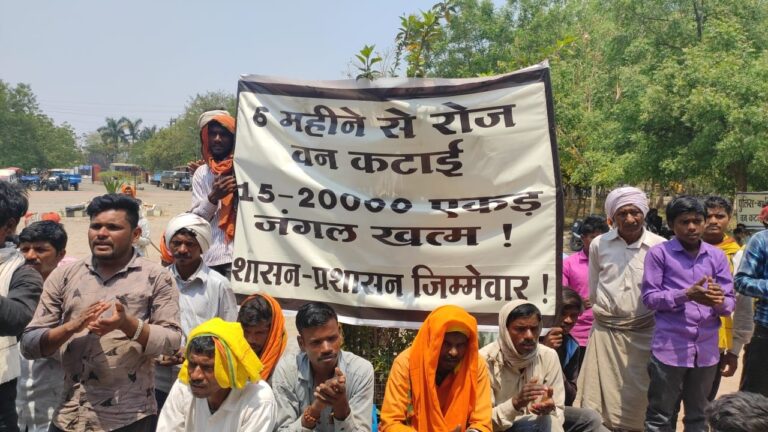
Burhanpur, MP: Jagrit Dalit and Adivasi sangathan activists, Antram Awase and Madhuri have been booked under false changes by the Burhanpur Police since they hhave been protesting constantly about the illegal tree felling and timbre smuggling.
Antaram Awase , Gram Sabha President and Forest Rights Committee Secretary of Siwal village in Burhanpur district, has been arrested by the Burhanpur police yesterday on false charges. Awase an activist of Jagrit Adivasi Dalit Sangathan, has been continuously opposing the deforestation and timber smuggling in Burhanpur district for the last 3 years.
He has also played a leading role in spreading awareness about the Forest Rights Act in every village in Burhanpur district. This has put stop on scaring and looting tribals by the corrupt forest staff. JADS has exposed the role of administration in cutting trees and smuggling of timber. To cover their actions, police has arrests the JADS activists. , to cover it, repressive action has been started against the tribal movement and its workers!
1/ OPPOSE THE ATTACK ON JAGRIT ADIVASI DALIT SANGATHAN ACTIVISTS! Update: In their latest attack on the Sangathan, the MP Police have arrested Adivasi activist, Antaram Awase on Apr 30 based on FALSE, politically motivated charges (See: https://t.co/O2jpvnUbrZ) pic.twitter.com/mkhNzFhsH4
— Jagrit Adivasi Dalit Sangathan (@JADS_mp) May 1, 2023
The truth behind the false cases against Antram Awase:
Fake Case of 2022 – The activist who was at the forefront against deforestation was involved in a fake case with those who cut forests! Deforestation has been going on continuously for the last 6 months in Burhanpur district – when the felling started in October 2022 – the first complaint about the felling was made by Antram Awase to the DFO on the morning of 9th October. In addition to the Home Department with the District Collector, Superintendent of Police, District Forest Division Officer, Forest Department Head Chief Conservator of Forests (Forest Force Chief), Additional Chief Secretary of the Forest Department to stop the felling of more than 15000 acres Complaints were also given to the Chief Secretary, Director General of Police.
The tribals of Burhanpur district protested against tree felling and smuggling at the district collector’s office for three consecutive days from April 5. Then police came to their senses and started action against the people who were cutting trees. But, because the organization exposed the involvement of the government administration in deforestation and smuggling, the ruling and anti-tribal forces responsible for deforestation have now started attacking the activists of the organization!
Fake Case of 2019: In 2019, the forest department attempted to illegally evict the forest rights claimants of Siwal village, during which 4 tribals were shot and injured by the forest department! An FIR was also lodged against the forest staff on the subsequent complaint of the villagers after the bullet challan – no action was taken on the complaint of the villagers, but action was taken on the false complaint made by the forest department against the person who filed the complaint! After the movement against illegal eviction and firing, the officers responsible for the illegal action were also transferred and the process of harassing the activists who made complaints started.
The felling has now doubled over the past week, with three new areas being deforested hence new round of protests by JADS activists.
JADS activists have been camped outside the police station and protesting the arrest and demading the Shivraj Singh governemnt to stop felling of trees and timber smuggling. But instead police have booked more activists under false charges.
Jagrit Dalti and Adivasi Sangathan activist Madhuri has been charged with 21 cases by the Forest Department and 3 others by the police – who are making ridiculous and false accusations against Sangathan and Madhuri who has been constantly campaigning against State government’s connivance in tree felling and timber smuggling. The police is claiming that she is somehow responsible for the felling of 500 acres of trees.
Apart from the various complaints given by the Sangathan tree felling and smuggling of wood, Madhuri has been constantly informing the District Collector, District Forest Officer and the Superintendent of Police, Burhanpur of instances of tree felling SINCE 9th OCTOBER – the day rampant tree felling started!
In their attempt to suppress the organization and Adivasi movement questioning the government’s role in the felling and timber smuggling, the Sangathan has been ridiculously accused of extorting money under the garb of applying for Forest Rights Claims. They have claimed that Sangathan membership receipts that each Sangathan family has with them, are somehow “a proof” of extortion.
In truth, these membership receipts are governed by Adivasi activists of the organization, and the money deposited into a joint account co-owned by 3 Adivasi women! All of the money in the accounts is used solely for the purposes of meeting expenses such as that of arranging for logistical needs like the sound, for protests or for Adivasi activists when they need to travel out of their districts!
LATEST ATTACK AGAINST JADS. After the arrest of Antaram, another Sangathan Activist, Madhuri has been accused of tree felling and extortion – despite the two having been the strongest opponents of the tree felling and timber smuggling!! 1/ pic.twitter.com/OIkFMalfOY
— Jagrit Adivasi Dalit Sangathan (@JADS_mp) May 2, 2023
Such attempts to spread misinformation and discredit the Sangathan are further proof of the political vendetta against the Sangathan and its’ activists — for continuously asking questions of the role of the government in months of tree felling and timber smuggling!!
The Supreme Court on Tuesday dismissed the Delhi Police’s appeal challenging the order of the Delhi High Court granting bail to Natasha Narwal, Devangana Kalita and Iqbal Tanha.The three were arrested under the Unlawful Activities Prevention (UAPA) Act after the Delhi Pogrom of 2020. The bench, comprising Justices Sanjay Kishan Kaul and Ahsanuddin Amanullah pointed out that the accused have been enlarged on bail for nearly two years and said that there is no reason to keep the matter alive.In response to Solicitor General Tushar Mehta’s argument that the High Court’s order should not be treated as precedent, the bench reiterated the same:“Purpose of interim order was to ensure that interpretation and views on a law should not be enunciated in bail hearing. We make it clear that we have not gone into legal position of law’s statutory interpretation one way or the other”, the bench added.Justice Kaul also expressed that bail orders should not be prolonged in response to Mehta’s adjournment request on behalf of the Delhi Police. The bench refused to grant adjournment, noting that the matter was adjourned on several occasions. The case involved the Delhi Police probe into the violence that broke out in North-east Delhi in February, 2020. As per Delhi Police, Narwhal, Kalita and Tanha were part of a ‘larger conspiracy’ that led to the violence. The police claimed that following the Citizenship Amendment Act, the accused persons planned to create disruption of such an extent that it would lead to disorderliness and disturbance of law and order. Narwhal, Kalita and Tanha were in custody for almost a year.Read also: Delhi High Court Grants Bail to Asif Iqbal Tanha, Devangana Kalita and Natasha NarwalIn June 2021, the Delhi High court granted bail to the three after finding that the offences under the UAPA were prima facie not made out against the student leaders. Judges Siddharth Mridul and Anup J Bhambhani held that the accused were only leading protests and “the right to protest is not outlawed and cannot be termed as a ‘terrorist act’ within the meaning of the UAPA”.In response to the state’s attempt to shift blame on the Delhi Progrom onto activists, the High Court said:“We are constrained to express, that it seems, that in its anxiety to suppress dissent, in the mind of the State, the line between the constitutionally guaranteed right to protest and terrorist activity seems to be getting somewhat blurred. If this mindset gains traction, it would be a sad day for democracy.
The Railways has earned an additional revenue of around Rs 2,242 crore from senior citizen travellers between April 1, 2022 and March 30, 2023 by revoking concession offered to them, an RTI response has found. This money has come from the pockets of senior citizens travelling by trains.
The national transporter had generated Rs 1,500 crore in excess between March 20, 2020 — when the assistance was suspended after the onset of the Covid pandemic and March 31, 2022.
The senior citizens’ concession that the Indian Railways used to offer remains suspended, with the elderly having to pay full price for their tickets.
The senior citizens’ concession was suspended in March 2020, because of the COVID-19 pandemic. Even though the pandemic-related shutdowns have all come to an end a while ago, this concession has not been restored. The concession used to apply to men above the age of 60 and women above the age of 58.
In a Right to Information response sent to Madhya Pradesh-based Chandra Shekhar Gaur, the Railways said about eight crore senior citizens bought train tickets at the full price in the last financial year. “The total revenue from senior citizen travellers during the period is ₹5,062 crore which includes an additional ₹2,242 crore, earned due to the suspension of the concession,” PTI cited the RTI reply as saying.
“The total revenue from senior citizen travellers during 2020-22 was ₹3,464 crore which was ₹1,500 crore more than what it would have earned if they had offered the concessions to them,” the PTI report continued.
For the Railways, the earnings from senior citizen fares has increased at a steady pace. Between March 20, 2020 and March 31, 2022, the Railways did not offer concessions to 7.31 crore senior citizen travellers. These included 4.46 crore male passengers aged 60 years and above, 2.84 crore female travellers over 58 and 8,310 transgender people.
On April 28, the Supreme Court had dismissed a petition seeking revival of the concession. “It would not be appropriate for this court to issue a writ of mandamus in a petition under Article 32 of the Constitution. It is for the government to take a call on the issue keeping in mind the needs of the senior citizens and the fiscal repercussions. Dismissed,” the bench said then.
The Supreme Court on Tuesday turned down an interlocutory application (IA) challenging the release of movie “The Kerala Story” on the grounds of hate speech and propaganda.
Directed by Sudipto Sen and produced by Vipul Amrutlal Shah, the film follows the theme of religious conversion and falsely claims that nearly 32,000 women from Kerala were forcefully converted to into Islam and made to join ISIS.
Advocate Nizam Pasha, who was representing the petition against the film, argued that it was “audio-visual hate propaganda.” Senior advocate Kapil Sibal informed the bench that the trailer for the film constituted the “worst kind of hate speech” and had already garnered millions of views across different languages.
A bench consisting of Justices KM Joseph and BV Nagarathna expressed difficulty in considering an IA. Given that the film has received certification by the Central Board of Film Certification, a court can only consider a challenge to certification in the form of a substantive petition.
“There are varieties of hate speeches. This film has got certification and has been cleared by the board. It’s not like a person getting on the podium and starts giving uncontrolled speech. If you want to challenge the release of the movie, you should challenge the certification and through appropriate forum,” Justice Joseph said.
Justice Nagarathna also asked why this was not taken up at a High Court level first. When Pasha argued that this was done due to a lack of time as the movie is scheduled to release on Friday, the judge replied that these are not valid grounds.
Advocate Sibal saidthat he would file a substantive petition tomorrow and seek an urgent listing by mentioning before the Chief Justice of India, but pleaded that the bench look at the IA in the meantime as they are short on time.
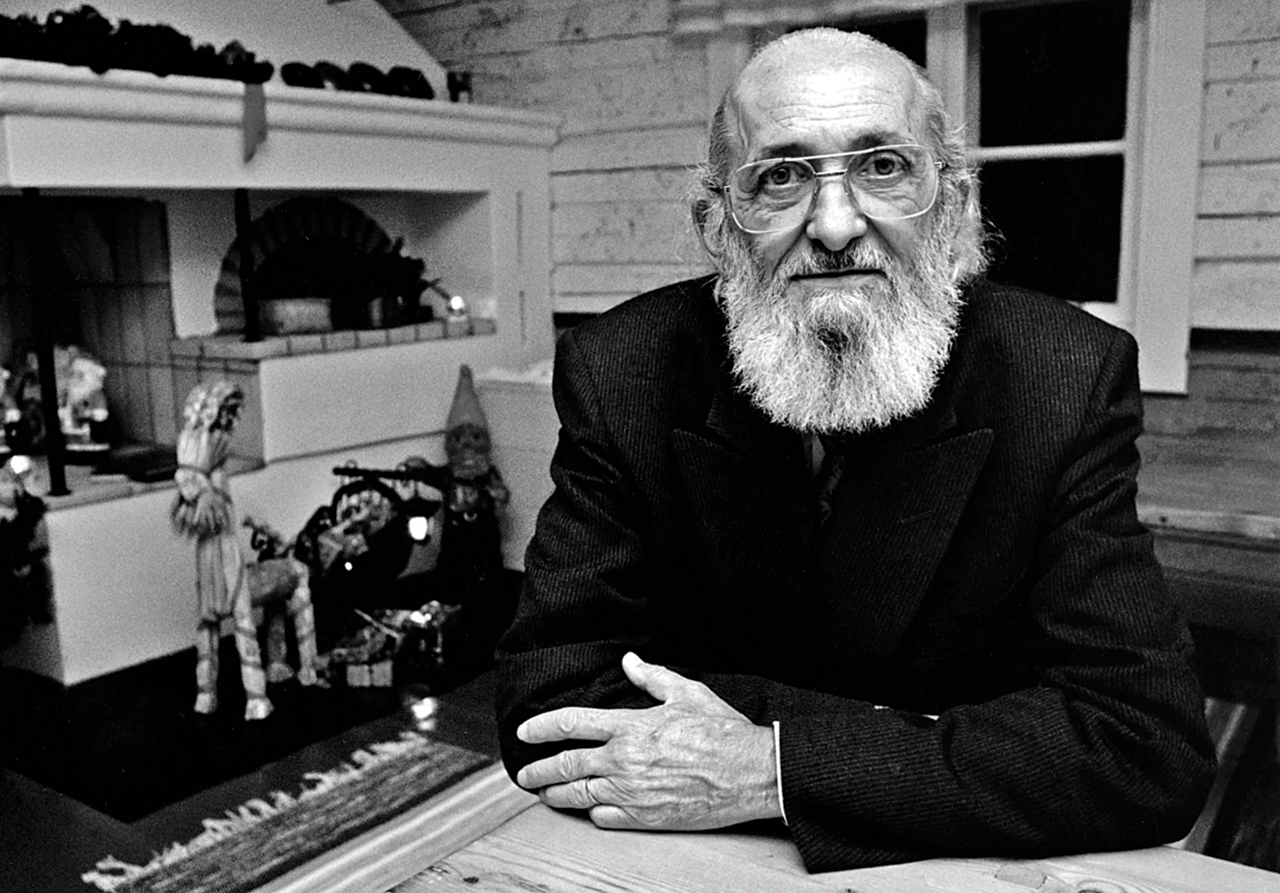
Born to a middle-class family in Recife, in the state of Pernambuco in northeast Brazil, South American philosopher Paulo Reglus Neves Freire’s (1921-1997) life experience shaped his vision of education. In his younger days he faced hunger, poverty and personal hardship because of the economic depression in his country. The turning point in his life came when Aluízio Pessoa de Araújo, the principal of a secondary school gave him an opportunity to study in his school at a reduced tuition fee. This happened to be his only life chance at formal education. To reciprocate this generosity he decided to teach in the same school in 1942. In 1947 he was invited to join a government agency called the Serviço Social da Indústria (SESI) where he began to work with the illiterate workers and peasants in Brazil. His teaching-learning experiences during these years in SESI lead him to develop adult literacy methods that are practiced the world over even today. He wrote and published extensively about his actions and reflections. One of Freire’s best-selling works, first published in 1971, is Pedagogy of Oppressed that has sold more than a million copies worldwide. In 2018 Bloomsbury published its 50th anniversary edition with a foreword by Noam Chomsky. It is widely regarded not as an ordinary book but ‘a transformative text’. There is renewed salience in re-reading Freire’s illuminating book at the current juncture. His longtime political ally and Brazil’s first working-class president Lula da Silva has re-returned to office after winning the October 2022 election. His radical ideas merit a re-visit on his death anniversary now as he continues to remain an inspiration to all educators who believe in social justice (Madan, 2022). Pedagogy of the Oppressed remains relevant because it dreams of an egalitarian, inclusive and just social order through education in socially-divided Brazil notwithstanding poverty, unemployment and inequality. This kind of socio-economic inequality is exacerbating in many countries including India. Also, post-colonial societies like ours have inherited colonial educational apparatuses that are disconnected from the life of their majority people.
It is noteworthy in this context that commentaries have pointed out that sometimes international financial agencies have in a ‘pseudo-Freirean perspective’ worked in the direction of reinforcing prevailing structures of oppression in unequal societies rather than liberating Third World’s peasants from the domination of private capital (Kidd and Kumar, 1981). A reading of Freire’s original works is valuable for an authentic re-conceptualise of education for transforming a society towards humanisation, social justice and empowerment of the poor. Also, the language of the book has been regarded as inaccessible to a non-specialist reader. This article attempts to understand three core terms of Freirean vocabulary: banking education, problem-posing education and dialogue, as presented in this illustrious book.
Banking Concept of Education
Freire came to realize that the sole purpose of education of his times was to transmit information to students who were presumed to be passive beings, or, empty vessels. Teaching was seen as a task of deposition of information in the name of knowledge. The knowledgeable teacher supposedly deposits it in the students mind, much like a banking process. In such a type of education it is the efficiency of teachers’ deposition and students’ passivity that defines their respective proficiency as,
The capacity of banking education to minimize or annul the student’s creative power and to stimulate their credulity serves the interest of the oppressors, who care neither to have the world revealed nor to see it transformed (1993:47).
Such an education is apolitical as well as devoid of possibilities for the rural and urban poor to raise their own problems ‘of agriculture, health, livelihood and ownership of factors of production’ (Raina and Mansi, 2022). Freire believed that it is a tool used by the oppressors to maintain their authority on the oppressed by making them mere meek receptors of existing ideas legitimizing the status quo of inequality in society.
Problem-posing education
Freire, a man of action, offered an antidote: problem posing education, as liberation from the dehumanizing effects of banking education. Problem posing education, instead of centering on textbook knowledge, assumes reality as a dynamic process of transformation that addresses the immediate problems faced by people in their own environment. He writes,
The problem-posing method does not dichotomize the activity of the teacher-student: he is not ‘cognitive’ at one point and ‘narrative’ at another. He is always ‘cognitive’, whether preparing a project or engaging in dialogue with the students. He does not regard cognizable objects as his private property but as objects of reflection by himself and the students (1993:54).
In this pedagogical approach, problems from the outside world are presented to the students as the educational content. Both students and teachers find out ways to solve these problems. Freire did not see education as merely mastering of academic standards or skills that prepared ‘professionals’ but as a humanizing process that developed learners who understood their social problems and discovered themselves as creative agents. Such an education transforms the students from the objects to the subjects of the process of education by overcoming both authoritarianism and their false perception of reality.
Dialogue
The foundation of problem-posing education is Freirean dialogue. A problem posing education can only be dialogical as it needs to be based on meaningful dialogue about real life and its problems; between teachers and students. Unlike banking education it isn’t just intellectual or text bookish in mode but,
Education which is able to resolve the contradiction between teacher and student takes place in a situation in which both address their act of cognition to the object by which they are mediated. Thus, the dialogical character of education as a practice of freedom does not begin when the teacher-student meets the students-teachers in a pedagogical situation, but rather when the former first asks himself what his dialogue with the latter will be about (1993:65).
Freire has gone as far as to call dialogue an existential necessity. For him human existence can never be silent because to live humanly means to speak with each other and transform the world together. It is necessary to break the culture of silence implicit in the banking model of education leading to educational practice that involves a real-world action beyond the abstract apolitical world of textual knowledge.
Educational practice in post-colonial societies
Freirean educators are confronted with the complex relationship between politics, history and social change. Most post-colonial societies like India have institutionalised a banking model of school education characterized by a tightly framed, predefined school curriculum which is mostly indifferent to human realities. Teachers are expected to transact the copious chapters of several textbooks of the many school subjects. These chapters constitute the credit that has to be put in the bank which is the student. The government’s education department, which serves as the certifying and standard-setting body, expects that the students have a basic understanding of the material covered in these chapters. The tends to an anti- dialogical tonality as the teacher teaches and the students are taught. The teacher talks and the students listen; the teacher presents disciplinary knowledge and the students follow it. The teacher remains the subject of the learning process, while the students become its objects. Freire distrusted formal school curriculum, as according to him education should be based on generative themes from the student’s real life. The exploration of these themes should be dialogical which can provide an opportunity to stimulate learner’s awareness regarding the themes. Problem-posing education aims to liberate humans, of which the first step is to break the authoritarianism between teachers and students, which is not possible in a transmission model of banking education. The educational systems in most societies (global south in particular) follow a vertical relationship between teachers and students where communication (not dialogue) is between the teacher-of-the-students and the students-of-the-teachers obviating a pedagogy of hope. Yet reading Freire continues to keep alive the dream of education for social justice among educators the world over.
References
Freire, P. (1971/ 1993). Pedagogy of the Oppressed. England: Penguin.
Kidd, R. and Kumar, K. (1981). ‘Co-opting Freire: A critical analysis of pseudo-Freirean adult education’, Economic and Political Weekly, 16(1-2), 27-35.
Madan, A. (2022). Book Review Walter Omar Kohan, Paulo Freire: A Philosophical Biography (Jason Wozniak & Samuel D. Rocha, Trans.), London: Bloomsbury, 2021. 296 pages INR 1742 (E-book). Contemporary Education Dialogue. 19(1), New Delhi: Sage.
Raina, J. and Mansi. ‘Education in post-colonial societies and Paulo Frere’s Insights’, The Armchair Journal, 21 August, 2022.
(Jyoti Raina teaches at the Department of Elementary Education at Gargi College, New Delhi. Mansi is her student at a four year undergraduate pre-service teacher education program at the same department.The article was first published in Countercurrents.org.