The Tamil Nadu (TN) Police have informed the Madras High Court that 86 people in the state were arrested so far. They were arrested for spreading communal hatred against the Muslim community linking them with the Covid-19.
The Additional Director General of Police in Tamil Nadu informed Justices MM Sundresh and R Hemalatha when they were hearing a PIL (Public Interest Litigation) filed by ASA Umar Farooq seeking action on over 700 complaints that filed in police stations across the state but had remained pending.
Umar Farooq also had filed a writ petition requesting directions from the High Court to concerning authorities to stop media and other agencies and individuals from communalizing Covid-19 issue.
In response, the DGP filed a counter-affidavit stating that in 159 cases were registered against 356 people thus far and amongst them, 86 were arrested.
After the news broke out that the Tablighi Jamaat’s congregation in New Delhi was linked with the spread of the Covid-19 pandemic, communal propaganda was spread against the Muslim community, especially online in social media and being aired on broadcast media.
Media had also reported attacks on Muslims across the country which was a result of this propaganda.
In order to counter the propaganda, Muslims and Muslim organizations in Tamil Nadu registered complaints identifying the hate mongers. both online and offline. There were at least 700 such cases filed across the state.
As per the counter-affidavit filed by Director General of Police of Tamil Nadu, Madurai topped the list with the highest number of complaints failed with 19 cases. In Erode and Pudukottail, 17 and 12 complaints were registered respectively. In the state’s capital Chennai, 8 cases were filed against 8 accused people.
The High Court after noting the submissions has adjourned the hearing of the case to 13th July, 2020.
It is a welcome shift on the part of the police to act in favor of the religious minority community to safeguard them and their interests especially in times of rising Islamophobia across the country. However, it must be acknowledged that the Tamil Nadu Police is known to violate the rights of the citizens which is evident from it being top-ranked amongst South-Indian states in terms of custodial deaths. The custodial deaths of Jayaraj and Bennicks recently had spurred up debates about the actions of police in general and TN police in particular.
Also Read:Sathankulam’s Jayaraj-Bennicks Case: India’s own George Floyd Moment
A Constitution is understood not merely as a binding force enabling the residents of the State to call upon the State to fulfill its responsibility, but also as a check on the perennial propensity of the State to go rouge at its will. One major Right that is inscribed in the Constitution to that effect is the ‘Right to Life’.
It has now become a cliché to loudly proclaim one’s Right to Life vis-à-vis State. But the State that is the recognizer of Rights of its residents and responsible for codifying such Rights is also the biggest enabler of its abuse, abuse for its own sake as well as abuse on behalf of some other sections through which the State is constituted.
A technique that was invented and proven successful to suppress any one section would not vanish with the subjugation of that particular section. It would then be wielded against anyone that State thinks are dispensable.
Had the democratic consciousness been deeply ingrained in the collective psyche of this country perhaps all this would have been not so necessary. But, now we are living in the stage where the democratic consciousness that is still in the formative stage in this country is now being eroded, aided duly by the State and embraced wholeheartedly by the Society. Perhaps such erasure is a sine qua non for a fascist society to emerge and thrive with no ethical problems to deal with.
The recent case of “encounter killing” of four rape accused in the Hyderabad is one such case in point. Innocent until proven guilty is the cardinal principle that runs the rule of law in this country. One might ask what this ‘rule of law’ is?
An encounter that has an element of surprise to it in its natural meaning is turned into something that has come to be attached with meanings soaked in the feelings of dread and terror. A quintessential South Asian contribution to the annals of inhumanity and barbarity.
Extra-Judicial Killings that go by the name “Encounter” in this country has a sordid history spanning back to five decades. The onset of Srikakulam Peasants Armed Struggle in Andhra Pradesh heralded the coming into existence of two of the bloodthirsty techniques that would go on to become the defining features of the Indian Security establishment- Extra-Judicial Killings and Lockup Deaths.
A slogan that is very popular in the Telugu land essentially captures the essence of this- All Encounters are Government Murders. This slogan is not some creative work of any anti-State Radical. This slogan was born from the painful history of Extra-Judicial Killings and Lockup Deaths in Andhra Pradesh. In the last fifty years, nearly 3,300 people were killed in “Encounters” in Telugu land, mostly in the present-day Telangana.
This number doesn’t include another sordid creative invention of the security establishment- Lock up Deaths. A brutal technique that was invented to subvert the armed uprising has become an important weapon to run the writ of the State and the police occasionally demanded and vehemently supported by the people.
If one were to look at the trajectory of “Encounters” and Lockup deaths one would not fail to see the gradual up-gradation of this brutality to encompass everyone and every section within its ambit. Both these techniques were invented to deal with the Naxalites who at one point of time commanded wide support and sympathy in Telugu land. A technique that was invented and proven successful to suppress any one section would not vanish with the subjugation of that particular section. It would then be wielded against anyone that State thinks are dispensable.
One cannot give an exact breakup, but we can say that “encounters” and lock up deaths were not merely limited to Naxalites or their supporters and sympathizers or any other anti-State actors but now encompasses anyone and everyone. They could be history sheeters, petty criminals, people accused of various crimes and they could also be someone whom the police themselves don’t know( There was a lock-up death in Andhra Pradesh recently where the Police are yet to identify the person. The police need not know someone to kill them). Such is the universalization of “encounters” and lock-up deaths. If people are still doubtful they could clarify their doubts by looking at the spate of “Encounters” in Uttar Pradesh after Yogi Adityanath was made the Chief Minister.One would invariably come up with the question- where is the Judiciary that is supposed to be the upholder of the Constitution and its derivative, the rule of law? Once in awhile the Judiciary to discharges its duties constitutionally only to be upturned sooner or later. In a judgment delivered in 2010 the Andhra Pradesh High Court (Andhra Pradesh Civil Liberties Committee v/s Government of Andhra Pradesh) castigated the practice of “Encounters” in no uncertain terms and termed the practice illegal, unconstitutional and inhumane. It ordered that a case under Sec. 302 should be filed against the participating police party and they should be prosecuted as per that. However, police being police they are very adept at subverting anything remotely resembling justice. That too Andhra Pradesh that has by now become addicted to such extrajudicial killings (The popular culture- feature films in Telugu Land- is replete with references to “encounters”. “Encountering” someone is so casually spoken of in the movies. Such is the spread of that culture) had their way already.
Filing a case against the other party and then closing the case now that they are dead is the standard operating procedure of the Telugu Police. They have got a further boost for their practice from the Supreme Court. In a judgment delivered 2014 (PUCL v/s State of Maharashtra) among other things, the Supreme Court said that a case needs to be filed in the case of any “encounter”. Such an interesting wording; isn’t it? A case needs to be filed against whom? The police are already filing the case against the dead party. The Andhra Pradesh High Court judgment was pushed into cold storage in the form of stay order when the Telugu police approached the Supreme Court against the High Court’s judgment. So, that was gone. What is the law at present is filing a case? We know against whom the case is filed now.
A word about the support and clamoring of the society for such undemocratic practices by the State is necessary. Violence by the authority has always had an acceptance in this society. The “way of life” of the people in this country enables such acceptance and hegemony. Now in these fascist times such utterly undemocratic values are breathing a new lease of life. The fascist State has its own advantages in promoting them. But, the alarming rate at which society is completely acquiescing is what we have to deal with. The times are such that we have to worry more about the Society than the State. It tells a lot about the democratic content of the State to make use of such hegemonic understanding and taking forward such abominable practices for its sake. One can only feel nothing but disgust.
The author is an activist with the Human Rights Forum (HRF) Andhra Pradesh. Views are personal.
Turkey’s top court has ruled that the conversion of the Hagia Sophia to a museum under Mustafa Kemal Ataturk, founder of the modern secular Turkish state, was illegal. Immediately after this verdict, President Erdogan announced that it would now be reconverted into a mosque and opened for worship.
Call to prayer from the Hagia Sophia, hours after it was converted into a mosque pic.twitter.com/dqyUQ16q1Y
Turkey’s top administrative court, the Council of State, held that “the cabinet decision in 1934 that ended its use as a mosque and defined it as a museum did not comply with laws” and that “the settlement deed allocated it as a mosque and its use outside this character is not possible legally”.
Hagia Sophia was first constructed as a cathedral in the Christian Byzantine Empire. It remained a church for 900 years but was converted into a mosque after the Ottoman conquest of Constantinople in 1453.
The association which brought forth this court case believes that the Hagia Sophia building is thus the property of the Ottoman leader who in 1453 turned the Byzantine church, into a mosque. Some groups in Turkey support its status as a mosque since they believe that this reflects the Muslim-majoritarian character of the country.
In 1935, in the early days of the modern secular Turkish state under Mustafa Kemal Ataturk, it became a museum.
The structure is nearly 1,500 years old and dates back to the 6th century. It is a UNESCO World Heritage Site and is of great significance to Christians and Muslims. The monument is now to be under the management of the Religious Affairs Directorate, which will open it for worship.
This move has been criticized by the United States, Greece, and the Russian Orthodox Church, among others, who had advised Turkey to leave the building as a museum. The Russian Orthodox Church believes that this decision to make it a mosque could prove to be more divisive. Earlier, Ecumenical Patriarch Bartholomew, the spiritual leader of over 300 million Orthodox Christians around the world, stated that converting the historical monument into a mosque ‘would disappoint Christians and would “fracture” East and West’.
UNESCO said its World Heritage Committee would review Hagia Sophia’s status, saying it was “regrettable that the Turkish decision was not the subject of dialog nor notification beforehand”.
“UNESCO calls on the Turkish authorities to open a dialog without delay in order to avoid a step back from the universal value of this exceptional heritage whose preservation will be reviewed by the World Heritage Committee in its next session,” the United Nation’s cultural body said in a statement.
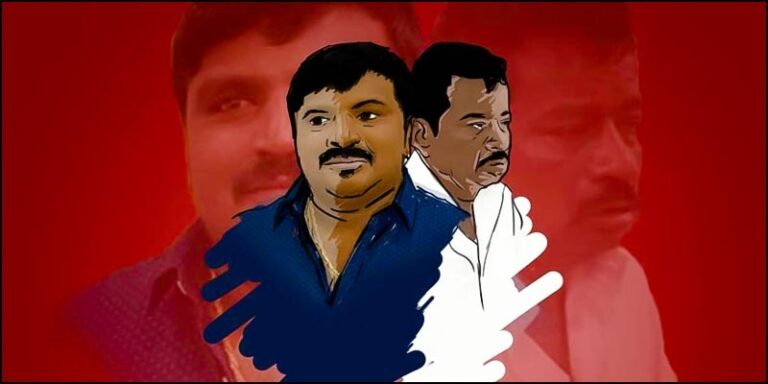
Jayaraj-Bennicks’ case of custodial deaths (father-son duo) at Sathankulam in Thoothyukudi district of Tamil Nadu resonates like India’s own George Floyd moment.
Let us see some of the facts related to this episode
On 18 June 2020, police hauled up Bennicks for violating lockdown timings. Arguments ensued. June 19, Bennick’s father Jayaraj was picked up by police. Son went to the Police Station to see the father. Son objected to the ill-treatment of the father. He was also detained. The entire night of June 19, both the father and the son were brutally tortured by the police officers under the direct supervision and aid of the Inspector of Police of the station. It is told that a volunteer group called Friends of Police was part of the torture team. More on Friends of Police later. Apparently, the family provided additional clothes to change in view of the rectal bleeding.
As per the original FIR, the father-son duo rolled on the ground in protest and sustained injuries. They had been booked under sections 188, 269, 294 (b), 353, and 506 (ii). On June 20, both were taken to Sathankulam government hospital. The doctor was pressurized to provide a certificate of medical fitness. They were presented to the Judicial Magistrate P Saravanan at his house at Sathankulam. Without following the due process, without even examining the ‘accused’, without even talking to the ‘accused’, Judicial Magistrate Saravanan granted judicial custody. The police apparently threatened the father and son not to speak in front of the magistrate.
Even though there were sub-jails at Srivaikuntam and at Tiruchendur which are located at a distance of about 40 Km, Jayaraj-Bennicks were taken to Kovilpatty sub-jail which is located about 100 Km from Sathankulam. The Kovilpatti sub-jail admits them after recording bruises to the gluteal region and bleeding injuries sustained by them.
On June 22, Bennicks complained of chest pain, fainted and was rushed to the hospital. He died on June 23. On June 24, Jayaraj dies in the same hospital.
Violations of Due Process of Law
Before proceeding further, let us highlight a couple of key violations of the due process of law here.
According to Justice Chandru, former Judge at the Madras High Court, Supreme Court guidelines in the light of D K Basu Vs Government of Bengal case, clearly says that the accused will not dare to talk about police torture. Hence, the magistrate should examine the health condition, should check if relatives have been informed, whether the accused has got a lawyer to defend his case. In the same case, the Supreme Court upheld two rights of the accused. It was the Right to Life and Right to Know.
According to the law, the police must take those arrested for medical examination. A doctor is required to list any pre-existing injuries as new wounds would be evidence of custodial abuses.
As a result of widespread public anger and protest, the Madurai branch of Madras High Court took suo-motu cognizance of the offence and started monitoring the case. The point to be noted here is that the trading community who were behind these protests is a politically powerful force in Tamilnadu. In caste terms, it is known as Nadar community.
The High Court-appointed Kovipatti magistrate Bharathidasan’s report, Sathankulam Head Constable Revathi’s witness helped in converting the case from Section 176(1)(A) to Section 302 of IPC. 5 policemen including the Inspector of Police have been arrested and are behind the bars.
The extract from the Suo-Motu petition from High Court 528/2020:
District Police administration has done everything to prevent HC directed magistrate Bharathidasan from proceeding with the enquiry. D.Kumar, Additional Superintendent of Police and C. Prathapan, Deputy Superintendent of Police were available in Sathankulam Police Station. In their presence, other policemen were taking videos of magisterial proceedings. The policemen were not providing relevant records to the magistrate. One Police Constable by name Mahajan made a disparaging statement to the magistrate, “you can’t do anything”. Based on the report of the learned magistrate, Hight Court took cognizance of the Criminal Contempt of Courts Act, 1971 against the ASP, DSP and the Constable who misbehaved with the Magistrate.
Such a gruesome and shocking event raises a few questions.
What is the legacy and background to the police brutality and high-handed behaviour in Thoothukudi District? Who are these Friends of Police? What is their political connection? What is the way forward?
We know that every day there are 5 custodial deaths in India. Among southern states, Tamil Nadu stands number one in the count of custodial deaths. While we can continue to look at the reasons behind custodial deaths in India and in Tamil Nadu in general, is there anything unique about Thoothukudi? It is the political patronage that provides impunity to these men in Khaki? Connections for some of these policemen go up to the ministers.
When one thinks of Thoothukudi, we recollect anti-Sterlite agitations that took place during May 2018 and the indiscriminate police firing on 22 May 2018.
The police started shooting at the protesters and were also accused of shooting without any formal warning. Police were also reported of intentionally shooting at the heads of the protesters. 13 protesters were killed including a 17-year old school student, and dozens were injured. Another man injured in lathi-charge by the police passed away in October 2018, after being in coma for five months. Thus, taking total death toll increased to 14.
FIRs filed in local police stations, claimed that the order to shoot was issued by officers in the rank of deputy Tehsildars and people pointed out that only collectors have the authority to issue shooting orders.
UN human rights experts have condemned the apparent excessive and disproportionate use of lethal force by police against protesters. The plant is run by Sterlite Copper, a business unit of Vedanta Ltd., which is a subsidiary of the UK-based company, Vedanta Resources.
So, other than the political patronage, we need to investigate the role of Sterlite company in patronizing the brutal police force in Thoothukudi district. The behaviour of police officers in front of the Judicial Magistrate adds credence to such questions.
Friends of Police
Another dimension that is emerging is the role of Friends of Police which is similar to the Salwa Judum of Chhattisgarh. Officially, it is supposed to be a volunteer force connecting police with the people. They are not supposed to be in uniforms like the police. They are not supposed to wield lathis. They are not supposed to be involved in any criminal investigation along with the police. They are not supposed to have access to police records. In reality, they wield lathis and they behave like the police. Apparently, 4 of these Friends of Police have been involved in the brutal torture of Jayaraj-Bennicks. It has come to the light that there are over 6000 Friends of Police across Tamil Nadu. Many of the members of this volunteer force are drawn from Seva Bharathi, a frontal organization of RSS. This disturbing fact about the potential infiltration of RSS affiliated Seva Bharathi in the Police force is contrary to the secular fabric of the Indian Constitution. This requires deeper investigation and correction.
Tamilnadu government has formally banned the movement of Friends of Police after their role in the deaths of Jayaraj and Bennicks surfaced.
Where do we go from here? Mere punishment of culprits in this custodial death is not sufficient. The system has to be rectified.
Though India has signed UN Convention Against Torture (UNCAT), 1997, India is one of the 18 countries yet to ratify the Convention. Torture should be considered as an endemic and a systemic problem. Cruelty and torture are violative of Article 21 of the Constitution. This interpretation is consistent with the principles contained in UNCAT. UNCAT aims to prevent torture and other acts of cruel, inhuman, or degrading treatment or punishment around the world.
Parliament had earlier considered The Prevention of Torture Bill (2017) to “provide punishment for torture inflicted by public servants” or by “any person inflicting torture with the consent or acquiescence of any public servant” and related matters.
Accordingly, the draft bill suggested that punishment for such offences would be imprisonment for a term not less than three years, but extendable to 10 years and a penalty.
However, the Bill lapsed with the 16th Lok Sabha dissolved in 2019.
Since the Jayaraj-Benicks case came to light, the Tamil Nadu Police removed over 80 police officers in the Trichy range for want of “interpersonal skills” while dealing with the public.
“We are removing 80 police personnel in the Trichy police range who need behavioural correction to improve their interpersonal skills. They are taken off duties involving direct public contact as their track record in that aspect is found wanting,” Deputy Inspector General of Police (Trichy Range) V Balakrishnan said in a Facebook post.
The DIG added that they would be gradually reintegrated into regular duties “only after completing a specially designed course with CBT (Cognitive Behavioural Therapy)” that would involve a component to improve “the way they deal with the public”.
As per the editorial page article which appeared in The Hindu on 3rd July, Ajit Prakash Jha, former Chief Justice of Delhi and Madras High Courts writes that India’s Attorney General spoke in UN Human Rights Council in Geneva in 2017, invoking Gandhi and Buddha and had stated that “India believes in peace, non-violence and upholding human dignity. As such the concept of torture is alien to our culture. It has no place in the governance of the nation”. Justice Jha hastened to add that this would be the text example of hypocrisy.
Author is a social activist based in Bangalore. Views are personal.
The police chase after Vikas Dubey – a gangster charged with criminal offences in over 60 cases – ended this morning with Dubey being shot dead in an encounter. The Kanpur police have released a statement that “the car overturned and policemen and the accused were injured. Then Vikas Dubey grabbed a gun from an injured policeman and ran. The police team caught up and surrounded him and tried to get him to surrender, but he refused and started firing. The police had to fire back in self-defence”. This narrative; of an attempted escape and the police having no choice but to shoot the accused, is an old and overused template. Dubey’s arrest and his death have raised multiple questions and the circumstances surrounding them are unclear.
It is not even clear whether Dubey surrendered or was arrested by the Madhya Pradesh police. A video shared by Srinivas BV (Indian Youth Congress) showing Dubey walking uncuffed along with a police officer, has been used to suggest that the arrest was scripted.
इस वीडियो में कौनसे ऐंगल से आतंकवादी विकास दुबे को उज्जैन पुलिस ने 'गिरफ्तार' किया है ?
If Dubey did surrender willingly, then his alleged attempt to escape from the police car this morning does not fit well in this puzzle. Additional facts have come to light which are inconsistent with the official police narrative. First, a video has surfaced which shows Vikas Dubey, at 4 am, in a different car from the one which is seen overturned on the road. Another video shows media cars, which had been following the police convoy, being stopped by police on the highway at 6:30 am, just half an hour before the police car allegedly overturned and Dubey attempted an escape.
#WATCH Media persons, who were following the convoy bringing back gangster Vikas Dubey, were stopped by police in Sachendi area of Kanpur before the encounter around 6.30 am in which the criminal was killed. (Earlier visuals) pic.twitter.com/K1B56NGV5p
The Supreme Court has been forewarned of Dubey’s encounter killing through a petition filed before it on Thursday evening, hours before Dubey’s death, which apprehended that “there is every possibility that even accused Vikas Dubey shall be killed by Uttar Pradesh Police like other co-accused once his custody is obtained by Uttar Pradesh Police”. The Petitioner had prayed for the Court to pass directions to “ensure that [Dubey] is not killed/encountered by police and complete security arrangement is made for his safe production in the concerned court…and he is dealt with in accordance with law”. Vikas Dubey’s death in a police ‘encounter’ this morning is only the latest in a long chain of similar custodial deaths that have taken place under suspicious circumstances. The other such recent incident to have caught public attention was the killing of the four accused men in the Hyderabad rape case. In these cases, public sentiment has often sided with the police, despite the emergence of facts contradicting the police narrative of the encounters. Perhaps, public (tacit) consent has encouraged the police to become more brazen in ‘encounter’ killings.No doubt Dubey’s criminal history was entangled with people in high places. But there is no reason to condone his death in this encounter killing, which only serves to protect those who risked being exposed otherwise. In demanding justice instantly and through the harshest punishment, what we allow is the perpetuation of unchecked police and state power; a disregard for any semblance of due process and principles of evidence and criminal justice.
Online education has become a contested policy arena across the country. The case is the same in Karnataka too. On 15th June, the state government had banned all schools in the state from providing online education to students below primary grades. However, on 27th June, it modified its order and allowed the schools to undertake a limited hour of online classes according to its regulations for students till class 5. Now, the Karnataka High Court has stayed both these orders in response to a bunch of petitions that were filed.
The Court has noted that the state government cannot issue an order under Article 162 of the Constitution that curtails the Fundamental Rights of citizens under Article 21 and 21A.
A division bench of the Karnataka High Court on 8th July observed that “Prima Facie we are of the view that both orders of June 15 and June 27, encroached upon the Fundamental Right conferred by Article 21 and 21A of the Constitution of India”. The observation was made by Chief Justice Abhay Srinivas Oka and Justice Nataraj Rangaswamy through their interim orders. The interim order issued by the High Court has stayed the government order passed by the state government on June 15th and June 27th, 2020.
Clarifications
The other major source of contention has been that many private schools are willing to provide their students with online education during school closures. This would enable them to collect fees from students. In many cases, the regional and national media had reported about private schools compelling students and their parents to pay fees despite the school closures. In many cases, it was also noted that the private schools had charged fees in the name of online education over and above the pre-existing fee structures. However, the justices have also clarified that the orders must not be taken that online education can be made compulsory or will that the schools have the right to charge extra fees for providing online education. It has also noted that it was the government had to ensure that the rights of children not studying in “elite” schools were also protected.
Arguments of the state government
The counsel appearing for the state government had argued that the order was only an interim measure until the government could explore to ensure that no student is deprived of educational opportunities. It also argued that the subject of online education to students of younger classes must not only be viewed from the perspective of fundamental rights but also child psychology.
The order is understood to open up the way for online teaching-learning processes for the students from families that can afford to access it. However, it would create an inequitable educational space for masses of students in the state provided that many students and their families cannot access online education.
Also read: Is CBSE’s Curriculum “Rationalizaion” an attempt to Saffronize Education?
On 7th July, it was announced that the syllabus for the Central Board of Secondary Education (CBSE) classes IX to XII was ‘rationalized’. The Union Minister of Human Resources Development Ramesh Nishank Pokriyal tweeted about it. A major reduction in the syllabus comes in continuation of the slight reduction in the syllabus that was undertaken in April 2020. The CBSE and also HRD Ministry claimed that the curriculum rationalization was aimed to reduce the syllabus load by almost 30 percent so as to ease the exam stress amongst students and prevent the gaps in expected and achieved learning outcomes.
While it is easy to misconstrue exclusion of 3-4 topics like nationalism, local government, federalism, etc. and build a concocted narrative, a wider perusal of different subjects will show that this exclusion is happening across subjects.
— Dr. Ramesh Pokhriyal Nishank (@DrRPNishank) July 9, 2020
On the decision of the curriculum rationalization, Ramesh Pokhariyal in his tweets noted that suggestions were invited from all educationists and at least 1500 suggestions on how to reduce the burden on students. However,
— Dr. Ramesh Pokhriyal Nishank (@DrRPNishank) July 7, 2020
However, the move was deeply criticized by many including educationists, activists, political leaders across political and ideological spectrums. The chapters that were dropped in the name of the curriculum rationalization are understood to make up the core values that the education system must carefully engage with. The complete chapters on certain important topics were omitted.
According to the updated curriculum, the chapters deleted from the Class 10 syllabus are those dealing with democracy and diversity, gender, religion and caste, popular struggles and movement and challenges to democracy.
For Class 11, the deleted portions include the chapters on federalism, citizenship, nationalism, secularism and growth of local governments in India.
The curriculum for Class 11 students included chapters on Peasants, Zamindars and the State, Understanding Partition, and sections on ‘Revolt in The Countryside’ which were based on farmers’ agitation against moneylenders, have been removed. Additionally, topics including Federalism, the need for Local Governments, Growth of Local Government in India, which fall under a section titled Indian Constitution at Work, have been removed from the subject of Political Science in Class 11. In the subject of Sociology, chapters on Social Structure, Stratification and Social Processes, and Environment and Society have been removed for Class 11.
Similarly, Class 12 students will not be required to study the chapters on India’s relations with its neighbours — Pakistan, Myanmar, Bangladesh, Sri Lanka and Nepal, the changing nature of India’s economic development, social movements in India and demonetisation, among others.
Response to the move
The move is understood and alleged to be yet another attempt to Saffronize Education in the country by the ruling BJP regime. The ideas of federalism, democratic rights, environment, nationalism, and secularism that form the core of the functioning of a Democracy. These chapters being sacked from the curriculum is seen as a part of the larger attack on democracy by the BJP Government and its parental organization RSS. Many leaders have objected to this move by the Central government.
The Modi govt is losing no opportunity to squeeze Indians in this health crisis. No effort to boost public healthcare. Instead, more taxes on the poor hiking fuel prices, deepening economic decline, states not getting their share and altering syllabus to kill reason & thinking. pic.twitter.com/ZsdyWJ20MN
Imp subjects like Citizenship,Nationalism & Secularism are no more part of class Xl CBSE curriculum.
Moving inch by inch towards majoritarianism ……..
# SaffronisingEducation
— Dr Syed Naseer Hussain-MP, Rajya Sabha (@NasirHussainINC) July 8, 2020
However, in response to the various criticisms, it was met with, the CBSE has issued a clarification statement that syllabus reduction is only for the purposes of the examination only in the academic year 2020-21. It has also added that for the purposes of teaching-learning processes, the Alternative Academic Calendar is being followed in which none of the chapters have been omitted.
Here’s what the HRD ministry has to say on the reduced CBSE syllabus
According to Human Resource Development (HRD) Ministry officials, the syllabus has been rationalised to reduce the burden on students but the core concepts have been retained.
“The loss of instructional time for a proportionate reduction in the curriculum load for exams was assessed. Accordingly, the course committee of the board had initiated the work on the reduced syllabus. Suggestions were invited from various stakeholders.
“Heads of schools and teachers have been advised by the board to ensure that the topics that have been reduced are explained to the students to the extent required. However, the reduced syllabus will not be part of the topics for the internal assessment and the year-end board examination,” a senior CBSE official said.
Below is the detailed list of chapters that were removed from the curriculum of class 9th to 12th. Deleted Social studies syllabus for CBSE class 9UNIT 1: INDIA AND THE CONTEMPORARY WORLD – I (HISTORY)
Forest Society and Colonialism
Pastoralists in the Modern World
UNIT 2: CONTEMPORARY INDIA – 1 (GEOGRAPHY)Chapter 3: Drainage Complete Chapter except for Map items which will be assessed in the Examination
Chapter 6: Population Complete Chapter
UNIT 3: DEMOCRATIC POLITICS – I (POLITICAL SCIENCE)Chapter 2: Constitutional Design Democratic Constitution in South Africa (Only)
Chapter 5: Democratic Rights Complete Chapter
UNIT 4: ECONOMICSChapter 4: Food Security in India Complete Chapter
CBSE Class 10Recommended portion for deletion in Social studies syllabus for CBSE class 10UNIT 1: INDIA AND THE CONTEMPORARY WORLD –II (HISTORY)Section 2 : Livelihoods, Economies and Societies: The chosen Chapter to be assessed in the Periodic Tests and not in Board Examination.
Section 3: Everyday Life, Culture and Politics; Chapter 5: Print Culture and the Modern World
UNIT 2: CONTEMPORARY INDIA – II (GEOGRAPHY)Chapter 2: Forest and Wildlife Complete Chapter
Chapter 3: Water Resources Complete Chapter except for Map Items which will be assessed in the Examination
Chapter 5: Mineral and Energy Resources Complete Chapter except for Map Items which will be assessed in the Examination
UNIT 3: DEMOCRATIC POLITICS –II (POLITICAL SCIENCE)Chapter 3: Democracy and Diversity Complete Chapter
Chapter 4: Gender, Religion and Caste Complete Chapter
Chapter 5: Popular Struggles and Movements Complete Chapter
Chapter 8: Challenges to Democracy Complete Chapter
CBSE Class 11Deleted Economics syllabus for class 11Part A: Statistics for EconomicsUnit 3: Statistical Tools and Interpretation: Measures of Dispersion – (range, quartile deviation, mean deviation and); (co-efficient of range, co-efficient of quartile-deviation, coefficient of mean deviation,
Correlation –Spearman’s rank correlation.
Index Numbers – index of industrial production
Part B: Introductory MicroeconomicsUnit 4: Introduction concepts of production possibility frontier
Unit 6: Producer Behaviour and Supply: Producer’s equilibrium-meaning and its conditions in terms of marginal revenue-marginal cost.
Unit 7: Forms of Market and Price Determination under Perfect Competition with simple applications: Other Market Forms – monopoly, monopolistic competition – their meaning and features.
Deleted English Elective syllabus for class 11
WRITING REPORT WRITING
LITERATURE GLORY OF TWILIGHT
LITERATURE THE LUNCHEON
LITERATURE FOR ELKANA
LITERATURE REFUGEE BLUES
LITERATURE FELLING OF THE BANYAN TREE
LITERATURE AJAMIL AND THE TIGERS
Deleted History syllabus for class 11THEMES IN WORLD HISTORY
Early Societies (Theme-1): Complete Chapter
Nomadic Empires (Theme-5): Complete Chapter
Confrontation of Cultures (Theme-8): Complete Chapter
Deleted Political Science syllabus for class 11Book I: Indian Constitution at WorkTOPICS
Federalism (Completely Deleted)
Local Governments
These topics are deleted from this unit: Why do we need Local Governments?; Growth of Local Government in IndiaBook II: Political Theory
Citizenship (Completely Deleted)
Nationalism (Completely Deleted)
Secularism (Completely Deleted)
CBSE Class 12Deleted Economics syllabus for class 12Part A: Introductory MacroeconomicsUnit 2: Money and Banking: Control of Credit through Bank Rate, CRR, SLR, Repo Rate and Reverse Repo Rate, Open Market Operations, Margin requirement
Unit 5: Balance of Payments: Balance of payments deficit-meaning; Determination of exchange rate in a free market
Part B: Indian Economic Development
Current challenges facing Indian Economy: Growth of Education Sector in India; alternative farming – organic farming; Infrastructure: Energy
Deleted English Elective syllabus for class 12Literature-Short Story
1. Tomorrow
2. One cm.
Literature- Poetry
1. Blood
Literature – Non Fiction
1. Science Fiction
2. Argumentative Indian
Literature – Drama
1. Broken Images
Deleted History syllabus for CBSE class 12Through the Eyes of Travellers (Theme-5) Part-II: Complete Chapter
Peasants, Zamindars And the State: Part-II – Complete Chapter
Colonialism and The Countryside: Part-III — A Revolt in The Countryside -The Bombay Deccan (Uniit-3), The Deccan Riots
Colonial Cities: Part-III – Complete Chapter
Understanding Partition: Part-III –— Complete Chapter
Deleted Political Science syllabus for class 12Book I: Contemporary World Politics
Security in the Contemporary World (Completely Deleted)
Environment and Natural Resources (Completely Deleted)
Book II: Politics in India since IndependencePlanned DevelopmentThese topics are deleted from this unit:
Changing nature of India’s economic development
Planning Commission and Five-year Plans
India’s Foreign PolicyThese topics are deleted from this unit:
India’s Relations with its Neighbour’s: Pakistan, Bangladesh, Nepal, Sri Lanka and Myanmar.
Social and New Social Movements in India (Completely Deleted)
15 Regional Aspirations (Completely Deleted)
The brutal deaths of two shopkeepers (father-son), Jayaraj and Bennix, in Thoothukudi, Tamil Nadu has once again cast the spotlight on the systemic issue of custodial torture and police impunity in India. Many have pointed out the need to expand accountability, beyond the police officers directly involved, to the judicial magistrate who allowed the police to keep the father and son in custody without reasonable justification.
Despite India’s anti-colonial struggle and the establishment of an ‘independent’ nation-state in 1947, the repressive arm of the State; the police system, continues to function on the British colonial model.
Within the criminal justice system, judicial magistrates play a central role in granting or rejecting police remand. The magistrates have a statutory duty to examine the accused person produced before them and ensure that the accused is in good health and physical condition. In Jayaraj and Bennix’s case, the Sathankulam judicial magistrate sent them into police custody without applying his mind to the fact that the offence was of a trivial nature and that there was no urgent need to grant police remand.
Also Read: Satanic Police of Sathankulam: Need to Counter Police High-Handedness
As per Section 167 of the Code of Criminal Procedure, 1973, in allowing remand, the judicial magistrate must see that there is enough material produced by the police to justify the detention of an accused person in custody. Remand cannot be granted when there are no grounds to justify it or when it is an unnecessary curtailment of the accused’s personal liberty. But unfortunately, it has become a common practice for magistrates to grant long periods of remand routinely, without paying close attention to the facts at hand. While judicial magistrates can play an important role in preventing custodial torture, there is also a need to re-examine the structure of the police system itself.
Need for Structural Reforms in the Police System
A public interest litigation has been filed by the People’s Charioteer Organization before the Supreme Court seeking guidelines to be framed to prevent and redress the issue of custodial torture. It highlights the lack of institutional safeguards against police excesses and the abuse of power, and stresses the need for systemic reforms to hold police and judicial officials accountable.
The petition states; “At a time when demands for police reforms are sweeping the world in the context of the “Black/All Lives Matter” movement, the killings of Jayaraj and Bennix are a chilling reminder of how the excessive use of force has become a routine in India, resulting in tragic loss of lives”.
Despite India’s anti-colonial struggle and the establishment of an ‘independent’ nation-state in 1947, the repressive arm of the State; the police system, continues to function on the British colonial model. As the Petitioners point out, the “Indian police system under Indian Police Act, 1861 continues to have colonial coercive machinery which was modelled on Irish colonial paramilitary police”.
Additionally, existing institutional mechanisms have proved to be inadequate in remedying the problem of police impunity and the resulting abuse of force. Complaints filed before the National Human Rights Commission (NHRC) on custodial assaults or deaths have rarely resulted in convictions for police persons indulging in such violence. Although The Prevention of Torture Bill, 2010 and The Prevention of Torture Bill, 2017 have been drafted and deliberated upon, they have not been enacted into laws by the legislature. Section 176(1A) of the Code of Criminal Procedure, inserted in 2005, mandates an inquiry by the Judicial Magistrate or the Metropolitan Magistrate, in addition to the investigation conducted by the police, in cases of custodial disappearance, rape or death. However, this provision too is rarely complied with.
The Supreme Court has, on various occasions, issued directions to curb and punish custodial torture, but few of these have been implemented. The Supreme Court has long held that “custodial torture is a naked violation of human dignity… and whenever human dignity is wounded, civilization takes a step backward”. The Court observed in Re Inhuman Conditions in 1382 Prisons v. State of Assam (AIR 2016 SC 993) that, “in spite of repeated decisions delivered by this Court and perhaps every High Court there seems to be no let-up in custodial deaths. This is not a sad but a tragic state of affairs indicating the apparent disdain of the State to the life and liberty of individuals, particularly those in custody. The time to remedy the situation is long past and yet, there seems to be no will…”.
The inadequacy of incremental reforms so far in curbing custodial torture and the continued existence of a colonial police system should perhaps point us towards examining the more foundational and structural sources of such violence. Just as George Floyd’s death has highlighted the need to radically re-imagine the role and function of the police system in the USA, we must raise the same questions in the Indian context.
Read Next: Losing the Race for Justice: How the Police system shapes America
Akhil Gogoi Krishak Mukti Sangram Samiti (KMSS) chief along with two other leaders Bitu Sonowal and Dharjya Konwar have been tested positive for COVID-19 today.
The peasant leader Akhil Gogoi was unwell for long and his swab sample was collected after he fell ill and the result came positive today.
Gogoi was taken into custody on 12 December 2019 due to the ongoing Citizenship Amendment Act protests.
The cramped jails serve as a hotspot for COVID-19, hence the court has ordered the release of political prisoners and undertrials. The practice is being done all across the world. But Narendra Modi government have used the lockdown and COVID-19 pandemic as an excuse to make arbitrary arrests of anti-CAA protesters, students, and human rights activists, thus clamp down all the protesters.
It was three days ago that news of Akhil Gogoi might be having COVID-19 spread across te media and protests erupted in different parts of the state demanding the immediate release of the leader and to provide advanced treatment.
Both the leaders Sonowal and Konwar were brought out of Guwahati Central Jail last night and kept in a makeshift camp in Panbazar.
Sonowal, since his childhood, has been a patient of Asthma.
Also Read: Akhil Gogoi shows Covid-19 symptoms: Not treated despite Court Orders
Meanwhile, in a video released on social media, Kamal Kumar Medhi, former longstanding deputy of Akhil Gogoi and second in command in the organisation, has accused the government of taking a very casual approach to the deteriorating health of the jailed leaders.
Slamming the government for this attitude, he asked why the government had to wait, despite many appeals, for the court orders to do the swab tests of the jailed leaders. He further informed in the video that the leaders, due to lack of space in the existing health facilities, were taken to different hospitals last night, thus highlighting the alleged inhumane treatment meted out to them.
Many activists and intellectuals from across the country including Anti-CAA activists were being imprisoned and kept in jails under draconian laws. Prisons have largely been the most inhumane places to live in especially in times of the pandemic. Covid-19 cases have also been reported in prisons across the country. The higher courts of the country too have functioned as extended arms of the government and have denied many political prisoners the basic human dignity and the right to a healthy life.
Akhil Gogoi has been booked under the draconian UAPA Laws for being a part of the Anti-CAA Protests.
Ghassan Kanafani (1936-72), a Palestinian revolutionary and writer, was assassinated on this day 48 years ago by Mossad. His writings and politics hold important lessons for us today, especially in light of Israel’s ongoing efforts to expand its annexation of the West Bank and the growing popular movement in opposition to it, demanding justice for Palestinians. Interview by Richard Carleton, Beirut 1970:
In this rare video from 1970, Palestinian revolutionary socialist and martyred resistance leader, Ghassan Kanafani answers why stopping the fight for liberation isn't an option and why he refused to talk to Israeli leaders. "That's the kind of conversation between the sword and the neck."
Kanafani was born into a middle-class family in 1936 in the city of Acre, which was then under the British mandate of Palestine. His father, Fayiz Kanafani, was a lawyer and an opponent of the British occupation. At the age of 12, Kanafani and his family were forced into exile along with thousands of Palestinians during the 1948 Nakba. The Nakba, or the Palestinian Exodus, in 1948 saw more than 7,00,000 Palestinians expelled or forced to flee from their homeland due to the outbreak of the Arab-Israeli War, which ended with the establishment of the State of Israel. Kanafani’s family settled in Damascus along with many other Palestinian refugees. Apart from the struggles of being a refugee, Kanafani also suffered from type I diabetes from an early age. Nonetheless, he completed his secondary education in Damascus and worked as an art teacher in schools run by the UN Relief and Works Agency (UNRWA).
He enrolled at the University of Damascus in the Department of Arabic Literature but was expelled before he could graduate on account of his political ties with the Movement of Arab Nationalists (MAN). His involvement with this anti-imperialist and anti-colonialist movement from 1952-3, under the influence of Dr. George Habash, could be considered to mark the beginning of his political activism. For him, the struggle against imperialism involved embracing socialism. He moved from Damascus to Kuwait in 1956 and, in 1960, to Beirut. Here, he edited the newspaper of the Movement of Arab Nationalists (MAN), al-Hurriya. Apart from journalistic articles, he also wrote essays on Zionist literature and on the 1936-39 Palestinian revolt against the British colonialists. He condemned what he saw as the British state’s collusion with the Zionist project. The Six-Day War in 1967 resulted in a victory for Israel and expanded its control over territories such as the Gaza Strip, the West Bank, and East Jerusalem (among others). This war marked a shift in Kanafani’s political thought and writing. He was convinced of the need for more radical and active resistance to Israeli occupation and believed that a social revolution was the only way through which a free Palestine could be created. He joined the Popular Front for the Liberation of Palestine (PFLP) in December 1967. He drafted the program of the PFLP in 1969, in which the movement officially adopted the philosophy of Marxism-Leninism. He was also the founder and editor of PFLP’s newspaper, al-Hadaf (The Target). At the time of his assassination, Kanafani was the official spokesperson of the PFLP. Mossad justified his assassination as a response to the Lod airport attack a few months earlier. Kanafani, along with his 17-year-old niece, were killed by a bomb planted in his car.
Literature as Resistance
Kanafani was as much a writer as he was a revolutionary. He wrote short stories and novels, which are critically acclaimed and translated into 17 languages and published in over 20 countries. Some of his best works include Returning to Haifa, Men in the Sun, and All That’s Left to You. He coined the term ‘Palestinian resistance literature’ and the stories he wrote reflected the painful and complex reality of Palestinian refugees. His fiction was inextricably tied to his political convictions as he asserted that “politics and the novel are an indivisible case and I can categorically state that I became politically committed because I was a novelist, not the opposite… something very important would be missing if I were not politically involved and I would feel greatly diminished if I had not been a novelist at the same time”. When asked to give up revolutionary activities and focus more on his writing instead, he responded; “I write well because I believe in a cause, in principles. The day I leave these principles, my stories will become empty”.
Legacy
On his death, his obituary in Lebanon’s The Daily Star described him as “a commando who never fired a gun, whose weapon was a ball-point pen, and his arena the newspaper pages”. His significance to the Palestinian liberation struggle is recognised not only by his admirers but seemingly by the Israeli state too, which ordered the demolition of a statue of Kanafani in his birthplace in late 2018. His observation decades ago, that “the Palestinian cause is not a cause for Palestinians only, but a cause for every revolutionary… as a cause of the exploited and oppressed masses in our era”, is more relevant than ever today.
Video Courtesy: Redfish




 One would invariably come up with the question- where is the Judiciary that is supposed to be the upholder of the Constitution and its derivative, the rule of law? Once in awhile the Judiciary to discharges its duties constitutionally only to be upturned sooner or later. In a judgment delivered in 2010 the Andhra Pradesh High Court (Andhra Pradesh Civil Liberties Committee v/s Government of Andhra Pradesh) castigated the practice of “Encounters” in no uncertain terms and termed the practice illegal, unconstitutional and inhumane. It ordered that a case under Sec. 302 should be filed against the participating police party and they should be prosecuted as per that. However, police being police they are very adept at subverting anything remotely resembling justice. That too Andhra Pradesh that has by now become addicted to such extrajudicial killings (The popular culture- feature films in Telugu Land- is replete with references to “encounters”. “Encountering” someone is so casually spoken of in the movies. Such is the spread of that culture) had their way already.
Filing a case against the other party and then closing the case now that they are dead is the standard operating procedure of the Telugu Police. They have got a further boost for their practice from the Supreme Court. In a judgment delivered 2014 (PUCL v/s State of Maharashtra) among other things, the Supreme Court said that a case needs to be filed in the case of any “encounter”. Such an interesting wording; isn’t it? A case needs to be filed against whom? The police are already filing the case against the dead party. The Andhra Pradesh High Court judgment was pushed into cold storage in the form of stay order when the Telugu police approached the Supreme Court against the High Court’s judgment. So, that was gone. What is the law at present is filing a case? We know against whom the case is filed now.
A word about the support and clamoring of the society for such undemocratic practices by the State is necessary. Violence by the authority has always had an acceptance in this society. The “way of life” of the people in this country enables such acceptance and hegemony. Now in these fascist times such utterly undemocratic values are breathing a new lease of life. The fascist State has its own advantages in promoting them. But, the alarming rate at which society is completely acquiescing is what we have to deal with. The times are such that we have to worry more about the Society than the State. It tells a lot about the democratic content of the State to make use of such hegemonic understanding and taking forward such abominable practices for its sake. One can only feel nothing but disgust.
The author is an activist with the Human Rights Forum (HRF) Andhra Pradesh. Views are personal.



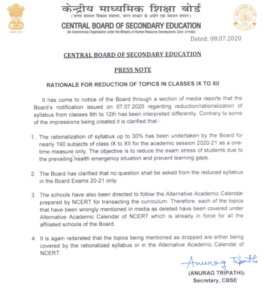 Here’s what the HRD ministry has to say on the reduced CBSE syllabus
According to Human Resource Development (HRD) Ministry officials, the syllabus has been rationalised to reduce the burden on students but the core concepts have been retained.
“The loss of instructional time for a proportionate reduction in the curriculum load for exams was assessed. Accordingly, the course committee of the board had initiated the work on the reduced syllabus. Suggestions were invited from various stakeholders.
“Heads of schools and teachers have been advised by the board to ensure that the topics that have been reduced are explained to the students to the extent required. However, the reduced syllabus will not be part of the topics for the internal assessment and the year-end board examination,” a senior CBSE official said.
Below is the detailed list of chapters that were removed from the curriculum of class 9th to 12th.
Deleted Social studies syllabus for CBSE class 9
UNIT 1: INDIA AND THE CONTEMPORARY WORLD – I (HISTORY)
Forest Society and Colonialism
Pastoralists in the Modern World
UNIT 2: CONTEMPORARY INDIA – 1 (GEOGRAPHY)
Chapter 3: Drainage Complete Chapter except for Map items which will be assessed in the Examination
Chapter 6: Population Complete Chapter
UNIT 3: DEMOCRATIC POLITICS – I (POLITICAL SCIENCE)
Chapter 2: Constitutional Design Democratic Constitution in South Africa (Only)
Chapter 5: Democratic Rights Complete Chapter
UNIT 4: ECONOMICS
Chapter 4: Food Security in India Complete Chapter
CBSE Class 10
Recommended portion for deletion in Social studies syllabus for CBSE class 10
UNIT 1: INDIA AND THE CONTEMPORARY WORLD –II (HISTORY)
Section 2 : Livelihoods, Economies and Societies: The chosen Chapter to be assessed in the Periodic Tests and not in Board Examination.
Section 3: Everyday Life, Culture and Politics; Chapter 5: Print Culture and the Modern World
UNIT 2: CONTEMPORARY INDIA – II (GEOGRAPHY)
Chapter 2: Forest and Wildlife Complete Chapter
Chapter 3: Water Resources Complete Chapter except for Map Items which will be assessed in the Examination
Chapter 5: Mineral and Energy Resources Complete Chapter except for Map Items which will be assessed in the Examination
UNIT 3: DEMOCRATIC POLITICS –II (POLITICAL SCIENCE)
Chapter 3: Democracy and Diversity Complete Chapter
Chapter 4: Gender, Religion and Caste Complete Chapter
Chapter 5: Popular Struggles and Movements Complete Chapter
Chapter 8: Challenges to Democracy Complete Chapter
CBSE Class 11
Deleted Economics syllabus for class 11
Part A: Statistics for Economics
Unit 3: Statistical Tools and Interpretation: Measures of Dispersion – (range, quartile deviation, mean deviation and); (co-efficient of range, co-efficient of quartile-deviation, coefficient of mean deviation,
Correlation –Spearman’s rank correlation.
Index Numbers – index of industrial production
Part B: Introductory Microeconomics
Unit 4: Introduction concepts of production possibility frontier
Unit 6: Producer Behaviour and Supply: Producer’s equilibrium-meaning and its conditions in terms of marginal revenue-marginal cost.
Unit 7: Forms of Market and Price Determination under Perfect Competition with simple applications: Other Market Forms – monopoly, monopolistic competition – their meaning and features.
Deleted English Elective syllabus for class 11
WRITING REPORT WRITING
LITERATURE GLORY OF TWILIGHT
LITERATURE THE LUNCHEON
LITERATURE FOR ELKANA
LITERATURE REFUGEE BLUES
LITERATURE FELLING OF THE BANYAN TREE
LITERATURE AJAMIL AND THE TIGERS
Deleted History syllabus for class 11
THEMES IN WORLD HISTORY
Early Societies (Theme-1): Complete Chapter
Nomadic Empires (Theme-5): Complete Chapter
Confrontation of Cultures (Theme-8): Complete Chapter
Deleted Political Science syllabus for class 11
Book I: Indian Constitution at Work
TOPICS
Federalism (Completely Deleted)
Local Governments
These topics are deleted from this unit: Why do we need Local Governments?; Growth of Local Government in India
Book II: Political Theory
Citizenship (Completely Deleted)
Nationalism (Completely Deleted)
Secularism (Completely Deleted)
CBSE Class 12
Deleted Economics syllabus for class 12
Part A: Introductory Macroeconomics
Unit 2: Money and Banking: Control of Credit through Bank Rate, CRR, SLR, Repo Rate and Reverse Repo Rate, Open Market Operations, Margin requirement
Unit 5: Balance of Payments: Balance of payments deficit-meaning; Determination of exchange rate in a free market
Part B: Indian Economic Development
Current challenges facing Indian Economy: Growth of Education Sector in India; alternative farming – organic farming; Infrastructure: Energy
Deleted English Elective syllabus for class 12
Literature-Short Story
1. Tomorrow
2. One cm.
Literature- Poetry
1. Blood
Literature – Non Fiction
1. Science Fiction
2. Argumentative Indian
Literature – Drama
1. Broken Images
Deleted History syllabus for CBSE class 12
Through the Eyes of Travellers (Theme-5) Part-II: Complete Chapter
Peasants, Zamindars And the State: Part-II – Complete Chapter
Colonialism and The Countryside: Part-III — A Revolt in The Countryside -The Bombay Deccan (Uniit-3), The Deccan Riots
Colonial Cities: Part-III – Complete Chapter
Understanding Partition: Part-III –— Complete Chapter
Deleted Political Science syllabus for class 12
Book I: Contemporary World Politics
Security in the Contemporary World (Completely Deleted)
Environment and Natural Resources (Completely Deleted)
Book II: Politics in India since Independence
Planned Development
These topics are deleted from this unit:
Changing nature of India’s economic development
Planning Commission and Five-year Plans
India’s Foreign Policy
These topics are deleted from this unit:
India’s Relations with its Neighbour’s: Pakistan, Bangladesh, Nepal, Sri Lanka and Myanmar.
Social and New Social Movements in India (Completely Deleted)
15 Regional Aspirations (Completely Deleted)