

Petition for Uniform compensation for Mob Lynching Victims
Gujarat Court Acquits Maya Kodnani and 68 other Accused in 2002 Naroda Gam Massacre

The Trial of Chicago 7 or the ‘trial of Bhima Koregaon and North-East Delhi Riots’?
The report of the Justice Nanavati Commission that investigated the Gujarat riots, noted the statements of witnesses that “there was no police help received by the Muslims and they were simply at the mercy of the miscreants”, and that police help arrived only in the evening. However, several police officials deposed before the Commission that they were not able to reach Naroda Gam because they were managing the more serious situation at Naroda Patiya, which was unfolding at the same time.Rapid Support Forces: The Unit at the heart of the Crisis in Sudan


Guns, Borders and IMF : The History of conflict in Sudan
Background:
Sudan has been in a state of political turmoil for several years now. Since 2019, when the military overthrew Omar Al-Bashir, they promised a transitional government and a path to democracy. However, recent events have seen the military consolidate power and take direct control of the government, leading to concerns about the future of democracy in Sudan. After taking direct control of the government, General Abdel Fattah Al-Burhan held a press conference to explain his actions. He claimed that the takeover was necessary to prevent the country from descending into chaos and promised to establish an emergency declaration and a government of technocrats. The deposal of Omar Al-Bashir was a significant moment in Sudanese history. However, the country has been facing several crises, including the COVID-19 pandemic and a failed coup attempt in September 2020. Additionally, there have been pro-military protests in Khartoum, highlighting the tension between the military and civilian government. Hemetti and the Rapid Support Forces (RSF) are a significant faction in Sudanese politics. Hemetti is a former militia leader who rose to power in the aftermath of the deposal of Omar Al-Bashir. However, the RSF has been accused of war crimes, leading to uncertainty surrounding its future role in Sudanese politics. Sudan has a long history of conflict, and recent changes in the country’s relationship with the International Monetary Fund (IMF) have complicated the situation. While Sudan has received debt forgiveness and is eligible for future loans, the suspension of loans and aid by the IMF has had a significant impact on the country. Additionally, there are plans for development aid under the new government, but the country’s history of conflict may complicate these efforts.Why is the military so powerful in Sudan?
Since the war on terror began, many Western powers have established military alliances with governments in Northern Africa, which has created a significant power imbalance between civilian governments and the military. Civilian governments have often been poor and exploited by foreign governments, while the military has gained access to money and tools of surveillance. This imbalance has resulted in military coups taking over civilian governments frequently in many African countries. Military governments often claim that they are responding to political crises and promise to return to civilian rule. However, tensions between the two branches of government have frequently erupted. This situation is further compounded by the presence of private militias from all over the world. When conflict zones demilitarize, they create new waves of private militias, exacerbating existing tensions. Africa, and Sudan in particular, have been vulnerable to these dynamics. After the Cold War, Africa became a destination for the arms trade, with private militias, insurgent groups, and governments all involved in the trade. Sudan has been particularly affected by this, with a lot of conflicts contained in South Sudan after the split. In 2019, there was a grassroots democratic movement in Sudan, but recent events have thwarted it. The uncertainty surrounding the future of the Rapid Support Forces (RSF) and the accusations of war crimes against them has led to speculation about the role they may have played in the recent takeover by Burhan. The history of conflict and power dynamics in Sudan highlights the importance of international support and involvement in Sudan’s transition to democracy. It is crucial that Western powers and the international community do not perpetuate these dynamics by supporting military governments or private militias. Instead, they should prioritize supporting the development of democratic institutions and civil society organizations.Concerns over Indians In Sudan:
India’s Minister of External Affairs, S Jaishankar, spoke with officials from Saudi Arabia and the United Arab Emirates to assess the situation in Sudan. On April 16 2023, the Indian embassy in Sudan confirmed that one Indian citizen died. The Indian embassy has issued advisories to Indians in Sudan and set up a control room.Democracy or Apartheid: You Can’t Have Both
Ghassan Kanafani: Palestinian revolutionary leader and martyr
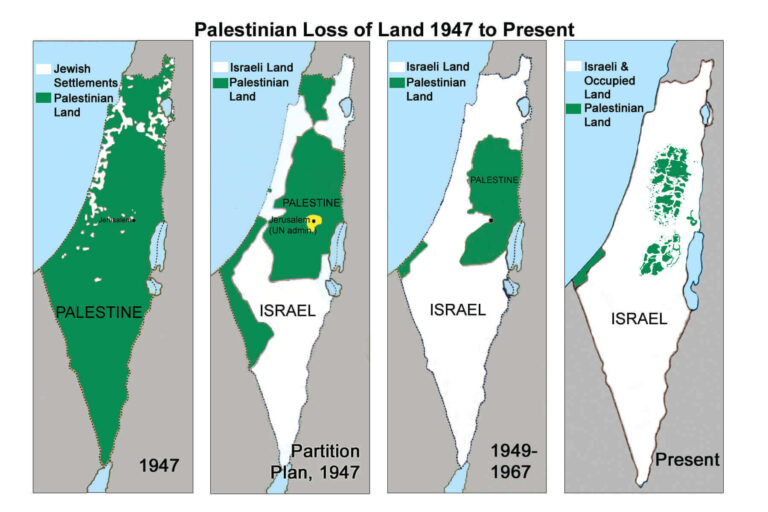
This is a fight to maintain and protect the status quo for Israelis, not Palestinians who have been denied all basic democratic rights under Israel since 1948. For Palestinians, there is no democracy. Despite these blatant acts of unjustified violence committed by Israel, there is no outrage among Israelis. The tens of thousands of people who showed up just last week to protect democracy are suddenly silent. Moreover, Palestinian worshippers are beaten by Israel all the time, this violence is routine during Ramadan. In 2021, Israel unleashed an 11-day bombardment on Gaza during Ramadan and there has been no outcry by Israelis to prevent that from happening. This is evidence that the movement for democracy in Israel is not about democracy at all, but about maintaining the apartheid state of Israel as it has existed for the past 75 years – at the expense of Palestinians. It is insulting for Israelis to launch this “democracy” movement when Palestinians have been ignored for decades. Meanwhile in the the United States, our government is the #1 foreign funder of Israel, which means we have a responsibility to hold them accountable. Yet, year after year a majority of Americans sit silent while our government aids and abets in Israel’s extremely undemocratic apartheid of Palstinians. If the United States truly wants to spread democracy around the world, we must stop funding such blatant violence and human rights violations. You simply cannot have it both ways. (Nour graduated from DePaul University with a bachelor’s degree in International Studies in June 2022. She has been advocating for Palestinian liberation for over 5 years, including organizing within her university. She also organizes around related issues, such as abolition. Courtesy: CounterPunch.) . Views are personal.SC sets aside Bombay HC order discharging Prof. G N Saibaba in Maoist links case

Faculty, Students across India call for the Release of Varavara Rao and GN Sai Baba
The High Court had recorded that while terrorism poses an ominous threat to national security and every legitimate weapon in the armoury must be deployed against it, a civil democracy cannot sacrifice procedural safeguards afforded to the accused. The top court subsequently held a special sitting on Saturday, October 15, and suspended the High Court’s decision. The order was passed after the Maharashtra government contended that failure to grant sanction cannot lead to acquittal in view of Section 465 of the Code of Criminal Procedure. The Supreme Court on Monday also granted bail to Assamese activist and Sibsagar MLA Akhil Gogoi in a case registered against him under the Unlawful Activities Prevention Act (UAPA) for his speeches against the Citizenship Amendment Act (CAA) and alleged links to Maoist organisations.Same-sex marriage is a ‘mere urban elitist view’: Government to SC

LGBTQI Rights Activists Urge SC to Legalise Same-Sex Marriage
“A decision by the court in recognising the right of same sex marriage would mean a virtual judicial rewriting of an entire branch of law. The court must refrain from passing such omnibus orders. Proper authority for the same is appropriate legislature. Given the fundamental social origin of these laws, any change in order to be legitimate would have to come from the bottom up and through legislation a change cannot be compelled by judicial fiat and the best judge of the pace of change is the legislature itself,” stated the application. “This is the only constitutional approach permissible under the Constitution while recognising any socio-legal relationship as an institution with sanction under the law. The competent legislature is the only constitutional organ which is aware of the above referred considerations. The petitioners do not represent the view of the entire population of the nation,” it added. “Any encroachment on the legislative powers solely reserved for the elected representatives would be against the well-settled principles of ‘separation of powers’ which is held to be a part of the basic structure of the Constitution. Any such deviation from the concept of separation of powers would be thus, contrary to constitutional morality,” the application reads. It further states that, “The institution of marriage is necessarily a social concept and a sanctity to the said institution is attached under the respective governing laws and customs as it is given sanctity by law on the basis of social acceptance. It is submitted that social acceptance and adherence to societal ethos, common values, shared beliefs across religions, in case of recognition of “socio-legal institution of marriage” is not be confused with majoritarianism.Macron Signs Unpopular Pension Reform Into Law After Court Approval

Farmer Organisations Condemn Govt Reduction of Wheat Procurement Price

An MSP scheme to transform Indian agriculture
SKM demands that every grain of crop must be procured at the Minimum Support Price (MSP). The SKM will not tolerate any reduction in procurement on the grounds of quality, as the quality variations due to climate change are not the farmers’ fault. SKM warns the Union Government to withdraw the circular on price-cut immediately and do full procurement at MSP as in the previous years. SKM is giving a call for a nationwide protest on April 18 against this atrocious anti-farmer policy of the Union Government. If the Government fails to withdraw this circular, larger protests will follow. The procurement and PDS from the Green Revolution period provided assured price incentives for rice, wheat and sugar (the flagships of the Green Revolution), but left out some 20 crops now under discussion for MSP including millets, coarse cereals, pulses and oilseeds. MSP could serve, in principle, three purposes — price stabilisation in the food grains market, income support to farmers, and also as a mechanism for coping with the indebtedness of farmers.Brazil’s Lula De Silva Proposes BRICS Currency to Replace Dollar in Foreign Trade

Largest strike in decades brings Germany to a standstill
This incident isn’t an isolated one. The calls to reduce dollar dependency in the aftermath of the Ukraine Crisis and the dwindling economy of the US are getting louder, clearly signaling a multipolar world. In February, it was reported that the yuan has replaced the dollar in monthly trading volume between China and Russia, and the difference between the two currencies became more pronounced in March. Another attempt at de-dollarization, this switch occurred due to additional sanctions imposed by Washington. The sanctions affected the few banks left in Russia that retained the ability to engage in cross-border transfers in dollars and other currencies of countries, leading them to switch from the dollar and the euro to currencies of countries who refused to impose sanctions on them, China being one of the most prominent ones.Common Latin American Currency ‘Sur’
Soon after Lula took oath as the President in January, he announced that Brazil and Argentina were engaged in starting preparatory work on a common currency, something that might lead to the development of the world’s second-largest currency bloc. Other Latin American countries were welcome to join in on the bilateral proposal of creating the “Sur” (the currency name suggested by Brazil) in an attempt to boost regional trade and reduce reliance on the U.S. dollar. Lula’s criticisms on the usage of the dollar comes at the helm of his passionate call to other BRICS countries to drop the dollar and start using their own currencies for trade in a latest effort to reduce reliance on the dollar. These comments, in turn, come amid efforts by China, India, and Russia to set up streams for trade in their own currencies. At the upcoming BRICS summit, scheduled in South Africa, a new financial arrangement is expected to be announced, which might be translated to a common BRICS currency. The pushback against the U.S. dollar dominance and the attempt to de-dollarize is due to many reasons, most of which involves concerns about destabilising economies due to Washington imposing sanctions on unfriendly countries or the burden of dollar-denominated debt for other nations rising and falling with the exchange rate. As Lula’s “Brazil is Back!” slogan reverberates against the backdrop of a multilateralist foreign policy stance, what happens next depends on how he navigates the country on the international stage. Especially with a shift to closer ties with China and with both Brazil and China continuing to refuse to impose sanctions on Russia.Nandini-Amul Saga: Corporatisation of Cooperatives
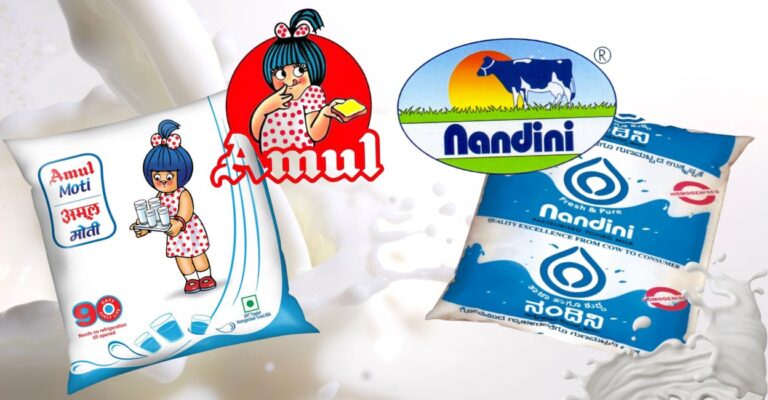
Amul, a dairy brand under Gujarat Cooperative Milk Marketing Federation (GCMMF), announced on April 5 that it would sell its products in Karnataka, resulting in widespread protests in the state. In December 2022, Union Home Minister Amit Shah declared in Mandya that Amul would work with the Karnataka Milk Federation (KMF), whose dairy brand Nandini is the second-largest milk procurer in the country (after Amul) and largest milk supplier in Bengaluru.
Farmers’ groups, opposition leaders, Hotel Associations, and general citizens voiced their dissent against this move by taking to the streets, releasing statements, and through social media campaigns online.
N Jagadish Gowda from Karnataka Rakshana Vedike (KRV) told Deccan Herald that – “The central government only sees Gujarati farmers, not Karnataka farmers who depend on selling to Nandini for their livelihood. This merger will hit local farmers the hardest. We oppose this mentality. We don’t need Amul here.” Indeed, Nandini has already been lurching towards a crisis due to the pandemic, lack of price revisions, rising input costs, cattle diseases, fierce competition from private dairies, and corruption allegations. However, rather than a parochial blame on Gujarati farmers, one must turn their attention to the larger developments in the dairy sector and the centralisation of state-level initiatives as a means towards corporatisation and privatisation. The outcome is not a replacement of Kannadiga farmers with Gujarati farmers, but a replacement of the cooperative structure with a corporate one, disenfranchising both farmers and consumers across the country for the private gains of a few.

Amul: Cooperative or Corporation?
According to the International Cooperative Alliance (ICA), cooperatives are people-centred enterprises jointly owned and democratically controlled by and for their members to realise their common economic, social and cultural needs and aspirations. Article 43B of the Constitution says that “states shall endeavour to promote voluntary formation, autonomous functioning, democratic control and professional management of cooperative societies”.
However, following the deregulation of the dairy industry in 1991, the cooperative laws were amended such that cooperatives could run on commercial lines to enable them to compete better in an open market environment. Both Amul and Nandini function within this ‘privatised’ cooperative structure.
Amul has already monopolised milk markets in most Indian states and ranked 8th among the top 20 global dairy processors as assessed by the IFCN Dairy Research Network in 2020. It is also the largest exporter of skimmed milk powder (SMP). In fact, as Sagari Ramdas points out, several dairy companies on the top 20 ranking are ‘cooperatives’ in name and have become large producers through the exploitation of land, labour and resources, and through the destruction of millions of ‘non-member’ dairy farmers and traders.
Amul too, when faced with price slumps in the export market, turns to local markets to dump its excess production. As the Amul-Nandini row continues in Karnataka, a KMF official himself admitted that production of milk is low from March-May making the period before May important for Amul. While BJP leaders scramble to paint a picture of two large cooperatives ‘working together’ to meet the needs of the people and bring profits to dairy farmers, it is clear that Amul’s entry into Karnataka is driven by nothing other than the opportunity to divert excess milk to Karnataka’s markets.
Centralisation As Means Towards Corporatisation
The Farm Laws of 2020 sought to liberalise the agricultural market and facilitate the involvement of corporates in procurement of produce, as well as through investments of infrastructure and technology in the agrarian sector. Following its repeal after widespread protests, corporatisation continues to be brought in through different avenues. The Union government’s focus is now on using the cooperatives as a base for collection and distribution of milk, while corporations take over marketing and exports, with private participation at the apex level.
In October 2022, Shah announced that Amul will be merged with five other cooperative societies to form a multi-state cooperative society (MSCS). In December 2022, amendments were proposed to the Multi-State Cooperatives Act (2002) such that any cooperative society can merge with existing MSCSs, allowing Amul’s newly formed MSCS to further eat up local co-operatives and expand on its corporate production model. The amendments also empower the central government to conduct and oversee the administrative functioning of the cooperative societies, including in matters pertaining to the redemption of their shareholding, further restricting cooperative autonomy.

Shah directly made the link between the MSCSs and global trade by saying, “We have a huge opportunity to deliver milk to countries like Bhutan, Nepal, Bangladesh, and Sri Lanka. To explore this world market, the government is setting up a multi-state cooperative which will act as the export house.”
Privatizing profits and socializing losses
In March 2023, NITI Ayog member Ramesh Chand announced that India needs to find a market for milk in foreign countries as its production is growing by 6% every year. During 2020-21, India exported 54,762.31 million tonnes of dairy products worth `1,491.66 crore (USD 201.37 million). The logic of dealing with overproduction through increased exports makes domestic markets susceptible to global trends, and small farmers take the fall. For example, In 2014, a price crash in Europe led to low procurement prices due to which Amul’s SMP was outpriced in the global market, leading to a huge domestic build-up of stocks. As a result of this, Amul entered the Hyderabad dairy market to dump the excess milk that had reconstituted from SMP, driving down procurement prices in Hyderabad and harming local farmers.
In the price slump period of 2015-2019, Amul, like all other top corporate dairy players, drew enormous profits. Meanwhile, the losses were passed down to small farmers, many of whom were forced out of dairying or forced into enormous debt. Amul also sustained profits of over 16% throughout the lockdown of 2020, while dairy farmers in Gujarat suffered losses at the same time.
To increase exports, more private investment is needed. The Dairy Processing and Infrastructure Development Fund (AHIDF) of INR 15,000 crore has been set up to support breed multiplication farms and breed improvement technology, manufacturing of milk testing and dairy equipment, and manufacturing of feed supplements/ feed additives. It is available to multi-state dairy cooperatives, milk producer companies, self-help groups and Farmer Producer Organizations (FPOs), which will be vertically linking them to integrated dairy companies like Amul. The latter integration is taken care of by the recent MSCS amendments, but the former technological interventions require enormous capital, to which players like Reliance become key. In April 2023, Former Amul managing director RS Sodhi joined Reliance Retail in an advisory role, which many speculate could be a hint into Reliance’s future plans to foray into India’s dairy sector.
While the Farm Laws have been repealed following popular protest, the agenda of corporatisation and privatisation is still very much alive and being pushed through other avenues. Through a joint policy of centralisation of cooperative societies and increased focus on export of dairy products, the government is able to integrate local producers and milk markets into India’s corporate dairy agribusiness. Ultimately, this is an existential threat to small producers in the country.
Inputs by Swati Krishna.