

When Bad Chemistry Eats into Fair Arithmetic – A mid-way analysis of Loksabha Election- 2019 in UP

/Abhishek Srivastava/

For Kannada Version: click here 

Uttar Pradesh has always been a party to election covering scribes and pollsters. Being the largest and politically most decisive state in India, UP has given 14 Prime Ministers till date. The incumbent PM Narendra Modi holds his parliamentary seat in UP’s Varanasi and is again contesting from the same seat that goes to polls in the last phase on May 19th. Varanasi has traditionally never been a VIP seat. Amethi, Raibareli and Phulpur were at the center of national politics until the Indian National Congress went crumbling down to 44 seats in the last General Elections. This was the worst performance ever and credit goes to UP that poured in 73 seats to Bharatiya Janta Party out of 80 parliamentary seats.

The remaining seven were the ones that saved the face of two political clans- one of Mulayam Singh and the other Nehru-Gandhi family. Bahujan Samaj Party of Mayawati that fielded a maximum of 503 candidates nationally in 2014 fared the worst. 447 of its candidates’ deposits were forfeited and the party scored nil although it came third in terms of percentage votes (4.19%) over total valid votes polled. Even the Communist Party of India could secure a single seat just by getting 0.79% votes (that was lowest among six National Parties). Samajwadi Party was the only major state level force that fought on 78 seats (all in UP), won five and secured more than 22% votes that were almost all from UP.

To come to terms with the electoral importance of UP, we need to first have a closer look at the percentage votes polled and seats won by various parties in the state in 2014. BJP secured almost 43% votes and won 73 seats. BSP was clean bowled although it grabbed 20% votes in UP. INC stood at two seats with around 8% votes and SP came runner-up at 22% votes despite getting just five seats. Now just add up percentage votes of SP and BSP, we get almost closer to BJP’s tally. Add to this RLD’s one percent and BJP is left behind. This was the exact equation that worked in Loksabha bypolls of Kairana, Phulpur and Gorakhpur last year when BJP lost all three. Its dismal performance resulted due to the united opposition that arithmetically aggregated its votes and defeated BJP. These results were hailed as sort of some magic that could evenly work over all 80 seats in UP for 2019 GE. This equation may be treated as a backdrop to ongoing General Elections as the opposition is partially united in UP. SP, BSP and RLD are fighting as a Grand Alliance and Congress party could not negotiate terms with them due to various internal and external frictions.

The Arithmetic

Going by the arithmetic, it seems as if the Grand Alliance (GA) could sweep UP very easily. But there is catch. It was perfectly analysed by S. Gurumurthy in an article published in The New Indian Express on June 6th, 2018 but blatantly ignored by much of the media and GA too. It needs a revisit to move forward. Gurumurthy summed-up his analysis in following words:

While the opposition is elated over its by-election victories, a closer look at the numbers suggests the BJP increased its vote share. It shows when the opposition unites, its votes do not just get aggregated automatically; it actually loses part of its own individual constituents’ votes.

After defeating BJP in by-polls opposition assumed that it could defeat BJP the same way in 2019. Many analysts prophesied the defeat of BJP then. They still stick to their analysis. This needs a scrutiny. Since UP is the main battleground that will decide the future of this country, this analysis is more relevant today than ever. The reason why the BSP and the SP strategically got together in March 2018 was that the BJP got far less votes than the divided opposition in 2017, but swept the UP Assembly poll. After the 2018 victory, it was comfortably ignored that as compared to the 2017 Assembly polls, in the 2018 LS by-poll, the BJP has reduced the united opposition’s margin in Gorakhpur from 14.8% to 2.4%. In Phulpur from 24% to 8%. In Kairana from 19.2% to 4.7%. Since electorate prefers to vote for a national party in Loksabha polls, this margin would reduce more and more so in favour of BJP, not Congress.


So the plain but hidden message is that, when the opposition unites, its votes do not just get aggregated automatically; it actually loses part of its own individual constituents’ votes. This works much aggressively in current scenario where BSP and SP are fighting together at half of their capacities. In an informal chat with a RSS shakha pramukh in Ghaziabad on the evening of April 11 when nine seats of West UP went to polls, I wondered how the BJP people are talking of 350 seats and what is the basis of their claim. He responded very calmly that this would be possible just because of the candidates that could not get tickets on almost all seats of UP. If BSP and SP fought independently without alliance, they would have fielded their candidates in all constituencies. Now with the Grand Alliance in picture, almost half of the seats are left by SP for BSP and vice-versa. So apart from the loss of individual constituent’s vote generally, the missing candidates would work hard to stop transfer of votes to alliance. This was not a part of some imaginative assumption. This alludes to the chemistry that works to make the arithmetic a success or failure, depending on the situation.

The Chemistry

Around the time when Grand Alliance was announced formally in the third week of January, I visited some crucial seats in UP. Among them were Etawah, Bulandshahar, Kasganj, Ferozabad and Agra. I talked to the district heads of SP and BSP and went to some villages as well. Local leaders were already aware of the Grand Alliance and were bullish about it. It was the common voter that felt betrayed by this “historical” re-union. A Dalit women leader in Etawah was of the view that better they voted for BJP. Almost all the members of Yadav community I talked, they were hesitant to vote for a possible BSP candidate. The alliance was received in a bad taste at the bottom of political pyramid.

After a couple of months I visited Eastern UP specially Varanasi, the VIP seat of PM Modi around Holi. Talking to SP’s core voter, it gave a sense as if they were not mentally prepared to vote for a possible BSP candidate. The story was same as in Etawah. BSP core voters were silent at that time. They were waiting for the announcement to get validated in front of their eyes. It is never easy for a cadre to accept an old enemy as a partner. It took more than a month for the staunch rivals to “bury the hatchet”, as termed in media reports. On April 19th, BSP Supremo Mayawati and SP’s patriarch Mulayam Singh Yadav shared stage. Two phase of polls had already passed until then. Around one-fourth of constituencies had polled by April 18.


Not going into the reasons of delay in this formal show of unity, the scenario was already fraught with communal polarisation across the board that was kicked off by none other than Mayawati who had appealed to Muslim voters on April 9 not to split votes. This statement had sufficient capacity to backfire. She was not only banned by the Election Commission for 24 hours but by saying this she had sent shockwaves into Congress high command that had launched Priyanka Gandhi in Eastern UP to consolidate the party’s ailing structure. Until then there was no exchange of words between Congress and SP/BSP. Things went so smooth in initial two phases that BJP started crying of collusion behind curtain. Even many journalists were convinced of the view that Congress had fielded candidates in such a manner so as to eat into BJP’s forward caste votes and not to disturb the GA’s arithmetic.

After Mayawati’s controversial call and finally the show of unity, Congress finalised its major seats in Eastern UP. It allied with Babu Singh Kushwaha, inducted Ramakant Yadav and spoiled GA’s fortunes in Ghazipur, Chandauli and Bhadohi. Congress was now desperate not to leave the field open for Alliance. Priyanka Gandhi upped the ante by creating “suspense” over her candidature from Varanasi against Modi. Rahul Gandhi, the Congress President added salt and pepper to the speculations about Priyanka. This acted as a major catalyst for Congress candidates in Eastern UP who were already much strong in their own capacity. Anti-BJP undercurrent was already there. They just needed it to surface and that was possible only if the “suspense” would have ended in expected positivity.

The Double “Suspense” of Benares

Unfortunately, the “suspense” ended into a tragedy. Not much for Congress, but for the distressed voter, the floating 4-5 percent, about which the noted psephologist Yogendra Yadav had predicted a swing away from BJP. The premature fall of this “suspense” may be termed as a “shock doctrine” that will be remembered in the electoral history of India if the final results prove to be a disaster- obviously not for BJP!

Conspiracies were in full swing until now. Take the case of Ambedkar Nagar LS seat. Priyanka Gandhi had visited Bandit Queen Phulan Devi’s home and fielded his husband Ummed Singh from this constituency on Congress ticket. After nomination, Congress candidate received notice from ECI about discrepancies in his form. He had 24 hours to respond and rectify, He never turned up. His nomination was cancelled after 48 hours. As per internal sources, he was given hefty amount by the GA candidate from the same seat to sit back. Likewise, Praveen Nishad, the alliance candidate and thereafter MP from Gorakhpur who won in March 2018 LS by-polls switched sides and joined BJP. The story is same here also.

Alliance was waiting for an opportune moment to dent Congress, The moment came on April 29th when total 71 seats went to polls in fourth phase and it was the last date of nomination for the last phase. SP had announced Shalini Yadav as GA’s official candidate from Benares against Modi but it changed its candidate at the last moment. A suspended ex-serviceman of BSF Tej Bahadur Yadav was fighting independent from Benares. SP gave him its official symbol and turned Shalini into a dummy within hours. The national media made a hero out of Bahadur and pitched him as the sole rival candidate against Modi from Benares lS seat. Local INC candidate Ajay Rai who was fighting twice against Modi was completely ignored.

Again “suspense” engulfed the whole discourse as Tej Bahadur’s nomination was cancelled by the Returning Officer of Varanasi and the final decision was upto ECI in Delhi. On May 1 at 4.00 p.m. his nomination was finally rejected but the whole episode was very much successful in creating a binary of Bahadur-Modi. It had created a false discourse of BJP’s communal militant nationalism Versus SP’s secular militant nationalism and much of the civil society that supported Arvind Kejriwal in 2014 got trapped in it. After May 1, things are sundry and uninteresting in Benares. The communal-secular combine of BJP-SP has proved successful in sidelining Congress from the VIP seat.

This episode may be validated by the recent historical events. In October 2015, SP government in UP with consent of Modi government at the centre had imposed NSA on Ajay Rai and put him behind bars for seven months. At that time, there was a fierce debate in Benares about putting idols in Ganga and the local saints were opposing the move. These saints were lathicharged by UP police in which the successor of Shankaracharya Shrih Avimukteshwaranand, the most revered religious figure in Benares was badly hurt. Rai, whose deposits were forfeited in 2014 came in his support and he was jailed under NSA. This episode has now repeated itself in Benares as an electoral “suspense” that has taken air out of Congress’s fortunes. Otherwise Rai being a local candidate and having stood with the people of Benares for five years was the best bet against Modi this time, given Kejriwal’s absence. SP and BJP created a Kejriwal out of Tej Bahadur and the discourse got destracted.

What Next?

The story till now bears two main contradictions that arise out of bad chemistry in opposition: the first contradiction between the social base of SP and BSP, another being INC’s urge to consolidate its organisational structure for 2022 state elections and GA’s natural “obligation” to defeat Modi in 2019. There are much more frictions at micro level but all this have a same resultant effect: gain for BJP!

As the election progresses towards end, we should expect more exchange of words between Rahul Gandhi and Akhilesh Yadav as has been witnessed in last week. Ideological fault-lines have clearly emerged out of a pre-modern society that is being pulled out deliberately by the people in power. Values have completely eroded. The aggregate of our civilizational and cultural achievements are touching a historical low. It is still immature to speculate on wins and losses. That would be much clear after May 19th when I will focus more on voting patterns and expected results. As of now, it may be suggested that the fair arithmetic of Grand Alliance in UP has been spoiled by the the bad chemistry and BJP’s propaganda machinery. Whatever would come out of it will bear consequences for the whole nation. In this sense, UP is again going to dictate the collective future of more than a billion impoverished people of India.

(Abhishek Srivastava is Executive Editor of Mediavigil.com)


Venezuela- Story of a Failed coup, again

/ Bharath Hebbal /

For Kannada Version- Click here

Juan Guaidó´s attempted coup in Venezuela backed by US administration to overthrow a democratically elected president Nicolás Maduro is not only a blatant violation of international law but also a reflection of crumbling democratic values in society across the globe. Though this theme is often neglected or wrongly presented by the main stream media including Hollywood. America has been desperately trying to break the Bolivarian revolution achieved under the leadership of Hugo Chavez in 1999. America had similarly attempted failed coup against Chavez in 2002 and against Maduro in 2016 which was defeated by the people Venezuela.

FILE PHOTO: Venezuela’s President Nicolas Maduro attends a gathering in support of his government in Caracas, Venezuela February 7, 2019. REUTERS/Carlos Barria/File Photo – RC1DEC98AF40

Juan Guaidó, US backed opposition leader

In upping the ante, on April 30th, Juan Guaidó US declared interim president of the country appeared in a video calling for a military uprising. Guido was accompanied by heavily armed men claiming the backing of the military and that the video was filmed at the Generalissmo Francisco De Miranda Airbase in the capital Caracas. Opposition politician Leopoldo Lopez who was under house arrest after inciting violence during the anti-government riots appeared along with Guaidó . President Trump along with Vice President Pence and National security advisor John Bolton immediately tweeted public support for the coup attempt and threatened the Venezuela’s legitimate government by military action. The US backed coup attempt was branded as Operation Libertad (operation liberty) and it received vocal support from leaders and US officials and its Latin American allies.

But, the coup did not go according to the plan. Despite the initial claims of Guaidó, his supporters failed to get control of Francisco De Miranda Airbase. In the first half of the day the anti-government protesters fought mostly outside the airbase main street and the highway along the military facility. By evening, most of the protestors were expelled from the air base though clashes and sporadic use of firearms has been reported across capital. Rioters including the armed ones marched towards Palacio de Miraflores, the workplace of the president but lacked resources to storm it. Low scale riots also have taken from in few of the provinces. Throughout the day US officials with their statements and American news channels ran stories on how democracy was about to achieve victory and Maduro was about to flee the country to Russia. This didn’t happen. This was the second coup attempt by Guaidó that failed due to lack of support from the local population.

In his third attempt, arrogantly, Juan Guaidó gave a call on social media to oust Maduro on May 1st, International Labour day, but that also failed disastrously because of massive turnout of people, workers from labour unions and left organisations. President Maduro has called for the people of Venezuela to mobilise and defeat US plans. Defence minister Vladimir Padrino also reaffirmed that the armed forces of Venezuala reject the US proclaimed president. Venezuela Samuel Moncada, the ambassador to UN described the situation as an attempt by foreign powers to spark a civil war in Venezuela. According to reports the number of soldiers and security officers who have defected to Guido is only around 80 to 100 people.The Venezuelan government has characterised armed forces supporting Guaidó as a small group of traitors. Security measures across the capital have been reinforced along with curbing of local and international media outlets like CNN and BBC supporting the coup.

It appears that Guaidó and supporters will not be able to seize power without direct foreign support. That support might come through overt or covert US led invasion. Leaked reports in the media suggests Eric prince the notorious founder of private military security company “Blackwater” has suggested to deploy some 5000 mercenaries to support the coup against the Venezuelan government.

Donald trump, US president

After crippling the Venezuelan economy by imposing illegal sanctions for two decades and starving millions of Venezuelans, America’s National Security adviser John Bolton has ironically said “We need Venezuela to be ruled by people of Venezuela and not by external forces”. He has warned Maduro against using force against innocent civilians. The innocent civilians that Bolton refers is a small groups of armed protestors and west backed militias who are instigating violence supporting unelected, self-declared president of Venezuela Guaidó. Although Maduro is no Chavez and Maduro governance is marred with corruption, large part of the population are committed to the Bolivarian revolution and them democratically elected legitimate president Maduro. Maduro has vowed a South American Vietnam for US if it attempts to invade Venezuela militarily. US with its interventions in Afghanistan, Iraq, Syria, Libya, Yemen and scheming to start a new war with Iran is attempting to topple Maduro. US under Trump administration is not only getting rid of mask of benevolent liberator who brings democracy across the globe but, is displaying all signs of delusional state which wants to control every corner of the planet with its rouge interventions .


Maharashtra: A Fractured Mandate with NDA at Disadvantage

/ Shriranjan Awate /

For Kannada edition: click here

The fourth and final phase of polling in Maharashtra, the state having second most Lok Sabha seats (48) in the country, got completed on 29th April with 60.68% turnout, little higher than 2014’s 60.32%. Though the voter turn-out remains more or less same, the voting pattern has changed significantly. Maharashtra, like most of the parts of Hindi Heartland, had witnessed Modi-wave during 2014 LS elections. This time, the wave has almost disappeared and the centre’s dominant narrative gone down dramatically despite Modi’s relatively high popularity. As a result, local equations became crucial in Maharashtra Lok Sabha elections. The changing mood was quite visible throughout the campaign & tactics played by the political parties in the fray.

● The campaign in Maharashtra:

Though there are four major parties in the politics of Maharashtra, the contest was primarily two-cornered with Cong-NCP alliance (UPA) on one side and Shiv Sena-BJP alliance(NDA) on the other. The third corner was Vanchit Bahujan Aghadi(VBA) having an alliance of Bharatiya Republican Party (RPI) headed by Prakash Ambedkar, grandson of Dr.Babasaheb Ambedkar & All India Majlis-e-Ittehadul Muslimeen (AIMIM) headed by Asududdin Owaisi. While VBA was claiming to fight against both Congress & BJP, it seems that this alliance would compel UPA to face a tough challenge as the voter base of VBA & UPA will get divided in few constituencies.
BJP played the game on two fronts:

Firstly, the party was successful in demoralizing the alliance of opposition, by persuading their prominent influential local leaders to join BJP by hook or crook. BJP could manage to accommodate Vikhe Patil from Ahmadnagar (Radhakrishna Vikhe-Patil was the leader of opposition in Maharashtra legislative assembly) and Mohite Patil from Madha in its party.

Secondly, CM Devendra Fadanvis & his team vigorously campaigned on the issue of national security citing the example of Pulwama attack & Balakot airstrike. PM Modi also campaigned on the same agenda, diverting the key issues of unemployment & agrarian crisis. Interestingly the ‘Gujrat model’ and the ‘development’ campaign agendas were missing from Modi’s speeches this year. Instead his focus remained on the card of caste and religion. The religious polarization tactic became more evident after Pragya Thakur was awarded a candidature from the Bhopal constituency, apparently an accused from the Malegaon Bomb Blast case. While addressing the rally In Latur, PM said, “I want to ask first-time voters: Can your first vote be dedicated to the courageous jawans who did the Balakot air strike? Can your first vote be in the name of the courageous martyrs who lost their lives in Pulwama?” But, unlike 2014 LS, Modi couldn’t energize the crowd enough with his rhetoric.

While NDA was faltering, UPA also was directionless. The Congress party faced internal conflicts and could not manage to resolve it to challenge BJP effectively. It seems that NCP, headed by senior leader Sharad Pawar, could manage a comeback by placing strong candidates in Western Maharashtra. On the other hand, Shiv Sena, an ally of BJP, apparently could not be able to gain the confidence of voters and might lose more seats as compared with the BJP as it criticized Modi-Shah’s BJP severely for last four and half years and made an alliance in the wake of the election.

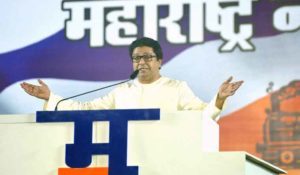
● Raj Thackeray Factor:

While the election fever was low and somewhat tedious, the rise of charismatic leader Raj Thackery, chief of Maharashtra Navnirman Sena (MNS) gave an impetus to the opposition as he did not field his candidates & forcefully campaigned against the Modi-Shah duo. His speeches were a combination of his oratory and an audio visual presentation verifying Modi-Shah’s claims. The rallies of Raj Thackery witnessed unprecedented crowds and may turn out to influence floating voters especially in Mumbai-Nasik region where he has a stronghold. Even his speeches went viral on social media & crossed the borders of Maharashtra. The clips of his speeches & the clips he showed were played with the subtitles in non-Maharashtra regions, creating a counter narrative to the ‘national security’ campaign agenda built on Pulwama attack and Balakot strikes by the NDA. Consequently, the one-sided battle became level playing field with his ability to pull crowds like a magnet.

● Region-wise Trends:

Maharashtra has five major regions, namely, Vidarbha (10), Marathwada (8), North Maharashtra (6), Mumbai-Konkan (12) & Central/Western Maharashtra (12) with total 48 Lok Sabha constituencies. After the rise of Modi in 2014, the power centre of Maharashtra was shifted to Vidarbha from Western Maharashtra as Vidarbha is the bastion of BJP. This time, poor response to Modi’s rally at Wardha indicated a red signal to the ruling party. As all seats of Vidarbha were grabbed by NDA in 2014 LS, the mandate of this region will be the litmus test of BJP on farmer distress. Similarly, farm distress & drought conditions impacted Marathwada, the most affected region of the state deeply. Even in North Maharashtra, the agrarian crisis will turn out to be the key issue on which farmers would have made their voting choice. Besides this, issues about the Forests Rights Act and the conflict between tribals & Dhangars will be decisive in this region. BJP’s decision of allocating 16% reservation to Marathas did not go well with OBCs, which may turn crucial in Central & Western Maharashtra. Chhagan Bhujbal, the face of OBC leadership from NCP, attempted to exploit the scenario at its best. The issue of unemployment remains effective in all regions. While a significant part of urban constituencies still supports BJP, the rural voter has moved away from the ruling party to a great degree.

The lack of strong leadership in Congress and their inability to coordinate well with parties in the alliance has made sure that Sharad Pawar and his NCP would be decisive players in the politics of Maharashtra. Sharad Pawar continues to be the upper hand in the political scene.

● Looking Ahead

Squarely talking in terms of numbers, the BJP-Shiv Sena alliance would steep below 30, while the Cong-NCP alliance may reach a figure in the 20s. Beyond the electoral arithmetic, the key issues of the people of the state are left behind. While BJP-Shiv Sena alliance have centred their politics in the state mainly around Hindutva and national security, Cong-NCP, with the help of MNS have been able to raise the issues of unemployment and farmers’ distress to the fore to a great extent. However with all said and done, the future of Maharashtra stands on shaky grounds with no clear indication of the mandate and of the political atmosphere that is taking shape.

The author is a Teaching Associate at Savitribai Phule Pune University, Pune. He can be contacted at [email protected]

Iran Sanctions and the threat of War

/ Bharath Hebbal / In a series of escalations, United States of America has declared a total economic war against Iran on 22nd April. The white house statement has said “This decision is intended to bring Iran’s oil exports to zero, denying the regime its principal source of revenue”. Oil being the main exports of Iran, US is attempting to strangulate Iran into submission after Trump Administration took power. Iran currently exports about 1 million barrels of oil per day. When sanctions were first announced in November 5th of 2018, eight countries were initially given six-month deadline to stop oil imports fearing market instability. The current exemptions from unilateral U.S. sanctions ends on April 30 after which all eight countries have to comply. China, India, Japan, South Korea, Taiwan, Turkey, Italy and Greece were the countries given exceptions. Japan, South Korea and Taiwan which will obey the sanctions as US is its protector after WW2. It doesn’t matter for Italy and Greece as they source very less oil from Iran. China decision to comply with this diktat is dependent on the ongoing trade war. Though Indian petroleum minister has confirmed through his tweet that India is going to comply with US sanctions, it will be however decided after current elections and a new government in power. Turkey is one of the biggest importers of Iranian oil and gas and it cannot get oil and gas from other sources within short period of time and might face consequences. In May 2018, the crisis started when US withdrew unilaterally from a multilateral nuclear accord, officially known as the Joint Comprehensive Plan of Action (JCPOA), which was reached between Iran and six world powers in 2015 under Obama administration (link). Under Trump administration it has re-imposed unilateral sanctions on Iran that had been lifted under the deal. It has recently offered to renegotiate the deal under various conditions. After the debacle of US regime change attempts in Syria and recently in Venezuela and the ongoing wars, it is attempting now to paint Iran as a rogue terrorist regime bent on acquiring nuclear weapons and spreading anti American sentiments across Middle East.  This is very similar to the “war on terror” buildup done in 2002 for attack on Iraq (in 2002) under the same national security advisor John Bolton. These conditions of negotiations as described by Iranian President Hassan Rouhani are “bunch of lies which wants to bring Iranian Nation to its knees”. Iranian Foreign Minister M Javad Zarif has clearly questioned why Iran should join another agreement if US has pulled out from its previous agreements? In clear terms he has stated Iran truly believes that president Trump does not want war but his advisors which he terms B-TEAM (Bibi of Israel, Bin Salman of House of Saud, Bin Khaled of UAE and Bolton from America) are the cause for the present crisis. He has stated Iran cannot be brought to knees with the so called maximum pressure policy. 35% of world’s traded oil imports passes through Persian Gulf called “Strait of Hormuz” which passes through Iranian waters and Iranian Revolutionary Guards guard it. On 8th April, Trump administration, designated, Iranian revolutionary Guards Corps as foreign terrorist organisation, marking the first time Washington has formally labelled another country’s military a “terrorist group”. In response, Iran immediately declared the US as “state sponsor of terrorism” and US forces in the region “terrorist groups”. Historically, India and Iran have shared cordial relations. Even during the times of sanctions under Manmohan Singh and during Narendra Modi, India has aided and sided with Iran. It only remains to be seen whether India will try to strengthen regional bond or betray historical friendship under pressure.

What is Human DNA Profiling Bill and why we should know about it?

For Kannada version – click here

2019 started off as a busy year for it being an election year and what not. So busy that many contentious bills were passed without a whimper of debate on most TV channels or even newspapers. On January 8th 2019, the Lok Sabha quietly passed one such bill called the DNA Technology (Use and Application) Regulation Bill, 2018 or “DNA bill”.

DNA profiling or DNA fingerprinting

Deoxyribonucleic Acid or DNA is one the building blocks of all organisms. It contains all the genetic information needed for growth, development, functioning and reproduction of all living organisms. It is translated into proteins which carry out the duties specified by the genes and ensure normal growth and functioning of all species including humans.The fact that DNA is like a blue print of an organism, once isolated, it has several applications in the field of Biomedical research, industry and agriculture. DNA can be used to determine an individual characteristics which are as unique as fingerprints. DNA profiling is a forensic technique used in criminal investigations to establish an individual identity. DNA can be isolated from blood, semen, skin, saliva or hair found at a crime scene to identify a matching DNA or an individual. In DNA profiling, a profile is created by comparing and analysing certain sections of DNA called short tandem repeats and mini-satellites, between people.

What is DNA Technology (Use and Application) Regulation Bill?

Currently, the use of DNA technology for identification of individuals is not regulated in India. The DNA Technology (Use and Application) Regulation Bill, 2018 or “DNA bill” proposes to regulate the use of DNA technology to establish the identity of persons, including offenders, victims, suspects and undertrials, in criminal and civil cases such as parentage disputes, emigration or immigration, assisted reproductive technologies and transplantation of human organs. The bill includes offences under the Indian Penal Code, 1860, as well as offences under other laws such as the Immoral Traffic (Prevention) Act, 1956, the Medical Termination of Pregnancy Act, 1971, the Protection of Civil Rights Act, 1955, and the Motor Vehicles Act, 1988. The Bill provides for establishment of a national DNA data bank and regional DNA data banks. The bill also proposes establishment of a Regulatory Board that will comprise of officers from NIA, CBI, experts in the field of biology and a member of the National Human Rights Commission.

The idea for a DNA bill was first proposed by Department of biotechnology (DBT) in 2003, when Atal Bihari Vajpayee was the prime minister. This led to formation of a DNA profiling Advisory Committee by DBT that drafted the first Human DNA Profiling bill in 2007. The bill has gone through several drafts from 2012- 2017, before it was tabled before the Lok Sabha in January 2019.

The bill that is designed on the model of similar DNA profiling laws in US and UK, has the same features minus the safeguards. Despite having gone through multiple drafts the bill has still many glaring concerns which remain unaddressed. Lets first look at the legal red flags with the bill.

  1. Consent and dignity – The bill has no provision of consent in civil cases. Even in criminal cases in offences with punishment of more than seven years of imprisonment or death, consent is not required. There are also no safeguards against forcibly obtained, unclear or uninformed consent. A citizen’s refusal to give their consent to collection of their DNA can be overridden by a magistrate’s orders. There is also no provision to inform the accused about the purpose and consequences for DNA collection, thus overriding the dignity of individuals.

  2. Right to privacy – While DNA can establish the identity of a person, its analysis can also reveal information related to his medical and physical characteristics, which could affect his privacy. For this reason, in many countries, DNA profiling to establish the identity of a person is done using a specific portion of the DNA that does not reveal any additional information about the individual. The Law Commission in its report on the draft Bill of 2017 also made the same recommendation. The DNA Bill fails to provide any clear mechanism to handle such additional or resultant sensitive and personal data. There is also no specifics on whether DNA profiles for civil matters will also be stored in the Data Banks.

  1. Data retention and data protection– DNA profiles are prepared by DNA laboratories which will then share it with the DNA Data Banks. There are no specifics on removal of DNA profiles from the DNA labs once the case is closed. There also seems to be no regulation or safeguards on data security and if the data will be used further by the DNA labs.

The Personal Data Protection (PDP) Bill produced in July 2018, defines “sensitive personal data” and provides an exhaustive list of data that can be considered sensitive, including biometric data, genetic data and health data. Under the Bill, sensitive personal data has heightened parameters for collection and processing, including clear, informed, and specific consent. The DNA bill clearly overrides these concerns. Ideally it should be passed after ensuring that it is in line with the PDP Bill to give effect to the constitutional right to privacy.

  1. Right to be forgotten– Part of an Indian citizen’s right to privacy, importantly, includes the right to be forgotten. The DNA Bill fails to provide any specific time period for which information contained in a crime scene index will be retained.

  2. No mechanism for grievance redressal for removal of profiles– There are no provisions for removal of DNA profiles for civil matters from the Data Banks. The Bill also does not provide any mechanism for redressal of grievances in cases where the DNA profile is not removed from the data banks.

    In 2016 alone, 29,75,711 crimes under various provisions the Indian Penal Code were reported. One can only guess the sheer number of DNA profiles and related information that will be collected from both criminal and specified civil cases. Not to mention the added expenditure to set up state of the art labs and infrastructure and capacity needed for storage of massive amount of data.

Along with the legal and privacy concerns, there are many practical, ethical and social problems with the bill. At first glance, the bill might look harmless and to tech obsessed Indian middle class it might look like a magic wand that will put and end to crime in India and we will all live in “Ramarajya”. Far from it..For that we need to understand the numerous other applications the DNA data has and how that much information can be misused/abused unless not regulated.

DNA has been used as a tool in biological research since the 70s. But its usage was mostly limited to microorganisms as production factories of drugs like Insulin, hormones and vaccines. Since 2000s with the advances in biotechnology and informatics, the complex genetic information can be translated into data that can be used to predict physical and medical features and understand complex human behaviour and characteristics. The fact that DNA contains all our our genetic information, even the mutations collected over generations, it is a treasure of information for population geneticists, historians, anthropologists and evolutionary scientists.

Human Genetic testing to determine ancestry and paternity disputes is already in use and is commercialised in US. In US alone, there are several companies providing direct customer genetic testing. By 2018, large DNA genealogy companies had over 18.5 million profiles. Some testing companies have been found to retain samples and results for their own use without a privacy agreement with subjects causing concerns about privacy and regulations against such companies. Now imagine the impact of such a technology when used on 1.3 billion Indian population, a population that is ethnically diverse, divided by caste, religion and class and most of them illiterate and ignorant of their rights!!

Big Pharma giant GlaxoSmithKline, recently bought a share in an american ancestry company 23andme, thus giving it access to 4 million DNA samples to develop and approve drugs faster. This is not only illegal, its a great invasion of privacy. The pharma company profiting off naive people who only gave their DNA out of curiosity about their ancestry.

There have already been attempts of linking genetics to white superiority. One of main pastime Indians indulge in is claiming one´s superiority over other groups be it regional, linguistic, caste or religious groups. Can one be sure that such data cannot be used to prove superiority over said identities, when in the hands of people with vested interests. Or that people wont be profiled according to their caste and religion? Or to market you drugs based on your genetic predisposition to a particular disease? The possibilities are infinite…

False positives– Though the technique of DNA profiling is quite reliable, but in a crime scene, identification can be complicated if the scene is contaminated with DNA of several people. Several labs have also shown the ease with which to fabricate or plant a DNA to a crime scene. There are still studies and cases that show that DNA testing is also prone to error. There should be proper sensitisation and training on the collection, storage and use of DNA profiles as well as the recognition and awareness of the fact that the DNA tests are not infallible and should be used as supporting evidence and not the “be all to end all” to an investigation. 

It has been argued that DNA tests have not led to an improvement in conviction rates in countries where its a standard procedure. Also, we really need to think, are our court systems overburdened because of inability to identify criminals and collect evidence? Or because more often than not the rich and powerful get away and its the weak and poor who get the noose. The evidence can be manipulated, data can be forged. We have seen in sexual assault cases, where even with DNA samples, the rapist is acquitted, how is a database of millions of people going to give any justice? For a country like India, is it really worth investing time, money and resources on a technology that is still developing? There have been many instances of major security breach with AADHAR, with latest incidents of stolen AADHAR data used to delete voters from electoral rolls. In this digital age, the nexus of Big Data with surveillance is increasingly infringing on our civil liberties. Lest we are careful, it will end up as a marketing tool for the corporates and a surveillance apparatus in the hands of the state.

Also Read- Malnutrition and state apathy is killing children in Bihar

(to be continued)

Devanooru Mahadeva on Indian Politics and Elections

This interview was conducted in Kannada by Dr. S Tukaram“
Edited and translated by Rashmi Munikempanna Why has your party Swaraj India not fielded any candidates for the Lok Sabha elections in Karnataka? Swaraj India, that is the coming together of the farmers’ movement and the Dalit movement, has a base in the Zilla and Taluk Panchayat constituencies. Hence we haven’t fielded. In this Lok Sabha election we are supporting Prakash Raj, an independent candidate. Then, what is your work in the remaining Lok Sabha constituencies? Swaraj India is part of an awareness campaign called ‘Deshakkaagi Naavu’. We have created a space during the electoral process for highlighting and discussing of issues like unemployment that is tearing up our country, the faltering agricultural sector etc. If you’re saying ‘Deshakkaagi Naavu (Us for the Country)’, the BJP is saying ‘Modi for the Country’! After having tried and failed to make emotional issues into electoral issues they are disoriented and screaming ‘Modi Modi’. Those screaming like this are by and large unemployed young men. Statistics tell us that unemployment had not reached such levels in the past 45 years. A man who came to power promising the creation of crores of jobs a year, instead of doing that, hasn’t even kept the status quo. Instead has destroyed jobs. I don’t understand how these people who break promises take the name of Ram who was true to his word. Probably it is possible for those who don’t feel the twinge of a conscience. That is why the BJP President, Amit Shah, calls their own electoral manifesto promises that brought them to power as ‘electoral jumla (lies)’. This is the pinnacle of shamelessness. But the BJP says, ‘Country first, party next, last the individual’? Don’t look at what they say. Look at what they do. With what face do the ones who are selling national assets say ‘country first’? Isn’t this like selling the country? Also what does it feel like to see the ups and downs in the Prime Minister Modi’s talk and gestures? Doesn’t it look like the gestures and talk of an auctioneer? And when you come to the question of party, where is the BJP party? It is only a screaming herd. There are only two people there. There is no place for even a third. Also do take a look at the central cabinet – there is just one person there! The remaining ministers are just the Prime Minister’s servers. What the BJP says ‘Country first, party next, individual last’ that Modi has turned upside down. See this election’s manifesto – only Modi’s photo is there. Then is it your allegation that Modi is moving towards a one man show? You don’t have to read the shastras for that. It is the helpless whisperings among BJP leaders that Modi’s is indeed a dictatorship. Before, even Indira Gandhi had allegations of being a one person show? Yes it did exist. But there’s a difference between the two. During Indira’s rule – she brought about some reforms that helped the poor, the voiceless, the vulnerable. But under Modi’s rule just a handful of corporate companies saw a growth of lakhs of crores of capital with Prime Minister Modi conducting his work like a manager. That is why the saying has come about that in Modi’s ‘Mann ki Baat is for Antyodaya (emancipation of the have-nots); but Dil ka Kaam is service to the haves’. You were someone who was in part of the Lohiaite Samajavadi Yuvajana Sabha. What is your opinion today regarding Lohia’s anti-Congress stand? You shouldn’t attribute meanings to words. You should see the spirit behind the words. At that time to say Lohia and Ambedkar were anti-Congress meant that they were anti-establishment. In this sense what is the meaning of an anti establishment stand today? Today it is the BJP that rules the country. So an anti-establishment stand means an anti-BJP stand. If harmony and equality is desired in society in order to move forward then a community’s conscience should always keep itself conscious of an anti-establishment stand. We have seen that a particular caste votes enmasse for a particular party. How do you see this? Castes and tribes have not remained one homogenous group after the Panchayat Raj electoral system came into force. So they are split into various groups aligned with different parties. The situation is no different among the sub castes in the Dalit community. It is only those who fail to understand all these political dynamics who say that a particular caste votes enmasse. Is there a future for new politics? New faces such as Kanhaiya Kumar, Jignesh and Prakash Raj are bringing into being a new political system. I sincerely wish them victory. Only when people like these come to power will the country’s politics change. Devanoora Mahadeva is an acclaimed Kannada writer, recipient of Padma Shri and Sahitya Academy award. He returned the awards in protest against the growing intolerance in the country. A public intellectual, Dalit activist and Swaraj India leader, he has been a guiding force for various social movements within the State and the country.

Khabar Lahariya – Example of Path Breaking Rural Journalism

/ Dr. Swati Shukla / For Kannada Version – click here 

Are you tired of the shouting TV anchors, cacophony of TV channel debates, Modi Vs Rahul, BJP Vs Congress , Chowkidar Vs Pappu binaries? Are you also looking for alternative media outlets? Welcome to the community and congratulations on keeping your sanity.

Today we are talking about one newspaper that has been making waves in the hinterland of Bundelkhand region of Uttar Pradesh since 2002 called Khabar Lahariya. Khabar Lahariya (KL) meaning News wave has many “firsts” and “onlys” to its credit. Khabar Lahariya,  a weekly newspaper is the country´s first and only women- run independent rural newspaper delivering local news in many parts of rural north. Khabar lehariya is the only newspaper in India that is brought together entirely by a collective of rural women. They write, they edit, they photograph and conceptualise the news stories. Most of them come from Dalit, Adivasi and Muslim communities. These women are selected from these communities and trained in writing stories, reporting and video making. With its women reporters, it delivers in areas where there is no newspaper at all. It was started in Bundelkhand district of UP by Nirantar, a Delhi based gender rights group that works on women literacy. Mahila Dakiya (“Woman post), the predecessor to khabhar lahariya was a popular experiment that instigated the need to cater news to new and self educated rural folk along with working towards women empowerment.


Khabar lahariya wants to give news to people in their own language. It started in Bundeli bhasha and has now turned in five languages – Bajjika, Awadhi, Hindustani and Bhojpuri published from Banda, Sitamarhi, Mahoba, Lucknow, Faizabad, Ambedkar Nagar and Varanasi. Their efforts have led to sustained production of reading material in local languages and promoted an overall environment of learning. Many of their reporters read out the news to people who cannot read. Two years ago, they launched their digital portal to reach out to urban population. It claims to have a reader base of 80,000 in UP, Madhya Pradesh and Bihar and reaches five million people a month through multiple digital platforms. It has a network of 30 women reporters and stringers in 13 districts of Uttar Pradesh and Madhya Pradesh.


Among the things that they report are the situation of villages adopted by the MPs, condition of schools, health care centres, midday meals, cleanliness drives, toilets and farmers not getting their crop dues. They have district wise sections, along with sections on politics, development and crime against women. They are doing the work of keeping parliamentarians on their toes with their report card in election specials with ground reporting from their constituencies. In 2018, they started Yogi tracker that tracks the activities of UP CM Yogi Adityanath. In their section “Women at work” they covered how #MeToo was in small towns and rural landscape where women have even less agency and lesser chance of getting justice.

A big aspect of journalism is follow up, something which the big city journalists have forgotten. At Khabar Laharia, they have a column called “asar” (Impact)  which shows how their stories made local authorities improve things on the ground, be it on sanitation, condition of schools and even electrification of entire village. 


They have gotten compliments as well as threats for their work. Journalism is mostly a male dominated field, these women not only have to struggle with their families and society to do their work but also have to fight with local MLAs and authorities. This has not deterred these women. Instead it has further sharpened their politics about caste, gender, language and rural- urban divide. They are more determined to take on families and administration. They have impacted ample social, political and infrastructural improvement in the region.They are the news vigilantes of rural India which the “New India” has forgotten that it even exists only to remember before elections. After almost 17 years of existence, Khabar lahariya has won the trust of local people, who now reach out to the paper to report incidents.

The success of Khabar lahariya is a shining example that Journalism is not always a space satellite but also the roads that are not made the irrigation projects that remain unfinished. Lets make such Journalism..lets support such Journalism!!

From KL website- 

Our rural journalism is feminist. We report on issues of violence against women with an astute understanding of gender and caste structures within which this violence is situated. News reports in Khabar Lahariya question structures of power and inequity in the personal sphere of the family, as well as in the public realm. This is what Rural Journalism Looks Like!

Khabar Lahariya has gotten several national and international awards- 

  • UNESCO King Sejong Literacy Prize in 2009
  • Laadli Media Award for gender sensitive reporting in 2012
  • Amazing Indian Award by Times Now in 2012
  • Kaifi Azmi Award in memory of poet Kaifi Azmi in 2013

Julian Assange and the case of diminishing press freedom across the Globe

0
A famous English aristocrat once said that if a person walking down the streets of London telling the truth to people he met, he would probably be killed before he went a couple of hundred meters. In a self-fulfilling prophecy, Theresa May, the British Prime Minister has called for the arrest of Julian Assange, founder of WikiLeaks. After more than 7 years of an international witch hunt against WikiLeaks and its founder Julian Assange and his illegal detention at the Ecuadorian embassy in London, on 11th April 2019, London metropolitan police entered the Ecuadorian embassy and dragged Julian Assange out. Rumors of his imminent arrest have been doing the rounds for some weeks in the media. He has been arrested for jumping bail issued by the London court and avoiding arrest by seeking refuge in Ecuador Embassy after Ecuador granted him citizenship and asylum status in 2012. Though the made up charges of rape in Sweden were officially dropped by Swedish police, the US Department of Justice is contemplating ways to extradite him to US and try him for espionage. 
Julian Assange dragged out of Ecuadorian embassy
Chelsea Manning born Bradley Manning , former US soldier released secret US documents exposing US war crimes in Iraq and Afghanistan.
The leaked secret indictment documents on Assange shows that the main charge against him is that of helping Chelsea Manning to crack open secret US files stored on pentagon computers Linked to Secret Internet Protocol Network(SIPRNet). This act will go down in history as one of the most shameful acts on curtailing press freedom by the so-called liberal democracies. This will set a precedent by which all journalists who publish classified information, delete metadata/ chat logs and protect their sources could be prosecuted by the US. It is not only an attack on the idea of journalism itself but it’s also a dismissal of international law. Assange is an Ecuadorian citizen and was granted asylum in the Ecuadorian embassy in Britain. According to international law, Assange cannot be tried in US. As per the United Nations working party covenant on arbitrary detention to which Britain is also a signatory Assange can’t be arrested. It has also warned that Assange is at “the risk of serious human rights violations” if extradited to the United States. Assange was given Ecuadorian citizenship and asylum in the Ecuadorian embassy by former president Rafael Correa, who was ousted and exiled in May 2017 after a constitutional coup installing the present President Lenin Moreno. On 11th April 2019, Ecuador revoked Assange’s asylum status facilitating his arrest. Ex-President Rafael Correa has accused Moreno of prostrating before the United States for 4.2 billion IMF loan which was sanctioned after the arrest to guarantee the Washington’s neo-liberal economic structural reforms agenda in Ecuador. WikiLeaks has released the corrupt dealings of Moreno several times. WikiLeaks founded by Assange in 2006 is a network of hackers and tech-savvy individuals who leak important secret documents, deals, and agreements done by governments across the globe. Wikileaks aims to bring transparency in social life by leaking the information which has been kept secret from its own citizens. Sources who did not want to be whistleblowers openly found refuge in WikiLeaks by submitting information to them. The leaked documents often detail the architecture of creeping surveillance state and curbing of civil liberties across the globe.  In 2013, Edward Snowden also revealed that the US is doing widespread surveillance on its own citizens as well as several other countries in connivance with their local governments. 
Edward Snowden, an ex CIA agent employee, leaked highly classified information from the National Security Agency (NSA) in 2013. His disclosures revealed numerous global surveillance programs, many run by the NSA and the Five Eyes Intelligence Alliance with the cooperation of telecommunication companies and European governments.
 From April and November 2010, WikiLeaks published over 90,000 files that range from military details to diplomatic cables from different parts of the world. The files contained information about the wars in Afghanistan and Iraq. The documents exposed the links between US intelligence agencies, Taliban, Al-Qaeda and Saudi Arabia under the pretext of “war on terror”. It also exposed the terror funding by oil-rich states in the Middle East spearheaded by Saudi Arabia. Among the leaked files was a video called “Collateral Murder”. The video later became viral and can be found on various media outlets. The video shot from an American helicopter shows indiscriminate firing on 12 unarmed Iraqi civilians, killing two Reuter’s reporters and injuring 2 children around the outskirts of Baghdad. As per one American soldier’s confession, American soldiers were made to sing during training “I went down to the market where all women shop, I pull out my machete and began to chop” gives a glimpse of the chilling nature with which the western powers operated with impunity. The pentagon justified these actions as a part of the operational procedures by army personnel on the battlefield.The documents on Afghanistan detail the nature of civil war fought by the Taliban before the American invasion. Ironically, after 17 years of “war on terror,” America is negotiating power-sharing with Taliban.  Wikileaks expose’ brought forth many testimonies and confessions from the US army and administration about the nature of American Imperialism and its war on terror. The testimonies also exposed the war crimes of the United States and its allies in Afghanistan and Iraq and how mainstream media acts as an extension of the ruling class mouthpiece. The brutality and horrors of American military actions in Afghanistan, Iraq, Guantanamo Bay and Abu Gharib prison were a cause of big embarrassment for the US.  In 2016, before US presidential elections Wikileaks published Hilary Clinton’s and her administration emails confirming the link between Hilary Clinton and terror financiers in the Middle East who were hand in glove with the jihadist and ISIS. It was Hilary Clinton who was the secretary of the state when ISIS started creating havoc in Iraq and Syria. The leaks proved that she organised one of the biggest arms deal in history with Saudi Arabia. The deep state that wanted Hillary to win immediately linked Trump’s victory to Russian meddling in American elections (Russia gate). Hillary supporters and Democratic Party that lost to Trump accused that Julian Assange conspired with Russia and helped Trump in winning elections. In March 2017, WikiLeaks started releasing a series of documents called “Vault 7” that detail activities of CIA to perform electronic surveillance and cyber warfare. The files include details of agency’s ability to compromise cars, smart TVs, web browsers, operating systems, and most smartphones. Vault 7 leaks have infuriated CIA as it leaked their plans of planting spying malware worldwide that would appear to have initiated from Russia and China. The arrest of Julian Assange comes at the time when there is increased suppression on press freedom and most of the media outlets are serving the corporate interests across the globe. In India as well when Radia tapes and Panama papers were leaked, most media outlets were silent and no action was taken against the people named in the tapes. Comparatively, Pakistan fared relatively better where it arrested its former prime minister Nawab Sharif named in Panama papers. In India, the Radia tape and Panama papers accused are busy in strengthening their corporate-political nexus. Many have jumped into open endorsement and promotion for BJP.  India is at the 138th position in the press freedom index with Pakistan on 139th. So far there have been more than 300 reported cases of attacks and harassment, 51 murders and five suicides on RTI activists. There are increasing threats, attacks and murders on people who have been fighting to bring justice, transparency, and rationality in civil society through social activism and other forms of Investigative Journalism. The majority of the Indian media is toeing to the ruling party’s divisive plans without any resistance, let alone question it. With the increasing surveillance and diminishing public spaces, the future challenge to civil society would be to solve the paradox of teaching truth and honesty to our children on one hand or silencing them when they become adults. It’s up to the citizens across the globe to rise to the potential challenges that threaten to change the fundamental social fabric of society. In these times, to stand with Assange is to stand with Gauri’s, Kalburgis,  Dhabolkars, Pansares, GN Saibaba’s and Anand Teltumbdes and many countless people working to make another world possible.  

Life of Bengali Migrants in Bangalore Slums

/ Duronto Jajabor /

Near about 10,000 migrants live in slums in Thubarahalli, Bangalore, the number are much higher if we take into count other migrant slums in Bangalore. People in cities see slums as ugly sights which is hindering the plans of “swachh India” and slum dwellers as “illegal occupants”.

Why the migration?

People from villages in West Bengal are continuously migrating to Bangalore in search for work and better living. Most of them have small piece of land in their native, which doesn’t suffice their financial needs, according to them- farming is no longer profitable , there is more investment than profit, so they are moving out for work.

Life in Slums

The slum conditions are no better. They live in closely cramped shanties, pay Rs.2000-4000 for each jhuggi/shanty. There is no proper sanitation, toilets, no ventilation inside the shanty. These migrants mostly work as domestic workers in surrounding apartments, male members work as masons, some work as garbage collectors for BBMP. They have been living like this for 10-15 years, the fear of eviction from slums is a constant one.

In December 2018, BBMP sent the eviction notice where these 10K people were asked to leave the place in just three days. Power connection to the area was disconnected by Bescom the same day as the eviction order came. The MLA of the area, Arvind Limbavali of BJP accused these people to be “illegal Bangladeshi immigrants” and swore to drive them out of the area. The owners and contractors of the slum were taken into police custody and asked to vacate the land forcefully. These slum dwellers have valid voter id card, adhaar card, pan card to prove that they are not illegal immigrants but citizens of India.

After 1month of struggle they finally got stay order on the eviction from High Court and after 3 months power was restored in the area. But the eviction threat keeps on coming after every 4 to 6 months.

This slum is surrounded by high rise apartments, with newer apartments closing in on the area. It doesn’t take much time to understand this eviction drive.The builder- political nexus is quite evident. It begins with politicians tagging the slum dwellers as illegal immigrants, which will enrage the common people against these slum dwellers in the name of being patriotic and driving ‘illegal immigrants’ out of country. This is followed by government officials passing the order of eviction. Police will force the landowners to vacate the land and finally sell it to the Corporates so that multi crore apartments can be built and profit can be shared by the politicians, Government officials, police and corporates.

Upcoming Elections

Nazma runs a small shop in the slum, when asked about the upcoming elections, she thinks education and employment should be the main agenda of any political party. The slum children are dropping out of school when their parents are moving to Bangalore city from the village. The process of re-admission should be made easy and accessible for these children. They cannot afford private schools, so more Government schools and anganwadis should be made.

Another big concern is employment. She says graduates from her village are not getting job, they are moving to Bangalore to do menial jobs, earning meagre Rs.10,000-12000 in the city. This discourages the young parents in educating their children if they don’t see any job prospects so they put their children to work once they are 14-15 years old because they don’t see any future with education when the job market looks so unpromising. She further adds, even if anyone gets job they have to pay bribes, so she is saving money for her daughter’s education as well as job.

Sanitation in slums is another concern that should be taken care of by the government. Lack of proper sanitation and drainage system is affecting the health of people living there. If there is an outbreak of a disease it will spread very quickly and engulf the whole slum due to lack of toilets and open defecation.

Talking to a first aid doctor and compounder in the slum, what comes up as the primary concern of the people living here is the fear of alienation, noncooperation from the locals, constant threat of eviction, and humiliation of being marked as “Bangladeshis”. He says as a citizen of India we should be able to live and work without any fear anywhere in India.

He says in the last 60 years of Congress rule never has India seen such polarization based on religion, caste, language as it has seen in last 5 years of BJP rule. BJP will continue to divide the country and it will be tough for minorities to live without constant fear.

Hopes of better living, better education for children and better healthcare facilities are bringing people from far flung areas to Bangalore. Government should provide safe and secure environment for these migrant workers to work and live here, that is all they want and expect from the Government.

Prakash Raj’s commitment to Human Rights is a Lighthouse in Storm of Communalism and Hate

Election 2019 is packed with star power with actors such as Urmila Matondkar, Nikhil Gowda, Pawan Kalyan, Shilpa Shinde, and Arshi Khan testing their electoral mettle. But the one star who outshines them all is Prakash Raj.

The South Indian superstar is contesting as an independent from the Bangalore Central constituency where he will face off against BJP’s PC Mohan. The Congress has fielded youth leader Rizwan Arshad from this constituency. Explaining why he chose to contest as an independent in an interview to NDTV, he said, “I think, I believe, I can feel the disillusionment of the people that both the national parties, they have not delivered.”

Prakash Raj has been a vocal critic of right wing extremists and was a close friend of slain braveheart journalist Gauri Lankesh. He had not only questioned PM Modi’s silence on her murder by fundamentalist forces, but also called Modi an ‘actor’. In October 2017, Raj had said, “Look, I am a seasoned actor, can I not see through the acting? Do you (Modi) think I will not be able to detect when you are acting? Give me some respect. Am I stupid? Are people foolish that they cannot see through all this? Are the youth of today blind? The time has come for Modi to understand this.” He added further insult to injury saying, “When we see these people going around acting as if nothing has happened, I feel like giving them the five National Awards I have won for acting.”

Even before he made his political foray, he was asking tough questions on social media. His #JustAsking became quite a Twitter sensation. Today, the actor who has a huge fan following across Kannada, Tamil, Telugu and Malyalam cinema and has also gathered much appreciation for his power packed performances in the few Hindi movies in which he has acted, is determined to right the wrongs of the previous administration in his constituency. Praksh Raj launched his campaign in January and then went about meeting his constituents in a bid to draft a people’s manifesto. His vision for his constituency includes improving public transport using environment friendly infrastructural development, improving healthcare and education facilities as well as fostering a culture where pluralism and diversity are celebrated and there is no place for hate crimes and violence. The article was first published at www.sabrangindia.in
