

UN Sec-General expresses concerns on child casualties in J&K

Secretary-General of the United Nations, António Guterees has expressed his concerns about child casualties in Jammu and Kashmir. He has called the government to undertake preventive measures to protect children including ending the use of pellet guns. He also urged the government to end the practice of detention of children, including arrests during night raids. Detentions without charges or due processes and the torture in detentions must also end. He added that, in relation to Naxal insurgency, access to education and health services remains a concern, especially in the state of Chattisgarh and Jharkhand. He also urged the Government to initiate legal proceedings involved in the attack on schools.
Reporting about the casualties and violations of rights of children in India, the 2020 Report of the UN Secretary-General on ‘Children and Armed Conflict’ which verified over 25000 grave violations. It reported about violations of child rights from across the world that occurred between January and December 2019. The UN reported that it had:
“ verified the killing (8) and maiming (7) of 15 children (13 boys, 2 girls), between the ages of 1 – 17 years by or during joint operations of the Central Reserve Police Force, the Indian Army (Rashtriya Rifles) and the Special Operations Group of the Jammu and Kashmir Police …”
Detentions, shootings including from pellet guns, and cross-border firing were found to be the main causes for the torture of children.
Read more on Human Rights Violations in Kashmir: https://gaurilankeshnews.com/kashmir-women-fact-finding-team-reveals-chilling-stories-out-of-kashmir-under-lockdown-all-is-not-well/
The UN has also verified attacks on nine schools in Jammu and Kashmir by unidentified elements. 68 children had also been detained by the Indian Security Forces in Jammu and Kashmir. They were aged between 9-17 years. These detentions were made on grounds of national security. 1 was detained for alleged or actual association with the armed groups in the state read the report.
However, in Jharkhand, approximately 10 children were rescued by the Indian police from the Naxalite insurgency groups the report read.
Amendment to Land Reform Act: Need for Non Co-Operation Movement
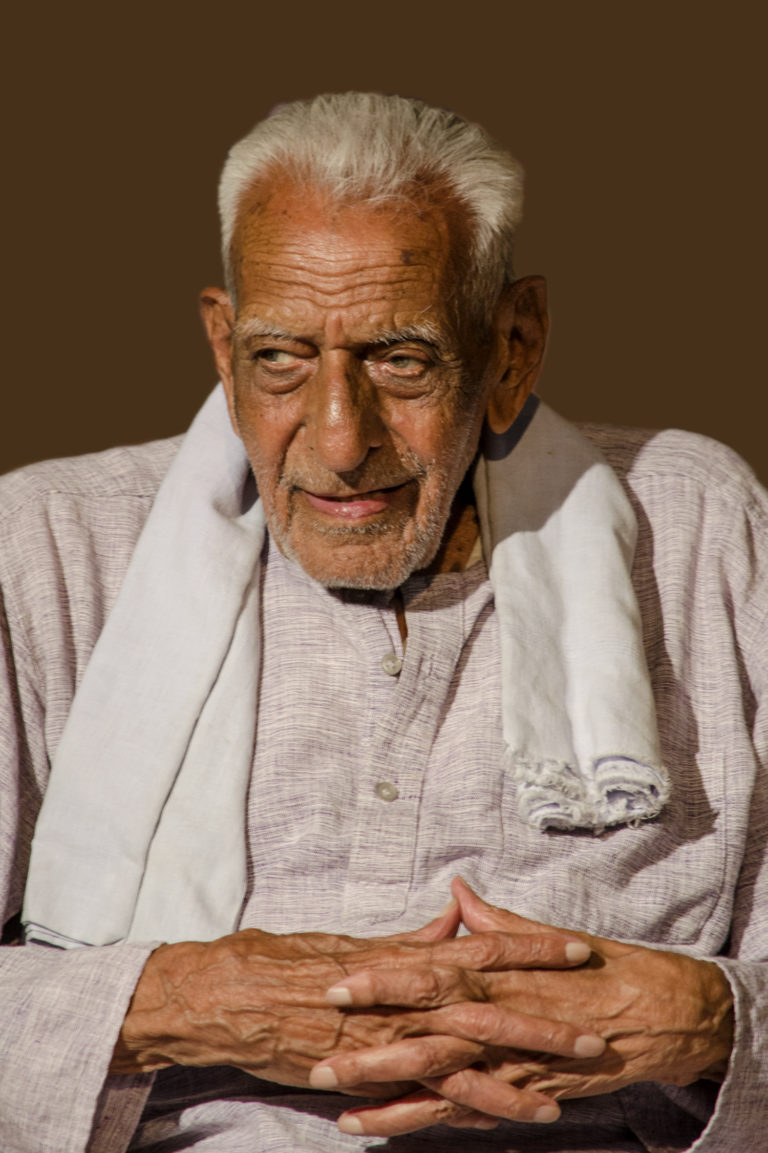
The BJP government in the state is now bringing in amendments to the land Reforms Act. This anti-farmer program is being implemented in pursuance of the orders from the Modi government.
In Karnataka, landlords had provided land to the poor on lease anywhere between 2-3 acres. This has kept them for long under slavery. These practices which keep the poor as such, have been a widespread practice in districts including Shimoga and Chikkamagaluru. Kadidal Manjappa, Basavani Ramasharma, and Ganapathiyappa were among the first to organize these poor tenant farmers. Later, socialist leaders like Shanthaveri Gopalagowda organized these tenant farmers against landlords and campaigned for the abolition of the land lease system. When Devaraj Urs was elected as the Chief Minister of Karnataka, he passed mandates to abolish the land lease system. Under the popular slogan of Uluvavarige Bhoomi (Land for the tillers) he undertook land redistribution in favour of the poor tenant farmers. This provided them the land of the landlord in which they were practicing agriculture. This land redistribution was however confined to land that belonged only to the large landlords.
Devaraj Urs also implemented the Land Reforms Act applicable to all over Karnataka around the same time. However, the land redistribution was not applicable to all tenant farmers but only to the ones who had leased their lands from large landlords. The land reform legislation he undertook was unscientific and unrealistic. Hence, the poor landless labourers have not redistributed any land as per the land redistribution scheme.
In Karnataka, almost 60% of the landowners own less than 2 acres of land. These landowners practice agriculture to the extent that it provides for their own subsistence. However, large landowners who own larger lands practice agriculture by hiring agricultural labourers and pay wages to the extent of around 500 Rs per day. These landowners do not practice agriculture for growing food that can provide for their subsistence. Instead, they grow other cash crops including vegetables, ginger, turmeric, fruits, and flowers and are dependent on the others including the markets. A two-acre landowner is unable to grow enough for his stomach and provide for his family on a small farm. These poor farmers need at least 5 acres of Khushki (non-irrigated agricultural) land. Only then, can they be able to sustain their livelihood and can provide food for society on a small scale.
So, now the legislation has to be revised to allow poor farmers and labourers to own 3 more acres so that they can own up to 5 acres. If not, a large number of poor people are sure to migrate to towns in search of livelihoods as migrant workers. Successive governments for the past 70 years have been swallowing farmlands in the garb of road building and widening.
The land reforms law now being implemented by the government forces all the poor and small farmers to quit their livelihoods and migrate in search of livelihoods. Lands owned by the poor will fall into the hands of the wealthy or the corporates if this act gets implemented. Large companies extended staunch support for consolidated holdings. It is an ill-intended plan to hand over lands to big landlords or the corporate houses by luring the poor to sell off their lands.
Corporate companies will provide the best tools for agriculture to these rich peasants and will drastically bring down the need for labourers on the farms. All those who lose their land will be forced to leave the village and move to towns. The merchants and large corporations will push the big landlords to grow the corps from which these companies would benefit. This means that the companies turn these landlords into their own laborers or even puppets. Yeddyurappa’s plan is now to convert an agriculture-based country like India into America.
America is a country of enterprises. It is also a country that is majorly based on Industries. In America, only a few own lands measuring thousands of acres since many people do not get involved in agriculture. They sow their lands on power tillers. The seeds are sown by the use of helicopters. They also own and use grain weighing machines, seed dispersers, and dryers. A farm as large as 1000 acres is managed by a household.
It is not right to undertake an American experiment in an agriculture-based country like India. This would be deeply disgraceful for the country to beg for food stock from other nations. It is the duty of all the people to resist and prevent the implementation of such unreasonable land use in India.
MAKAAM has also denounced the Land Reforms Act. Read about here: https://gaurilankeshnews.com/mahila-kisan-adhikar-manch-rejects-karnataka-land-reforms-amendment-act/
Importantly, all the peasant organizations across India should come together and form a joint action committee. Everybody with a keen eye on the plight of India’s poorest farmers should denounce this move. It must be called out that, “This land reform through which the government is enabling the rich to buy land from the poor is inherently an anti-people move.” Against such anti-people measures, a nationwide Non-Cooperation Movement must be initiated. It is of importance that farmers’ organizations must be joined by all people who are concerned about the sovereignty of our country.
Also Read: https://www.thehindu.com/news/national/karnataka/introducing-changes-to-land-reform-act-will-spell-doom-for-farmers-cong/article31822675.ece
Government must rebuild lives and livelihoods: All India protests by CPI(M)

The present crisis of the Covid-19 pandemic and the lack of coherent policies to tackle it has unleashed catastrophic consequences for the poor masses of the country.
Communist Party of India CPI(M) had given a call for an All India Protest Day yesterday to raise demands from the Indian government to help the lives and livelihoods of the masses of the country.
In response to the call for the protests, Protests were undertaken in many places in India while adhering to the precautions and laws laid down by the respective governments for the prevention of the spread of the COVID-19 pandemic.
The demands put forth by CPI(M) included:
- A cash transfer of Rs. 7500 per month for a period of six months to all families outside the income tax-paying bracket.
- Free distribution of 10 kg foodgrains, per individual, per month for a period of six months.
- A minimum of 200 days of employment under MNREGA with enhanced wages. Extend employment guarantee schemes to the urban poor. Immediately announce an unemployment allowance to unemployed persons.
- Stop the loot of national assets, privatization of the public sector, and stop the scrapping of labour laws.
Protests in Karnataka:
Karnataka also witnessed mobilizations across the state in support of the demands. In Bengaluru, alone protests were organized in more than 100 wards in the premises of the BBMP Ward Offices. Protests were also organized at BBMP Head Office and the memorandum was served to Anbu Kumar, Additional Commissioner(Administration), BBMP. Demonstrations were also organized all across the state including Anekal, Doddaballapura, Ramanagara, Bellary, Mysore, Tumakuru, Mandya, Chikkaballapura, Kolara, Raichur, Uttara Kannada, Dakshina Kannada and Udupi amongst others. Memorandums were served to government functionaries like Tehsildar’s, Deputy Commissioners, and Gram Panchayat Members amongst others. In addition to the demands put forward by the Polit Bureau, state issues were also addressed in the memorandum put forth by the Bengaluru District Committee of CPI(M). The announcements earlier made by Karnataka CM B.S Yediyurappa provided assistance to labourers involved in the informal economy and also did not reach the people in need. Demand was put forth to extend such assistance to several other occupations. Other demands also included provisioning of PPE kits and Covid-19 Test kits, repealing of amendments to Agricultural Produce Market Committee Act and Karnataka Land Reform Act, Reduction of Petrol and Diesel prices. Demand was also made to Stop the Loot by schools in the garb of online learning. Payment of full wages for the period of lockdown for all workers amongst was also one of the demands. Read about Protests in America :https://gaurilankeshnews.com/george-floyd-protests-trump-threatens-with-military-mobilisation/ demanded by the protesters.Nobel Laureate Amartya Sen wins German Peace Prize 2020
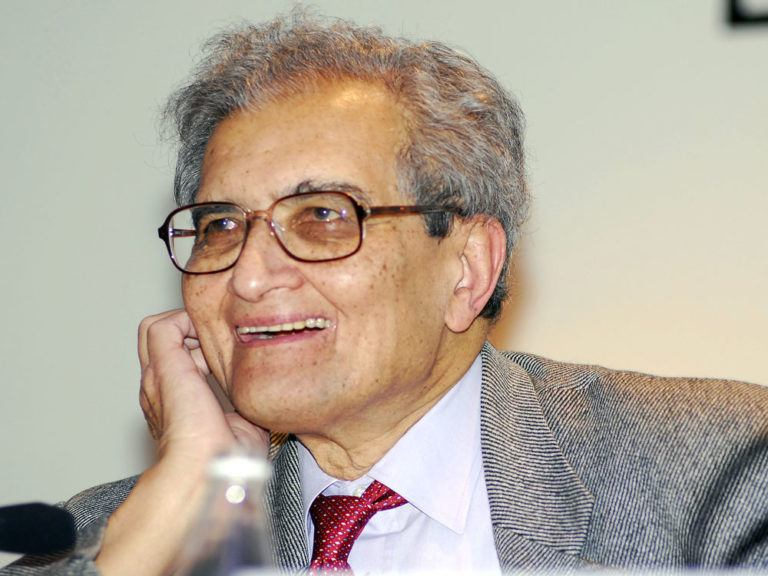
Nobel prize-winning economist and philosopher Amartya Sen has won the prestigious Peace Prize of the German Book Trade. The 86-year-old professor’s work addresses global social injustice.
The board of the German book trade on Wednesday announced it had awarded its prestigious peace prize to Indian economist and philosopher Amartya Sen.
The Board of Trustees of the Peace Prize of the German Book Trade has chosen the Indian economist, philosopher, and Nobel Laureate Amartya Sen as the recipient of this year’s Peace Prize. The announcement was made today by Karin Schmidt-Friderichs, who as head of the German Publishers and Booksellers Association (Börsenverein) is also the chairperson of the Board of Trustees The 86-year-old Harvard professor and past Nobel prize winner was granted the 2020 Peace Prize of the German Book Trade for his “decades-long work on the question “as a question of global justice,” the board said in a statement on Twitter.The Award aims to honor individuals “who have made an outstanding contribution to the realization of the idea of peace primarily through his activities in the fields of literature, science and art.”
In a statement issued on their website, the Board of trustees explains the reason behind the choice of Prof. Amartya Sen. The association wants to pay tribute to a pioneering scholar who has addressed issues of global justice for decades and whose work to combat social inequality in education and healthcare is as relevant today as ever. Among Sen’s, most important contributions is the idea of evaluating a society’s wealth not solely based on economic growth indices, but also on the opportunities for development available to all individuals who comprise that society, in particular its weakest members. The Board describes further Amartya Sen´s body of work which is a combination of economic theory with moral philosophy and ethics. Throughout his work, Amartya Sen has consistently highlighted solidarity and a willingness to negotiate as essential democratic values, proving in the process that cultures need not be the source of disputes over identity. His vivid and powerful descriptions have also served to elucidate the fundamental ways in which poverty, hunger, and illness are intimately linked to the absence of free and democratic structures.Paying tribute to a pioneering scholar who has addressed issues of global justice for decades:
— Börsenverein (@boev) June 17, 2020
Indian economist, philosopher and Nobel Laureate Amartya Sen @amartyakumarsen receives Peace Prize of the German Book Trade 2020.
Full statement: https://t.co/khFdCQ32Cc pic.twitter.com/SwV08ZKWj1
The award ceremony will take place on Sunday 18 October 2020 at the Church of St. Paul in Frankfurt am Main. The event will be organised in compliance with any applicable health regulations in place at that time. The ceremony will be broadcast live on German public television. The Peace Prize has been awarded since 1950 and is endowed with a sum of €25,000.The ‘Human Development Index’, the ‘capabilities approach’, and the notion of ‘missing women’ are just three of his groundbreaking concepts that continue to set high standards to this day with regard to generating, preserving, and evaluating equal opportunities and decent living conditions for all. Amartya Sen’s inspiring oeuvre represents a compelling call to establish a culture of political decision-making borne by a sense of responsibility for the well-being of others, including the right to self-determination and the right to articulate one’s interests and have a say in one’s own future”.
Amartya Sen Life and Background
In 1959, after having completed a B.A. in economics at Presidency College, Kolkata, Sen received his Ph.D. at Trinity College, Cambridge. He continued to devote himself to the study of philosophy in addition to economics, something that is clearly reflected in many of his later works, where issues of economic theory meet moral philosophy and ethics. Since the 1960s, Sen has taught at a number of leading institutions, including the Delhi School of Economics, Stanford, Berkeley, Oxford and Cambridge. He has been a professor of economics and philosophy at Harvard University since 2004. Sen first became known to a wider public for his advancement of the theory of social choice and his analysis of the compatibility of reasoned social decisions and individual rights. As an economist-philosopher whose research areas include public health and gender studies, he has also worked tirelessly for the cause of democracy, freedom and global justice. He has always stood up for his conviction that the quality of an economic system should not be measured solely on the basis of its growth indices, but rather on the opportunities available to the members of society to pursue their own development as well as their freedom to lead a life they have reason to choose. Sen’s multifaceted and award-winning scholarly work has contributed unmatched insights and impulses to a number of fields, including welfare economics, social choice theory, decision theory, studies in hunger and poverty, and development economics. Sen has received numerous awards for his highly influential body of work, including the Nobel Prize in Economics in 1998. He has also been awarded over 100 honorary doctorates and had his books translated into over 30 languages. He lives in Cambridge, Massachusetts and has been married since 1991 to the British economic historian Emma Georgina Rothschild-Sen, who also teaches at Harvard University. He is the father of four children. His work is “more relevant today than ever before” in the fight against social injustice around the world, the board said. The award ceremony will take place on Sunday 18 October 2020 at the Church of St. Paul in Frankfurt am Main. The event will be organised in compliance with any applicable health regulations in place at that time. The ceremony will be broadcast live on German public television. The Peace Prize has been awarded since 1950 and is endowed with a sum of €25,000. Last year, the Brazilian photographer Sebastião Salgado received the prize.Mahila Kisan Adhikar Manch rejects Karnataka Land reforms Amendment Act

MAKAAM (Mahila Kisan Adhikar Manch) – Karnataka has opposed the amendments brought out by the BJP government to the Karnataka land Reforms Act 1961. The MAKAAM has also presented a letter addressing the CM of Karnataka.
Some of the salient points addressed in the letter are as follows-
1. It may not be out of place to point out that the economy is centered around “essential services” in the COVID-19 scenario – this is essentially Gandhi’s and Deen Dayal Upadhyaya’s idea of the economy which provides for everybody’s need but not for humanity’s greed (against the idea of the consumerist capitalist economy that the world had built on the premise of exploitation so far). In this new world centered mainly around ‘essential services economy’, agriculture and food security take center-stage as they rightly should, and in such a context, it is extremely unwise for the government to facilitate active diversion of agricultural land from farming and farmers to non-agricultural activities and non-farmers.
2. Globally, women perform around 66% of the rural work, produce approximately 50% of the world’s food supply but earn a meager 10% of agricultural income and own only 1% of the property. At the all India level, only 4% of rural women own land compared to 24% of men and Karnataka also reflects the same picture at the state level. The fact that women farmers have not received land titles and that the government never prioritized landless people like them, especially Dalit and Adivasi women farmers, should have been the topmost concern of the government. Instead of these dilutions, we demand land redistribution, at least 5 acres to a landless family of five, and registration in the name of women or joint title. With a similar demand, a march for women farmer’s rights and a movement for women’s land rights-‘Mahila Bhoomi Adhikar samvad Yatra’ was led by women in 2018. 3. Since the government is comparing the legislation in Karnataka with that in states like Tamil Nadu, it is pertinent to point out that where such protective legal clauses were not there, land diversion to non-agricultural uses has been more rapid and for larger areas. In a state like Tamil Nadu, compared to Karnataka it is 2 lakh hectares more land diversion to non-agricultural uses from 1960 to 2015. Around 16.9% of the geographical area of the state is now under non-agricultural uses, whereas it hovers around 7.7% under non-agricultural uses in Karnataka. And by 2017, in Tamil Nadu, 20% of the geographical area of the state went into non-agricultural uses. Karnataka’s Land Reforms Act 1961 would surely have played a part in protecting against diversion to non-agricultural uses”. While demands like those of MAKAAM, for empowering women farmers (especially landless women) through land rights have been consistently ignored, the dilution in the Land Reforms Act 1961, especially in the current times, does not make any sense at all. We showcase the picture of Tamil Nadu since the government has compared Karnataka regulation with states like TN, and point out that each acre of land is a source of great employment and livelihoods for rural women. We object to the government taking cover under the COVID-19 scenario to bring in undemocratic changes without widespread consultations and through the routes of ordinances. We would like to remind that when the Modi government took the ordinance route to dilute land rights of agriculturists in their first term of government, they had to retract those moves under pressure from people’s movements, other parties, and citizens and that the state BJP government will face a similar situation if they obstinately push forward.We object to the government taking cover under the COVID-19 scenario to bring in undemocratic changes without widespread consultations and through the routes of ordinances. We would like to remind that when the Modi government took the ordinance route to dilute land rights of agriculturists in their first term of government, they had to retract those moves under pressure from people’s movements, other parties, and citizens and that the state BJP government will face a similar situation if they obstinately push forward
Turning back the clock: How the state is reversing gains made by traditional forest-dwelling communities
Why no insurance cover for mental health? : SC to Centre and IRDA

The recent death of the Bollywood actor Sushant Singh Rajput who allegedly committed suicide has spurred up debates around the issue of mental health in India. The youth have taken to social media including Instagram, Twitter, and Facebook to raise the public consciousness around the issue.
Advocate Gaurav Kumar Bansal had filed a plea in the Supreme Court alleging that Insurance Regulatory Development Authority (IRDA) failed to implement Section 21 (4) of Mental Health Act, 2017 which can severely affect people. He also alleged that the regulatory authority failed to ensure the implementation of the relevant provisions of the act due to its red tape attitude despite the provisions of the law providing for the same. While a circular was issued by IRDA on 16th August 2018 to all the insurance companies asking them to comply with the Mental Health Act, none of the companies had brought them into effect until February 6th, 2019. The information on the non-enforcement of the provisions of the Mental Health Act was based on the RTI application that the advocate had filed on 10th January 2019.
Also Read: Mental Health Awareness Week: Twitter Offers Humour, Advice & New Perspectives
Hearing the plea, the bench of justices including RF Nariman, Navin Sinha, and BR Gavai heard the petition today and has sought reply from the center and the IRDA on the inclusion of mental health in the insurances. While the act of the Supreme Court to recognize the issue and provide it due recognition is appreciable and a step in the right direction especially when the government has drained out funds from its public healthcare provisioning to an insurance-based health system through the launch and overemphasized policies like Aayushman Bharat and not provided enough funds for schemes like National Urban Health Mission (NUHM) and National Rural Health Mission (NRHM). It must however be noted that the country is trying to address the issue of mental health when the public health system is in shambles not anywhere near to providing basic health care to its citizens. The largest democracy in the world suffers its worst crisis as COVID – 19 has exposed how bad the state of the public healthcare system in the country is. A country that spends only 1.5% of its GDP on healthcare for a population that is estimated to be around 130 Crore is only an indicator that healthcare including mental health has not been a priority of the state.Unemployment : What Could Be Done But Would Not Be Done
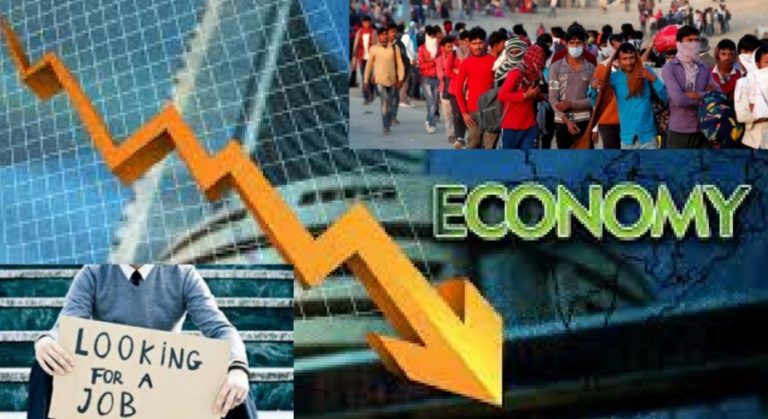
It has been a recurring theme in the political economy. Its two great masters of the nineteenth century, Malthus and Ricardo, believed in the “iron law of wages”.
If the wage is raised above the subsistence minimum, workers would breed too much, and population growth would soon overtake the growth of food production to bring wage back to the subsistence level.
Marx, the other great master of that century gave an insightful twist to that argument by placing it in the context of capitalist development. Its early phase would continue to break down small, pre-capitalist manufacturing to make labour available for the industry which in later phases would continue to be made available through various labour-saving technologies. This would keep wages low with the weak bargaining power of workers, continuously recreating what Marx described as a ‘reserve army’ of labour. Capitalist development did not quite follow this trajectory, and wages did rise along with labour productivity in advanced capitalist countries particularly in the twentieth century. However, in developing countries, things seem to be going another way. The pre-capitalist modes of production have given rise to a vast informal economy which is not just a reserve army of labour.
Informal Economy and the army of Reserve labour
The argument about the ‘reserve army’ contains a deeper argument. Full employment with rising wage erodes the very discipline which capitalists impose on workers under the rules of the game. Neo-liberalism with market-oriented reforms has its appeal precisely for this reason. As a result, all firepower gets concentrated to demolish the idea of a full employment society where labour is also powerful with a relatively neutral state regulating excesses of both sides. Well funded academic research, the IMF, the World Bank as well as the corporate-fed media all join in chorus to argue against the neutral posture of the state that might regulate not only workers but also the capitalists. Full employment as a target achieved through large monetized budget deficit ( i.e. printing notes) to increase employment through massive public works at reasonable minimum wage, subsidy to labour, the imposition of taxes on wealth, a transaction tax on high-frequency speculative stock market transactions become unacceptable. Instead, the imposition of a one-sided discipline only on workers and privatization is considered the only way of reforming the economy. Notwithstanding seventy years of industrialization, in India, nearly 92 percent of the working labour force is employed in the informal economy. They exist at the margin of organized capitalist industry with much lower earning per hour, long hours of work, no social security, and often self-employed with the whole family rather than one individual working to eke out a living. Early enthusiasts believed that industrialization would gradually absorb in organized industry all surplus labour from the vast informal sector. They were right only in one respect. Labour productivity which is at least six to eight times higher on a conservative estimate in India means that, for each worker pulled out from agriculture and employed in organized industry, output increases manifold. GDP growth increases. However, not employed sufficiently because the market , domestic and international, is not large enough to absorb all labour at such high labour productivity. The result has been jobless growth. However, the enthusiasts for industrialization were also wrong in another crucial respect. The process of transfer of labour from agriculture to industry has been a long and tortuous one in history. Britain took approximately hundred and twenty years, the United States about ninety, and countries like Germany no less than sixty years. During most of this period, democracy with universal adult franchise was hardly in place. Such long time periods are incompatible with democratic accountability with elections every five years.Labour Shift from Peasantry to Industry
The early industrializers had colonies to acquire cheap raw materials, and also sell their products in captive colonial markets. This avenue is not available to a late industrializer like India. If we wish to persist on that path, we have to turn increasingly to internal colonization of our land, water, forest, mountains, and sea-shores destroying the livelihood of many among the poorest, Adivasis, forest dwellers, Dalits, etc. When peasants, tenants, agricultural workers, fishermen among many others lose their livelihood without an alternative, the cost of the brutal process paid by the weakest, not shared among our citizens. The political precondition for a rapid pace of industrialization in the countries of showpiece South East Asia was under ‘managed democracy’ in addition to preferential trade arrangements with the United States during the Cold war period. More importantly, both capitalist and socialist countries in that part of Asia which succeeded in industrializing had achieved a much higher degree of literacy, health care, and infrastructural development mostly through higher government spending prior to their industrialization process. The one-party system of socialist countries achieved this by mobilizing labour for infrastructural work on an unparalleled scale. India took a hesitant step with MGNREGA with lower than legal minimum wage and an insufficient number of days a year, but did universalize the schemeCOVID19 and the economy
Many had hoped this COVID -19 pandemic would be a watershed. The Central government’s authoritarianism was visible in imposing successive lockdowns causing disproportionate distress and suffering for the poor in the informal sector. And yet, the government has shown no interest in expanding employment in economic and social infrastructure in rural India. Instead empty announcements for financial help through bank loans are thrown at them. Instead what should have been done without display of authoritarianism is direct government spending through local governments like panchayats and Gram Sabhas in consultation with the states. Desperate and starving millions of migrant workers locked out of livelihood at four hours’ notice shows what a determined government can do! Why not take up this challenge instead? There is a reason, and it is neither inefficiency nor misgovernance nor plain stupidity. It does not want to do anything that will improve the lot and tilt a little the balance of power in favour of the poor! Under the cloak of a lockdown, the government is applying this same vicious logic even more ruthlessly than just maintaining a reserve army of labour. It no longer even pretends to act as a neutral referee regulating excesses on both sides. Labour is shown its place in the hierarchy of power as labour protection laws are deregulated; small peasants and agricultural labour are made to feel even more precarious with the threat that land will be monetized for easy transfer to private industry and mining. Millions of tons of foodgrains in reserve will be allowed rot and eaten by rats, but not given free to the unemployed.They should be kept on their knees, ready to die humbly as ‘unemployable’. Although the lockdown was meant to prepare better the healthcare system to cope with the pandemic, even temporary nationalization of basic health services in private hospitals is kept out of the policy agenda, and of course no whisper about taxing wealth in this very unequal society. In its place, the platitude: ‘ more wealth must be created before being distributed’. So five zillion GDP is our goal, not full employment.No alternative to direct cash transfer for the poor: A workers study during the lockdown
Economics is neither rocket science nor a number game about the growth rate or fiscal deficit. It concerns ordinary people and their daily lives. We all should insist on three immediate better options available based on three principles. First, apply the basic principle of creating demand which requires expenditure to precede income. So cash must first be transferred directly to the needy (roughly of the order of two lac crores). The demand will drive production of more output from an underutilized productive system which has fallen into a coma in this lockdown. Fortunately, the availability of a large stock of foodgrains also make this less inflationary . Second, concentrate on decentralized labour intensive public works on health care, education and housing as the best route at present for absorbing labour. Let the states, panchayats and gram sabhas take responsibility and compete in this respect to show their relative worth with the money transferred to them. Kerala has demonstrated it in handling the pandemic; let it lead by example in development. Party politics should not blur the picture. Recall the same political party was far less successful in every way in three decades of power in West Bengal; credit must be given when it is due. Finally, economic performance in India must be judged at the moment by the ability of the government to provide productive employment in strengthening our health, education, housing, and small peasant agriculture through small water management and local storage. Deficit spending, not promises of bank loans to absorb labour in productive employment is the compulsion of our time. It must involve decentralization of power to the gram panchayat level, and let gram sabhas compete in terms of their performance in this respect, to be rewarded or punished at the next round of funding. Growth would have to be the outcome of vigorous employment policy, and not the other way round.
Prof. Bhaduri is currently teaching at Pavia University, Italy. He is a visiting professor at the Council for Social Development, Delhi University.
Datta Sonawane, President of the Indian Airports Employees Union Passes Away Due to COVID-19

Datta Sonawane, 57, who was the President of the Indian Airports Employees Union expired on 13th June 2020 of COVID 19 at the ESI Hospital at Kandivli, Mumbai.
Datta was a contract worker at the Chhatrapati Shivaji International Airport at Mumbai in its trolley department. He joined work at the airport in 1993 and by 1994 he along with his unit of over 100 workers joined the union. The union was then at the peak of its activities of organising contract workers at the airports in Mumbai. Workers from the Airports Authority of India, Air India, Indian Airlines, and Pawan Hans were being organised in thousands back in those years.
Datta joined the union in the heat of these struggles, with the demand to stop paying “hafta” or extortion money to the contractors from the workers’ wages on a daily basis. This was a widespread practice those days in the AAI and used to be carried out openly. To stop this practice was the main struggle of the union then and no amount of petitioning the authorities had the slightest of effects. It was the workers’ unity and numbers across airport terminal buildings, ancillary buildings, workshops, plants, runways, roads, and also in workers colonies spread over hundreds of acres of contiguous airport lands that could achieve it. These workers included loaders, sweepers, canteen workers, malis, security guards, bird chasers on the runways, carpenters, masons, plumbers, pump operators, electricians, mechanics, helpers, storekeepers, clerks and others who were variously termed contract, casual and temporary workers. They were all doing work of a permanent nature. Of course, they received nothing but a part of their wage and were dressed in ragged coats or dungarees of bright colours so they could be spotted easily anywhere. Removing them from the job just meant grabbing away their airport pass. Beatings were a regular phenomenon then. All this stopped once the workers united and started to fight back. The airport was pockmarked with contractors. The contractor had anywhere between a single worker to almost a hundred workers working for him. Once the workers started organizing themselves and the momentum was built, workers from everywhere came forward to take charge not just for their own units but also strived for across units and companies. Workers who had been working alongside each other for years but did not know each other as they were under different contractors, now became comrades-in-arms for the struggle.
Also listen: Podcast on the Migrant Workers Report during the Lockdown
While the workers organized themselves and worked for long in order to secure their rights, the majority became permanent workers over the years by court orders and also through settlements, but always by undertaking staunch struggles. These managements did not implement Supreme Court orders till they were gheraoed at the headquarters at Delhi where the workers refused to leave till they got it in writing right there. However, some like Datta still remained so-called contract workers but could retain their jobs for the past 25 years through the union. Later, the Mumbai Airport was privatised and the majority of those who were permanent workers refused the option of joining the private company MIAL and remained with AAI. The private company which took over the airports filled all these posts once more with new contract workers. Datta was active from the day he joined the union. He was a son of a mill worker, who worked in Kohinoor Mills. Datta grew up studying in his village school as a boarder. He pursued his 11th and 12th in Dadar Ambedkar college. After the mill was shut-down, his family of 6 members was entirely dependent on his salary as he took a job as a press worker in Dadar. In the press too, he formed a union and fought for securing the rights of the workers. Datta, who was called Dada or elder brother by all the workers, didn’t just work for workers in his own Union. Wherever he went he would be involved in solving the problems of the workers, be they of another union or the unorganised workers. For him, it was the working class and the poor and injustices against them that mattered. He was short-tempered and would often fight with the ones he was closest to, but not a single worker minded it because they knew he was worried about them. He would work long hours at the union office and in organising at the airport or elsewhere, including travel out of town for union work if necessary. Whatever the work, be it sweeping the office and filling water or writing a letter, leaflet or poster, addressing the workers, encouraging others to participate in all the work of the unions, carrying out agitations, extending solidarity to others, he understood the position of the Red Flag. In unorganised workers unions, hardly a day passes without problems. Wherever there was any injustice by the management or the contractors he would fight militantly and principally carrying the workers with him. He hardly cared about himself, while always thinking about others. He felt a deep solidarity with the workers and the poor everywhere. He was a true proletarian. Datta cannot be replaced in the union. He will be missed everyday and we will remember his contribution to the union and our lives forever. He left an example to follow. In these Corona days when the governments are shamelessly using the opportunity of the lockdown and the pandemic to attack the workers, peasants and all working people, by stripping them of all their legal rights, even their right to form a union, more than ever, it is time to push unions with leaders from rank and file of the masses. Many Dattas will continue to be born from the working class. The working class will hold aloft it’s Red flag and it will strike back! Deepthi Gopinathis the senior union organiser at Mumbai AirportKarnataka: How Corona Scare was used to whip Islamophobia in a water scare Village

In the scary times of Coronavirus and with the panic frenzy created by the media, the rumor mills are feeding the anti-Muslim sentiment in the country.
In a recent incident from Raichur, Karnataka, a lake was emptied after a Muslim man threw a stone into it.
Raichur district of Karnataka has seen the irrigation system very recently. The availability of potable water is still a difficult task. Summer makes it even worse.
There have been protests, appeals to release water in the canals, lakes to be filled, and so on. In such a situation, an incident happened where one lake was emptied by the locals.
The incident
Attanuru, Shakhapura, and Ganadinni are three adjacent villages of Sirivara Taluk of Raichur district. Attanuru lake and Shakhapura lake provide drinking water for these three villages. Mohammad, who works in Attanuru gram panchayat happened to throw a stone in Shakhapura lake after he drank water from there. Some villagers who saw Mohammad throwing a stone into the lake, have expressed their suspicion that this man has thrown a poisonous stone into the lake and asked some others not to drink water from the lake. The news spread fast and created a big furore in the village. Throwing a stone into the river led to rumour that the lake has been poisoned. The villagers become so scared that they decided to empty the lake completely with the help of a motor pump.The battle to fill the lake
The incident is tragic if it was not so ironic. The same villagers who have been fighting a struggle to fill the Shakhapur lake with clean drinking water, now wanted to empty it. In past, villagers had staged a protest in front of the district collector’s office and alleged that the drinking water is contaminated; they had given a memorandum asking for clean water to be filled in the lake or an alternate system be put in place for clean drinking water. Since then, the lake is filled with drinking water every year. This year too, drinking water was filled in the lake through the Tungabhadra canal.The case goes to the police station
The matter was brought to police’s notice, then the villagers and police summoned Mohammad who had thrown a stone and a meeting was held. Mohammad reiterated that he threw the stone just for play and there’s nothing else to it. He was made to drink the water and bathe in the lake, Mohammad did what was asked and clarified that he hasn’t poisoned the lake. Finally, the police came to the conclusion that Mohammad has thrown only a stone and tried to convince the villagers but villagers were not ready to believe.Reasons for suspicion
Corona scare too is a reason for people to become suspicious. Media, especially TV channels have been making news about corona every minute and creating fear among people. Naturally, residents of Shakhapur were also scared. And the person who threw the stone being Muslim made their suspicions stronger. And some others have alleged that water in the lake is getting contaminated and is not fit for human consumption. Hence a water purifying machine too has been installed besides the lake. Adding to this, there was a minor fight between people of Shakhapura and Attanuru over a girl. So, people of Shakhapura suspected that someone from Attanuru poisoned the lake.Water woes resume
People who emptied the lake over suspicion are now struggling for drinking water. For Shakhapura, with 450 houses and a population of over a thousand people, this lake was the only source of drinking water. Now, not able to drink water from the lake and not able to procure water from any other source are demanding the gram panchayat make some other arrangements for drinking water soon. Gauri Lankesh news correspondent spoke with Mr. Marappa Haravi, who has ties with both the villages, “A small fight that happened last month, corona scare and Muslim phobia have resulted in villagers emptying the lake and now they are repenting their act. Not having proper awareness is the reason for this. Now, some say, they shouldn’t have acted in haste and empty the lake and there are some who are defending the stupid act.” He said. One can blame the stupidity and ignorance of the villagers. But can we let go of media which was complicit in whipping anti-Muslim sentiments and connecting Muslims with Corona? The 24/7 news cycle of corona news has also created fear and panic in general citizenry.Podcast on the Migrant Workers Report during the Lockdown

In this episode of our Gauri Lankesh News Podcast, we talk to people who have been working in providing relief, help with travel and counseling to migrant workers stuck in the cities during the COVID19 induced lockdown.
We are joined by Mallige, Kishor, Bharath, and Rosey. They together started a migrant worker helpline where they received calls from all over Karnataka, even the remote corners of the state.
Many of the migrants had no rations and had no help with the Seva Sindhu app that was formed by Karnataka government for migrant workers to register themselves if they want to leave the state.
