Ayyankali, a forgotten hero, was a social reformer in the state of Kerala. He worked for the upliftment of the backward castes. Ayyankali started his carrier as a social worker when he was 30 years old. Ayyankali was born on 28 August 1863 at Vengannore, at that time in princely states of Travancore, Kerala. His parents Ayyan and Mala belonged to the Pulayar family. Pulayar communitywas considered to be untouchables by the upper castes Hindus.
Ayyankali often fell victim to the boys of high castes, as he belonged to the Pulayar community. He bet a boy of the superior caste for beating him first, when he was seven years old. Ayyankali faced them with unusual courage not fearing any consequence, though everyone else were afraid. He boldly told his rivals that they could not do anything to him. It was the first sound of the Pulayars against the upper castes. Though his parents punished him severely, his courage did not perish and grew everyday.
Ayyankali’s statue in Thiruvananthapuram
He organised the men of his community. These men under his leadership began questioning the old customs. Ayyankali also mastered in wrestling to face possible dangers. He along with his group rebelled through the means of folk dance and music laced with dissent at the end of his workday. These acts were to voice out sentiments of the downtrodden.
Ayyankali worked for a landlord, who took pity of him for his hard work and gave him five acres of land. Thus, Ayyankali became the owner of five acres of land when it was not customary from the depressed classes to own land.
The lower castes had no right to wear what they preferred. Women were not even allowed to cover their bosom. He advocated the inclusion of women and motivated them to be on par with their male counterparts. Ayyankali believed that all human beings had equal rights and people should not be discriminated against on the grounds of caste or gender.
‘Walk for Freedom’
The first target of his group was to gain the right to walk along the highway and roads, which was denied to the Pulayars. Ayyankali rode a bullock cart on the roads that they were not allowed to travel. This act of rebellion spread as movement across Travancore as it was not allowed for the Pulayars to travel in a bullock cart back then. Collecting more supporters, he began to walk along highways by groups.
Earlier not just to walk, but they were also forced to maintain a distance of at least 64 steps from the Nair community and 128 steps from Namboodiris. With this act of defiance, Ayyankali succeeded in destabilising the traditional order.
Anand Teltumbde in his book ‘Dalits: Past, present, and future’ has termed this incident as ‘walk for freedom’ and the consequent riots as ‘Chaliyar riots’,”
Post this incident in 1889, Ayyankali and his group faced an attack at Balaramapuram in Thiruvananthapuram District. The upper-caste Hindu men attacked them with arms. The blood flowed as these revolutionaries claimed their right to walk along highways.
Access to Education for the untouchable community
Ayyankali could not acquire formal education, as the untouchables were not allowed to enter into schools. However, he believed that the best way to eradicate the oppression of the lower communities was by getting them education. Hence, he built a private primary school at Vengannore for the untouchables. The school did not last long, due to the opposition from the upper castes.
“If you don’t allow our children to study, weeds will grow in your fields”: Ayyankali
He organised the first strike by agricultural workers in the region, demanding education for the children of the Pulayar community. As a form of protest, many farm labourers withdrew their labour from the fields of the upper castes. Staging marches they demanded the government to remove all restrictions on education.
He also pushed the Travancore government to issue an order mandating the admission of Dalit children in public schools in 1907. The order was finally passed in favor of the lower castes in 1910, though it was opposed by the upper castes.
Philosophically Annaykali drew inspiration from the social reformer, Sri Narayana Guru. However, they differed in terms of practice. He founded Sadhu Jana Paripalana Sangham (Association for the Protection of the Poor), to unite members from oppressed communities and campaigned for access to schools. they also raised funds to set up Pulayar-operated schools.
Ayyankali was later appointed as a member of the Assembly of Travancore, known as the Sree Moolam Popular Assembly (SMPA) or Praja Sabha. He played an important role in establishing community courts.
Ayyankali passed away on 18 June 1941, leaving behind a better and more inclusive world for lower caste communities in Kerala. He led the life of a revolutionary until his death. Chentharassey, released the first biography on Ayyankali, after 38 years of his death.
August 28 is celebrated as Ayyankli Jayanti, to commemorate his birthday. Mahatma Gandhi called Ayyankali as ‘Pulaya Raja’. Indira Gandhi described him as ‘India’s greatest son’. Historian P. Sanal Mohan has described Ayyankali as “the most important Dalit leader of modern Kerala”.
Film producer Nilesh Navalakha complained to the Ministry of Information of Broadcasting seeking the suspension of the Hindi news channel, Aaj Tak.
According to livelaw website, the complaint states that during a discussion of Indo-China confrontation, news anchor Ms. Sweta Singh and her colleague Mr. Rohit Sardana stated disparaging remarks against the Indian Army and blamed them for the Indo-China standoff.
Shweta Singh said on her Aaj Tak show:“This is the responsibility of the Army. You can’t blame the government for this” and that Chinese incursion into the Indian Territory is not just government fault, but also Army’s as patrolling the border are not government’s responsibility”.“..This isn’t a situation where you ask questions after something has occurred. There are a few questions to be answered here. Firstly, if the People’s Liberation Army entered Indian territory and our soldiers were sleeping, then it’s on the Army and not on the government because the government is not on patrolling duty, the Army is”.
As per the complaint sent through Advocates Rajesh G Inamdar and Amit Pai, the above broadcast “clearly attacks the sovereignty and integrity of India, the security of the state, public order, decency or morality and in no manner fits in the realm of freedom of the press”.
The complaint states that such remarks by the anchors, who are not experts in the field, can affect the morale of the Armed forces and the formulation of strategic protocols.
“in a tense situation, with the broadcast reaching crores of people, this is a deliberate attempt to spread a negative emotion against the Indian Armed forces, and in direct breach of the Programme Code”, the complaint states.
The Channel and it’s anchors have insulted every hero of the Indian Armed Forces presently serving the nation, Martyrs, their families, and every Citizen of this nation by their insensitive, disparaging, gross, distasteful, disrespectful, unlawful, speculative and irresponsible remarks against the Indian Armed Forces”, the complaint adds.
The complaint also states that the Aaj Tak Channels coverage of film actor Sushant Singh Rajput’s death was also insensitive. It is stated that immediately after the news about his death, the channel ran a tickr “How did he hit wicket” and published the pictures of his dead body. The reporter from the channel also bombarded the grieving family members of Sushant with insensitive questions, the complaint adds.
The petition also adds that Aaj Tak manufactured certain tweets and falsely reported the screenshots calling them real and attributing them as the actor’s last tweets.
In this backdrop, the complaint states :
“That the broadcasts clearly shows that Aaj Tak channel clearly promotes sensationalism, fake news, an anti-national attitude disparaging of the Indian Army, against the good taste and decency, is defamatory, deliberate, false and suggestive innuendos and half-truth and affects the integrity of the Country which clearly violates Section 5 of the Cable Television Networks Act, 1995 (“Cable Act”), Rule 6 (a), (c), (d), (e), (h), (i), of the Cable Television Networks Rules, 1994 (Rules), the Code of Ethics & Broadcasting Standards (“Code”) and News Broadcasting Standards Regulations (“Regulation”)”.
The complainant reminds that provisions under the Cable Television Networks (Regulation) Act of 1995, 1994 Rules and the Policy Guidelines for Uplinking of Television Channels, gives the government the power to suspension/cancellation of uplinking-downlinking license any channel in the country.
The petition ends with the comments that- “In such circumstances, the Ministry is requested to take cognizance of the violations of programme code and suspend/cancel the downlinking license granted to Aaj Tak and impose a severe penalty”.
Nilesh Navalakha is a film producer and has produced nine films including national winning films ‘Shala’, ‘Fandry’, and ‘Anumati’.
The startup companies which were promoted as the lions of the “Make in India ” campaign have fired close to 15000 employees giving lockdown as the reason for the retrenchments. The ill-planned lockdown brought the already ailing Indian Economy to a grinding halt.
“In March and April 2020 this fall, of course, has been precipitous, but even if we leave aside these two months which fall within the pandemic period we find that between April 2011 and December 2019 there has been a 38 percent fall in the All Commodity Price Index prepared by the IMF (base 2016),” Prabhat Patnaik – ‘The problem of external Debt.’
The State of Indian Economy: 2012 onwards
The Indian economy was growing at a faster pace between 2012-2016. After which it was hit by the two major blows- demonetization and the GST. This caused great damage to the unorganised sector and led to the shutdown of many smaller businesses and increased the unemployment rate drastically. Many experts have time and again warned of such shocks to the social and political system. In 2018, Raghuram Rajan also highlighted that Demonetisation and GST held back the Indian economy. From 2017 onwards, while the global economy was peaking, the Indian economy was seeing a steady decline.
According to data released by the Centre for Monitoring Indian Economy (CMIE), India had an unemployment rate of 7.2% in January 2020 with the Urban unemployment rose to 9.7% in January, up from 9% in December 2019. It stood at 7.8% and 8.6% in June 2019. It shows that job loss is not new for many. But the numbers skyrocketed during the month of April-May after the announcement of lockdown. The unemployment rate saw a steep rise as April- May 2020 stands at 23.4%, a whopping three-fold increase since January 2020.
The reality of govt initiatives
The GDP growth that was used as the prime indicator of economic growth in the last decade has been in a free-fall since 2011 onwards has become stagnant now. In the year 2019, the GDP was 10.3% is oscillating between 8% to 6.6% in 2019.
The steady decline in GDP growth since 2011BJP with Modi as its prime ministerial candidate came to power in 2014 with big promises of development but failed to deliver on all platforms. Now, with six years under his belt, the 2 Cr job creation promise was also discarded away, declared just a´Jumla´, an election gimmick, rhetoric!Modi government had started several initiatives under the ‘Make in India’ program. The government initiatives that started with much fanfare have been nothing but dud affairs. Few among them are Accelerating Growth of New India’s Innovation (AGNII), ‘Startup India,’ and ‘Skill India,’ etc.
According to a report by Bloomberg Quintin 2019, the industrial output of the country fell the most in nearly eight years with all three industrial sub-segments showing output contraction. The first quarter of 2019 had already hit a six-year low and the government data further slumped in the second quarter.
“Manufacturing output contracted by 3.9 percent in September as compared to a contraction of 1.2 percent in August. Seventeen of 23 manufacturing industry groups saw a contraction in output in September. Within the manufacturing segment, the segment of ‘motor vehicles, trailers, and semi-trailers’ saw a fall of nearly 25 percent in output,” the report added.
Power generation which is seen as an indicator of broader economic activities saw the steepest fall in the present series.
The GDP is the lowest in the last 12 years and doesn’t paint a rosy picture of the Make in India and similar government initiatives.
Lockdown as an excuse for downsizing of employees
The Government had promoted the “Make in India” campaign as a great example for the youth in India to start their own startup.
The start-up companies did benefit from government initiatives like Startup India and Make in India and had early success claimed to be going into loss due to the lockdown.
Though workforce reduction in many of big corporate companies, MNCs and multinational banks had been going on since 2018 onwards. The start-up companies were being looked up to as the next trendsetters and job providers, which they did for a short period of time, but because of lack of labour laws and protection to the employees, it ended up being quite a risky decision for many employees.
In the wake of COVID-19, many of these companies are firing their employees in thousands giving a loss of business due to lockdown. The big businesses also made several rounds of retrenchment exercise in the last few weeks. Though the lay-off and firing of employees had started pre-COVID-19 itself. Many of these “Make in India” companies have now fired 15,000 employees. ( Figure above) .
Many of these startups have amassed a huge amount of wealth due to government subsidies and support. Some of these startups have donated generously towards the much talked about and controversial PM CARES fund. The PM CARES fund does not come under the ambit of RTI and has not declared the amount of money collected through donations.
OYO has donated INR 2.5 Cr towards the PM-CARES fund. It has fired 5000 of its employees citing loss of business.
OLA group has donated 5 crores towards the PM-CARES fund. It has fired 1400 of its employees citing loss of business.
Paytm has pledged 500Cr to the PM-CARES fund. It has fired 800 of its employees citing loss of business.
Cure.fit donated 5Cr to the PM – CARES fund. It has fired 800 of its employees citing loss of business.
While the lockdown might explain the halt in the economic activities, one is baffled by the increasing number of firings from the companies which are expected to go into full-scale production mode once the lockdown is lifted.
Are the start-up companies that were the prime beneficiaries of the Make in India and Start-Up India government initiatives using lockdown as an excuse for the downsizing?
Jayanta Bora – an Assamese Youth was picked up by a joint team of Army and Police in the early hours on 15th June. However, the next day, he was declared dead. This ‘mysterious’ death of Jayanta has created an uproar in Assam. Satra Mukti Sangraam Samiti (SMSS) has demanded CBI inquiry and arrest of convicts within seven days.
The incident
According to Bidyut Saikia, Joint Secretary – SMSS, Jayanta – a youth hailing from Borhola in Assam was picked up by a joint team of Police and Army. A group of 9 military personnel led by Major Sachin Sinha of No. 244 Saraideu Field Regiment entered Jayanta’s house and picked him up forcefully at around 12.30 AM on 15th June 2020. SDPO Titabar Amrit Kumar Hojai and Officer-In-Charge(OIC) of Borhola Police Station Mintu Kumar Handique were also part of the team that picked up Jayanta. The charges against which Jayanta was being arrested was not informed. However, before taking him away, the joint team has collected signature on ‘No Objection-Military Custody’ Certificate from Jayanta Bora’s mother who is illiterate.
According to OIC, Jayanta was handed over to the army. However, the villagers alleged that Jayanta was tortured on the way as he was heard shouting ‘Maa…Maa..’
He was taken to a nearby hospital at around 1.14 AM. Doctor Dolan Bora has informed that Jayanta was senseless and then, he was shifted to Jorhat Medical College Hospital. Dr. Prakash Bora declared Jayanta dead at 3.24 AM after the primary check-ups. Jayanta’s family members were neither informed immediately nor when his mother visited the Borhola Police station the next morning. It was only later in the day, that Jayanta’s family heard the news of his death from a TV media news.
Family did not receive Jayanta´s Body
The family and the locals denied receiving the body of Jayanta. They demanded immediate arrests of those who were involved in the ‘killing’ the local media outlets reported. The family received huge support as around 200-300 people held hartals in front of the police station while refuting to receive Jayanta’s body. However, the Police and the DC pressurised the family to receive Jayanta’s body. As the matters escalated, on Tuesday, State Agriculture and Cabinet Minister Atul Bora and MP Jogen Mohan visited the site. They persuaded the family, informed that the Chief Minister Sarbanda Sonawal had assured that the case will be tried in a fast track court. Rs 6 lakh and also a government job to a kin of the family was assured as compensation. Also, Three Assam police personnel involved were suspended from duties.
Allegations against Jayanta
Allegations were made by the police against Jayanta being associated with armed organizations that demands sovereignty. It is also being said that the search and pick-up was a counter-insurgency operation. However, Bidyut Saikia has alleged that Jayanta had some evidence of the involvement of the police in illegal money (hafta) collection from mining operations.
Black Days reminded
Police had informed that they were not aware of the charges leveled against Jayanta when the villagers questioned them. Villagers have also questioned how was it possible for the army to pick up someone without informing the local police. These kinds of incidents have raised questions about the law and order and security of common people. It also makes them feel fearful and insecure and reminds them of Black Days.Such incidents remind people of the series of secret killings conducted in the state between 1996-2002. Also, such cases have been reported over the last year. Bidyut Saikia told that clear signs of torture were visible on Jayanta’s body and hence demanded a CBI inquiry. He also added that killing of innocent people while misusing the provisions of the AFSPA Act would not be tolerated.
Former Assam Chief Minister Tarun Gogoihad claimed in 2019 that the previous NDA government headed by Atal Bihari Vajpayee had pressured him to continue with “secret killings”. He accused his predecessor Prafulla Kumar Mahanta of having pursued the practice during 1996-2001 to break the backbone of the outlawed United Liberation Front of Asom (ULFA).
The Gujarat high court on Wednesday reunited a man with his pregnant wife. The couple belonged to different caste and the girl’s family had objected to their marriage. The couple were married legally and were provided police protection after marriage.While reuniting the couple in Palanpur court in Gujarat upon the woman’s wish to join her husband, the bench of Justice Sonia Gokani and Justice N V Anjaria observed,
“The caste system in the country is making it more and more difficult for young people to decide their own life partner and the rigidity in the minds of adults in the family becomes the serious cause of the division of human relationship.
It is also making it extremely difficult for the administration to handle this social and emotional upheaval which eventually turns into a legal battleground.”
The court observed so after the woman’s mother threatened to commit suicide if her daughter preferred to go with her husband. The court felt that the girl’s family members were not agreeable to the union because the man was from a different caste.In this case, the couple had approached the high court for protection from the wife’s family members after getting their marriage registered in January. On February 10, the high court ordered Banaskantha police to provide protection to the couple. But they were separated when they visited a relative’s place in Rajasthan.The husband lodged a complaint of abduction against his in-laws at the Gadh police station in Banaskantha, but when he felt that there was no development in the matter he filed a habeas corpus petition for custody of his wife. The woman was produced before the HC through video conferencing form Palanpur district court.After completion of the hearing, the HC asked additional sessions judge Robin Mogera to ensure that the couple safely reaches their home. The judge has also been asked to refer the case to the mediation center for reconciliation between the woman and her family members. The HC ordered police protection for the couple for the next four months and asked the district superintendent of police to extend it further if required.
Sonia Gandhi, Mamata Banerjee, Sharad Pawar, Sitaram Yechury will be among several opposition leaders who are expected to attend Friday’s all-party meeting called by Prime Minister Narendra Modi over the killing of 20 Indian soldiers by the Chinese army in the Galwan valley.
There will, however, be no Aam Aadmi Party, Rashtriya Janata Dal and the AIMIM.
Delhi: Rashtriya Janata Dal (RJD) leaders including Manoj Jha and Misa Bharti staged a protest near Gandhi Statue in Parliament. Manoj Jha says, "we are upset because we have not been invited to the all-party meeting called by PM Modi over #GalwanValleyFaceOff." pic.twitter.com/MWEiX9ft46
The meeting is scheduled at 5 p.m. and it will be attended by the political parties through video conferencing.
This is the first all-party meeting called by Modi after the death of 20 Indian soldiers in a violent face-off with Chinese troops at patrol point 14 on Monday night in Ladakh’s Galwan valley.
The India-China faceoff at the Line of Actual Control (LAC) has been going on since early May and the brutal attack came amid a de-escalation operation and disengagement talks already underway.
Congress interim chief Sonia Gandhi, Maharashtra Chief Minister and Shiv Sena supremo Uddhav Thackeray, NCP chief Sharad Pawar, Left leaders Sitaram Yechury and D. Raja, DMK President M.K. Stalin, West Bengal Chief Minister Mamata Banerjee, Bihar Chief Minister and Janata Dal-United President Nitish Kumar will be attending the meeting via video conferencing along with other political party chiefs.
However, RJD, AAP and the AIMIM alleged that they have not been invited to the meeting called by the Prime Minister.
In a tweet on Thursday night, AAP Rajya Sabha MP Sanjay Singh said, “A strange egoistic government is at the Centre. AAP has its government in Delhi, in Punjab, it is the main opposition party and also has four MPs and also has its presence across the country. But for all the important issues BJP will not take the opinion of AAP. What the Prime Minister will say during the all-party meeting is eagerly awaited by the country Amen.”
भारत-चीन सीमा विवाद पर प्रधानमंत्री जी के द्वारा बुलायी गयी बैठक में तीन बार के चुने हुए मुख्यमंत्री व @AamAadmiParty के राष्ट्रीय संयोजक @ArvindKejriwal को न शामिल किया जाना भेदभाव पूर्ण फ़ैसला है । pic.twitter.com/6TH1ptPdx2
RJD leader and former Bihar Deputy Chief Minister Tejashwi Yadav also tweeted on Thursday night: “Dear Defence Minister and PMO, Just wish to know the criteria for inviting political parties for tomorrow’s All-Party Meet on Galwan Valley. I mean the grounds of inclusion/exclusion. Because our party RJD hasn’t received any message so far.”
All India Majlis-e-Ittehadul Muslimeen ( AIMIM) MP Assaduddin Owaisi also released a statement on Twitter expressing its disappointment for not getting invited to the All Party meeting on India china border issue.
All India Majlis-e-Ittehadul Muslimeen (AIMIM) MP Asaduddin Owaisi writes to PM Modi stating, "it is disappointing that my party was not invited to today's "All Party Meeting" on China border issue which was to be chaired by you." pic.twitter.com/9RmyJLKg0g
Coming under attack from the opposition parties, especially the Congress, the Prime Minister after lengthy meetings with Defence Minister Rajnath Singh and External Affairs Minister S. Jaishanker, on Wednesday sent out a clear signal to China that India won’t tolerate any misadventures when it comes to defending its sovereignty and territorial integrity.
Also Read:
HD Devegowda, Former Prime Minister, and current Rajya Sabha MP today urged the for toning down “nationalist rhetoric” in a statement released on the India-China conflict.
The statement comes ahead of an all-party meeting, on the border issue with China, set to be held on Friday evening.
“In order to ensure that we do not escalate matters, I sincerely urge that nationalist rhetoric should be toned down. This is not the time for a language of provocation and revenge.
Devegowda while fully appreciating PM Modi´s decision to call the all-party meet listed a series of suggestions to ensure a conducive environment for a bipartisan environment for discussions in the statement letter.
My statement on the India-China Border issue in the backdrop of the Prime Minister’s meeting with opposition leaders. pic.twitter.com/wYTu4sI6LO
He also said a detailed presentation should be made by a senior serving military officer and diplomat on the ground situation for opposition leaders at the all-party meeting on the border situation for a “meaningful” exchange of views.
He urged his colleagues in the parliament to refrain from using “intemperate” language. He also cautioned the government against encouraging calls for an economic boycott of Chinese products in the backdrop of the death of 20 Indian soldiers in the Gwalwan Valley face-off. “Its implications are deep. We should be guided by pragmatism,”.
Also Read: Fuel Price Hike: Siddaramaiah writes to Narendra Modi
Media outlets spreading fake information and cheap rhetoric endanger the lives of our soldiers and diplomatic staff,” Deve Gowda said. The social media retribution was of particular concern, he said, adding the government should take steps to check this.
“By this, I do not mean that critical mainstream opinions, analysis, and reporting should be stopped,” he added.
On Thursday, Union Minister Ram Vilas Paswan appealed to people to boycott products from China and also directed officials of his ministry not to procure any Chinese products for day-to-day office use while his ministerial colleague Ramdas Athawale said all restaurants and hotels that sell Chinese food in India should be closed down.
His remarks came amid rising voices for a boycott of China-made products after a violent clash between Indian and Chinese troops in the Galwan Valley in Ladakh left 20 Indian Army personnel dead early this week.
“Only with this information could there be a meaningful exchange of ideas between the government and the opposition leaders… The demand here is not for classified details, but truthful information,” he said.
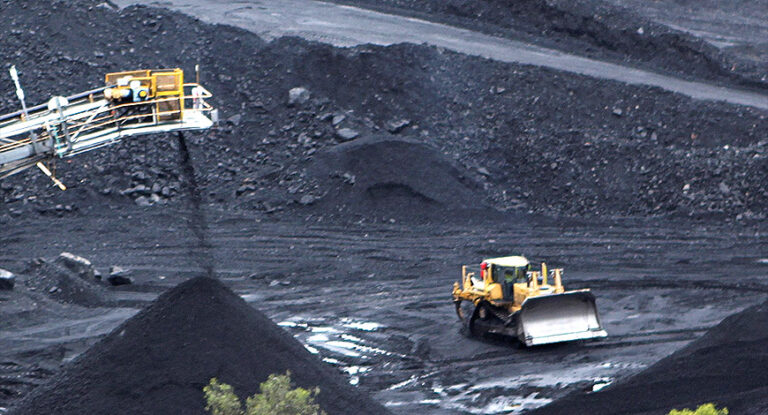
A statement has been put forth by the Jharkhand Janadhikar Mahasabha on 18th June 2020 calling for protests. This call was made by the Mahasabha as the central government initiated to auction 41 coal blocks of which 20 is in Jharkhand. While viewed as an atmanirbhar initiative, it move would take away ownership rights of landowners and Gram Sabhas. It would also allow corporates to exploit natural resources. The Mahasabha has expressed concern that the state government has extended support to the decision of the central government. However, the state has sought a 6-9 month moratorium indicating that it isn’t fully on board with the decision.
Detrimental impact of mining by the corporates:
The statement also speaks about the detrimental impact of opening up mining to corporates in the state. A large population of Jharkhand, especially the Adivasis, depends on agriculture and forest-based livelihoods. Being a mineral-rich state, Jharkhand witnesses rampant mining which does not improve the lives of its people and only serves corporate interests. Mining by domestic and foreign corporates will further destroy the environment and livelihoods. Mining companies in support of the government widely flout laws to destroy the environment. The move would also weaken the rights of the coal workers.
Violation of Constitutional Provisions
The decision also violates several constitutional provisions that aim to protect the poor and the marginalized. It also takes the rights of Adivasis to self-govern. Grama Sabhas are the primary decision making bodies under the PESA Act and provisions of the 5th Schedule. Ownership of minerals is to be vested with the landowners was the order of the Supreme Court in a landmark judgment of 2013. Forest Rights Act considers forest as the property of the Gram Sabha. The Central Government has not consulted the respective gramsabhas to arrive at decisions on coal mining.
Political Agenda
The government instead must provide technological help and capital to cooperatives of landowners or Gram Sabhas to undertake mining and allied activities on their own. Gramsabhas have earlier demonstrated that they can manage both forest and forest-based products. However, the government has sided with the large corporates. Mahasabha also has stated that it expects the state government to stand with its people against the anti-people and pro-corporate policies.
Call for Protest
Under such conditions, the Mahasabha has given a call to all Gramsabhas of the affected areas to protest against the Modi government’s decisions and not allow the mining activities to start. Mahasabha has put out that it would work with the people to oppose mining activities on the ground. It also demanded the state government take a firm stand against commercial mining and centre’s decision to auction coal blocks. It also demanded that the state implement laws and legislations that protect people’s rights to natural resources and self-govern.
Also read: Centenarian Activist HS Doreswamy on the need for nationwide Non-Cooperation
The Uttar Pradesh police have booked the executive editor and editor-in-chief of the news portal Scroll.in under various charges of the Scheduled Caste and Scheduled Tribe (Prevention of Atrocities) Act, 1989 and sections of the Indian Penal Code. The complainant Mala Devi, a resident of Domari village in Varanasi, has alleged that Supriya Sharma, the executive editor of the news portal, wrongly reported that her condition had worsened during the coronavirus-induced lockdown, in the absence of emergency food support. Also read: Kashmiri photojournalist Masrat Zahra wins top photojournalism awardThe FIR, which has been registered on Mala’s June 13 complaint has charged Sharma and the “editor-in-chief” of the news portal under IPC sections 269 (negligent act likely to spread infection of disease dangerous to life) and 501 (printing matter that is defamatory), along with two sections of the Atrocities Act. FIR report against Supriya SharmaSharma recently wrote a number of reports on the poor state of affairs in Varanasi, which is also Prime Minister Narendra Modi’s parliamentary constituency. In one of her reports headlined “In Varanasi village adopted by Prime Minister Modi, people went hungry during the lockdown”, she chronicled the condition of Domari’s residents and quoted many of them on how they were driven to misery during the lockdown.Domari is one of the villages which the prime minister had ‘adopted‘ under the Sansad Adarsh Gram Yojana, a model village scheme for parliamentarians.Sharma’s report highlighted how the out-of-work village poor had to survive without essential food because of a malfunctioning public distribution system (PDS), an inefficient and insouciant administrative machinery, existent caste prejudices, and petty corruption. She also pointed out that the relief food kits promised by the state administration had barely reached the village.
By criminalising reporting on the distress of poor people, the idea is clearly to shut down stories of suffering. https://t.co/E53d5jXEvi via @thewire_in
One of the residents she spoke to was the aforementioned Mala Devi, a Dalit domestic worker whose income had frozen during the critical period of the lockdown. Sharma wrote that without a ration card, Mala had not been able to receive any help from the district administration, and thus looked for odd jobs and was even forced to beg on the streets of Varanasi. However, in the FIR against Sharma and the editor-in-chief of Scroll.in, Mala denied having said anything like that. She said in the FIR that when Sharma came to her house in Domari, she told her that “neither she nor her family faced any problem in getting food and water”. “However, it has come to be known that Supriya Sharma wrote lies about me that I work as a cleaner and dishwasher and that I slept with only tea and bread in my stomach,” Mala alleged in the FIR while claiming that she worked as a sanitation worker at the Varanasi municipality through “outsourcing”. “By writing that I and my children went hungry during the lockdown, Sharma mocked at my impoverishment, my caste, because of which I have suffered mentally. It (the report) has hurt my standing in society,” she said in her complaint. When acorrespondent called Mala, mentioned in the FIR, her younger sister picked up the call. On being asked about the details of the FIR that Mala has filed, she said, “Please speak to the DM (district magistrate) sir regarding the matter,” she said hesitatingly, before ending the call. Soon after the FIR was released by the UP police in the public domain, Scroll.in released a statement. According to the statement, the article has been reported accurately and the website stands by its accuracy. It also states that the FIR is a witch-hunt of journalists and attempts to silence independent journalism that reports on conditions of vulnerable groups during the Covid-19 lockdown.“Scroll.in interviewed Mala in Domari village, Varanasi, Uttar Pradesh, on June 5, 2020. Her statements have accurately been reported in the article titled, ‘In Varanasi village adopted by Prime Minister Modi, people went hungry during the lockdown.’ Scroll.in stands by the article, which has been reported from the Prime Minister’s constituency,” the statement said.
Many from the journalist fraternity see this as an attempt to silence reporting from the marginalized sections of the society.
Anything can happen in New India. Journalists who spread fake news from their studios = no problem. Journalists who get on the ground and dare to report from the PM's constituency = kari ninda + FIR. Support #SupriyaSharma and @scroll_in. https://t.co/TAlWVZ2BsN
The FIR against the Scroll journalists is not the first to be registered against journalists during the lockdown. A recent report said that at least 55 reporters and editors have been booked or arrested or threatened by different police departments and district administrations for reporting on the COVID-19-induced lockdown. The Uttar Pradesh Police has been particularly aggressive against scribes who highlighted the poor state of affairs during the lockdown. In end-March, when the lockdown had just begun, two journalists Vijay Vineet and Manish Mishra of a local daily Janadesh Times were sent show-cause notices by the Varanasi district magistrate Kaushal Raj Sharma. The two had filed a report on a viral video that showed children of the Musahar community eating grass to survive at Koiripur village in the Prime Minister’s constituency. Similarly, in April, the UP police filed two FIRs against one of the founding editors Siddharth Varadarajan, for a news report about chief minister Yogi Adityanath violating the national lockdown to take part in a religious event in Ayodhya on March 25.Such was the enterprise of the UP police to take action in the case that a team of state police officials drove down 700 kilometers in the middle of the lockdown on April 10 to Varadarajan’s New Delhi residence to serve him a summons.
Karnataka Ex-CM and opposition leader, Siddaramiah has written to PM Modi. In a letter dated 17th June, he has raised concerns about the fuel price hike in the country amidst the Covid-19 pandemic. He has alleged that the BJP government is extracting flesh out of the common people when the country is undergoing a crisis.
Fuel Price Hike in the last 10 days
Petrol and Diesel prices are on an increase during the last 10 days. Both petrol and diesel prices have increased by approximately Rs 5.5 per liter. He noted that petrol prices have shot up to Rs 79.9 from Rs 74.6 in the state capital Bengaluru. Diesel prices also have increased to Rs 72.07 from 67.11 during the last 10 days. The fuel prices have reached the levels of October 2018 while the crude oil prices are way lower and are on a decline in the international market.
Excise Duty and Gestation Period as Justification
While the crude oil price was remarkably low since March and May 2020, the government instead of bringing down the prices increased the excise duty. It would have benefitted the common people if the prices were brought down. However, the government claimed that it would require at least a months’ time to bring down the price of the fuel under the garb of the gestation period between procurement and retail markets. However, to increase fuel prices and burden the common people, the government does not need any gestation periods.
Fuel Prices under 6 years of BJP Rule
The government has also failed to increase the oil storage capacity of the country during its ruling in the last 6 years Siddaramiah alleged. We could have had an advantage when the crude oil price fell if the government had undertaken to do it. He also noted that as of now, the excise duty on petrol and diesel stood at Rs. 32.98 and Rs. 31.83 per liter. However, at the end of the UPA – II Regime, the excise duty had stood at Rs. 9.21 and Rs. 3.45 per liter of petrol and diesel respectively.
In other words, BJP during its six years increased excise duty on petrol and diesel by 258% and 820% respectively. This meant an additional tax collection amounting to Rs 17,80,056 Crores in just the last six years. This he noted was an exploitation of the common people and also over-burdening them with taxes. He alleged that this was an outcome of the short cited policies of the government and emphasis on public relations which adversely impacted the economy and growth of our country.
Impact of fuel price on economy amidst Covid-19
Siddaramaiah in his letter also noted that the price hike would have a multipronged and irrecoverable impact for the common man. He argued that during the pandemic, the demand for the goods is already low and such policies will further the demand. It will also decimate the vulnerable sections of society. Farmers are already under distress owing to supply chain disruptions and this fuel price hike will increase their input costs sharply. It might also set off the predictions of a good monsoon thereby affecting food production. These measures will also have devastating impacts on other sectors of the economy and will further reduce demands.
Thereby, he has urged the Prime Minister Narendra Modi to roll back excise duty and reduce fuel prices. It can potentially reduce the burden on the common man. It will aid them to spend on essential goods and services thereby helping them to survive the pandemic. He also urged the Prime Minister to be thoughtful of the plight of the common people in deciding fuel prices.
It must be noted that Siddaramiah holds a distinct record of making 13 budget announcements in his political career.






 The Government had promoted the “Make in India” campaign as a great example for the youth in India to start their own startup.
The start-up companies did benefit from government initiatives like Startup India and Make in India and had early success claimed to be going into loss due to the lockdown.
Though workforce reduction in many of big corporate companies, MNCs and multinational banks had been going on since 2018 onwards. The start-up companies were being looked up to as the next trendsetters and job providers, which they did for a short period of time, but because of lack of labour laws and protection to the employees, it ended up being quite a risky decision for many employees.
In the wake of COVID-19, many of these companies are firing their employees in thousands giving a loss of business due to lockdown. The big businesses also made several rounds of retrenchment exercise in the last few weeks. Though the lay-off and firing of employees had started pre-COVID-19 itself. Many of these “Make in India” companies have now fired 15,000 employees. ( Figure above) .
Many of these startups have amassed a huge amount of wealth due to government subsidies and support. Some of these startups have donated generously towards the much talked about and controversial PM CARES fund. The PM CARES fund does not come under the ambit of RTI and has not declared the amount of money collected through donations.