Poverty, Pandemic and Purchase: Manipur Elections 2022

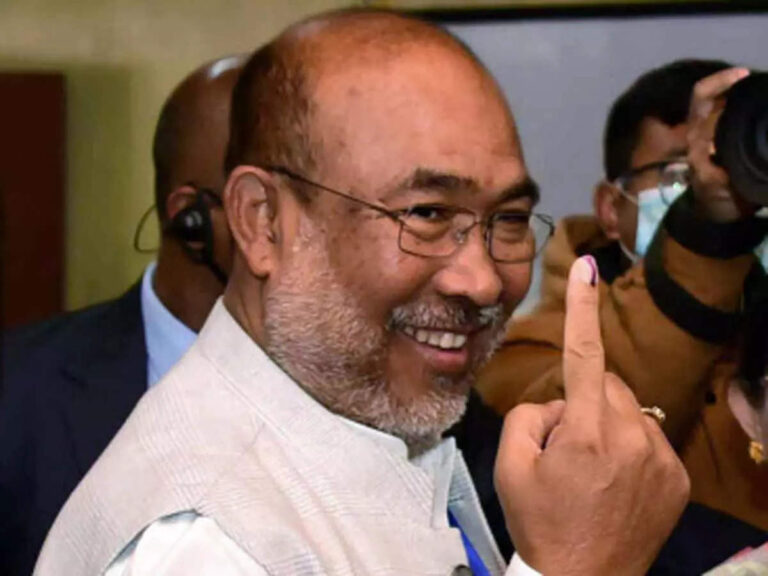
The results of the recent Assembly Elections in Manipur have caused a huge surprise and an intense introspection among the educated class irrespective of age. While the results have been the real world experience, the educated and intellectual class are now searching for the “corresponding type of mind” and the factors that have caused this emergence of unexpected results. Elections, as a mechanism in a democracy, are phenomena that have the potentiality for deep and wide differential dynamics within a short period. The period before the recent elections and the voting days were marked by unprecedented violence in Manipur. There are three things here. First, the members of the BJP, as members of the ruling party ipso facto, had no hesitation in using languages of threat and did follow them up with damages to both life and property. Second, in most instances, the victims of these violence were members and supporters of political parties which had robust candidates vis-à-vis the BJP candidates in the constituencies where violence was prominent. Third, by delaying the presentation of the Manifesto of the Party, BJP avoided the potential for general public debates and evaluations on their performance and commitment either as a Political Party or as a Government headed by the party.

The prevalence of widespread poverty makes it convenient for the powers that be to adopt momentary social bribery as a means to become winners in a key democratic process.

In the background of this unprecedented use of threat and violence as mechanism to influence the electoral outcomes, the informed and educated voters by and large were very sceptical of the ability of BJP to return to power again. The most dominant prediction was of a Hung Assembly wherein the BJP might win 15 at most out of the 60 seats. But today the BJP could score 32 out of 62 and thereby reaching the absolute majority mark. This absolute negation of the expectations of the educated and informed elite is what has stirred the minds of these people as to what has influenced the minds of the general voters. Here, on hindsight, it becomes clear today that the influential dynamics had worked only within the last five days or so before the two scheduled dates of voting. To begin with, the BJP must have realised that the educated elite were largely disfavouring them. It is now established that they were avoiding any kind of trucks with this group and concentrating on the remaining segments of the electorate. It here that three groups are paramount and can easily swing the votes in their favour.
  1. First, the poor households constitute almost about 80 per cent of the total electorate. Of the remaining 20 per cent, only about 10 per cent are decisive and 10 per cent non-committal (thus can be subject to influencers).
  2. Second, there is – as expected in context of mass unemployment and arguably zero creation of new employment opportunities – a large proportion of youths who can be easily subject to arousal with violent feelings.
  3. Third, sustenance of violence does cause a kind of submission and admiration to the vulnerable sections of the population.

Decoding the counter-intuitiveness of UP Assembly Election results

This is where we can look at the prevalence of poverty and its further complication by the presence of the Pandemic. Poverty in any context is never an enviable situation for any family. The situation is further aggravated by the absence of earning opportunities, which is contextually coupled by another absence of equalisation of opportunities due to the presence of corruption. This makes the revelation of preferences in voting exercises of the poor easily susceptible to the momentary charms offered by the powers that be. The Pandemic of the last two years has definitely deepened and widened the daily existence challenges of food and health of these poor households. While their capability to face life challenges is already low, the Pandemic has almost made it non-existent. This is where the convenience of being in the powers that be arises – the 80 per cent of the electorate can be easily lured by momentary extension of needed reliefs; anyway the poor live life only momentarily. Thus the coupling of poverty by the Pandemic creates a brilliant atmosphere for any political party to move for purchase of preferences of the poor. The political party that can pay the highest amount to the “majority” 80 per cent of the voters would definitely enjoy the preferences of the electorate when the Electoral Process gets completed. Thus the three factors that have been the determinants of the recent electoral process for the State Assembly in Manipur are Poverty, Pandemic and hidden market process of Purchase. While Constitution may mention Equality, the prevalence of widespread poverty makes it convenient for the powers that be to adopt momentary social bribery as a means to become winners in a key democratic process. So it is in the interest of the powers that be and wannabe powers to be that Poverty should prevail. If this poverty is also coupled by something like the Pandemic to make the poor much more absolutely desperate, the powers that be and wannabe powers to be cannot ask for a more congenial atmosphere to indulge in social bribery. This is the context any poor would be marketing whatever they are willing and including the rare voting right. Thus the market for the Purchase of votes spontaneously gets created. The highest bidder (here bidder means actual transactions taking place) gets the prize of Votes. Thus the lessons of the recent election outcomes in Manipur are: A. Poverty should be “sustained” for election interests; and B. There is nothing to worry about the character and quality of governance if the powers that be can sustain the prevalence of poverty. The issues of Democracy can be discussed in a seminar funded by the government that ultimately gets constituted. Prof Amar Yumnam is Professor of Economics and Former VC at Manipur University, India

Rajasthan: Dalit Health Worker Killed For Keeping Moustache 

0
Jitendra Pal Meghwal, a COVID health assistant living in Barwa village of Bali tehsil of Pali district of Rajasthan, was murdered on Tuesday. According to the allegations of Jitendra Pal’s family, Jitendra Meghwal was killed for maintaining a good looking personality while being a Dalit. But the police have denied these allegations. Disclosing the matter, the police arrested Suraj Singh and Ramesh Singh, accused of murder, from Dudwa village of Pachpadra in Barmer district on Thursday. According to media reports, Jitendra wrote on social media- “I am not rich but I am royal at heart”. The accused Suraj Singh was jealous of Jitendra and his style. This jealousy turned into hatred and he killed Jitendra by stabbing him on the back and chest with a knife. Sooraj was so jealous of Jitendra that he had come from Surat to kill him. Jitendra was better built and good looking than Suraj Singh, this made Suraj hate him even more. After the murder, the family members of Jitendra Pal sat on a dharna. After much persuasion from the police-administration, his family agreed for the postmortem on Friday, January 17. The administration has assured to give a government job to the brother of the deceased, 50 lakh compensation to the victim’s family. The family members have also demanded to make a permanent police outpost in Barwa village.

Upper Caste man Refuses to Marry Dalit girl, Sets her on Fire

MLA Pushpendra Singh Ranawat and MLA from Marwar Junction, Khushveer Singh raised this matter in the assembly regarding the murder. He demanded the early arrest of the accused, financial assistance to the victim’s family and government jobs to the family members. It was only after this, the police, showing readiness in the investigation of the case and arrested the accused. While the family alleges that the deceased Jitendra Pal was killed because he kept long moustache and was well dressed, the police says its a case of old enmity and have denied these allegations. According to the case registered with the police, the deceased Jitendra Pal was going from Bali to Barwa on Tuesday along with his friend and a COVID Health Assistant Harish Kumar. His friend was driving the motorbike. Two kilometers away from Bali, two youths who came on a bike from behind called for them to stop. As soon as Harish slowed down the bike, the young man coming from behind stabbed Jitendra on his back. Injured he fell down from the bike. After that, the young man made four stabbings in his stomach and chest with a knife. He died before reaching the hospital. It is notable that the incidents of Dalit atrocities are almost a daily affair in Rajasthan. Most of these incidents involve Dalit grooms being killed for riding a horse on their wedding procession. This custom is considered a monopoly of the upper castes.

Upper Caste man Refuses to Marry Dalit girl, Sets her on Fire

0
Bengaluru: In yet another case of Dalit atrocity, a man belonging to upper caste has murdered a dalit woman by setting up her on fire in Bengaluru. According to Electronic City police station where the case has been registered, accused Shivakumar Hirehal was in love with a Dalit girl Daneshwari. But when the girl wanted him to marry and solemnize the relationship,  the accused refused to marry, instead he set the girl on fire by pouring petrol over her. The accused who is said to belong to Lingayat community is now said to be absconding. The reports said that both the accused and the victim knew each other when they were studying in one of the Engineering colleges in Bijapur city. After their education, both settled in Bengaluru. At that time, Shivakumar had promised Daneshwari of marrying her. When the girl brought the matter of wedding before Shivakumar, he reportedly told her that he will have to first discuss with his parents. The accused reportedly visited Bijapur, after coming back, he told the girl that his family is not ready for the marriage as she belongs to lower caste.

Upper caste Villagers Assaulted Dalit man for beating drum

On March 15, Daneshwari goes to Shivakumar’s office where she insists Shivakumar to marry her. But he allegedly makes casteist remarks and refuses to speak to her. Later, he takes her to a secluded place and sets her on fire by pouring petrol with the help of his friends, the complaint said. The accused later admits the girl in the hospital and flees. The police have filed cases of atrocity and murder against the accused. Altercation had taken place between both of them over the marriage issue. At that time three men suddenly appear from behind and pour petrol over the girl before setting her up on fire. She was later admitted in a private hospital but she succumbed to injuries. “ We have taken the case and started an investigation. The accused is said to be native of Badami in Bagalkot district. When the police visited his room, we found he was absconding. We are in search of the accused”, said ACP, Ramesh to the media. The father of the girl, Ashok Sharma has told media persons that they were preparing for the marriage of their daughter. She had told her parents about the relationship with Shivakumar. She was insisting on marrying him. When my daughter asked about marriage, he refused citing caste as the hurdle. “ My daughter was doing a course to join a company. She was speaking to one of the paying guests in the BTM layout. The incident took place on the night of March 16. I had even transferred money for the treatment of my daughter. The police first said that the girl had immolated, but it was actually done by Shivakumar. It was he who admitted her in the hospital and gave our number to the hospital staff”, he said.

Paris Commune: Remembering the First Worker’s Revolution

On March 18, 1871, the workers of Paris rose against the rulers of France and established the first worker-run society in Europe after the industrial revolution. This is remembered as the Paris Commune. Though it lasted for a short period of 10 weeks it was an important event. It was the first socialist revolution in Europe. While Utopian Socialists tried to design communes in Europe, Britain, and America, the Paris Commune was different. It was run directly by the people and was a spontaneous development. Members of the Commune would figure things out as they went on. In this sense, it was truly experimental, but it was also surprisingly functional. Workers developed their systems of justice, decision making, and resource allocation. It ended only because it was violently destroyed by the French army. It lives on in memory of later socialist movements. Also read: Investigate the allegations of illegal detention by Shiv Kumar: Haryana High Court

Before the Commune

Since the French Revolution, France was a hotbed of revolutionary political activity. In 1848, the workers of Paris attempted a failed uprising. After the uprising, Napolean Bonaparte III took control of the government, abolished elections, and declared himself the Emperor of France. What followed was an authoritarian government. Bonaparte positioned himself as a benevolent leader, who aimed to reduce poverty, increase development, reduce the public sector and open up the economy.
Napolean Bonaparte III / Image courtesy: napolean.org
Bonaparte’s despotism was most obvious in how he dealt with the press. When he became emperor, he passed a law restricting the press’s ability to comment on social or political matters. Penalties would be imposed on members of the press that went against state policy. Many underground groups tried to organize against this tyrannical regime, but they had little success in their time. Despite his despotism, Bonaparte was popular, especially with his hold on the press. In the 1860s, Prussia rose as an economic superpower. It aimed to unite various kingdoms under a single German government. This put them at odds with Bonaparte’s government, which also wanted to control Europe. Bonaparte did not want to enter into war, but his popularity was tied to him being an imperialist. As a result, he entered into a losing war with Prussia. The wars bankrupted France and weakened Bonaparte’s hold on France. After Bonaparte was captured and exiled from France, France returned to Parliamentary democracy. To retain independence, France had to sign an agreement to disarm its military. Also read: ‘Your hero is Nathuram and Our’s is Khudiram’ : A Response to the BJP Hooliganism in Kolkata After the war, many members of the working class of Paris returned. They were armed as part of the National Guard, whose job was to protect France. They were not covered by the agreement with Prussia. These members of the National Guard began to organize the other workers of Paris. They built upon the earlier organizing that happened during Bonaparte’s rule. The new radical wing of the National Guard scared the rulers of France. They tried to recall the armaments of the radical National Guard. When soldiers were sent to recall the arms, they were met by crowds of women from the working class. The army men were ordered to fire on the crowd, but the soldiers refused to fire on the crowd of unarmed women and switched sides. The result was, that Paris was now a Worker-run Commune.

How the commune functioned

The commune was run through a council, where representatives could be instantly recalled by their constituency and replaced at any time. There was no mayor no political class. Every adult male was a member of the National Guard, though there was no mandatory conscription. The death penalty was removed. The commune abolished child labor and night work. Children were provided free clothing and books for education. The commune also tried to develop a unique system of education that would combine theory and practical work. Workers were given control over the tools they worked with. Interest on debt and rent was abolished. Workers were allowed to collectively take over their factories, including many that were unused before the establishment of the Commune. 43 factories were ruled by democratic means in the commune. The homeless were allowed to stay in unoccupied buildings. Though the women in Paris led the rebellion, the men of the commune did not grant women the right to vote in the council. However, the democratic ethos of the commune led to the growth of a woman’s movement within the Commune. Though the commune only lasted 10 weeks, women leaders began to gain influence. Occupying abandoned Churches, women formed a union, La Union des Femmes. They demanded equal wages for men and women, equal rights for married and unmarried women, and recognition of all children, be they born in marriage or not. They organized workshops for women and ultimately made their way onto the governing council. Also read: Massive Turnout for the Two Day Bank Strike Against Centre’s Proposed Privatisation Plan
Paris commune
Women in the Paris Commune / Image courtesy: workersliberty.org
The Commune made many tactical mistakes, that allowed their enemies to regroup and come against them. They did not stop the banks from running, which allowed the ruling class of France to take out loans and rebuild the army. They were unsuccessful in reaching out to people outside of France, and they did not prioritize building up a strong enough military to protect against an invading army. These factors would eventually lead to the Commune’s downfall. Despite its limitations and tactical mistakes, the Commune ran surprisingly well. It opened up democratic spaces unheard of in Europe.

How the commune ended

The commune was destroyed when the French Government sent in their troops to destroy it. Nearly 2 lakh soldiers were sent in to crush the commune. The fighting power of the commune was still in a nascent stage, not having enough time to train anyone beyond the original members of the National Guard who began the commune, and the French Army was aided by the Prussian government. The army killed thousands of Parisians and arrested nearly tens of thousands more, including hundreds of children. 16,000 prisoners were tried by military tribunals, and 13,000 were found guilty, leading to the death penalty, exile, or imprisonment. Also read:Three Student Activists in Chandigarh Arrested for Protesting Against a Rape
La Semaine Sanglante / Image courtesy: butte.cailles.free.fr
The siege took place over a week and is remembered today as La Semaine Sanglante, the Bloody Week. The Commune remained in the memories of many revolutionaries, as an example of how people can spontaneously come together and run society on their terms. Though battered by decades of an authoritarian regime, living in a country nearly destroyed by war, the working class managed to rise and set up a society with nearly half a million workers. Author is a mathematician and a political observer based in Bangalore. 

After Gujarat, Karnataka govt Considering to introduce Bhagwad Gita in School Syllabus

With the Gujarat government planning to introduce Bhagwad Gita in the school syllabus, Karnataka Primary and Secondary Education Minister B C Nagesh on Friday said the state government will discuss with educationists before taking a call on doing so. “In Gujarat, they have decided to introduce moral science in three to four phases. In the first phase, they have decided to introduce Bhagwad Gita. This is what has come to my notice today. We will take a call only after discussing with Chief Minister Basavaraj Bommai regarding introducing ‘moral science’,” Nagesh told reporters here. Claiming that the cultural values among children were taking a beating, the minister said many people have demanded that moral science should be introduced. According to him, earlier there used to be one class of moral science every week where contents related to Ramayana and Mahabharata were taught. “We will seek the Chief Minister’s advice regarding introducing moral science in the coming days. If we decide to go ahead then we will discuss with the education experts about the content of the moral science and the duration of the class,” Nagesh said. Nagesh underlined that statesmen used to draw inspiration from Bhagawad Gita, Ramayana and Mahabharata including Mahatma Gandhi. Even Mahatma Gandhi used to give credit to the Hindu epics-Ramayana and Mahabharata- for his upbringing, which his mother used to narrate to him. When he grew up, the play Raja Harishchandra had a big impact on his life, the minister explained. Underlining the moral values in Hindu religious scriptures, he said the teachings in these books were the reason behind building a well-cultured society in ancient India when there were no modern schools and universities. It is our duty to introduce those things, which have a positive effect on society. However, it will be left to the educationists to decide what should be introduced, Nagesh said. “It is not like Bhagwad Gita should not be taught to the children because S M Krishna used to tell me when he was the Chief Minister that he used to read Bhagwad Gita every night, which was his strength,” the minister said. Regarding the content, he said it will be left to the experts to decide. “Whatever the experts say about introducing Bhagwad Gita, Ramayana, Mahabharat, or the stories of Jesus Christ and the good teachings in Bible and Quran can be retained. Whatever is time tested, will be taught in moral science,” the minister explained. The Congress state president D K Shivakumar said there was no need to further glorify things, which are already in the textbooks. “There is nothing wrong in getting to know about the religious practices of various faiths. We will see what content they (BJP government) want to introduce in the education system. Textbooks have the contents of various religions. I don’t think there is no need to further glorify new things,” Shivakumar told reporters. He underlined that the BJP was not introducing a novel idea. “As Chief Minister Kengal Hanumanthaiah had distributed books related to Bhagawad Gita for Rs two. These people (the BJP government in Karnataka) are not doing anything new. There is no need for them to take credit for it,” Shivakumar said. Further, the Congress state president said he completely opposed the new National Education Policy, saying that the policy was not needed. “There is no need for the NEP in the state and the country. People are already learned and knowledgeable. There are no circumstances to change the policy,” Shivakumar said.

Postcard News, Dragged Late Actor Puneeth Rajkumar To Spread Islamophobia 

0
Puneeth Rajkumar was a beloved actor, superstar of kannada cinema. It was his birthday yesterday. Postcard News, known as  ‘fake news factory’ for spreading false and fabricated news to spread hatred against Muslims and Christians this time used Puneet’s name and memory to spread their propaganda. This time, the ‘BJP propaganda machine’ and its editor, Mahesh Hegde has dragged the name of Kannada superstar late Puneet Rajkumar to target Muslims of Karnataka. The website has come under criticism for unnecessarily linking Hijab protests with the release of ‘James’ the last film of Puneet. It may be noted that after the High Court of Karnataka gave the verdict staying on the hijab Ban in PUC colleges, Muslims organizations who were upset with the order and called for Karnataka Bandh on Thursday. Interestingly, the date coincided with the date of the release of the Late actor’s film. The website tries to exploit this incidental situation to spread lies and project Muslims in a bad light. One can see that the release of the film and protest for Hijab have no connection. But the website took the protests by Muslims to spread its poison against Muslims. The website has uploaded some pictures of release of the film and Bandh called by Muslim unions to instigate people and foment tensions. Puneet was popular not only for his acting skills, but beyond that, he was loved by people because of his kind and generous nature. The website obviously doesnt care for what kind of person Puneeth Rajkumar was and dragged the late actor in his filthy agenda. “ It is an insult to Puneeth Rajkumar who was an ambassador of peace. Why Muslims chose to call for Karnataka bandh on the birthday of Puneeth. By doing so, Muslims have insulted the soil of Karnataka”, says the website in the posters that have been uploaded on the portal. Meanwhile, several  netizens have reacted sharply to the attempt of the portal  to spread communal venom by linking two different events.

“ Everyone is clearly aware of what kind of people you are. You fall under the category of such people who try to burn the houses to get warmth. The Muslims have nowhere insulted Puneeth. They have only asked the people to volunteer for the bandh and shut down their business activities. On the contrary, it  seems that you are insulting Puneet while spreading lies”, said Amar, one of the netizen.

While the Karnataka BJP government has made the film ‘Kashmir Files’ tax free in the State, the film which is perceived as a BJP propaganda, the netizens of Karnataka have wondered why BJP government did not make ‘James’, the last film of the late actor Puneeth as tax free. “ By not making Puneet’s film tax free, the government of Karnataka has insulted the late actor. If you have guts, talk about this”, one of the netizens asked this to the editor of the website. They have asked Hegde not to spread communal hatred in the name of Raj Kumar’s family in Karnataka.

Malayalam film sets must have sexual harassment committee: Kerala HC

0
The Kerala High Court on Thursday observed that film production units have the responsibility to form an Internal Complaints Committee as per the Sexual Harassment of Women at Workplace (Prevention, Prohibition and Redressal) Act, 2013 – commonly known as the POSH Act as re[ported by livelaw.in. The Court further held that other related associations like the Film Employees Federation of Kerala(FEFKA), Kerala Film Chamber of Commerce. with more than 10 employees should have an ICC as mandated by the statute. The Court passed the order in the PIL filed by Women in Cinema Collective (WCC) for establishment of grievance redressal mechanism in the Association of Malayalam Movie Artists (AMMA), the body of Malayalam movie actors, as regards prevention of sexual harassment of women at workplaces. A Division Bench of Chief Justice S. Manikumar and Justice Shaji P. Chaly also recorded that AMMA has volunteered to constitute an ICC and added that if AMMA constitutes an ICC as undertaken the same shall be in accordance with the provisions of the POSH Act.

Film Industry is a Workplace and also needs Internal Complaints Committee

AMMA, which had been resisting forming a committee for years, decided to form one last week just before the order in the petition was pronounced. However, this IC does not have an external member as is required, and the organisation has said this will be done later. The court commented that since each production unit of each film industry is an establishment employing actors, artists, workers and therefore such production units have t maintain an Internal Complaints Committee, if they are engaging more than 10 workers and if women workers are employed. The main contention in the PIL was that the association had not constituted an Internal Complaints Committee/Grievance Redressal Cell as mandated by the Supreme Court in the Vishaka case and Sexual Harassment at Work Places (Prevention, Prohibition and Redressal) Act 2013.

Kumbalangi Nights: Warmth and Vulnerability in times of Toxic Masculinity

“so far as the film industry is concerned, the production unit is the workplace of an individual film and therefore, each production unit would have to constitute an Internal Complaints Committee, which alone can deal with the harassment against the women in contemplation of the provisions of Act, 2013.” Meanwhile, the Centre for Constitutional Rights Research and Advocacy had also moved a PIL seeking directions to constitute Internal Complaints Committee (ICC) within political parties, media and film production houses n accordance with the Prevention of Sexual Harassment At Workplaces Act 2013.

What is WCC?

The Women in Cinema Collective (WCC) is a body of female actors and technicians. It was formed under the leadership of actors like Parvathy Thiruvothu, Revathy, Rima Killingal, Padmapriya, Anjali Menon etc., as an aftermath of the controversy following the sexual assault of a prominent actor in 2017, which was allegedly a part of the conspiracy hatched by actor Dileep. The trial in this case is still pending before a Special CBI Judge. The formation of a women’s collective which called for safe working conditions for women in the industry, initiated a conversation about the gender issues in cinema space. AMMA is trying to defend actor Dileep rather than stand by the sexual assault survivor. In 2018, WCC had also convened a press meet, where they attacked the Association’s inaction against Dileep and its indifference towards the interests of the survivor. Members of the WCC had further declared in the press meet that they will look for other means to redress their grievances as they had lost confidence in the leadership of AMMA. WCC is the first and only Womens body in the large multilingual Indian film industry. WCC’s first appeal to the Government of Kerala in May 2017, signed by 21 women who worked in the film industry including actors, directors, technicians, and singers suggested that an ICC for sexual harassment be formed for every film that was made. An ICC is an Internal Complaints Committee set up for the prevention of sexual harassment and to redress complaints of sexual harassment. It asked the government to make sure that films were not allowed to be made if this criterion was not met.

Kumbalangi Nights: Warmth and Vulnerability in times of Toxic Masculinity

Degree Students Asked to Remove Hijab, Stage Protest

0
In the Malnad region of Karnataka, students from degree colleges were asked to remove the hijab before entering the classes. Students refused to remove the hijab saying the HC order does not apply on degree college and protested outside the college. The incident happened inKamala Nehru Memorial College for Women in Shimoga and IDSG in Chikkamagaluru. Students boycotted the classes after they were denied permission to enter the classes in hijab. As many as 20 degree students from Kamala Nehru Memorial College protested in front of the college accusing college authorities of forcing them to remove their hijab. When they staged a dharna, cops moved in and asked them to leave the college premises as the Shimoga district administration has imposed prohibitory orders within 200 meters of educational institutions. Students from Malnad region boycotted classes on Wednesday to mark their protest against the Karnataka HC verdict which upheld the government ban on no wearing hijab during classes. Degree students protested accusing the college authorities of overstepping their jurisdiction as the HC verdict pertains to only schools and PU colleges. Security was beefed up around several educational institutions that witnessed protests over the hijab row.

HC Hijab Order: Women outfits launch signature campaign; want SC to stay the order

The protesting students argued that court verdict foes no apply to degree colleges. ” But still college authorities asked us to remove the hijab to attend classes. They are wrong to ask us not to wear the hijab. Students said. There were similar protests in Karnataka Public College in Shiralakoppa in Shimoga district. IDSG college in Chikkamagaluru also saw protests by Muslim girls when they were asked to remove the hijab. They said they will not remove the hijab until the case the settled in Supreme Court. In Hassan district too, Women’s First Grade College in Hassan city too protested and refused to remove the hijab to attend classes. They said we want both hijab and education.  

HC Hijab Order: Women outfits launch signature campaign; want SC to stay the order

Upset with the Karnataka High Court giving verdict against wearing of Hijab, several Women Organisations have launched a signature campaign demanding the Apex Court to give stay on the HC order. Stating that the order would prevent and act as major impediment in education of the Muslim girls, the campaign appeals the Supreme Court to intervene in the interest of the students. “ The HC order says that the college development committee has the authority to make decisions on uniforms. Many colleges themselves have made a rule in Karnataka that the students can wear Hijab along with the uniform. Like Hijab constitutes part of Islam, so is Turban of Sikh, Bindi/Tilak of Hindus. There is permission for the students of non-Muslims to follow their religious practices, similar permission should be given to Muslims girls to practice their religious customs”, the women associations have appealed to all the college development committees of the state. Reminding the college development committees that there was no such ban on wearing of Hijab in any college in the State in the past, the associations have said that in fact, the rules framed by the committees states that the Muslim female students can wear Hijab which is matches the colour of the uniform. Therefore the Hijab wearing students have not rejected any order of Uniform”, they said.

Karnataka Hijab Row: Get your hands off women

Pro Hindu outfits have been demanding a ban on wearing Hijab. The HC had the opportunity to curb such elements which are illegally forcing the colleges to act against the rule. But the HC has failed to do that. The decision has only put the students of Muslim community in more danger”, the letter said. Urging the SC to grant immediate stay to the HC order, the letter said that the HC order will have far reaching negative consequences on dignity, security and educational aspects of the Muslim students. The letter informed that the interim order of the HC had not only forced the students but also the Muslim teachers to remove Hijab in pubic even before they enter the college premises. The act of forcing the students and teachers to remove Hijab in public was no less than an insult to women fraternity. Because of the interim order, many students could not attend the classes and even had to skip the practical exams. Several teachers who could not tolerate this insult, resigned from the services. The order of Government of Karnataka instigated the education officers not to allow the Hijab wearing students and teachers to enter the college premises. “We even heard of some incidents where the Hijab wearing were humiliated in public areas”, the letter said and quoted one such incident that took place in a Bank in Bihar. In order to save Muslims girls from facing humiliation, harassment and discrimination, the SC must give stay on the order of HC, the letter said. The letter has made a list of various aspects of HC order which they considered misleading the people. The order said that Hijab is not an essential part of Islam. But at the same time, it is completely unconstitutional of depriving the Muslim girls from their right to education merely because they are wearing Hijab. Making it clear about the concept of B. R. Ambedkar on Naqab, Burqa or Hijab, the letter said that Ambedkar never said that even that girl who comes to college for education by wearing Hijab voluntarily should be prevented from taking education. The order forces Hijab wearing women either to get education in Minority institutions or stay at home without pursuing education. The decision makes a grave mistake of considering uniform as a presentation of unity. The uniforms of the colleges always have been representing the religious diversity of the country. For instance, uniforms allow Sikh students to wear turban in colleges. Thus the diversity which allows students to wear turban and Hijab does not remain different from uniform. Forcible unity was never part of the Indian schools and colleges. The order misinterprets the concept of dress code and his concerns for the people. The order gives a sense that Hijab is against the interest of Muslim women thus, they should not wear Hijab. The order has failed to understand the idea of liberty and  freedom of women in choice of clothing. The order also fails to distinguish between forced religious practices and voluntary decisions. It is the choice of the women to practice any of the religious customs. While  the SC allowed women to enter Sabarimala temple as the SC  considered it as the religious rights of women, similarly, wearing the Hijab should be considered as a religious right of women. The order clearly does not force the women to visit Sabarimala temple even if she does not want to. Similarly, Muslims women should not be forced to remove their Hijab if they don’t want to. Forcing them to remove Hijab under the pretext of giving ‘liberty’ to them, is just such an absurd argument. The real liberty of the women is possible only when their independence and their choices are respected and not forcing customs in the name of religions. The letter has extended complete solidarity with the Hijab wearing Muslim girls who are fighting for their right to education, respect and independence. The letter has been signed by office bearers of various women organizations.

Samyukt Kisan Morcha: There is no Division in the Morcha

0

Statement by Samyukt Kisan Morcha (SKM)

The historic movement led by the Samyukta Kisan Morcha, having succeeded in its first phase, is now entering the second phase. After the repeal of the three black laws, a new phase of agitation has begun for the legal guarantee of MSP, against corporate control of agriculture, and other long-standing issues of the farmers. In this phase, the anti-farmer stand of the government is coming to the fore even more openly. The conspiracy to save the killers of farmers and implicate the innocent farmers continues in Lakhimpur Kheri. The Union Government is reneging on its promises made to the farmers on December 9th, and is trying to impose anti-farmer laws and agreements through the back door. In such a situation, it is important that the farm movement should face this challenge by showing more strength and unity than before. At such a critical juncture, any challenge against this historical unity will have to be resisted. In the national meeting of the Samyukta Kisan Morcha on January 15th, it was decided by consensus that any farm union associated with the Samyukta Kisan Morcha that forms a party in these elections, or any leader who contests the elections, will not remain in the Samyukta Kisan Morcha. The Morcha had also decided that, if needed, this decision would be reviewed in the month of April after the assembly elections. Consequently, after this decision, farm unions and leaders who formed parties and contested elections in Punjab under the name of “Samyukta Samaj Morcha” and “Samyukta Sangharsh Party”, were out of the Samyukta Kisan Morcha, at least till April. These organizations that contested the elections despite the instructions and warnings of the Morcha, were completely rejected by the farmers of Punjab. The seven-member Coordination Committee of the Morcha had called a meeting of representatives of all the organizations at Gandhi Peace Foundation in Delhi on March 14th to decide the manner of reviewing the decision and the upcoming program of the Morcha. But without waiting for the decision of the Morcha, the people of “Samyukta Samaj Morcha” and “Samyukta Sangharsh Party” led by Shri Balbir Singh Rajewal and Shri Gurnam Singh Chaduni forcibly reached the meeting place and forcefully occupied the meeting hall and started a meeting in parallel. In order to avoid any untoward incident, the Coordination Committee decided that the delegates who came from all over the country on its invitation would hold their meeting in the open lawn outside. People intent on breaking the movement tried to disturb that meeting of the Morcha too, but they could not succeed. In this National Meet held under the leadership of the Coordination Committee, decisions were taken regarding the upcoming program of the Morcha. Although this episode helped in spreading the propaganda of the split of the Morcha to the opponents of the movement and the Godi media, we maintained silence for the unity of the Morcha. But we were very astonished to see that these leaders have done the ridiculous act of dissolving the Coordination Committee of the Morcha and declaring themselves as Samyukta Kisan Morcha by issuing a statement in the name of Shri Balbir Singh Rajewal from Chandigarh. The statement also referred to the convening of a National Meeting of the Morcha at Lakhimpur Kheri on March 21st, while the Samyukta Kisan Morcha has decided to observe a nationwide Day of Protest on this day. The Samyukta Kisan Morcha once again makes it clear that there is no division in the Morcha. The Samyukta Kisan Morcha has no relation to the farm organizations and leaders who formed “Samyukta Samaj Morcha” and “Samyukta Sangharsh Party” including Sarvshree Balbir Singh Rajewal and Gurnam Singh Chaduni, who disrupted the meeting. We still appeal to them to desist from any such act which threatens this historical unity of the farmers. We would like to warn all the farm organizations that any organization or leader who participates in the Lakhimpur Kheri meet on March 21st will be subject to disciplinary action in the Samyukta Kisan Morcha.