Historic Farmers’ Struggle Completes One Year; Rallies Across the Country

The farmers’ movement completed one year of its historic struggle with nationwide protest programs. While tens of thousands of farmers assembled at Delhi morchas at Singhu, Tikri, Ghazipur, and Shahjahanpur — Lakhs of farmers take part in the assemblies, rallies, marches, chakka jams, etc held in states of Karnataka, West Bengal, Bihar, Chhattisgarh, Tamil Nadu, Jharkhand, Telangana, Andhra Pradesh, Odisha among other states. Nationwide protests were organized in solidarity with the trade unions, various student and youth organizations, women’s organizations, civil society organizations, and other unions that came together in the support of the nation’s annadatas. On November 26th, 2021, the farm movement completed one year of its historic struggle with lakhs of farmers, joined by workers, youths, women, and common citizens in nationwide programs. The day will forever be remembered as one of the greatest moments of a people’s struggle in history. This day marked twelve long months of the farmers struggle, with numerous victories which seemed unlikely, and even impossible, with a will and determination to continue to fight for the unfulfilled demands of the farmers. The farm movement stands as a testimony to the will of the common people to fight against an unrelenting government, and for a long time, will be remembered as an example of peaceful satyagraha inspired by Mahatma Gandhi and the Indian freedom movement. The day was marked with programs at the Delhi morchas, state capitals and the district headquarters. Various trade unions, student and youth organizations, women’s organizations, civil society organizations, and other unions came together in support of the nation’s annadatas. Large assemblies were held at Singhu, Tikri, Ghazipur, and Shahjahanpur morchas, which were attended by SKM leaders. Lakhs of farmers came together in support of the farm movement at the programs held in various states. In Karnataka, farmers and workers organized chakka jams and blockaded state highways in Bangalore, Srirangapatna, Chickballapur, Belgaum, Vijaypura, Bhagewadi. A vehicle rally was also held in Chickballapur. Protest programs were also held in Mysuru, Kolar, Devangere in Karnataka. In West Bengal, SKM West Bengal held a massive public rally at Y Channel, Dharamtalla, Kolkata which was followed by a huge procession from Dharmatalla to Sealdah station. In Patna, a joint procession of farmers and workers was organized from Buddha Smriti Park to the collectorate, which submitted a memorandum of demands to the District Collector. Protest programs were also held in Sitamadhi, Rohtas, Bhojpur, Khagaria, Begusarai, Samastipur, Buxar, Darbhanga, Gaya, Arwal, Nalanda, Shekhpura, and other districts of Bihar. A massive tractor rally was held in Raipur. In the Bijapur district of Bastar in Chhattisgarh, tribal peasants observed the anniversary of the farm movement with Dharnas at Silger and Gangalore. At both places, tribals are protesting against Adani and other corporates, and the deaths of four tribals in police firing on May 16th, 2021. Farm protests were held in Gunturu, Vijayangaram, and other places in Andhra Pradesh. Protest events were also held in Tamil Nadu, Jharkhand, Telangana, Odisha among other states.

Also Read: Karnataka Farmers Block Key Highways across the State: Glimpses

The farmers across the country celebrated their victory in the the form of Prime Minister’s announcement for the repeal of the three anti-farmer laws while raising the still-pending demands of the farm movement. It must be noted that Samyukta Kisan Morcha, in its letter to the Prime Minister dated November 21st, 2021, had raised six demands, namely, legal guarantee of MSP for all produce based on C2+50% formula, withdrawal of draft “Electricity Amendment Bill, 2020/2021”, removal of the penal provisions on farmers in the “Commission for Air Quality Management in the National Capital Region and Adjoining Areas Act 2021”, withdrawal of false cases against the farmers over the course of the movement, dismissal, and arrest of Minister of State Ajay Mishra Teni, and compensation and rehabilitation to the families of the martyrs of the farm movement and allocation of land to build a memorial in their memory at Singhu morcha.

Solidarity & Support of International organizations

Numerous international organizations lent their support and solidarity to the movement. A letter of support was issued by the international farmers’ organization La Via Campesina.
“India’s farmers have inspired the world with their resilience. They have shown us what a united struggle of the working class and the peasantry can achieve even in the face of all adversities. Over the last year, this protest has stitched alliances with workers unions and other social movements and issued inspiring messages of solidarity, communal harmony and unity among rural societies”, said the organization in its letter of support.
Solidarity events to be held in various countries Solidarity events are also being held and planned in various countries. In the UK, a Kisan Demonstration is planned in the front of High Commission of India in London today. Tomorrow, a “1 Year Rally and Vigil” is planned at the same place. A “Kisan Sleep Out” will also be held in Letchworth City tomorrow. In New York, a “1-Year Anniversary Maha Kisan Victory Car Rally” will be held tomorrow. A similar event of car and truck rally will be held in California on December 4th. On December 5th, another event will be held in California “Celebrating Repeal of Farm Laws and 1 Year of Sacrifice and Commitment”. In British Columbia, a “1 Year Mark from Delhi Chalo Sleep Out” program will be organized today.

November 26 also marks the Constitution Day of India

November 26 is also observed as the Constitution Day of India. On this day, in the year 1949, the Constitution of India was adopted by the Constituent Assembly. Our founding fathers fought a long-drawn battle against the repressive British regime, which sought to destroy India, its people, and their livelihoods for the gain of one company. On November 26, 1949, the Constituent Assembly gave to ourselves this constitution, which exists not merely as a book of laws, but as a document of the liberation of millions of people from all forms of oppression. It is befitting that seventy-two years since then, with another historic movement India stands at the cusp of the fulfillment of the goal of social democracy envisioned by Babasaheb Ambedkar.

Endorsements from other International Organizations:

The farm movement was also endorsed by All Africa Women’s Group (UK);  Architects and Planners for Justice in Palestine (UK); Assembly of the Poor (Thailand); Bakers Food and Allied Workers Union (UK); Campaign for Public Policy on Mineral Resources (Thailand); Chemical Workers Union Alliance of Thailand (Thailand); Community Resource Centre (UK); Community Rights Protection Association of Khao Khuha – opposing limestone mining, Songkhla Province (Thailand); Community Women Human Rights Defenders Collective (Thailand); Decolonise Queen Mary University of London (UK); Empower Foundation (Thailand); Confederación General de Trabajadores del Perú-Callao (Peru); Duay Jai Rak Group – Lahu Indigenous group (Thailand); Ecological and Cultural Study Group (Thailand); English Collective of Prostitutes (UK); Federación Nacional de Trabajadoras y Trabajadores del Hogar Perú (Peru); Federación Nacional de Trabajadores de las Universidades del Perú (Peru); Haiti Action Committee (USA); Global Justice Bloc (UK); Global Women Against Deportations (UK); Global Women’s Strike (Ireland); Global Women’s Strike (USA); Group Rak Wanonniwat District – against potash exploration and drilling, Sakon Nakhon province (Thailand); House of Shango (UK); Huelga Mundial de Mujeres (Peru); International Jewish Anti-Zionist Network (UK); International IJAN; International Wages for Housework Campaign; Khao Lao Yai-Pha Chan Dai Community Forest Conservation Group, Dong Ma Fai (Thailand); Khon Rak Baan Kerd Group – six villages opposing gold mining, Loei Province (Thailand); Lao Hai Ngam Group Refusing Mining, Kalasin Province (Thailand); LILAK – Purple Action for Indigenous Women’s Rights (The Philippines); Khon Rak Baan Kerd Bamnet Narong Conservation Group – opposing potash mines & coal power plants, Chaiyaphum Province (Thailand); Legal Action for Women (UK); London Mexico Solidarity (UK); Malaysians Against Death Penalty & Torture (Malaysia);  Marikana [S. Africa] Solidarity Campaign (UK); members of York University Faculty Association Indigenous Caucus, Toronto (Canada); Milk of Human Kindness – breastfeeding group (UK); Naked Punch (Pakistan); National Family Farm Coalition (USA); National Lawyers Guild – International Committee (USA); National Lawyers Guild – San Francisco Bay Area (USA); National Union of Rail, Maritime & Transport Workers Black Solidarity Committee (UK); Network of Action for Migrants in Malaysia (Malaysia); Núcleo Anticapitalista en Movimiento (Peru); Palestine Institute for Biodiversity and Sustainability (Palestine); Payday men’s network (UK/US); Phulbari Solidarity Campaign (Bangladesh);  Queen Mary University of London Rent Strike (UK); Queer Strike (UK/US); Rak Banhang Group – opposing lignite mining, Lampang Province (Thailand); Rak Lam Kho Hong Group – opposing potash mining, Nakhon Ratchasima Province (Thailand); Rak Nam Sap Kham Pa Lai – opposing sandstone mining, Mukdahan Province (Thailand); Red Square Movement (UK); Sindicato de Trabajadoras y Trabajadores del Hogar de la Provincia de Trujillo (Peru); Single Mothers’ Self-Defence (UK); South Asia Solidarity (UK); RESISTers’ DIALOGUE; South Asian Faculty at York University, Toronto (Canada); Southern Peasant Federation of Thailand (Thailand); Thai Network of People Who Own Mineral Resources (Thailand); US PROStitutes Collective (USA); WinVisible, women with visible and invisible disabilities (UK/US); Women Against Rape (UK); Worker Hub for Change (Malaysia).


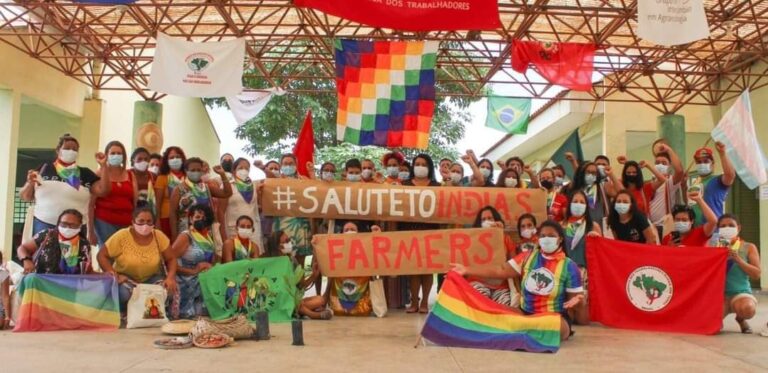
Global Social Movements Express Solidarity, Salutes Indian Farmers!

The statement has can be read below:

Salute to India’s Farmers! A Big Win for Peoples’ Power!

26 November 2021: In a big win for India’s protesting farmers, who were leading a historic agitation for nearly a year, the Government of India – on the 19th of November – announced the repeal of three controversial farm laws that threatened to corporatize the country’s agricultural sector. It is an inspirational account of what peoples’ power can achieve even in the most adverse conditions. The Indian farmers’ protest, one of the largest mobilizations in recent history, completes a year on 26th November 2021. In the course of this historic protest, peasants and workers have braved harsh winters, heavy rains, brutal crackdowns and a wave of campaigns that tried to criminalize, imprison, defame and delegitimize the protestors and their supporters. According to Samkyukta Kisan Morcha, the coalition spearheading this agitation, at least 650 farmers have died in the past year while on protest. Among these are five farmers who were heinously mowed down by a car in October 2021, allegedly driven by a Union Minister’s son. Despite all the adversities and oppressive measures, the millions of farmers who have laid siege to the borders of New Delhi for a year are in no haste to call off their protest. While they welcome the announcement to roll back the three laws as a step in the right direction, their other crucial demand to bring a legal guarantee for a Minimum Support Price (MSP) for their produce remains unmet. The Government is planning to constitute a committee that would make the procurement system more transparent, but agitating farmers insist that a legal guarantee is an absolute necessity. They also demand that the Government withdraws all the criminal cases filed against the protestors during the year. India’s farmers have inspired the world with their resilience. They have shown us what a united struggle of the working class and the peasantry can achieve even in the face of all adversities. Over the last year, this protest has stitched alliances with workers unions and other social movements and issued inspiring messages of solidarity, communal harmony and unity among rural societies. We, the Global Civil Society members, offer our unwavering support and solidarity for India’s farmers. We salute your resilience. You inspire every social movement everywhere. We stand with you in your demands to resist the corporatization of Indian agriculture that endangers India’s food sovereignty. Your protest resonates with every peasant and indigenous community in every corner of the world. Behind you, we stand united and alert to the daily developments.  The threat of privatization and corporatization of agriculture is not unique to India. But what is at stake for India is the lives and livelihoods of nearly 600 million people linked to agricultural and allied sectors. History teaches us the perils of agribusiness expansion. Europe, the US, Japan, South Korea, Canada, Australia, and several wealthy nations are living evidence of how agribusiness expansion marginalizes small-scale food producers and tilt agricultural production to large industrial farms. It is a model that pushes millions out of their farms, leads to large-scale land concentration, and turns precious natural resources into the hands of a few. It is a model that takes away small-scale food producers’ autonomy and control over their seeds, farm inputs, and farm machinery. It is a model favouring large-scale monoculture with devastating consequences for the planet, soil health, biodiversity, and our communities’ nutritional choices. For a predominantly agrarian society like India, to undergo this path of corporatization – primarily when a large majority of its peasants comprise tenant farmers and small-holder farmers – is akin to inviting despair to the doors of millions. And when farmers of the country lose autonomy over their food production, it endangers their food sovereignty. India is a signatory to the UN Declaration on Rights of Peasants and Other People Working in Rural Areas (UNDROP), which lays out the obligation of the State in guaranteeing adequate income and fair price to its food producers (Article 16). Despite its commitment to the UN Declaration, and contrary to the spirit of this Declaration, the Indian government brought in three controversial laws, in the middle of a pandemic year, without consulting the farmers. We insist that any attempts to reform Indian agriculture must be conducted with due consultation with the small-scale food producers through a transparent and democratic process. Over the last two decades, the agitating farmers in India have carried out several mobilizations demanding a legal guarantee for a minimum support price and a robust mechanism to ensure efficient public procurement of their produce. At this point, the protesting farmers fear that in the absence of such a legal guarantee, there is still scope for a backdoor entry for private corporations. That is why they insist on a legislation that ensures a Minimum Support Price to farmers in every state of India. As a signatory to the UNDROP, India must listen to its people, and institute a process to consult the unions before instituting any reforms. It must bring in a legal guarantee that offers a minimum support price for its farmers. It must acknowledge and compensate the families of those who lost their lives in this struggle. It must immediately bring to justice the culprits who mowed down protesting farmers in Lakhimpur Kheri. It must stop any actions that criminalize the leaders or members of the protesting unions and immediately resume the dialogue and negotiations. 

Call for Global Solidarity Actions:

On 26th November, we the members of the global civil society will carry out peaceful solidarity actions – online and offline – in support of India’s farmers. Hashtag #SalutetoIndiasFarmers Send photos, statements, videos to [email protected] Globalize the Struggle, Globalize Hope!  Salute to India’s farmers! You inspire us!  ————————————————————————————————– Statement Signed by: LVC – La Via Campesina WAMIP – World Alliance of Mobile Indigenous Peoples IITC – International Indian Treaty Council URGENCI – International Network for Community Supported Agriculture WWM – World Women March HIC – Habitat International Coalition FIAN International FOEI – Friends of the Earth International FIMARC – International Federation of Adult Rural Catholic Movements

Karnataka Farmers Block Key Highways across the State: Glimpses

Farmers Union and other allied organizations from Karnataka had come together and united under the banner of Samyuka Horata – Karnataka to be part of the historic Farmers’ Movement. This day, marking a year-long struggle of the movement, Samyukta Horata – Karnataka as a part of Samyukta Kisan Morcha had called for Blocking of Key Highways across the state of Karnataka. Farmers from Karnataka are not just pressing for the demands put – forth by the Samyukta Kisan Morcha to the Union government, but also are demanding that the Government of Karnataka must repeal anti-farmer ordinances and laws that it has been passed including the recently amended Land Reforms Act, APMC Act and the Karnataka Prevention of Slaughter and Preservation of Cattle Ordinance, 2020 At all these key highway points in Karnataka, Farmers have blocked the highway as a protest. Farmer leaders including Kodihalli Chandrashekar, Badagalapura Nagendra and Kuruburu Shantakumar amongst others had requested the public to join in support for the protests and to co-operate with the farmers.

1. Maurya Circle, Bengaluru

A protest meeting was organized at Bengaluru’s Maurya Circle wherein senior activist and writer BT Lalita Nayak read out the preamble of the constitution, signifying the upholding of constitutional rights and morality.

2. Bike Rally from Bengaluru’s Maurya Circle to Srirangapatna by Karnataka Janashakti:

A bike and car rally was flagged off from Bengaluru’s Maurya Circle that would culminate at Srirangapatna in Mandya District, wherein the activists would join for the highway blockade. Farmer Leader Kavita Kurugunti flagged off the Bike bike rally.
Bike Rally organized by Karnataka Jana Shakti flagged off at Bengaluru’s Marya Circle

2. Srirangapatna, Mandya District:

Farmers Block Highway at Srirangpatna on the Bangalore-Mysore highway

3. Belgaum – Dharwad Highway, Belgaum

Dharwad-Belgaum highway blocked at Belgaum

4. NH opposite Old DC Office, Chikkaballapura 

Farmers leader Kodihally Chandrashekar and DSS Activist Mavalli Shankar lead the protests at Chikkaballapura
Tractors coming in to block the highway at Chikkaballapura

5. Sollapur to Chitradurga NH- 50 Hospete, Vijayanagara District

Farmers Protesting at Hospete, Vijayanagara District

6. Saath Mile on the outskirts of Raichuru

7. Bus Stand Circle Shivamogga

8. Ramanagara 

Noor Sridhar from Karnataka Janashakti leading the protests at Ramanagara

9. Chamarajanagara 

10. Mysore

The Story will be updated as and when more updates are available.   

The Year Long Farmers’ Struggle Reflects the Insensitivity and Arrogance of India’s Government Towards its Toiling Citizens

0
The historic and unprecedented Farmers’ Movement which began with the call of Dilli Chalo on November 26th-27th 2020, will complete one long year of its historic struggle tomorrow. On the eve of the same, Samyukta Kisan Morcha iterated the fact that such a long struggle has to be waged is a clear reflection on the insensitivity and arrogance of India’s Government towards its toiling citizens. Over the course of twelve months of one of the largest and longest protest movements across the world and in history, crores of people took part in the movement which spread to every state, every district, and every village of India. Apart from the Government’s decision and Cabinet ratification of the repeal of the three anti-farmer laws, the movement achieved several victories for the farmers, common citizens, and the nation at large. The movement created a sense of unified identity for the farmers, cutting across regional, religious, or caste divisions. Farmers are discovering a newfound sense of dignity and pride in their identity as Farmers, and their assertion as citizens. It has deepened the roots of democracy and secularism in India.

Repeal of 3 anti-farmer laws: Only the first major victory of the movement

The movement has been able to sustain and strengthen itself mainly due to the peaceful determination of each individual protestor who participated. The andolan also drew strength from its collaboration with trade unions, and other progressive and democratic mass organizations including women’s, students and youth organizations. Nearly all opposition political parties of India stood in support of the farmers in the year-long struggle. Numerous sections of society including artists, academics, writers, doctors, lawyers, etc contributed their part in this people’s movement. SKM expresses its deep appreciation to all the participants and supporters of this movement and reiterates once again that the repeal of the 3 anti-farmer laws is only the first major victory of the movement. SKM is awaiting the fulfillment of the remaining legitimate demands of the protesting farmers.

Protests planned across the country 

On the call of Samyukta Kisan Morcha, to mark one year of the historic farm movement with massive protests at Delhi morchas and the capitals and district headquarters of distant states, farmers and workers are responding in huge numbers. Thousands of farmers have started arriving at the various morchas in Delhi. In states which are far away from Delhi, preparations are underway to mark the event with rallies, dharnas, and other programs. In Karnataka, farmers will block important highways in a highway jam. In Tamil Nadu, Bihar, and Madhya Pradesh, protests will be organized in all district headquarters jointly with trade unions. Tractor rallies will be held in Raipur and Ranchi. In West Bengal, a rally is planned in Kolkata and in the districts tomorrow. There will also be solidarity actions from across the globe from tomorrow onwards in various countries.

Updates from Maha Dharna at Hyderabad

A Maha Dharna was held in Hyderabad today, which saw the large-scale participation of farmers from Telangana. The attendees raised the still-pending demands of the Kisan Andolan including the legal right for MSP on all agricultural produce, withdrawal of Electricity Amendments Bill, keeping farmers out of penal provisions of legal regulation related to Delhi air quality, withdrawal of cases against thousands of protesting farmers, and dismissal and arrest of Ajay Mishra Teni. At the event, a list of martyrs of the farm movement was displayed and homage was paid to them.

Kisan – Mazdoor Mahapanchayat in Mumbai on November 28th

A massive Kisan-Mazdoor Mahapanchayat is scheduled to be held in Mumbai’s Azad Maidan on November 28th. The Mahapanchayat will be organized under the joint banner of Samyukta Shetkari Kamgaar Morcha (SSKM) comprising over 100 organizations and will see the participation of farmers, workers, and common citizens from across Maharashtra.

Compensation and Rehabilitation to Families of the Farmers Martyred in the Movement Demanded

So far, at least 683 farmers have sacrificed their lives in the year-long farm movement. SKM reiterates its demand raised in its letter to the Prime Minister, that the Union Government should announce compensation and rehabilitation to the families of the farmers martyred in the movement, and allocate land at the Singhu morcha to build a memorial in their name. The further course of action by the farm unions will be decided in the meeting of Samyukta Kisan Morcha which will be held on November 27th at the Singhu Borders.

Protest & Condemnations against Arrest of Khurram Parvez

All India Students’ Association (AISA) had organized a protest in which Human rights activists in Bengaluru organized a protest against the arrest of Kashmiri human rights activist Khurram Parvez and demanded his immediate release. Khurram Parvez is the Chairperson of the Asian Federation Against Involuntary Disappearances (AFAD) and also the programme co-ordinator of Jammu and Kashmir Coalition of Civil Society (JKCCS). On Monday, 22nd November, the National Investigation Agency (NIA) arrested well-known human rights activist Khurram Parvez in Srinagar after initially detaining him for interrogation in connection with a case on 6th November filed under various sections of the Indian Penal Code (IPC) and the Unlawful Activities (Prevention) Act (UAPA), including terror funding. This has not been the first time that Khurram Parvez has been under the radar of the state and its investigative agencies. The National Investigation Agency (NIA) had raided Parvez’s residence and office in Srinagar, along with the residences of several activists and journalists in the month of October last year.

International Bodies Condemn Arrest of Khurram Parvez by NIA

Mary Lawlor, The United Nations Special Rapporteur on Human Rights Defenders reacted sharply stating that “I’m hearing disturbing reports that Khurram Parvez was arrested today [Monday] in Kashmir and is at risk of being charged by authorities in India with terrorism-related crimes. He’s not a terrorist, he’s a human rights defender,” tweeted “We observe with regret that the Indian government intimidates citizens working to secure the values and norms enshrined both in the Constitution of India and in international treaties ratified by the government itself. We appeal to Indian authorities to respect Mr. Parvez’s habeas corpus rights and release him from detention without delay,” Jostein Hole Kobbeltvedt, Director of the Rafto Foundation, a body working for the global promotion of human rights said in a statement that can be accessed here.
CPIML Liberation has issued a statement condemning the arrest of Human Rights Activist Khurram Parvez
The World Organization Against Torture, based in Geneva, also expressed its deep concern. “We are deeply concerned about the high risk of torture while in custody. We call for his immediate release,” the organization said.

Organizations and Activists in India condemn the arrest and raids

Condemning the arrest and raids, Kavita Krishnan, politburo member of CPIML Liberation noted that “the NIA raid on JKCCS and arrest of Khurram are an attempt by the Modi regime to gag those witnessing and documenting the unrelenting rights violations in J&K.” Parvez was previously arrested in 2016 under stringent Public Safety Act (PSA) in 2016 to prevent him from participating in a session of the UN Human Rights Council in Geneva. He was released after 76 days of prison. “The raid and arrest comes days after massive protests in Srinagar against the killing of civilians in a security forces’ encounter against militants. The family members of Altaf Ahmad Bhat and Mudasir Gul said that security forces used them as human shields during the encounter and later branded them as militant’s supporters. It was only after a long 72-hour struggle and protest by family members, bodies of Bhat and Gul, hastily buried by security forces were exhumed and returned to their kins for a proper funeral” noted the statement issued by CPIML Liberation in this regard. Calling for the immediate release of Parvez, All India Lawyers Association for Justice (AILAJ) in a statement said, “The provisions of the UAPA Act effectively ensure that those charged under it can be made to languish for years with no possibility of bail, effectively overturning the presumption of innocence.”  

Bengaluru: Rally in defence of Freedom of Expression on November 26

0
A massive rally and convention has been organized in Bengaluru on 26th November 2021 (Friday) to defend citizens’ right to freedom of speech and expression and to condemn the ongoing attacks on popular Music Director Hamsalekha. The Samvidhana Samrakshana Aikyata Samiti – Karnataka has organized the rally on November 26th that marks Constitution Day, also known as National Law Day. Organizers said that the Samvidhana Samrakshana Aikyata Samiti – Karnataka has organized the rally and convention in support of the popular Kannada Music Director, Hamsalekha’s statements while condemning the Brahminical assault on freedom of speech and expression provided by the Constitution of India. The rally will be flagged off from Krantiveera Sangolli Rayanna Railway station at 11.00 AM on November 26th and head to Freedom Park. The organizers have urged people who stand with Hamsalekha to come to the state’s capital. Commenting on the same,littérateur LN Mukundaraju opined that, ” When we observe the verbal assault that has continued even after the veteran music director Hamsalekha apologized and complaints being lodged in this regard, we can understand that there lies a threat to individual liberty in our country”. He continued, “Not only an individual’s liberty but also the democracy and the constitution of our country is under threat. It seems that Dalits, shudras, and women will no longer be free in this country. We need to wake up and take up the fight”. “Thousands of people will participate in the protest tomorrow. They will carry their lunch baskets from their homes and have them together. If it’s meat, that would be even better. I request everyone to join the protest rally and convention. Join in, to save the country, to save the Constitution. Let us pass on the ideas of Ambedkar, Buddha, Basava, Gandhi and Kuvempu to the next generation. Let us protect the freedom, dignity, and respect of this country ” he requested. “Everybody should carry one umbrella and their own lunch basket because there are predictions of rains tomorrow. The advice of the elders has been to inaugurate and resist these attacks through the mass meal program. Let us all follow these conventions. We request all organizations and all intelligentsia to voluntarily cooperate for the state-level rally on November 26, to create and distribute posters in support of the rally voluntarily in the name of their organizations” he said.

The Context: 

In an awards function organized at the Mysore University, popular music director Hamsalekha had earlier criticized and challenged late seer Vishwesha Theertha Swami’s ideas of overcoming caste barriers. Referring to the late seer’s initiatives to visit Dalit colonies, Hamsalekha had said, “Pejawar Swamy has gone to stay at a Dalit person’s house. This is a statement. He had gone and sat there but can he eat chicken if they give it to him? They will fry up sheep’s blood and serve it, can he eat it? They will serve liver, can he eat it? No. So I felt what is the big deal of him going to a Dalit person’s house.” Soon after, in regard to the statement he had made, Hamsalekha did apologize publicly on a video that had been shared widely on social media. However, certain groups in the state continued their concerted social media attack on not just Hamsalekha but led a campaign wherein derogatory remarks were made about meat-eaters along with pictures and videos of meat even after the music director had issued an apology. Also, the meat-eaters were depicted as demons. In response to the derogatory comments on meat-eaters and the thoughts of banning meat being slowly legitimized in the public fora, a campaign with the hashtag #ಮಾಂಸವೇನಮ್ಮನೆದ್ಯಾವ್ರು ಮತ್ತು #ಬಾಡೇನಮ್ಗಾಡು, translated as #Meat_is_our_God was organized over the last week to stand in solidarity with the meat-eaters.

The Xi-Biden Summit: China and America’s Virtual Dialogue

Xi-Biden Virtual Summit:  On 16 November, American President Joseph Biden met with Chinese President Xi Jinping for a “virtual meeting.” The two leaders discussed the relationship between their two countries. The meeting was cordial, though each leader brought up issues of contention between the two countries. Xi brought up his concerns about the growing American militarism in the Pacific region, and interference in China’s policy regarding Taiwan. Biden hit back citing China’s human rights track record and his objections to China’s trading behavior with the United States over the past year.
In the Xi-Biden Summit, both leaders reaffirmed their commitment to peace and mutual support. The meeting was presented as a dialogue, with no lasting commitments or obligations.

Theatre of Diplomacy 

The Xi-Biden Summit was to assure the public of both countries that China and the United States would take a less confrontational stance regarding each other. Investors have been expressing concerns about American-Chinese relations in trade, fearing a trade war. People of both counties see the relationship, be it rivalrous or in terms of comparison, as a sign of their country’s place in the world.
PC: The New York Times
Preceding Biden, Donald Trump had accused Biden’s Democratic Party of being soft on China. He had argued that China had taken advantage of their trade agreements with the US, leading to a loss of American jobs and income. Trump ran on a platform of negotiation as opposed to the old policies of militarism and diplomacy. In the recent Presidential election, Biden accused Trump of being loud on China, but poor at negotiation. Biden promised a more substantial position regarding China.
This had left the new American President at odds with himself. On one side, he has affirmed a commitment to diplomatic relations driving foreign policy. On the other, he has promised a harder stance on China. To restore America’s foreign policy to the pre-Trump status quo, Biden would like to develop friendlier relations with China. Biden is stuck because of some of Trump’s agreements. Therefore, nothing substantial could be promised. Given these complexities, the Biden administration is still lacking in a concrete policy regarding China.

Climate Change

This Xi-Biden virtual summit comes on the heels of the 26th UN Conference on Climate Change (COP26) the week before. President Xi did not attend COP26. China did send an envoy to the conference, but large countries, like India, the United States, and China, are among the world’s largest producers of Greenhouse Gases. They are important parties to the agreement. Along with the European Union, Russia and Japan, these countries are most important in staving off climate change. Large countries like the United States, China, and India, are also disproportionately affected, compared to smaller countries, where smaller changes in the climate are likely to cause famine, submersion, and flooding across the country. (While India is vulnerable to the effects of Climate Change, smaller neighboring countries, like Sri Lanka, Bangladesh, Afghanistan, Nepal, Myanmar, and the Maldives will feel the effects far more drastically)
At the same time, developing countries, like China, have argued that they have been denied the industrial advantages that developed economies have already benefited from. China has much to lose and less to gain in the bargain. At this time, regarding climate change, there will be growing conflicts of interest between countries that are more vulnerable and those that economically benefit from Greenhouse Gas emissions. On this front, China and the United States are natural allies and are working on bilateral agreements concerning development and Green House Gas emissions.

Fear of War

The escalation between the US and China has been a concern for a long time. Both countries have nuclear weapons and very advanced military capabilities. Since the beginning of the War on Terror, the United States has moved away from seeking international cooperation, and towards a strategy of developing its military alliances. NATO has been America’s biggest tool in developing alliances, either through arms agreements, invasion, or diplomacy.
Since 2016, Trump’s “America First” policy, has led to a shrinking influence. Trump overturned the earlier policy of growing influence through diplomacy and invasion in favor of outright negotiation. After Trump’s policy of America First, Biden has tried to return America to its commitment to its allies in being under the American military umbrella, where American troops and military contracts have percolated across the world. America’s main rivals in this are global powers, like Russia and China, as well as certain regional powers, like Iran, Turkey, and Venezuela.
Also Read: Five things you need to know about the Glasgow Climate Pact
China has been developing economic alliances, through the Silk Road initiative, and has only maintained a regional military influence. Like Russia, China limits the area where the US has influence. This is the basis of the rivalry between the United States and China. In the summit, this was alluded to. Both countries hope to operate side-by-side without interfering with each other, but as the world begins to fall under the shadows of these superpowers, there is an uneasiness that another Cold War might be brewing.

Trade and Debt 

Biden’s Democratic party is often seen as “soft on China,” compared to the opposition Republican Party. One major contention between the two countries is trade. America has been in a growing trade deficit with China since the 1990s. America has often accused China of adopting protectionist policies. Before Biden’s Presidency, Donald Trump adopted protectionist policies for American Trade, leading to a confrontational relationship with China.
The Xi-Biden Virtual Summit was supposed to assure investors that both China and the United States would begin to remove trade barriers. Last year, America entered into a bilateral phase one trade agreement with the United States to commit to $173 billion in imports, of which they only bought $100 billion. American investors have complained that China has not been respecting their trade agreement. The summit sent a message that despite the recent upsets and conflicting interests between the two countries, their leaders will keep things amicable.

Sir Chhotu Ram’s jayanti marked as Kisan Mazdoor Sangharsh Diwas today

0
Today, Sir Chhotu Ram’s birth anniversary was celebrated with enthusiasm and respect in the morcha sites and elsewhere as Kisan Mazdoor Sangharsh Diwas. He is well known for his work on raising peasant consciousness and uniting them across religious and caste boundaries in the early 20th century. After winning in provincial elections and becoming a Revenue Minister, Sir Chhotu Ram brought in statutory changes to stop usury, to restore land to the tillers and to free up farmers from indebtedness. Samyukt Kisan Morcha pays its deep respects to Sir Chhotu Ram and the inspirational legacy that he left behind.

Union Cabinet completes its formality to repeal the 3 black laws in the upcoming winter session of the Parliament 

The Union Cabinet meeting today is reported to have given its go-ahead for a Bill to be introduced and enacted in the upcoming winter session of the Parliament, to repeal the 3 anti-farmer laws brought in by the Modi Government last year. While the Government’s decision to repeal the laws was announced by Mr Narendra Modi on November 19th, the formal procedure for the Cabinet to give a green signal to the Bill was adopted today. Meanwhile, it is also noted that the Parliament’s Bulletin related to 26 Bills listed for legislative business in the Winter Session consists of Electricity Amendments Bill 2021 also. It also consists of Indian Maritime Fisheries Bill 2021 – fishers are also farmers as per India’s National Policy for Farmers 2007. Meanwhile, a Shaheed Kisan Asthi Kalash Yatra is going through different districts of Madhya Pradesh, and local farmers are congregating in large numbers to pay their homage to the martyrs. A market survey taken up by a media house shows that a majority of NDA supporters also want MSP to be legally guaranteed. On the other hand, official data from the recent 77th Round of NSO’s Situation Assessment Survey of Agricultural Households show that a vast majority of farmers have not got MSP. This context reinforces the demand for legally-guaranteed MSP by this farmers’ movement. Protests planned in different states of India, to mark the first anniversary of this historic struggle of farmers  In Karnataka, to mark the first anniversary of the farm protests on November 26th, farmers have decided to come onto the streets, especially important highways in large numbers on that day. Protests are planned in approximately 25 locations spanning all districts of the state. Two of the protest locations for this highway jam will have people from Bangalore also joining in vehicle rallies at Srirangapatna and Chadalapura in Chikballapur district. In Tamil Nadu, rallies will be held in all district headquarters jointly with trade unions. There will be protest demonstration and meeting in Chennai also. Tractor rallies are being planned into several state capitals like Raipur and Ranchi. The Raipur rally will leave from Gariaband on 25th November morning. In Kolkata in West Bengal, protest events are being organised both on 25th and 26th. In Hyderabad in Telangana, a Maha Dharna will be organised tomorrow, on November 25th at Dharna Chowk near Indira Park. In Patna, the farm unions and trade unions will hold a joint march to the collectorate and submit a memorandum. Meanwhile, thousands of farmers are arriving at the morcha sites around Delhi with tractors and ration and other supplies. SKM pays its humble homage to martyr Shri Sukhdev Singh Chakkiwala, who has been continuously rendering his sewa in the kisan andolan by cooking and feeding protesting farmers at Bhavdeen toll plaza, who sacrificed his life in this movement. Samyukt Kisan Morcha points out that it is the utter failure of the BJP government at the Centre for the shortage of fertilisers being experienced by farmers in different parts of the country, for the black-marketing that is being done and for the extra prices that farmers are having to desperately shell out. SKM condemns the statements by Agriculture and Fertilisers’ Ministers that there is no shortage! It is now reported that at least 80 fake social media accounts are being operated in a networked manner, that too in the names of Sikhs. These fake accounts have been discovered to be promoting divisive narratives and were targeting Sikhs. These accounts have now been suspended across social media channels like twitter, facebook and instagram. Samyukt Kisan Morcha is concerned about the divisive agenda being promoted in this manner, and asks citizens to be extra alert about this virtual strategy to pit citizens against each other. The BJP and its supporters have not hesitated to use various strategies to attack the peaceful movement, even as the government went out of its way to suspend and stop the accounts of supporters of the protesting farmers. Press note by SKM.

Supreme Courts Raps Centre and States on Delhi Air Pollution

0
[Delhi Air Pollution] This is the national capital; what signals are we sending to the world? Supreme Court The Court said that ad-hoc measures are not sufficient to curb the Delhi air pollution, and called for a statistical and scientific study to combat the problem. While stating that ad-hoc measures are not sufficient to curb the air pollution in Delhi, the Supreme Court on Wednesday called for a thorough statistical and scientific study and a graded response to combat the problem (Aditya Dubey v. Union of India). The Bench of Chief Justice of India NV Ramana and Justices DY Chandrachud and Surya Kant further said that the toxic level of pollution in the national capital is painting a negative picture of the country to the world. The Court, therefore, urged the Centre and States to come out with a graded response and to take steps in anticipation of the peculiar weather conditions that prevail in North India during the winter months so that the air quality index can be improved. “This is the national capital. Look at the signal we are sending to the world. You can stop these activities in anticipation itself (of dip in air quality),” the Bench remarked. The Court noted that currently, mitigating measures are taken only when the weather becomes severe, leading to a spike in pollution levels. “We take measures (only) when the weather becomes severe. These measures have to be taken in anticipation. This anticipation has to be based on a statistical model,” the Court further said. The weather in North Indian plains is a severe contributing the factor pollution, since wind slows down during the winter months, preventing dispersal of pollutants. The Bench emphasised that these factors should be accounted for when putting in place a statistical model to improve air quality. “We have to define what is the acceptable level of air quality index for Delhi. Expected wind direction (should be studied) and also examine wind direction for the last 20 years. There was no computer then and now there are super computers. There needs to be a statistical model,” Justice Chandrachud said. The Court eventually kept the matter for hearing on Monday next week after Solicitor General Tushar Mehta, who was appearing on behalf of Central government, apprised the Court about the various steps in place to improve air quality. “Take the measures for the next two-three days and we will again hear this matter next Monday. In the meantime, if pollution becomes 100 etc, then you can lift some ban,” the Court said. Importantly, the Court said that it will not close the case and will continue monitoring it. “So long as seriousness is there, we have to hear this matter almost everyday. We just saw the AQI on phone, it is 318 now,” the CJI said. The Court was hearing a case filed by a 17-year-old Delhi student relating to air pollution in Delhi and its adjoining areas. During the previous hearings, the Court had been critical of the governments and the bureaucracy for lack of concrete action taken to tackle the issue. After the top court’s observations, the Central and state governments had come out with a series of measures to curb pollution. This included bans on entry of trucks, construction, and shutting down of thermal power plants in a 300 km radius. The Court asked the Centre to continue with appropriate measures for the next few days and posted the case for further hearing on November 29. Source: Bar&bench

3 Farms Laws shall Go; Question of Women Farmers’ Stays

0
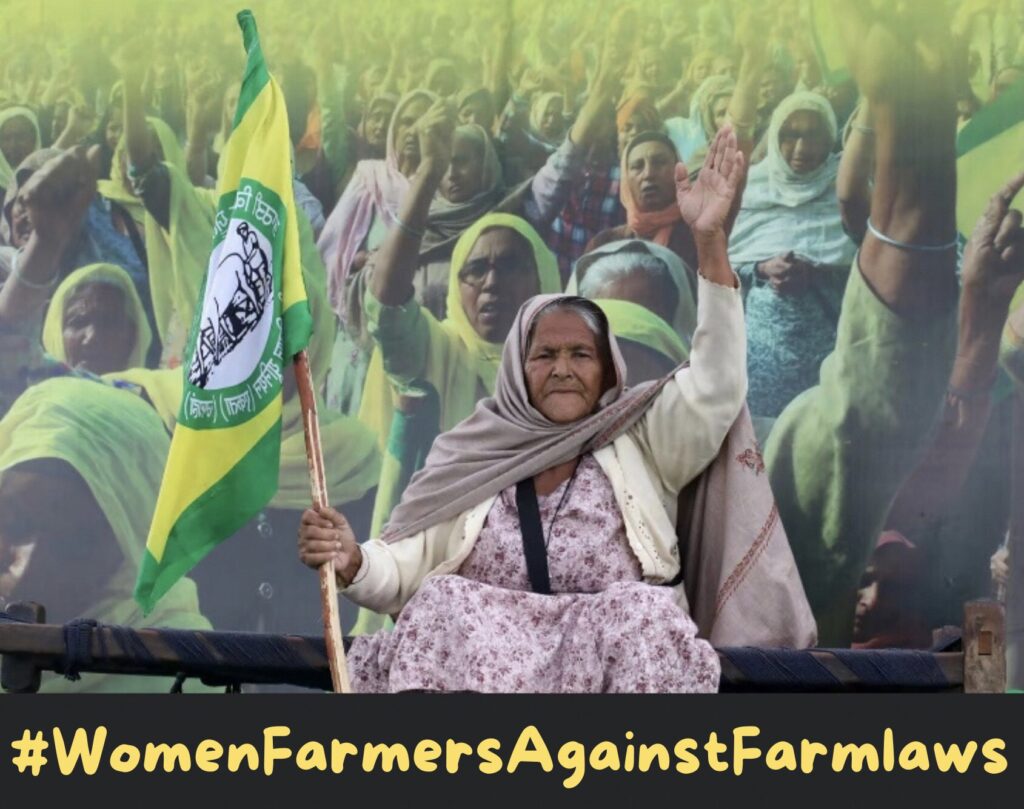
PM Narendra Modi through his address to the nation announced the withdrawal of 3 new farm laws in the upcoming winter session of the Parliament on Friday. This assumes the victory of the farmers’ movement and their year long struggle against the union government. Although a key demand has been conceded, the issue of legislation on MSP and other demands remain unresolved. Women farmers played a crucial role in the year-long protest. They brought new life to the protest and kept alive the resistance of the farmers. Women driving tractors in the protest rally was a representation of their strong presence in the movement. Thousands of women present in the Kisan Mahapanchayats organized at various places such as Jagron in Ludhiana, Muzzafarnagar, Panipat, etc showed their involvement and participation. But the question of recognition of women farmers of India and their issues seems to be on the back-foot as repealing of the three regressive laws makes headlines. The gendered perception of agriculture has a large impact on the visibility of labour by females. According to the non-profit Oxfam, women operated landholding is 13.87% (Agricultural Census 2015-16) whereas they end up doing around 80% of farm work in India – sowing, winnowing, harvesting, and other labour-intensive processes and non-mechanized farm occupations are undertaken by women. They are often the lead farmer in that household yet are not recognized as the ‘farmers’. The women coming from the landed families often end up categorizing themselves as the ‘housewife’ in various kinds of surveys and censuses. Annual Report of Periodic Labour Force Survey 2017-2018 reports that 73.2 percent of the females are engaged in the agriculture sector whereas males account for only 55 percent. As per the Census of 2011, 62.1% of all female workers are involved in agriculture at the national level. As per the Census, anyone who operates a piece of agricultural land is a ‘cultivator’. Operational land is the land used by anyone for agricultural production – irrespective of whether the person using it owns it or not. Land is a State subject and state governments consider only people with a land title as ‘farmers’. So, even though 3.6 crore women have been labelled ‘cultivators’, this does not mean they are considered farmers by the government. In spite of the digitization of the land records, the sex-segregated data regarding ownership of land is not available. The systematic distancing of women from ownership rights is seen persistently through the religious norms, the patriarchal nature of the society, and the caste system. The relation of land ownership is directly proportional to the engagement of women farmers in the formal sources of credit. The severity of the situation gets deepened when women have to survive in the suicide affected household. The transfer of property usually takes place in the names of the in-laws of the household and when widowed women farmers have to avail credit, the sources are mostly informal (saavkar, relatives, neighbors). Formal sources, such as banks, do not lend them money due to previous debts taken by the husband and thus, there is no channel for re-issuance of credit for the women. According to NCRB data, women farmers’ suicides is the only category in the country where many states show zero incidents every year! Because women are not recognized as farmers. Currently, there are no statistics defining the suicides of women farmers as they are not recognized as farmers but as cultivators by the State. The reasons behind the suicides must be addressed rather than pushing the count of the suicides under the carpet by modifying the criteria for identification of farmers’ suicides.  According to the senior rural reporter P Sainath, tens of thousands of women are excluded from the farmer suicides data in the country just because they are women. Out of eight exclusions from the NCRB data; women farmers, Dalit farmers, and Adivasi farmers are the three largest exclusions. In the context of the farmers’ movement, while speaking to the Peoples’ Archive of Rural India, a woman farmer Sarbjeet Kaur said, ‘People in power think of us as weak, but we are the strength of this movement. We women look after our farms. How can anyone consider us weak?’ she asks. Indeed, they have been the reason behind sustaining the movement and now they must ask for The Women Farmers Entitlements Bill like the one introduced in Rajya Sabha in 2012 by M. S. Swaminathan. Prof. Swaminathan, in the Bill’s ‘Statement of Objects and Reasons’, said that with the gradual decline in the size of farm holdings, many rural men from poor families were migrating to cities and towns looking for work. This had led to “an increasing feminization of agriculture,” and women farmers experienced several handicaps related to land titles, access to credit, inputs, insurance, technology and the market. The Bill sought to provide for the gender-specific needs of women farmers, protect their entitlements, and empower them with rights over agricultural land and water resources, and also access to credit, among other things. It is time for the protesting farmers’ organizations to demand The Women Farmers’ Entitlement Bill along with legislation on better remunerative prices. The author has completed Masters Degree in Development Studies from Ambedkar University Delhi. Views are Personal.