India’s parliament on Friday disqualified opposition Congress party leader Rahul Gandhi as a lawmaker after a lower court found him guilty of defamation and sentenced him to two years in prison, according to a parliament notice.
“Rahul Gandhi, Member of Lok Sabha representing the Wayanad Parliamentary Constituency of Kerala, stands disqualified from the membership of Lok Sabha from the date of his conviction i.e. 23 March 2023…,” reads the LS Secretariat in a notification issued today.
Responding to the notification, senior Congress leader Manish Tewari called the decision erroneous. “Lok Sabha secretariat cannot disqualify an MP. The President has to do it in consultation with the Election Commission,” he told NDTV.
Congress units in several states this morning launched simultaneous protests, accusing the Centre of political vendetta. Karnataka police detained Congress state president DK Shivakumar and other party leaders and workers who were protesting against the Surat court verdict against Mr Gandhi.
The Supreme Court on Friday held that holding membership of an association declared unlawful by the Central government is sufficient to constitute an offence under the Unlawful Activities Prevention Act (UAPA) as reported by Bar &bench.
In doing so, Supreme Court overruled its 2011 judgments in Arup Bhuyan vs State of Assam, Indra Das vs State of Assam and State of Kerala vs Raneef which held that mere membership of a banned association is not sufficient to constitute an offence under the Unlawful Activities (Prevention) Act 1967 or the Terrorism and Disruptive Activities (Prevention) Act, unless it is accompanied with some overt violent.
A bench comprising Justices MR Shah, CT Ravikumar and Sanjay Karol also upheld Section 10(a)(i) of the UAPA which makes membership of an association, which has been declared to be unlawful, to be an offence.
UAPA 2011 Judgements
The 2011 judgment in Arup Bhuyan was delivered by a 2-judge bench comprising Justices Markandeya Katju and Gyan Sudha Mishra while deciding a bail application under TADA filed by a person accused of being a member of ULFA. “Mere membership of a banned organisation will not make a person a criminal unless he resorts to violence or incites people to violence or creates public disorder by violence or incitement to violence”, the bench had held.
Earlier, in State of Kerala vs Raneef(2011), while deciding a bail application under the UAPA, the same bench had taken the same view. Same view was taken in Indra Das too by the same bench.
The top court had held that the TADA court had relied on an alleged confession statement, and mere membership of a banned organisation under the Act could not be ground for conviction.
Pertinently, the 2011 Bench, relying on its decision in State of Kerala v. Raneef as well as the American Bill of Rights and some US Supreme Court rulings, had observed in the context of the TADA Act that,
In our opinion, Section 3(5) cannot be read literally otherwise it will violate Articles 19 and 21 of the Constitution…Hence, mere membership of a banned organisation will not make a person a criminal unless he resorts to violence or incites people to violence or creates public disorder by violence or incitement to violence.”
In 2014, the Supreme Court had observed that the larger issue in three cases should be heard by a larger bench. This led to the present reference.
The Central government argued that the Court could not read down the provisions of an anti-terror legislation without hearing its arguments, and by relying on possible abuse of the law.
Solicitor General Tushar Mehta, appearing for the Central government, had argued that official membership of banned organisations was anyways difficult to prove. The provisos read down were a deterrent and preventive measure, he added.
The SG had stressed that the current scheme of things could allow terrorist activity if allegedly not done under the banner of banned/terrorist organisations.
Senior Advocate Sanjay Parikh, appearing for an intervenor-NGO, had argued that in matters involving susbtantive rights like personal liberty, provisos could be read down even when not under direct challenge.
He had submitted that civil liberties are a part of both Indian and American Constitutions, and therefore, it would be wrong to nullify the orders under challenge merely for relying on US court judgments.
Avtar Singh Sandhu, popularly known as Pash was born in the village of Talwandi Salem in Jalandhar, Punjab, on September 9, 1950. Pash’s poetry always had political overtones akin to the verses of poets such as Faiz Ahmad Faiz, Bertolt Brecht, Yiannis Ritsos, and Mahmoud Darwish. Pash was against religious fanaticism and strongly criticised the authoritarian nature of the state. He was killed by Khalistani militants on March 23, 1988 in New Delhi. Decades after his death Pash’s ideas still reverberate to the contemporary socio-political milieu. With the increasing communal tensions in the country, it is timely to remember the revolutionary spirit of Pash. Satyam Tiwari is a theatre actor, writer, a passionate orator of poetry and editor currently working with Newsclick.in. recites two of Pash’s poetry.
Ghaas (Grass)
Image courtesy: The Metropolitan Museum of Art
I am like grass
you can chop me mow me down
but I shall sprout again
grow and bounce back
you can obliterate my signposts
you can bomb the Universities
reduce the hostels to rubble
you may scorch the slums
but you cannot erase my identity
because I am like grass
I will sprout again
and my mantle shall cover everything
you may bomb Banga
you can destroy Sangrur
and reduce the whole district of Ludhiana to ashes
The Jammu and Kashmir administration is preparing to host one of the G20 event meetings as part of India’s presidency of the Group of Twenty (G20) in 2023.
The G20 is a self-appointed group that sets financial and economic guidelines for the world. The G20 Summit is a series of formal and informal meetings between world leaders. The summit is notorious as it excludes the voices of the people that it affects. The meetings lack transparency. Transnational corporations set the recommendations and decisions, with free trade regimes and economic growth being the primary drivers rather than social and economic justice and human rights. This economic “growth” only fills the pockets of the rich, and these free trade and investment agreements have destructive effects on people’s lives and the environment.
Whenever it is held, the summit attracts protests from groups calling for change on topics such as environmental policies, trade deals, and labour laws. These protests center around corporate greed as the G20’s decisions are made behind closed doors and lack transparency. The G20 was founded in 1999 in the aftermath of the SouthEast Asian economic crisis. Summits had been held annually since 2008, with the first one being held in the United States. The motive of the summit was to create a revived Bretton Woodssystem to reinvent neoliberalism in the twenty-first century.
In an almost ironic turn, the Indian government has been able to leverage a conflict region to host a controversial event. G20 Summit is an anti-people event. It is always marked by resistance. Protests are usually met with policing by the local governments. By using a conflict zone as the venue, the Indian government has been able to prevent any protest before it began. G20 Summits have been marred by violent street protests by international activists in the past. The expected controversy now is being used by authoritarian governments to repress the local population.
How Right-wing Governments take advantage of Crisis: Case of Türkiye
G20 summits are so unpopular it is an embarrassment
Since the second meeting in London in 2009, the G20 summits have been the focus of mass protests. Previous G20 Summits have seen high-profile demonstrations, with allegations of police brutality and civil rights violations.
Thousands of demonstrators marched through London on 28th march 2009 to demand action on poverty, jobs and climate change at the start of a week of protests aimed at the G20 summit in the capital.Toby Melville / Reuters
The G20 summit held in Bali in 2022 was a major concern for Indonesia, as they had the responsibility of hosting a secure and smooth-running event. Indonesia mounted an unprecedented security operation with over 18,000 personnel from the Indonesian Armed Forces deployed to safeguard the event.
In 2021, thousands of protesters marched at the G20 summit in Italy. Protesters included workers who had lost their jobs from globalization, climate activists, communists, and trade unionists.
In 2020, the G20 summit was held in Saudi Arabia. As the Saudi Arabia government already had a repressive structure, the event was relatively uneventful.
In 2019, at the G20 summit in Osaka, Japan, an estimated 30,000 people came to the city from outside.
More than 32,000 police were to keep protesters from getting too close to the world leaders attending.
G20 protests in Hamburg 2017
In 2018, thousands of demonstrators marched in Buenos Aires to protest the G20’s economic policies as the world’s leading industrialized nations opened their annual summit in the Argentine capital. Police, coast guard, and border patrols cordoned off a 12-square-kilometre area around the riverside Costa Salguero convention centre where the summit was held. Buenos Aires was largely locked down for the march, which was organized by a coalition of labour unions and rights groups.
G20 protests in Hamburg 2017, where protesters clashed with police
In 2017 in Hamburg, Germany, around 100,000 protesters came for the G20, and almost all of them were peaceful. These stories go back years, as the G20 summit is a tool of anti-people neoliberalism.
Protests have happened at the G20 summit almost every year since the second summit in London in 2009.
Why Kashmir? Using the infamy of G20 to promote repression
The G20 Summit is known for inviting protests from those who oppose neoliberal policies. These policies are believed to marginalize communities and prioritize order and beautification over the needs of marginalized groups. The Indian government is taking advantage of the summit to rearrange parts of the map in Srinagar. This move is part of a larger effort by the government to deploy the army in more urban areas. Kashmir, which is already highly militarized, could potentially see draconian measures implemented by the Indian government without consequence.
Given that Kashmir is recognized internationally as a conflict zone, the Indian government is prepared to shift the narrative in its favour, regardless of whether protests or violence occur during the summit. With many countries participating in the event, the Indian government is expected to be in control.
Domestically, holding an international conference in Kashmir is seen as a way for the Indian government to imply that the international community supports its position on Kashmir. However, this move has been met with objections from Pakistan and China, who have both claimed the areas where the summit is being held. These objections highlight the complex geopolitical tensions at play in the region.
The G20 Summit in Srinagar presents an opportunity for the Indian government to reinforce its position on Kashmir and to take advantage of the international attention on the summit to deploy further militarization and potentially implement harsh measures in the region.
How the G20 is being sold in India
Narendra Modi has touted the summit as a matter of national pride, it is little more than a showcase for neoliberalism and authoritarianism. The entire event is a giant Public Relations exercise by the government to show the Indian people that this government has strong international standing. Modi hoped that the summit could have been held in 2022 to coincide with India’s 75th Independence celebrations. Modi has even made the rotating post of G20 president a matter of nationalistic pride, suggesting that India’s hosting of the event is a sign of its growing global influence. The choice of location is a deliberate attempt by the Indian government to prevent protests against the summit, which would symbolize the disenfranchisement of many people around the world.
The G20 summit will have significant implications for people across the world, and decisions made behind closed doors will affect millions of lives. This anti-democratic summit has the added effect of justifying the suppression of dissenting voices worldwide. This is the first major international summit in Kashmir since the abrogation of Article 370. India’s decision to place the summit in Kashmir shows an eager willingness to crack down on any protests or dissent even before it happens. The promotion of the event by the government shows a wilful disdain for the concerns of the people.
Author is a mathematician and activist based in Bangalore. Views are personal.
A Surat Court in Gujarat, on Thursday convicted Congress leader Rahul Gandhi, in a 2019 defamation case for his remark “all thieves have Modi surname”. He was sentenced to two years in jail for the offence, PTI reported.
Gandhi was granted bail in the matter by the trial court and the sentence would remain suspended for the time being to enable him to file appeal.
Gandhi had, in a political campaign in Karol, linked Prime Minister Narendra Modi with fugitives like Nirav Modi and Lalit Modi.
He had said, “Nirav Modi, Lalit Modi, Narendra Modi. How come all the thieves have ‘Modi’ as a common surname?”
The case filed by former Gujarat minister and BJP MLA from Surat West Purnesh Modi pertains to the alleged remarks Gandhi made on April 13, 2019, at a Lok Sabha election rally in Kolar, Karnataka. Rahul had said, “Why all the thieves have Modi in their names whether be it Nirav Modi, Lalit Modi, and Narendra Modi?”
According to the petitioner- Gandhi defamed all the persons with ‘Modi’ surname.He, therefore, filed a defamation suit against the Congress leader.
The Gujarat High Court recently vacated the stay on the trial in the case pursuant to which the trial resumed.
Moments later, Gandhi was granted bail by the court and the order was stayed for a period of 30 days so the Congress leader can appeal in a higher court.
“We are not satisfied with the verdict passed by the court as some of our arguments were not taken into consideration. The issues we raised were, there is no community by the name of Modi and even the complainant is not a Modi as his earlier surname was Bhootwala and later changed to Modi. We will take up our issues to higher courts in coming days,” defence lawyer Kirit Pawala said.
Much has been spoken about the revolutionary life of Bhagat Singh. Be it in history books or movies, his revolutionary actions which had trembled the British imperialists have been sufficiently presented and his martyrdom is rightly venerated. But what is seldom spoken about is his ideas which are clearly reflected in his writings, and which guided his actions that transformed him from a romantic revolutionary into a socialist.
In the current context when the attack on the toiling masses is intensifying with every passing day, one needs to study his writings more closely in the quest to achieve complete revolution in this country.
In recent times, when the scientific temper of educational institutions is under threat with the promotion of pseudo-sciences and non-sciences in the name of ancient Indian sciences and anti-people outlook, his article “Why I am an Atheist” has to be studied with the greatest attention.
He said: “It is necessary for every person who stands for progress to criticize every tenet of old beliefs. Item by item he has to challenge the efficacy of old faith.”, and only after rigorous reasoning and analysis one should stand in favor of any philosophy or faith.
His thoughts stand staunchly against any kind of blind belief and he states that such practice deprives a man of his understanding power and makes him stand against progress of the society.
Bhagat Singh said, “The peasant who grows corn for all, starves with his family, the weaver who supplies the world market with textile fabrics, has not enough to cover his own and his children’s bodies, masons, smiths and carpenters who raise magnificent palaces, live like pariahs in the slums.”
The above mentioned lines seem like a very recent picture of our society, but to the surprise they were loudly said by Bhagat Singh around 90 years back in court to the magistrate. These lines by Bhagat Singh clearly speak of the naked truth about our society which remains the same even after a century.
Bhagat Singh/ Image courtesy: Leftword
Bhagat Singh writes about the importance of participating in political activities by the youth and students of this country in one of his important writings ‘Students and Politics’. In the article he writes,
‘We understand that the main task of the students is to study, they should pay full attention towards it; but is it not a part of the education to gather knowledge regarding the situation that our country is in and develop the ability to think about measures to improve it? If not, we consider this education, which is only obtained to gain some clerical skills, of no use. What is the use of this kind of education?’
When India is going through a Brahminical Hindutva fascist regime of RSS-BJP with the increase in an onslaught on Dalits, Muslims, Adivasis and the working people, Bhagat Singh’s vision becomes more and more relevant. His articles named “Communal Riots and its Solutions” and “Problems of Untouchability” clearly condemns the division of working people in the name of religion and caste and exposes it to be a policy of the ruling establishment to keep the people away from revolting against their real problems. He wrote:
“The root cause of communal violence is probably economic… To prevent people from fighting each other, ‘class consciousness’ is the need of the day. The poor laborers and the farmers must be clearly taught that their real enemies are the capitalists.”
He warned the Dalits to stay away from the imperialist bureaucracy as he identified the same to be the cause of their slavery and poverty. He emphasized the need for organizing Dalits and to revolt against the present system and bring a revolution to come out of the menace of caste.
As a Marxist, Bhagat Singh defined revolution as “the complete overthrow of the existing social order and its replacement with the socialist order” as written in the article “To Young Political Workers”. Against the Gandhian way of compromise and reforms under the British structure, he showed the alternate path to the youth of organizing the working class and the peasantry and to work for a destruction of the present system and rebuilding the economic and political structure of the nation.
He analyzed the prevailing conditions, and advised the youth to adopt Marxism as the ideology and form a Communist Party. He stressed that the involvement of huge masses in revolution is elementary, but it would not follow the Gandhian path of non-violence. At that young age, he was quite mature to use all forms of struggles (legal and illegal) in order to complete the revolution. He said,
“The sanctity of law can be maintained only so long as it is the expression of the will of the people.”
While acting as the vanguard of the national liberation movement of India, he envisaged that revolutionaries had to be part of the international communist movement.
Bhagat Singh, Sukhdev and Rajguru remembered at Singhu border during farmers protests 2021.
Had Bhagat Singh been alive in today’s day, he would have surely been dubbed as an Urban Naxal and his organization, Hindustan Republican Socialist Organization Association, would have been banned in the country. If today anybody dares to think, say or act in the same way as Shaheed Bhagat Singh did, he would probably be charged with UAPA and put behind bars. It is precisely in this context that we should remember him and take inspiration from his life.
Just a glimpse of his writings exposes the lies that the right-wing forces uses in their attempts to appropriate him by organizing Tiranga marches and paying tributes. He had done detailed studies of the history of Bolshevik revolution and writings by various Marxists. He was clear that it did not matter whether Purushottam Das Thakur (a wealthy industrialist of his times) ruled India or the British if the exploitation of man by man has not ended. He said:
“Let us declare that the state of war does exist and shall exist so long as the Indian toiling masses and the natural resources are being exploited by a handful of parasites. They may be purely British Capitalist or mixed British and Indian or even purely Indian.”
This understanding perfectly sums-up the present struggles of labourers, farmers and working people nationwide against the Brahminical Hindutva fascist forces.
Nagarhole: Last Wednesday, several indigenous communities across the country came together in Nagarhole and launched a week-long padayatra across the villages inside Nagarhole Tiger Reserve to protect their rights. The padyatra began on 15 March 2023 from Kumbarakatte village and reached the forest department office, Nagarhole Tiger reserve yesterday. The sit-in in front of the office will continue indefinitely. Some community leaders will also hold a two-day intercommunity dialogue and press conference at the Indian Social Institute, Bangalore from 22-23 March 2023. The padyatra is being organised under the name of Community Network Against Protected Areas (CNAPA), a newly formed network of people’s movements and groups resisting the capitalist and neo-colonial conservation model adopted by the government, and foregrounding the idea of radical community ownership where forests, animals, and peoples equal. The network includes Adivasis who have been displaced or who face eviction due to conservation projects in Uttar Pradesh, Chhattisgarh, Arunachal Pradesh, Andhra Pradesh, Odisha, and Karnataka. Two important organisations leading the fight are Nagarhole Adivasi Jamapale Hakkusthapana Samiti and Budakata Krishikare Sangathan. Even after the padyatra is over, they will continue to be on indefinite protest until their rights are recognised. In the past, the Nagarhole Tiger Reserve has seen several protests by Adivasi communities such as the Jenu Kuruba community, who in the face of forceful evictions and violence, demanded that the Forest Rights Act be implemented and that their ancestral rights to the forest be respected.
The extractive and neo-colonial nature of India’s conservation practices:
India’s conservation policy and practice are rooted in a “fortress conservation” model which involves creating Protected Areas (PAs) or exclusive human-free “wilderness” zones such as wildlife sanctuaries, national parks, and reserves. This model has a colonial and romanticised view of nature and propagates a false dichotomy between people and animals. The declaration of Adivasi land as a PA is a violation of constitutional rights vested in Gram Sabhas and forest rights committees (FRCs). It is also a violation of the Panchayat (Extension to Scheduled Areas) Act or PESA, 1996 applicable in Schedule Areas. When a region gets declared as a PA, thousands of Adivasi communities are evicted. The National Tiger Conservation Authority (NTCA) is supposed to offer a ‘relocation package’ consisting of cash compensation and housing, healthcare, and education infrastructure to displaced families. However, many families are evicted without receiving packages. Out of the 56,257 families that have been evicted since the inception of the tiger projects in 1972, 44,000 families have not received relocation packages. For those that have, the living conditions are appalling and many are forced into daily wage work at construction sites. Communities who live adjacent to PAs and need to access those forests for livelihood are also stopped from going in. Instead, PAs have become extremely militarised zones, resulting in local people being shot, implicated in false cases, beaten up and killed by park rangers like the Special Tiger Protection Force in Kaziranga(Assam), Nagarhole (Karnataka), Similipal (Odisha) and Sundarbans over the years. The Kaziranga National Park even has a “shoot-at-sight” policy.
On the other hand, massive swathes of forested land in Tiger-bearing regions have been diverted toward mining operations. In fact, NTCA’s relocation programmes are financed from money that mining companies deposit with the government for conducting mining operations in forested areas. Tourism projects and other market-based programs such as eco-resorts and safari trails are also carried out within PAs without any care for the ecological impact. To appeal to tourists, eco-engineering practices are adopted and exotic species are imported from abroad, affecting local ecosystems. These projects are also responsible for the erosion of local people’s conservation ethos, knowledge systems, and customary resource management practices.Any resistance by Adivasis and other forest-dwelling communities results in criminalisation and harassment by the forest department and the wildlife and forest conservation lobby (NGOs and bureaucracy). Many Adivasi/Tribal leaders have been slapped with false cases, coerced, tortured, and murdered. Adivasi/Tribal people are also made scapegoats in wildlife poaching cases to protect organised syndicates of poachers.The Post-2020 Global Biodiversity Framework proposes to upscale PAs by 30% by 2030, which can only be seen as another move to erode Adivasi/Tribal rights in the name of biodiversity conservation.Despite this, they continue to assert their rights and fight evictions. The two-day intercommunity dialogue at the Indian Social Institute, Bangalore will continue this conversation on the global capitalist and neo-colonial conservation model. The CNAPA challenges the cartel of forest departments, wildlife NGOs, conservationists, and corporations by exposing their collaborative exploitation of various natural resources and black-marketing of wildlife parts. undermining communities’ knowledge and agency in the practice of conservation embedded in co-existence. The meeting is like a coming together of communities and people to articulate their voices against the destructive impacts of conservation and to chart working strategies for grounding the idea of radical community ownership of forests and commons, including wildlife.
Delhi, 20th March 2023: Delhi’s historic Ramlila Maidan today witnessed a hugely successful Kisan Mahapanchayat on the call of Samyukt Kisan Morcha (SKM) , which was attended by tens of thousands of farmers from all over the country.
More than 50 speakers at the Mahapanchayat stressed that SKM shall continue its protests against corporate control over agriculture and the anti-farmer policies of the Union Govt.
Speakers at the Mahapanchayat condemned the debt-Ridden Modi govt for selling of Farm Sector, Agriculture Land, Forests, and Natural Resources to Corporate Profiteers.
It was announced that SKM will immediately hold state conventions and All-India yatras to mobilise farmers. SKM will also mobilize people on farmers’ demands for the commencement of spate of Countrywide Massive Struggles to End Corporate Exploitation.
SKM submits Memorandum to Union Govt to Immediately Implement MSP Guarantee Law
A 15-member Delegation of SKM met the Union Minister for Agriculture & Farmers Welfare at Krishi Bhawan and submitted 2 memoranda to him. Discussions were held and the Govt agreed to engage in dialogue with SKM on an ongoing basis to resolve the pending and burning issues of farmers. SKM informed the Minister that if the demands are not met in a time-bound manner, SKM shall announce further protests and agitations.
On 6 February 2023, a massive earthquake hit southern Türkiye and northern Syria. Over 49,000 people have died and the earthquake flattened cities. Syria has already been struggling with a decade of Civil War and this disaster will add to the refugee crisis. Over half of a crore people have been left homeless and have been forced to live in rain and temperatures that often dip below freezing.
What could have been done?
Türkiye has imposed a three-month state of emergency in many provinces. However, relief systems have been strained in both Syria and Türkiye. The Turkish government’s response has been inadequate, though defenders of the Turkish government have insisted that the Earthquake was a force of nature that could not be prevented. Though the earthquake could not have been prevented, given the vulnerability of the region, it seems odd that a more robust emergency system could not have been properly developed.
This is stranger given the history. In Türkiye, Erdogan had come to power in 2002, following the similarly devastating earthquake that hit 1999. In that earthquake, 17,000 people died, and Erdogan promised to make hard choices to prevent a similar disaster from happening again. However, in the aftermath of the recent earthquake, there have been valid criticisms of Erdogan’s government’s response, particularly around centralization and poor response. The earthquake highlighted the weaknesses of the government’s neo-liberal policies and its lack of local control.
How Right-wing governments redirect blame
Rightwing governments have tried to shift the burden of social security, emergency response and social service from the public sector to the private sector. Religious organizations and other identity-based organizations are often propped up, and given an advantage in terms of funding and state support. These organizations are majoritarian and can spread the image that the government should stay out of these activities. In times of crisis, they can spread pro-government messages without making the government liable when things go wrong.
At the same time, these governments try to shift the focus from the government’s role to inflammatory issues that can redirect public attention. In Türkiye, anti-Kurdish sentiments have been flagged, as the Turkish government has been increasing its attacks on the Kurdish population, both in Türkiye and in Northern Syria.
The Kurdish people in Syria have already been fighting a multi-side war. In 2012, guided by feminist, anarchist and socialist principles, the people of Rojava Syria declared their region as an autonomous region. They have tried to construct a society which is not accountable to the state or patriarchy. They have built radical self-defence units to protect the freedoms of the people from the area. They have been attacked by the Syrian government at first. During the course of the Syrian Civil War, they have come against fundamentalist groups, like ISIL.
Since 2016, the Turkish government had escalated the attacks on the Kurdish regions of Syria, claiming that they are a terrorist group. The Turkish state’s attacks against the revolution in Kurdistan are expected to continue and intensify in the coming weeks and months. The state’s suppression of democratic forces in order to maintain power and conceal the crisis of the Turkish state has a long history, with the use of poison gas being a sad tradition in Kurdistan. The AKP-MHP regime is planning its next steps to crush self-governance in Kurdistan, relying on the backing of international powers to supply war equipment that is used to commit brutal crimes on a daily basis.
The war in Syria also played a significant role in Turkish politics. The government switched its focus to terrorism and continued its attacks on Kurds. International players, such as the USA, Russia, and Syria, were also involved in the conflict.
Recent attacks, such as ongoing poison gas attacks in Southern Kurdistan, targeted drone strikes on the autonomous area of Northern and Eastern Syria, the upcoming elections in Türkiye, and the catastrophic earthquake that recently occurred in Türkiye, are all part of this continuation of the genocidal policy against Kurdish society. The rulers continue to resort to the cruellest means in their fight against the aspirations for freedom of the people in the Middle East.
Inadequacy in the Turkish response
The rescue systems in Türkiye were not prepared for an earthquake of this magnitude, and NGOs often took the slack when they were ineffective. These NGOs can be used by the right wing to promote their propaganda. In 2009, the government established the Disaster and Emergency Management Authority (AFAD) to coordinate disaster relief. The government also promoted faith-based organizations, particularly during the aftermath of the earthquake, which was seen as a way to gain more support for the ruling AKP party.
However, the government’s response to the earthquake was slow, and there were criticisms that it was being used for propaganda purposes. The earthquake occurred during a period of political uncertainty, with the 2023 elections looming. Erdogan was losing ground to the main opposition party, the Republican People’s Party (CHP). In response, Erdogan declared a State of Emergency, which enabled him to make use of crisis points like earthquakes and pandemics to maintain his grip on power.
The rising racism in Europe was also a significant issue in Turkish politics. The Syrian Civil War had been used by the right wing to promote fearmongering against Turkish refugees. The Turkish government used the hurt response to the earthquake to gain more support for their policies.
The right-wing playbook is similar across many countries, with rising racism being a common tactic. The comparison with India is significant, particularly around how the Gujarat earthquake was mobilized and then used for propaganda purposes. The government declared a State of Emergency, similar to Erdogan’s, to maintain its grip on power.
The manipulation of these events might seem distant, but the patterns can be seen in governments across the world. Even in India, we have seen how such a pattern was deployed during times of crisis, such as the 2001 Gujarat earthquake, where Hindu organizations took advantage of foreign funding to organize the local populations against minorities, or even during the pandemic, where the failure of government response was taken advantage of, by Hindutva elements, to spread messages to affected populations that worked in favour of the government.
Author is a mathematician and an activist based in Bangalore, India.
Last Friday, eight-night shelters for the homeless and a few jhuggis were demolished in Yamuna Pushta, near Nigambodh Ghat and Qudsia Ghat. These shelters, built by the Delhi Urban Shelter Improvement Board (DUSIB) and managed by NGOs, have allegedly been around for eight-ten years. They were set up with the aim of providing basic medical care and support to homeless people with injuries or illnesses, and are used by many who perform informal or contract work in nearby areas.
The demolitions were carried out by the DUSIB themselves and nearly 200 police personnel were involved in the demolition process. Many occupants claim that they were not given any prior notice or even a chance to take their belongings. Some people were supposedly taken away to another shelter but many are still on the banks of the river and have been rendered completely homeless.
On 9 March 2023, activists from the Centre for Holistic Development filed a petition in the Delhi High Court on behalf of the shelters on Yamuna against the demolition drive. The court scheduled a second hearing for 14 March, but the shelters were bulldozed that very night. Despite this, on the 14 March hearing, the Delhi High Court dismissed the petition and merely asked the government to provide prior notice while carrying out future demolitions and relocations.
Many activist groups claim that this particular round of Yamuna Pushta demolitions has to do with the upcoming G20 Summit in September 2023, which would bring a large number of foreign delegates to New Delhi. While officials deny any connection to the G20, this conclusion is more likely than not. While high-profile international events like sports competitions, pageants, music festivals, and diplomatic events bring excitement and bustle to the country’s middle and upper classes, these events are an existential threat to the city’s poorest. In welcoming important external guests and opening the country up to an international audience, governments across the Third World resort to razing slums, criminalising poverty, and driving the residents out of the city. Over 2,50,000 were left homeless in preparation for the Commonwealth Games in New Delhi. A report by the Housing and Land Rights Network lists at least 10 separate instances of demolitions in the name of the Commonwealth Games between 2004 to 2010.
Officials, however, stated that the encroachers were being removed because the Yamuna floodplains are an eco-sensitive zone. L-G VK Saxena acknowledged that the encroachers are poor and in need of support, but he also referenced the NGT and Supreme Court orders to remove encroachments on the Yamuna floodplains, and argued that the support cannot come at the cost of the environment.
The Yamuna Pushta demolitions are not ahistorical, but representative of a complex history relating to Delhi’s urbanization process. This particular incident has all the same elements as previous Pushta demolitions over the past two decades: false rhetoric of opposition between the environment and the poor, evictions in the name of high-profile international events, judicial complicity, and the use of aesthetics of a ‘world-class’ city rather than evidence-based documentation to determine who deserves ‘the right to the city’. Asher Ghertner, in Ruled By Aesthetics (2015), argues that the world-class city is an idealized vision of a modern, privatized, and slum-free city that has been assembled from transnationally circulating images of other so-called global cities. Not just an idea in people’s heads, it is a material practice that shapes the character of urban development. Creating a world-class future requires attracting foreign capital, encouraging rising valuations of existing capital stock, and producing a citizenry desirous of cities in which they can enjoy the benefits of world-class consumption and lifestyle. While external events like the G20 represent both an anxiety around and an aspiration to appear like a world-class city, the same aesthetic sensibility drives everyday judicial decision-making that determines urban citizenship.
A group of LGBTQI activists has written an open letter on the same-sex marriage case being heard in the Supreme Court, which was recently referred to a constitution bench. The activists have urged the court to recognise marriages between same-sex couples.
“The right to equality, the right to dignity as well as the right to intimate expression are deeply affected by the non-recognition by the right of LGBTQI persons to marry the person of their choice,” the letter states.
The letter goes on to point out several flaws in the Union of India’s affidavit in the case, which has opposed same-sex marriage. “The Union of India ignores its constitutional commitment to securing the right to equality towards its LGBTQI citizens and seems adamant on perpetuating discriminatory marriage laws,” it says.
The letter was released at a press conference in Bengaluru on Tuesday organised by Namma Pride and the Coalition of Sex Workers and Sexual Minority rights (CSMR). Speakers and those endorsing the letter included Akkai Padmashali from Ondede, Uma Umesh from Jeeva, Ayaan Sayed from Namma Pride, transgender rights activists Christy Raj, Riyana and Rakskhita, and president of PUCL Karnataka Arvind Narrain.
Read the full text of the letter below.
We welcome the posting of the matter regarding same-sex marriage in Supriyo Chakraborty v Union of India before a five-judge bench on 13 March 2023. The decriminalization of LGBTQI lives by the Supreme Court decision in Navtej Singh Johar in 2018 has unleashed the legitimate hopes and aspirations of the LGBTQI community to be seen as equal members of society.
It is this deep desire for equality that has driven over 30 people from across the country to file petitions in the Supreme Court asking for the law to recognize their relationships as equal to any heterosexual marital relationship. The petitioners include Supriyo Chakraborthy and Abhay Dange, a gay couple; Kavita Arora and Ankita Khanna, a lesbian couple as well as Akkai Padmashali, Uma Umesh and Vyjayanti Vasanta Mogli who are transgender rights activists who believe that all persons in the transgender community must have the right to marry the person of their choice.
We believe that this demand for recognizing the right of all persons to marry under the legal framework is a just demand, which finds place under the Indian Constitution. The right to equality, the right to dignity as well as the right to intimate expression are deeply affected by the non-recognition by the right of LGBTQI persons to marry the person of their choice.
This demand for the right to marry for all persons is deeply rooted in the principles of the Indian Constitution as interpreted by the Supreme Court.
The Supreme Court in Puttaswamy v Union of India held that:
The sanctity of marriage, the liberty of procreation, the choice of family life, and the dignity of being are matters which concern every individual irrespective of social strata or economic well-being. The pursuit of happiness is founded upon autonomy and dignity. Both are essential attributes of privacy that makes no distinction between the birth marks of individuals.
The Supreme Court in Navtej Johar v Union of India held that:
The constitutional principles which have led to decriminalization must continuously engage in a rights discourse to ensure that same-sex relationships find true fulfillment in every facet of life. The law cannot discriminate against same-sex relationships. It must also take positive steps to achieve equal protection.
The Supreme Court in NALSA v Union of India has pointed out ‘Indian Law, on the whole, only recognizes the paradigm of binary genders of male and female, based on a person’s sex assigned by birth, which permits gender system, including the law relating to marriage, adoption, inheritance, succession and taxation and welfare legislations.’
The NALSA judgment held that this restrictive understanding of the person is hit by Article 14 as ‘Article 14 does not restrict the word ‘person’ and its application only to males or female. Hijras/transgender persons who are neither male/female fall within the expression ‘person’ and, hence, entitled to legal protection of laws in all spheres of State activity, including employment, healthcare, and education as well as equal civil and citizenship rights, as enjoyed by any other citizen of this country.’
The principles of the Constitution as interested by the Supreme Court have become the very basis of challenging biased and arbitrary laws which limit marriage as a right restricted to a ‘biological man’ with a ‘biological woman’.
Unfortunately, this form of thinking rooted in the transformative constitutional principles of equality and dignity is absent in the affidavit submitted by the Union of India in the marriage case. The Union of India ignores its constitutional commitment to securing the right to equality for its LGBTQI citizens and seems adamant on perpetuating discriminatory marriage laws.
The Union of India justifies this die-hard opposition to marriage equality on the basis that it is the ‘legislature which reflects the collective wisdom of the nation’ which is ‘based upon cultural ethos, social standards, and such other factors defining acceptable human behavior regulates, permits or prohibits human relations.’ This notion that the legislature alone has the right to ‘permit, regulate or prohibit human relationships’ and that too based on ‘collective ethos and social standards’, shows no appreciation of the values of the Constitution.
One needs to make two points here. Firstly, it is far from obvious that the ‘cultural ethos’ of India demands that marriage for all be rejected. A magnificent history of ‘Same-sex love in India’ going back to 1000 BC by Ruth Vanita and Saleem Kidwai documents a rich cultural history of same-sex love in India. Secondly, even if there was a ‘cultural ethos’ opposing same-sex marriage, the Government which is sworn to ‘bear true faith and allegiance to the Constitution of India’, should be cognizant that their affidavit ignores core constitutional principles of dignity, equality, and non-discrimination. It instead seeks to justify the exclusion of same-sex/Transgender couples on the basis of the vague and arbitrary conceptions of ‘cultural ethos’.
The Union of India’s affidavit also seems to misunderstand the contours of the right to privacy recognized by the Navtej judgment. The affidavit holds that the ‘dictum of the judgment’ applies to the ‘personal private domain of individuals’ and cannot include a ‘public right in the nature of recognition of same-sex marriage and thereby legitimizing a particular human conduct.’
In Navtej Johar the Court held that the right to privacy was not just a ‘zonal right’ but a right to make decisions about one’s intimate life. As such the concept of privacy does not only protect sexual conduct in the private sphere but also the expression of love in the public sphere. One form that such expression of the right to love can take in the public sphere is through the institution of marriage. Thereby by denying the right to marry to all persons one is going against the ‘dictum’ of Navtej Johar which protects not only the right to private sexual conduct but also the right to love.
The position of the Union of India that the right to equality as embodied in Article 14 is not violated as ‘same-sex relationships and heterosexual relationships are clearly distinct classes which cannot be treated identically’ is troubling. In effect, the Union is asserting that there are classes of personhood. Heterosexual couples are entitled to more rights than homosexual couples and trans couples. This bare animus towards homosexual couples and trans couples and denial of the basic rights to a relationship recognized by law hits at the constitutional bedrock principle of equality.
The position of the Union of India is that individuals conduct must ‘accord with the moral values of society’. However, it’s our position that moral values should accord with the Constitution. We should be defending constitutional morality and not popular morality. As Babasaheb Ambedkar put it,
Constitutional morality is not a natural sentiment. It has to be cultivated. We must realise that our people have yet to learn it. Democracy in India is only a top dressing on an Indian soil which is essentially undemocratic.
The fact that the Union of India is opposing the right to marry for all persons so vociferously shows that the values of constitutional morality have yet to seep into governance structures and the government instead of implementing the Constitution is giving in to popular biases and prejudices.
However, we have full faith, that the Court will deliver justice by interpreting the Constitution to protect the rights of LGBTQI persons.
Tel Aviv: Mass protests erupted across Israel on 7th January 2023, with demonstrators taking to the streets in Tel Aviv and other cities. The protests were in response to proposed judicial reforms that many see as a step toward authoritarianism in Israel. These reforms would limit the powers of the Israeli Supreme Court, undoing the 1992 Constitutional Reforms of Aharon Barak. The reforms would give the Israeli Legislature more control over the judiciary in terms of appointments and powers, and limit the scope of judicial review.
The proposed reforms have been met with widespread opposition, with over 150 people arrested in the protests so far. The opposition has come from many sectors, ranging from right to left. There are many voices from within the establishment who have opposed the reforms, with members of the administration and armed forces seeing it as an end to the rule of law. Opposition members have called it a blow to Israeli democracy, and from across the political spectrum, there is opposition to the reforms. The protests and the scope of the reforms have also led to financial insecurity.
Palestinian voices have mostly stayed away from the protests, as many see the difference between the so-called draconian reforms and the so-called liberal democracy as negligible.
Kestenbaum doctrine
The reforms are a rollback of the so-called 1992 Constitutional Revolution. The 1992 Constitutional Revolution, led by Supreme Court judge Aharon Barak, developed the Kestenbaum doctrine where human rights principles would be guiding principles in private law. However, this has been criticized as giving too much power to the judge, introducing legal uncertainty. As the judge becomes important, it creates a system where legal cases are judged based on the individual’s understanding and interpretation of the law, creating legal uncertainty. The proposed reforms would seek to limit this power, but critics argue that this would be a step backward for democracy. The reforms came at a time when Israel struggled to maintain a stable government. The reforms were intended to consolidate power across many wings of government
The Israeli government has been unstable since 2018, with less than four years seeing five snap elections. No party has been able to hold a majority, and many conservative parties in Israel have problems with Netanyahu as there are many types of conservatism in Israel.
In 2019, Netanyahu was indicted on fraud and corruption charges, taking a plea deal in 2020. He lost power in 2021, but in December 2022, he was able to form a coalition and return as Prime Minister of Israel. This new coalition promises to expand the role of religion in public life.
Netanyahu still faces a number of corruption charges. The reforms would allow Netanyahu to receive donations for his legal case in fighting off those charges.
Netanyahu’s government said that it was keen on passing these reforms to give his government more stability. The reforms were announced by Justice Minister Yariv Levin, who was appointed by the most recent government. On 4th January, he announced his plans for reforms, which triggered the current protests. The proposed reforms have been met with widespread criticism and opposition, with over 150 people arrested in the protests so far.
Protests Against Reforms: Left Right, and Center
The protests have a strong presence of members of the Israeli military, they have not engaged with the concerns of the Palestinians. Palestinian voices have mostly stayed away from the protests, as many see the difference between the so-called draconian reforms and the so-called liberal democracy as negligible. Israel courts have always ruled to the detriment of the Palestinians, and the current reform only seeks to streamline the process of human rights violations in the region.
The protests have been going strong, with many roads blocked in the month of March, and lakhs of Israelis participating in the protests. There is a lot of international support for the protests, as many international observers see these reforms as an end to the checks and balances system, which is important for any democracy. Many countries’ leaders have expressed concern about the direction of Israeli democracy. The reforms have been seen as a threat to the rule of law and democratic institutions, and many have called on the Israeli government to reconsider its position.
The protests in Israel reflect a larger trend of democratic backsliding around the world. The erosion of democratic norms and institutions is a global phenomenon, and Israel is just one example of this trend. The rise of authoritarian leaders and populist movements, coupled with the weakening of democratic institutions, has created a dangerous situation in many countries. The erosion of democratic norms and institutions is a threat to global peace and stability, and it is imperative that we take action to protect democracy around the world.
Need for reform, but not this way
Opinion polls show that most Israelis are frustrated with the current judicial system and want reforms. At the same time, most Israelis oppose the current set of reforms. As opposition to the reforms is coming from different corners, it is unclear what kind of reforms most people want. In Israel, there is strong support for centralization and a greater role of Judaism in public life. Without concern for democratic principles, the will of the Israeli people will keep floundering. The Israeli state, with the strong presence of religion and the military, will always run counter to the democratic spirit.
The author is a mathematician and a political observer based in Bangalore. Views expressed are personal.
Delhi: The country is facing unprecedented unemployment, inflation and economic inequality, there is no respite from the price rise and with no jobs in sight there is growing frustration among the youth of the country. To address this and many related issues, a countrywide one-month march by the name of Bhagat Singh Jan Adhikar Yatra (BSJAY) is starting today on 12 March 2023 till 14 April 2023.
The Yatra is organised by several students, youth and workers’ organisations namely the Revolutionary Workers’ Party of India (RWPI), Naujawan Bharat Sabha, Disha Students Organization, Delhi State Anganwadi Workers and Helpers Union and Bigul Mazdoor Dasta. Starting today, the Yatra will cover Delhi, Uttar Pradesh, Maharashtra, Haryana, Bihar, Uttrakhand, Punjab, Andhra Pradesh, Chandigarh, Rajasthan and Telangana. This will be carried out in several phases by different yatra groups such that there can be deep interactions with the public in the villages and cities of these states.
In a press conference earlier this week, representatives of various organisations highlighted the shared struggles between students and workers under the anti-people policies of the prevailing BJP government. Talking on behalf of RWPI, Yogesh argued that the government is attempting to use the “frenzy of religion” to divert from the breakdown and removal of basic social security and economic rights. By inventing a false religious enemy, the present government is faithfully implementing the British divide-and-rule policy. In a situation where all the parties like BJP, Congress, SP, BSP, RJD, JDU, and AAP serve the interests of big capitalists, it is crucial to refresh the spirit of revolution. BSJAY is an attempt in that direction.
Shivani Kaul, President of the Delhi State Anganwadi Workers and Helpers Union, echoed that the purpose of this yatra is to awaken, raise the people’s consciousness, and organize them to fight for their fundamental rights.
Priyamvada, from Disha Students Organization, laid out the dismal state of both primary and higher education, as fees continue to increase in schools and universities across the country while teaching positions remain vacant. The New Education Policy brought in by the Modi government only spearheads privatization and communalisation of education manifold. Vishal, representing the Naujawan Bharat Sabha, made the important connection between the two issues of unemployment and education. The Modi government came to power on the promise of providing two crore jobs every year, yet about 32 crore population of the country is facing the brunt of unemployment.
According to the data of the CMIE (Centre for Monitoring Indian Economy), at present, the unemployment rate in the country has reached the same level as what it was at the time of COVID. The same statistics show that one out of every five youths who were forced to lose their job in the era of COVID has been unable to get employment till now. Large and reputed companies such as Twitter, Amazon, HP, Microsoft and Netflix have begun retrenchment while reducing employees – leading to job losses even for the white-collar tech and managerial classes. The same is true in all the factories, offices, shops, workshops, etc. in the whole country.
In this dire context, the Yatra is being organised with the following demands in mind:
1.) Fundamental right to employment: The Bhagat Singh National Employment Guarantee Act (BASNEGA) should be passed in Parliament, under which it is the responsibility of the government to provide jobs to all eligible citizens. In case of failure to do so, at least Rs. 10,000 should be given in the form of an unemployment allowance.
2.) Strict implementation of pro-worker labour laws: All labour laws should be strictly implemented and the new proposed labour codes should be repealed. The laws should guarantee an 8-hour working day, weekly holiday, overtime at double rate, the right to form a union, and the right to security provisions, government regulation of informal factories, abolition of contract practice on regular nature work, and criminal punishment the violation of labour laws should be made punishable by bringing them under the criminal category.
3.) Control of inflation: A law should be made declaring hoarding, futures trade and betting as punishable offences, and the system of distribution of basic goods and services should be nationalized. Food should be made available to all citizens by universalizing the public distribution system. To reduce inflation, indirect taxes should be completely abolished, and the system of progressive direct taxes on the basis of property should be strengthened.
4.) Fundamental right to education: The anti-people New Education Policy, 2020, should be scrapped and both primary and higher education should be strengthened.
5.) Secular state: To ensure a truly secular state in place of the fake secularism of ‘Sarva Dharma Samabhav’, a law should be brought under which any mention or use of any religion, community, or faith by any public leader in any form should be made a punishable offence.
The Enforcement Directorate (ED) Friday conducted searches in multiple cities of Bihar and other locations, including premises of former CM Lalu Prasad Yadav’s three daughters and RJD leaders, in connection with a money laundering investigation into the land for jobs ‘scam’ case.
The searches are covering the premises linked to Prasad’s daughters Ragini Yadav, Chanda Yadav and Hema Yadav and former RJD MLA Abu Dojana in Patna, Phulwari Sharif, Delhi-NCR, Ranchi and Mumbai, officials said.
After Lalu Yadav, the ED (Enforcement Directorate) has also clamped down on his brother-in-law and SP leader Jitendra Yadav.
— Ahmed Khabeer احمد خبیر (@AhmedKhabeer_) March 10, 2023
The case pertains to people allegedly given employment in the railways in return for land parcels gifted or sold at cheap rates to the Yadav family and its associates, they said. The CBI has filed a charge sheet in the case against Prasad, his wife and former Bihar chief minister Rabri Devi and 14 others under charges of criminal conspiracy and provisions of the Prevention of Corruption Act, and all the accused have been summoned on March 15, officials had said.
The ED case, filed under the criminal sections of the Prevention of Money Laundering Act, stems from this CBI complaint. Both Lalu Prasad and Rabri Devi were questioned by the CBI in this case recently.
Notably, family and supporters of Prasad allege that the legal wrangles are a result of the political vendetta of the BJP to which the RJD president has remained opposed all through his life.
Burhanpur, March 2023: Two Adivasi Activists from Jagrit Adivasi Dalit Sangathan (JADS) claim that they were threatened with arrest during police questioning following the arrest of 35 Adivasi people after a run-in with the Forest Department in Madhya Pradesh’s Burhanpur region. The two have been called for questioning today.
The region has seen a history of violence against Adivasi communities by the Forest Department. The Forest Department routinely attempts to illegally evict the Adivasis of Pachayat Baldi from their land by employing violence and intimidation tactics such as illegal detention, physical assault, and money extortion. This is a violation of section 4 (5) of the Forest Rights Act, which states that forest dwelling person from a Scheduled Tribe or other traditional communities should not evicted or removed from the forest land they occupy until the recognition and verification procedure is complete.
In a statement released by JADS, they detail the timeline as follows: JADS activists received a call from the locals of Baldi Panchayat on 2 Feb 2023 informing them about the illegal arrest of four people – two men and two women. They were picked up from their homes and taken to an unknown location with no information given to their families. JADS activists immediately contacted the DFO and District Collector, Burhanpur, asking them to intervene in the matter and ensure that due process of law was followed. In search of those picked up, other villagers went to the Range Office in Burhanpur and heard screams and other sounds of torture from the office building. There was an alleged clash between villagers and the forest staff after this. Following this incident, around 20 men and 15 women were arrested by the police while they were on their way back to their village.
The next day, Antaram Awase, a young Advisadi activist, and Nitin, a graduate from TISS, went to meet the DFO, SP and District Collector, to find out what had happened. Instead, they found themselves implicated in the conflict for merely speaking to the arrested villagers on the phone. The two were in fact not in Burhanpur at the time. They have called the two for questioning on 9th March.
Antaram and Nitin have been working with JADS for over 5 years and are at the forefront of the campaign to spread awareness about legal Forest Rights. JADS, currently active with tribals across 4 districts in MP – Barwani, Khargone, Khandwa and Burhanpur – is a community led organisation and plays an important role in highlighting illegal fellings of trees on Adivasi land and underhanded attempts to suppress their forest rights. The attempt to implicate the two JADS activists can only be read as an attempt to suppress this campaign.
Bengaluru: A civil court on Monday temporarily restrained 45 media organisations from broadcasting defamatory material against Bharatiya Janata Party (BJP) MLA Madal Virupakshappa and his son Prashanth Kumar MV, who are currently facing bribery charges.
Judge Balagopalakrishna observed that a mere raid by the Lokayukta police on Prashanth Kumar MV’s office could not imply that he and the MLA both are involved in a corruption scandal as reported by Bar&bench.
“Merely, the Lokayukta police has raid the office of the plaintiff No.2 and seized bundle of notes, cannot give inference that both the plaintiffs are involved in the huge corruption scandal. Merely, amount is seized is not a ground to come to conclusion that, the plaintiffs are rank corrupts,” the Court stated.
A complaint against Virupakshappa and his son was made by one Shreyas Kashyap, who owns a partnership company called Chemicals Corporation in Bengaluru, after having successfully participated in the tender process in January 2023 to supply chemical oil to Karnataka Soaps and Detergents Limited (KSDL), where the MLA is the chairman.
Kashyap complained to the Lokayukta Police that the MLA and his son had demanded a bribe of ₹81 lakh to release the mandate and money.
Lokayukta Police conducted a raid and arrested five people including Prashanth, while the contractor was delivering a ₹40 lakh bribe to a private office on Crescent Road in Kumara Park on Thursday evening.
The MLA was granted interim bail on Tuesday.
The accused approached the civil court claiming that 46 media companies were broadcasting defamatory material against them. They informed the court that some channels were holding panel discussions where their character was being assassinated without verification of facts. Hence, they sought a gag order.
Their main grievance was that the discussions were affecting their goodwill and were being held at the behest of an opposing political party.
The Court observed that calling the accused corrupt was acceptable, but broadcasting the same in various news channels and conducting panel discussions was nothing but character assassination, that too when the matter is being investigated.
Mere saying that, plaintiffs are corrupt is acceptable, but off and often broadcasting the same in various news channels owned by the defendants and conducting panel discussions is nothing, but an assassination of character of plaintiffs, that to when the matter is being investigated by the Lokayuktha police under Constitution. Living in a dignity is also a Constitutional right,” it said.
It further said that the media can make true publications, based on material, but should not broadcast news as per their ‘whims and fancies’ based solely on people’s statements in order to ‘help other wings’.
“No doubt, the media people can also make publications, if there is a truth. The same shall be subject to verification whether it contains truth or not and they should possess material. Merely, on the basis of the statement given by the persons the defendants shall not broadcast a news as per their whims and fancies in order to help the other wings. The Constitutional right given to the media should not be misused by them,” the Court said.
Therefore, the Court held that the media companies were broadcasting the material only to harm the good will of society without ascertaining the truth and accordingly issued an order temporarily restraining them from broadcasting defamatory material against the MLA and his son until the next date of hearing.
Bengaluru Advocates’ Assn has also slammed the VIP treatment for BJP MLA in bail case. The Advocates’ Association said that while the High Court’s usual practice is to take days and weeks for anticipatory bail postings, MLA Virupakshappa’s plea was heard within one day.
A case has been filed against the CEO and editor-in-chief of Op India, a right-wing news platform, for spreading fake news about attacks on Bihari migrant workers within Tamil Nadu. Earlier last week, the Tamil Nadu police booked Prashant Patel Umrao, BJP’s spokesperson and a small-scale journalist from Bihar, and an editor at the Hindi Daily, Dainik Bhaskar for the same reasons.
Timeline of events:
A series of videos went viral on social media claiming that Hindi-speaking migrant workers – particularly those from Bihar – were being attacked and murdered in Tamil Nadu. These videos were retweeted by many, including members of the Bharatiya Janata Party – who used the incident to attackBihar’s coalition governmentfor failing to protect its citizens. Along with these videos, a false newspaper clipping of Dainik Jagran’s Lucknow edition was circulated. The clipping reported that the Chief Minister of Tamil Nadu, MK Stalin had asked Hindi-speaking migrants to leave the state as only Tamil people could work in Tamil Nadu and that the Tamil Nadu government would not be responsible for the safety of those who stayed on. Fact-checking platforms such as AltNews found that the article was fake, written using an Android application called “News Banner Maker” in poor unedited language.On 2 March 2023, Bihar Chief Minister Nitish Kumar tweeted expressing concern and asked the Director General of Police (DGPs) of both states to look into the matter. Responding to this, Sylendra Babu, the DGP of Tamil Nadu, called these videos “false and mischievous”, and claimed that these were older videos from different districts, and neither involved clashes between Bihari migrants and Tamilian residents. According to him, the first video depicts an incident between two groups of Bihari migrant workers while another video depicts tensions between the local Tamilian residents in Coimbatore. AltNews too published a report finding that at least 5 of the viral videos were unrelated to Bihari migrants and some were even from other South Indian states and did not have anything to do with Hindi-speaking migrants. The Bihar government sent a team of 4 senior officials to Chennai to meet Bihari migrants and verify the claims of attacks. D Balamurgan, the Bihar Rural Development Secretary led the team and reported that these claims were fake. Despite these videos being debunked, on 3 March 2023, Dainik Bhaskar published an article claiming that Bihari migrant workers were being attacked in Tamil Nadu and referenced the viral videos. Preliminary police probes find that this was the first news report regarding the incident and was the trigger for the spread of panic on social media, WhatsApp groups and TV news outlets. Soon after, Op India also published an article detailing hate crimes against Hindi-speaking migrant workers in Tamil Nadu. Citing Dainik Bhaskar, the report claimed that terror has gripped migrant labourers in Tamil Nadu, with 15 labourers losing their lives in “Talibani” style attacks. The report detailed a particularly gruesome account of a Bihari migrant whose fingers were severed because he spoke Hindi, while another 12 migrants were hanged to death. On 4 March 2023, Tamil Nadu Chief Minister MK Stalin tweeted that migrant workers are safe in Tamil Nadu and warned of strict action against those spreading false news with “the vile intention of disturbing the peace and harmony of our country”. Subsequently, a case was filed against BJP spokesperson Prashant Patel Umrao, an unnamed editor of Dainik Bhaskar, and Bihari journalist Mohammed Tanvir,. All three were booked under Section 153A and 505 of the IPC. Most recently, a case has also been filed against the CEO of Op India, Rahul Roushan and Nupur J Sharma, editor-in-chief, under the same sections. The Economic Offence Unit (EOU) of Bihar police also lodged an FIR against 4 social media users for spreading fake news. These include Manish Kashyap who runs a YouTube news channel called Sachtak, Rajesh Tiwari who runs another Youtube news channel called Prayas News, and two twitter users – Yuvraj Singh Rajput and Aman Kumar. As with previous instances of fake news going viral, BJP members used the news to level allegations against other party members in the Bihar state Assembly on 2 March 2023. Tejaswi Yadav, Deputy Chief Minister and member of Rashtriya Janata Dal (RJD) for attending CM MK Stalin’s birthday celebration on 1 March. The Tamil Nadu police say that the rapid spread of fake news had definite “political motives” linked to the birthday of MK Stalin on 1st March, where calls were made for a united front against the BJP.
In 2022, war around the world is still pervasive. Conflicts around the world have cost lakhs, possibly millions of lives so far. While the world focuses on the extremely dangerous conflict in Ukraine, there are still massive and bloody conflicts scattered throughout Asia, Africa and Latin America. The Civil wars in Ethiopia and Yemen continue. Myanmar still contends with internal conflict. The Sahel region sees recurrent upsurge, and the Drug War in Colombia and Mexico have cost them thousands of lives in 2022 alone. These are to name just a few.
By comparison, the Global North has remained nearly war-free for decades, at least in terms of being a site of war, but their war apparatus continues to grow and looms a large shadow over the world. The old dreams of world peace look less realistic, even in countries that have not known the threat of war for generations.
In some ways, we see the trend moving away from peace. As the Ukraine conflictshowed the world, the military alliances of the world are going to butt heads for years to come. In many ways, the situation resembles the period before World War I, when the war started because of a single assassination. The assassination triggered a cascade of events, leading the most powerful countries to commit to such high levels of senseless violence unheard of in human history.
Before World War I, the imperialist powers began to approach the almost inevitable war. The world was divided into sides. Small conflicts grew into bigger conflicts. Treaties intended to prevent fighting were being subverted. The great powers of Europe were waiting for a final excuse to fight a massive war.
In Germany, the Social Democratic Party came to power, after winning mass support. In theory, the SDP was a radical communist party, though it only supported moderate reforms when it got power. As a result, many Communists became disillusioned with the SDP and pursued revolutionary action directly with workers.
Against the interests of the German people, the SDP supported Germany’s entry into World War I. Many former members of the SDP called this a betrayal of their socialist principles. They felt that the state could have worked for the people. Instead, it imprisoned revolutionaries and brought the country into a massive war.
The Accumulation of Capital: A Contribution to an Economic Explanation of Imperialism was first published in 1913.
Rosa Luxemburg was one of the most important theorists of war. In her book, Accumulation of Capital, she noted that Capitalism could not exist by itself. She showed, using historical examples and advanced economic theory that an economy with only workers and owners would quickly collapse. Pure capitalist societies would always produce more than they would use, reducing prices and then profit to nothing. Capitalist economies, she said, need non-capitalist economies, both as markets and as a source of raw materials. As capitalist societies engage with non-capitalist economies, they transform them into capitalist societies. This creates a crisis where new areas must be sought out. To survive, capitalist economies must break down other countries, take them over, and engage in exchange with them.
War was an important tool in stabilizing capitalism. A Capitalist nation could use war to take resources from the working class, through taxation, and establish dominance in non-capitalist regions. This would provide resources to buy and the market to sell. This outlined her theory of imperialism.
But Luxemburg noted that there was another unique dimension to war. The military was a way to use tax money purely to fund big industries. Money goes directly from the people, through taxation, to big industry. The state military becomes a source of profit for the big businesses. Even in countries where defence is completely within the public domain, profit is co-opted by the large businesses in many ways, through the supply of machinery and equipment, public research and development, and development projects.
The destruction meted out by war could produce demand, and fuel a nation’s economy. Lives can be traded for profit. Luxemburg noted that this was the trend with European countries, and had to be fought as part of a peoples’ struggle. Luxemburg noted that this war only benefits the big business at the expense of the people, and along with other former SDP members, protested Germany’s involvement in the war. She co-founded the Spartacus League.
The Spartacus League was named after the historical slave from ancient Roman who launched a rebellion against his masters. The leaders organized workers in agitating against factory owners, and run factories democratically. Luxemburg’s activities landed her in jail in 1916 for over two years.
In protesting the war, the Spartacus League organized soldiers to form soldier councils, where units could be run democratically, instead of in a top-down fashion. Soldiers were encouraged to work with workers, where they would protect the workers and workers would economically support the soldiers. While in Prison for her anti-war activism, Rosa Luxemburg continued writing. Her work had to be smuggled out of prison and would be published as the Julius Pamphlet. She wrote under the pseudonym, Lucius Junius Brutus, a famous ancient Roman politician who overthrew the monarchy in Roman and established a Republic.
In the Junius Pamphlet, Luxemburg showed a more human cost to war. She described how many poor people, including those who contributed to the political and cultural life of the German working class were lost to war. She said that her opposition to the war was not based on a naive idea that violence is always wrong. Sometimes a country goes to war to protect itself, but when a country develops, it will invest in its military for the wrong reasons. At that time, war cuts the world in parts and benefits the rich at the expense of the poor.
In the twenty-first century, these observations are more relevant than ever. The web of war is cast over peaceful as well as war-torn countries. The military has deep connections with transport, surveillance, energy and other industries. Whenever an invasion happens, companies from across the world profit in reconstruction efforts, making money on lost lives.
The author is a mathematician and a political observer based in Bangalore, India.
Delhi, 4th March, 2023: Samyukta Kisan Morcha has today condemned the CBI raids on farm leaders in Punjab. SKM says that these raids are nothing but an attempt by the BJP Union Govt to suppress and weaken the farmers’ movement that is seeing a huge resurgence all over the country to compel the Union Govt to fulfil all promises made to farmers.
On 21st February, CBI raided the premises of Harinder Singh Lakhowal, State President of Bhartiya Kisan Union (Lakhowal) and Satnam Singh Behru, National President of Indian Farmers Union. No information or search warrant was produced by the raiding party and thus no justification for the raids was made available to the farmer leaders. Under the guise of search, CBI officials vandalised and ransacked the premises and needlessly detained the farmers leaders for long hours. Cheque Books, Bank Pass Books, Letter Pads of the organisations and mobile phone of Shri Satnam Singh Behru were seized and no reason was given.
On 28th February, farm unions of Punjab submitted a memorandum to the President of India through the Governor of Punjab to protest against these raids.
On 13th March, SKM Punjab are planning to organise protests at district headquarters against these raids, and submit memoranda to district collectors.
According to SKM these raids are Modi Government’s revenge against the farmers for the historic farmers movement, which compelled the PM to withdraw the three anti-farmer laws.
SKM condemns these raids, and will continue with determined resistance against these tactics of intimidation and harassment. The issue of CBI raids and harassment will be vocally raised at the Kisan Mahapanchayat to be held in Delhi on 20th March, when farmers from all over the country shall gather to condemn the Modi Govt’s anti-farmer policies and actions.
The Supreme Court on Friday dismissed a petition seeking to gag the media from reporting on the allegations of stock manipulation by the Adani Group, Live Law reported.
The petition was mentioned by advocate ML Sharma before Chief Justice DY Chandrachud
“We are not going to issue any injunction to the media ever,” Justice Chandrachud remarked, adding that the court will pronounce orders in the case shortly.
The ports-to-energy conglomerate led by billionaire Gautam Adani has been steeped in a crisis since January 24, when United States-based investment firm Hindenburg Research alleged that the group has amassed substantial debt by pledging overvalued shares.
Since the report was released, the Adani Group has lost over $136 billion(over Rs 11.26 lakh crore) in market capitalisation.
The Supreme Court is hearing two petitions filed by Sharma and another advocate Vishal Tiwari.
While Sharma had sought directions to the Securities and Exchange Board of India and the Union home ministry to conduct an investigation and register a first information report against Hindenburg Research founder Nathan Anderson as well as his associates in India, Tiwari has sought the formation of a committee under a retired Supreme Court judge to investigate the report.
At previous hearings, the Union government had said it had no objections to forming a panel to protect investors, but had insisted on suggesting the names of members of the committee.
On February 17, the government had submitted the names in a sealed cover, which the Supreme Court had refused to accept.
The court had also reserved its order on the matter of appointing the committee.
The US-based short-seller published a report on January 24, named ‘Adani Group: How The World’s 3rd Richest Man Is Pulling The Largest Con In Corporate History’, which led to the downfall of Adani Group stocks. Gautam Adani-led group’s market capitalisation has tumbled to Rs 7.15 lakh crore at the time of writing this report, as compared to Rs 19.18 lakh crore on January 24, with the loss totalling Rs 12.02 lakh crore.
Hindenburg accused the Adani family of stock manipulation and money laundering and said that its 7 key listed companies have an 85% downside purely on a fundamental basis owing to sky-high valuation. Some of the stocks, such as Adani Green Energy, Adani Total Gas and Adani Transmission have plunged over 70% while the flagship Adani Enterprises shares have lost over 60%. Adani Power has crashed by 46% and Adani Ports, Adani Wilmar, ACC and Ambuja Cements have fallen over 25%. On Friday, the group’s four stocks, Adani Power, Adani Transmission, Adani Green Energy and Adani Total Gas were locked in the lower circuit, falling 5% while Adani Enterprises shares fell 7.68% to Rs 1277.40.


 Responding to the notification, senior Congress leader Manish Tewari called the decision erroneous. “Lok Sabha secretariat cannot disqualify an MP. The President has to do it in consultation with the Election Commission,” he told NDTV.
Congress units in several states this morning launched simultaneous protests, accusing the Centre of political vendetta. Karnataka police detained Congress state president DK Shivakumar and other party leaders and workers who were protesting against the Surat court verdict against Mr Gandhi.


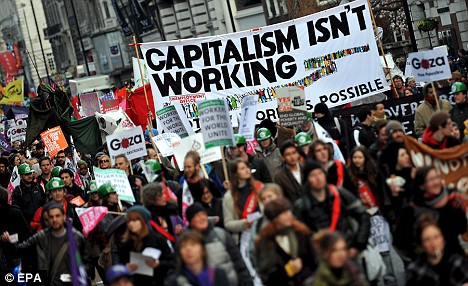
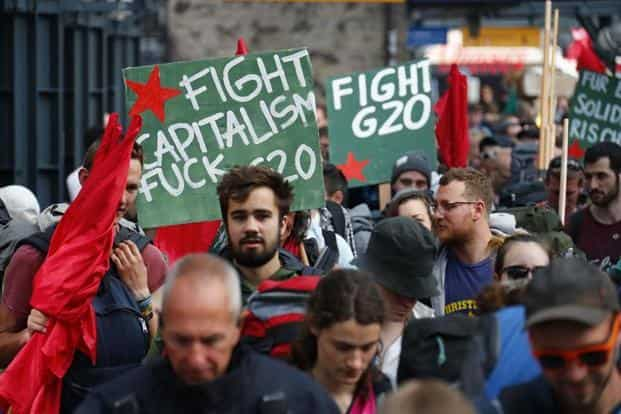
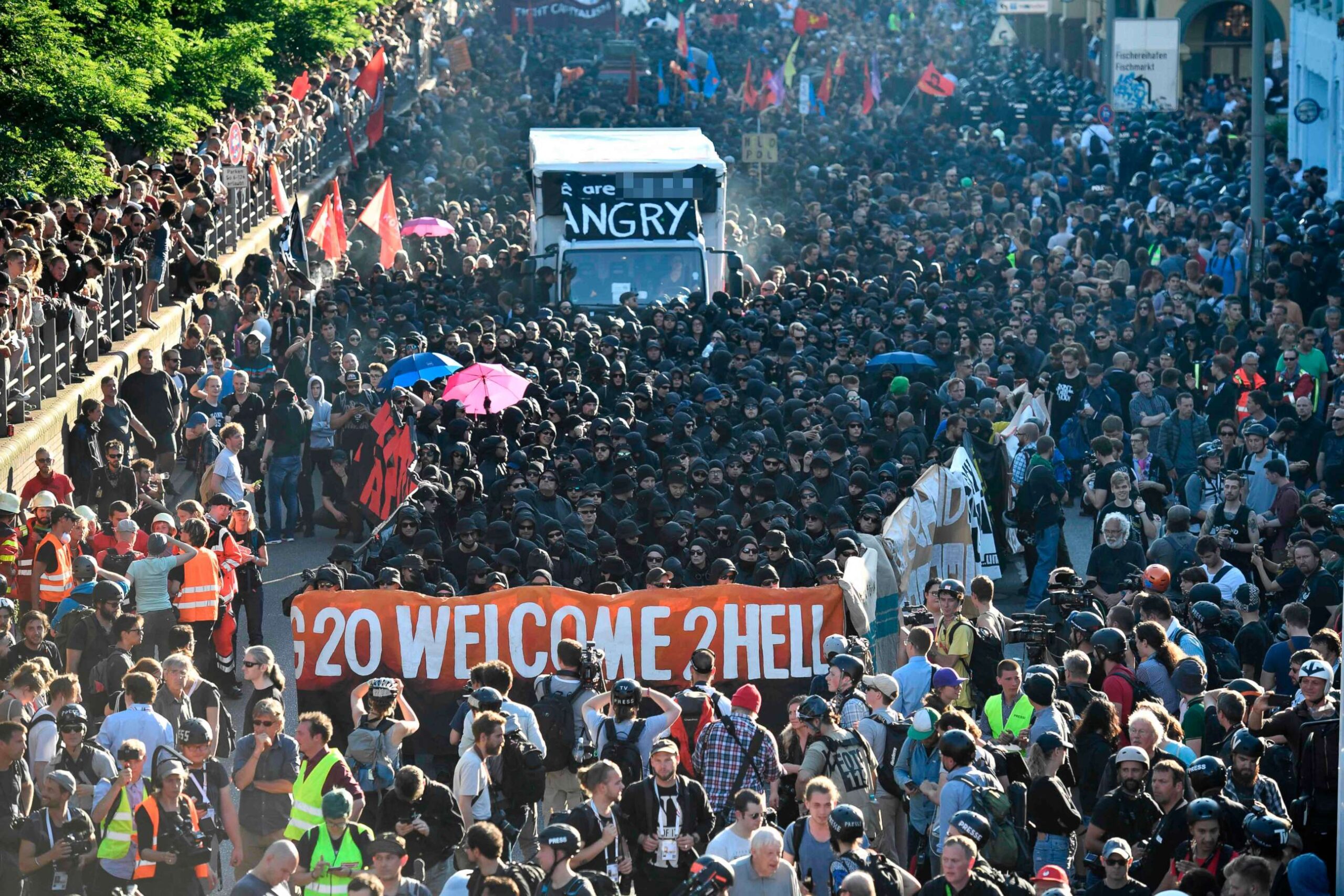
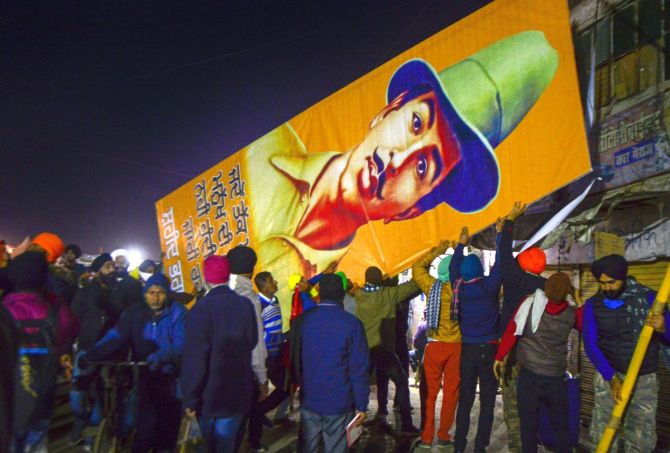
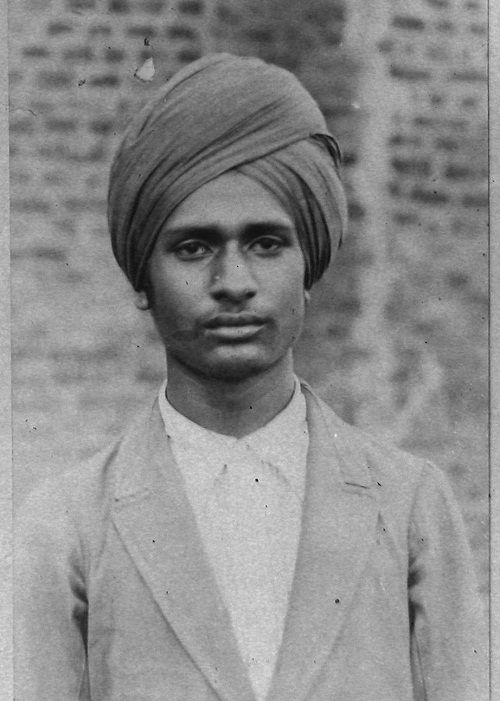
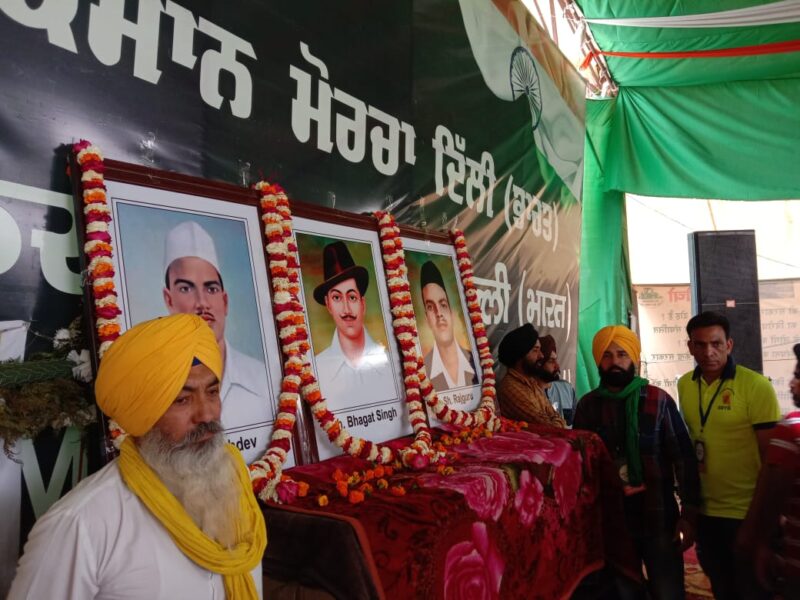

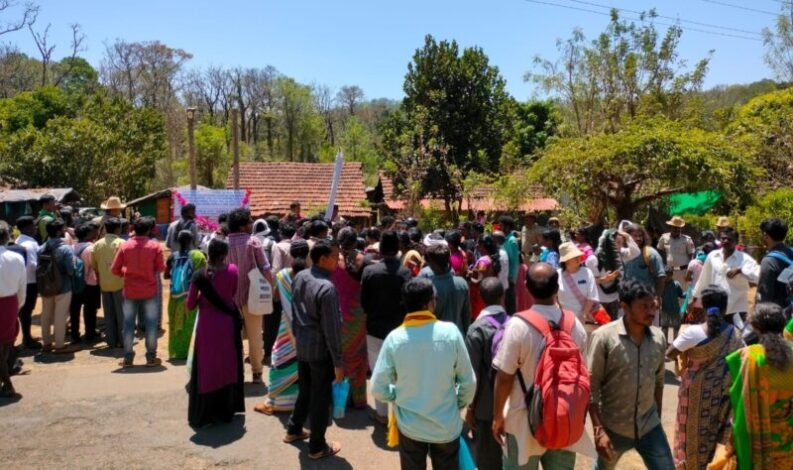


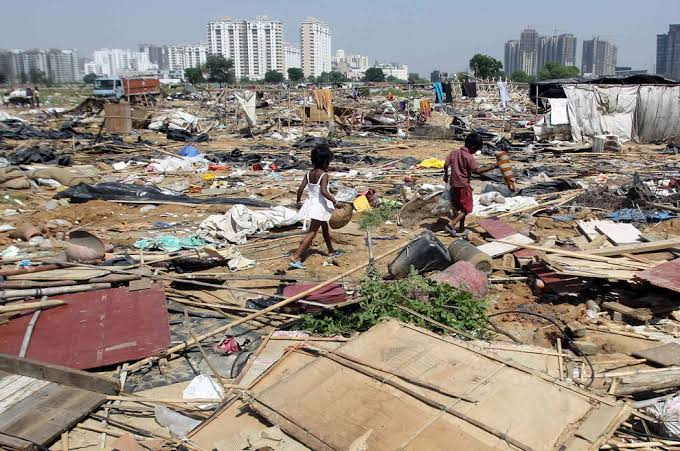
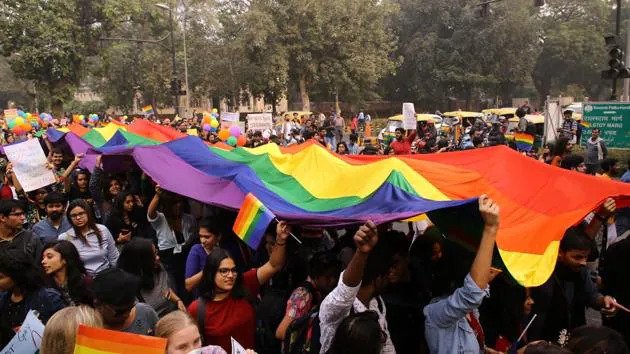

 Netanyahu still faces a number of corruption charges. The reforms would allow Netanyahu to receive donations for his legal case in fighting off those charges.
Netanyahu’s government said that it was keen on passing these reforms to give his government more stability. The reforms were announced by Justice Minister Yariv Levin, who was appointed by the most recent government. On 4th January, he announced his plans for reforms, which triggered the current protests. The proposed reforms have been met with widespread criticism and opposition, with over 150 people arrested in the protests so far.

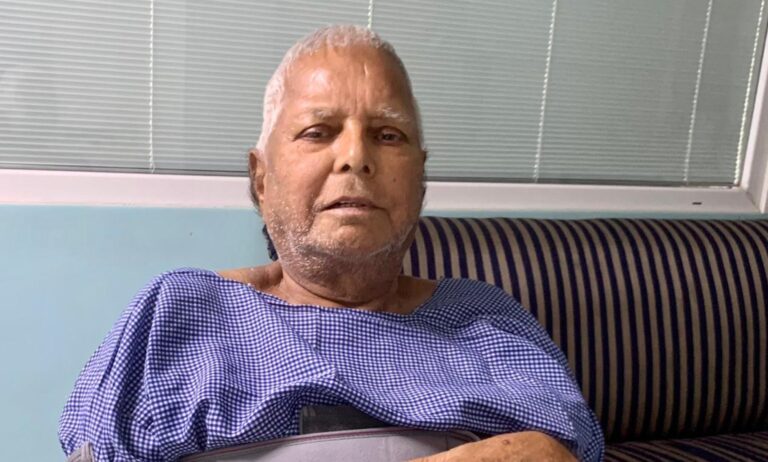


 But Luxemburg noted that there was another unique dimension to war. The military was a way to use tax money purely to fund big industries. Money goes directly from the people, through taxation, to big industry. The state military becomes a source of profit for the big businesses. Even in countries where defence is completely within the public domain, profit is co-opted by the large businesses in many ways, through the supply of machinery and equipment, public research and development, and development projects.
The destruction meted out by war could produce demand, and fuel a nation’s economy. Lives can be traded for profit. Luxemburg noted that this was the trend with European countries, and had to be fought as part of a peoples’ struggle. Luxemburg noted that this war only benefits the big business at the expense of the people, and along with other former SDP members, protested Germany’s involvement in the war. She co-founded the Spartacus League.
The Spartacus League was named after the historical slave from ancient Roman who launched a rebellion against his masters. The leaders organized workers in agitating against factory owners, and run factories democratically. Luxemburg’s activities landed her in jail in 1916 for over two years.
In protesting the war, the Spartacus League organized soldiers to form soldier councils, where units could be run democratically, instead of in a top-down fashion. Soldiers were encouraged to work with workers, where they would protect the workers and workers would economically support the soldiers. While in Prison for her anti-war activism, Rosa Luxemburg continued writing. Her work had to be smuggled out of prison and would be published as the Julius Pamphlet. She wrote under the pseudonym, Lucius Junius Brutus, a famous ancient Roman politician who overthrew the monarchy in Roman and established a Republic.
 In the Junius Pamphlet, Luxemburg showed a more human cost to war. She described how many poor people, including those who contributed to the political and cultural life of the German working class were lost to war. She said that her opposition to the war was not based on a naive idea that violence is always wrong. Sometimes a country goes to war to protect itself, but when a country develops, it will invest in its military for the wrong reasons. At that time, war cuts the world in parts and benefits the rich at the expense of the poor.
In the twenty-first century, these observations are more relevant than ever. The web of war is cast over peaceful as well as war-torn countries. The military has deep connections with transport, surveillance, energy and other industries. Whenever an invasion happens, companies from across the world profit in reconstruction efforts, making money on lost lives.
The author is a mathematician and a political observer based in Bangalore, India.