Taking advantage of the COVID19 pandemic and the resulting lockdown, Central and state governments have brought in many anti-people laws, amendments and policies. These include labour laws, Agricultural Produce Market Committees (APMC) Laws, Essential Goods Act, Land Reform Acts, Environmental Impact Assessment regulations, Electricity Act.
On the occasion of the anniversary of the “Quit India Movement” many farmer and labour organizations along with trade unions across the country had called a “Save India” campaign.
Protests and demonstrations were also registered in many districts of Karnataka including Bengaluru, Tumakuru, Bellary, Raichur, Mandya, Chitradurga, and Kampli.
Almost 2000 people representing various organizations gathered at Bengaluru’s Freedom Park against the anti-minority, anti-people, anti-student, and anti-labor moves of both the Union and State Government. Many Trade Unions, Dalit, Farmer’s, Students’, Women, and other progressive, secular, and democratic organizations joined the ‘Safe India’ campaign in with their respective demands.
Trade Unions :
The Workers Unions and Trade Unions opposed the labour law amendments and have demanded that the government must take necessary steps to provide employment job security to the workers. They have demanded that the government must immediately stop privatizing the public sector undertakings in the country and assist millions of workers in the unorganized sector.
The workers union also demanded that other regulations including minimum wages and workers’ safety at workplaces must be enforced with utmost care to secure the interests of the workers. They have also raised concerns that the Department of Labor has deliberately neglected enforcement of labour laws and has remained silent about complaints against employers on pertinent issues including lay-offs, retrenchment, and closures.
‘Save India’ Protests at Freedom Park, Bengaluru
Protests were also held elsewhere supporting the ‘Save India’ campaign jointly by Karnataka Janashakti, AIKSCC, Dalit Organizations including Dalit Sangarsha Samiti, We the People of India (Naavu Bharatiyaru), Farmer’s Organization and Tumakuru District Slum Residents’ Welfare Association.
Committee for Landless and Shelterless People also extended its support for the campaign demanding that the state government must allot lands and houses to the needy at the earliest.
Committee for Landless and Shelterless People also extended its support for the campaign demanding that the state government must allot lands and houses to the needy at the earliest.
Student organisations
Students’ organization like Karnataka Vidyarthi Sanghatane have demanded the government must provide an equitable education for all students, especially the ones hailing from the marginalized communities. They have demanded the withdrawal of the National Education Policy – 2020 and have staunchly opposed the moves by the RSS backed BJP Government to Saffronize Education.
Protests at Bellary against the Loot of the Mining Corporations and Karnataka land Reforms Amendment Act
Farmer organisations
For Farmer’s Organizations, loan waivers and issuance of fresh loans along with the repeal of the amendments brought to the Land Reforms Act was the major issue. Speaking about the same, District Convener of All India Kisan Sangharsh Coordination Committee (AIKSCC), C. Yatiraju, urged the government to waive all agricultural loans and to provide the farmers with yet another set of loans.
Farmer organisations demanded that all families within the income tax payment threshold must be provided a monthly compensation of at least Rs 7500 for the next six months and free rations should be distributed to them. He also demanded that the working days must be increased to at least 200 days under the Rural Employment Guarantee Scheme.
Save India Protests at Raichur
Dalit organisations
Dalit Organizations including the Dalit Sangharsh Samiti (DSS) has noted the rise in incidents of atrocities against Dalits and Minorities. They also raised voice against the inaction of the government to prevent such atrocities and how elected representatives of the BJP and its RSS associates have been inciting violence against minorities in Karnataka and across the country.
Noting the issues faced by women in times of COVID pandemic and increased communalisation, Convenor of AITUTUC, Manjula noted that incidents of violence against women, Dalits, and minorities have increased during the COVID period. Cases of domestic violence have been on the rise since the first lockdown was imposed. She also noted that the governments have completely failed to control these incidents of violence and that a united fight of the oppressed communities was the need of the hour to fight out the anti-people policies of the government.
‘Save India’ Protests at Chitradurga
Social worker Tajuddin Sharif brought light to the attack of the government on public intellectuals and dissenters across the country. He noted that dissent was very important and such attacks on dissenters are unacceptable. He demanded that the governments must immediately stop the retaliatory act of detaining the country’s top thinkers, luring them into false lawsuits, and must free all political prisoners.
Read About:Bangalore University Collects Exam Fees Amidst Pandemic: Student organisations Demands Free Education
Anant Kumar Hegde, Former Minister and current BJP Lok Sabha Member from Uttara Kannada of Karnataka is known for many of hate speeches. In yet one more such hate speech, he has attacked the state-owned telecom company BSNL and its employees by calling them ‘Anti-Nationals’.
ಖಾಸಗಿ ಸಂಸ್ಥೆಗಳನ್ನು ಹೇಗೆ ಮುಗಿಸಲಾಗುತ್ತಿದೆ ಎಂದು ಅನಂತ್ ಕುಮಾರ್ ಹೆಗಡೆ ಹೇಳುತ್ತಿದ್ದಾರೆ ಈ ವಿಡಿಯೋ ಬಿಎಸ್ಎನ್ಎಲ್ ಅನ್ನು ಉದಾಹರಣೆಯಾಗಿ ಇಟ್ಟುಕೊಂಡು ಇನ್ನು ಮುಂದೆ ಖಾಸಗಿಯವರಿಗೆ ಮಾರಾಟವಾಗಲಿರುವ ಸರ್ಕಾರಿ ಸಂಸ್ಥೆಗಳನ್ನು ದೇಶದ್ರೂಹಿಗಳು ಇರೋ ಸಂಸ್ಥೆಗಳು ಎಂದು ಹೇಳಲಾಗುತ್ತದೆ ಅನಿಸುತ್ತೆ. #NaanuGauri #ananthakumarhegde
The MP was speaking at Kumta after inaugurating several government initiatives. He has attacked BSNL and its employees by stating that BSNL is dysfunctional and should be privatised.
“Many people question the connectivity of BSNL. Yes, we know it. BSN does not provide connectivity. There is no BSNL network in my house in Delhi. BSNL’s connectivity in Uttara Kannada is much better in comparison to Bangalore and Delhi. BSNL has become a dark-spot for the country. We will bring in BSNL into the disinvestment initiative and dismantle it. Mostly private companies will take over that space in the near future. We could not fix it anywhere in the country. BSNL as an institution is so dysfunctional. Imagine the scale of its dysfunctionality when you know that even our government could not fix it.“BSNL is filled with Anti-Nationals and I’m accurate about the choice of my words. I had used the same words in the meeting that took place in Karwar. You are all not officers but anti-nationals. When the government has provided funds and infrastructure is already present and people are in need of your services, you do not work. When the Prime Minister is providing funds and other requirements under Digital India and other schemes, you do not want to work at all. We are already terminating around 85000 BSNL employees. We might terminate even more people in the coming days. We will do whatever it takes, be it a surgery as well, make BSNL functional. We will privatize it. Only two Public Sector undertakings are dysfunctional – one is BSNL and the other is Air India. It is not because of any technical deficiencies but because of Union activities. They do not want to work.”
Anant Kumar Hegde’s statement is not received very well by the people and he has been receiving lot of flak for it.
Speaking to gaurilankeshnews.com, Chadrahas Ullal, retired Sub-Divisional Officer from Mangalore commented on the issue-
“The MP must stop commenting about BSNL and its employees. It is the employees of BSNL who installed Optic Fibres across the country. He must not forget that we have installed it to the nook and corner of the country to provide connectivity to all the villages even in the most difficult geographical locations including hilly areas. It is BSNL and not Jio or other private telecom companies that respond and stands with the country by restoring connectivity at the earliest during natural disasters including floods and earthquakes. It was only after BSNL entered that Mobiles Services became affordable to the people. BSNL has provided good services to people. It is ill-intent of the Union government and not its employees which is responsible for the bad state of functioning of BSNL today. The government has not paid attention to BSNL only to aid the Private Telecom Companies we will oppose such statements being hurled at BSNL Employees.
ಎಲ್ಲವನ್ನೂ ಖಾಸಗೀ ಮಾಲೀಕತ್ವಕ್ಕೆ ನೀಡಲು ಹೊರಟಿರುವ ಕೇಂದ್ರ @BJP4India ಸರ್ಕಾರವು ತನಗೆ ಆಡಳಿತ ಮಾಡುವುದಕ್ಕೆ ಸಾಧ್ಯವಿಲ್ಲ ಎಂದು ನೇರವಾಗಿ ಒಪ್ಪಿಕೊಂಡಿದೆ
ಇನ್ನು ಸರ್ಕಾರದ ಅಧೀನ ಸಂಸ್ಥೆಯಾದ BSNL ಉದ್ಯೋಗಿಗಳನ್ನು ದೇಶದ್ರೋಹಿಗಳು ಎಂದ ಸಂಸದ ಅನಂತ್ ಕುಮಾರ್ ಅವರು ತಮ್ಮ ಅಯೋಗ್ಯತನವನ್ನು ತೋರಿದ್ದಾರೆ!https://t.co/1JZBZQqWFP
The Karnataka Pradesh Congress Congress (KPCC) has criticized the BJP-led central government that it has been trying to give everything to private ownership and admitted openly that it cannot provide governance. BJP MP Anant kumar Hegde has proved his worth by naming that Employees of State-Owned BSNL as ‘Anti-National’
Anant Kumar Hegde and other BJP leaders from Karnataka are known for their hate speeches and stir up controversies every now and then.
Recently, in its report on North-East Delhi Violence, the Delhi Minorities Commission has mentioned about the incendiary and communal speeches by BJP MP from South Bangalore Constituency Tejaswi Surya and BJP MLA Somasekhara Reddy.
The current Lebanon government resigned on August 10 in the aftermath of the Beirut blast and the mass protests that followed. Prime Minister Hassan Diab announced in a televised address, that the blast was a “crime” that was a result of corruption that is “bigger than the state”. He announced that he was taking a step back in order to stand with the people and “fight the battle for change alongside them”. Previously, Lebanon’s Information Minister, Manal Abdel Samad, Environment Minister, Damianos Kattar, Justice Minister, Marie Claude Najm, Finance Minister Ghazi Wazni, and 9 Members of Parliament had resigned from the government. President Michel Aoun accepted the Prime Minister’s resignation and asked him to continue in a caretaker capacity until the new government is formed. The crater at Beirut port this morning where the explosion took place( Twitter)On August 4, Around 2,750 tonnes of ammonium nitrate had exploded after a fire in the port area of Beirut. The death toll currently is 200, and around 6000 others have been reported to be injured. Besides the massive loss to life, the blast had also destroyed at least 3 Beirut hospitals and damaged 2 hospitals, leading to additional stress on an already overwhelmed healthcare system. The blast had also destroyed wheat stored in the port’s granaries leading to fears of an impending food crisis in a country already facing shortages, especially as Lebanon imports 90% of its wheat through the port which has been destroyed, which was then likely holding 85% of the country’s cereals.The blast and the impending crisis added to the rising discontent in the country, which had led to mass protests in October last year, and the resignation of the previous Saad Hariri government. The 2019 protests that had begun to resist a series of new austerity measures, soon encompassed other long-standing issues, such as corruption, sectarianism, unemployment, lack of state accountability, and need for basic services.After the blast, many in Lebanon saw the negligence and corruption of the state as the root cause behind such a massive lapse in safety measures, and protesters stormed various government buildings on August 8. Later, protestors hurled rocks at security forces blocking a road near Lebanon’s parliament. The police and army reinforcements responded with rubber bullets and teargas, and nearly 700 protesters were wounded in the clashes. In a report based on interviews with doctors, medical documents, images, and videos, Al Jazeera established that the police had violated international standards on the use of the force against the protestors.
Bangalore University in its latest order has announced August 15th as the deadline for students to pay their examination fees. The university has also ordered its students to pay for college enrollment fees for the upcoming academic year as well. Karnataka Vidyarthi Sanghatane (KVS) – a student organization has opposed the university’s order and warned that the students would be forced to undertake protests if the order is not withdrawn immediately.
Speaking to gaurilankeshnews.com, Sarovar Benkikere, State Convenor of Karnataka Vidyarthi Sanghatane said- ‘
The coronavirus pandemic is badly haunting the world. India is leaping ahead to become the VishwaGuru in terms of the number of people tested Covid positive. The families and households of the poor, daily wage labourers, farmers, and street vendors amongst many others have not yet recovered from financial issues that they faced due to lockdown. It is regrettable that private institutions are using these terrible times as an opportunity. Now, even public institutions are taking the same path. Both Bengaluru University and Bengaluru Central University must not collect fees during these times.”We have been demanding since the imposition of the first round of lockdown that the government should bear the examination fees and fees for this academic year and not demand that the students, their parents or household pay for education or to at least reduce the fees and provide them options of paying in installments and at their convenience. However, the government and education institutions have partnered together to extort students and parents! They are under immense financial stress and are worried. Hence, this time more and more students are considering dropping out of the educational system. This stance of the University to extort money from students in the name of fees for education would deprive students especially hailing from vulnerable communities including lower classes and women. Our state government is directly responsible for this,” he said.
Sarovar has also noted that KVS Student Leaders met the Vice-Chancellor of Professor S Japhet in this regard today. “Prof. S Japhet has acknowledged the issues and has assured us to address the issue in the best possible way taking into consideration the students’ interests. We will be meeting the Vice-Chancellor of Bangalore University Dr Venugopal tomorrow” he added.
Beirut sees massive protests after the blast at the Beirut port that killed 158 people, injured thousands of others, and has driven the country to the verge of a humanitarian crisis. After initial reports hinted at government negligence being the cause behind the explosion of around 2,750 tonnes of ammonium nitrate, Lebanese protestors stormed several ministries on August 8. The foreign ministry was taken over by protestors for three hours and declared the “headquarters of the revolution”. The near 200 protestors were driven out by army reinforcements using teargas and rubber bullets. Protestors also raided the economy ministry and the energy ministry, and the Association of Banks was ransacked. Nearly 700 protestors were wounded in the clashes with the police, and one police man died. On the second day of protests, protesters hurled rocks at security forces blocking a road near Lebanon’s parliament.
At the huge downtown Beirut protests, which are being heavily teargassed, so many people are carrying nooses and signs like this pic.twitter.com/DEW6YthvHH
Already in an economic crisis with large-scale unemployment, food crises, poverty, and national debts, Lebanon had seen mass protests in October last year. These protests were sparked off by a series of austerity measures that were introduced in Lebanon, noticeable out of which was the increase in taxes on gasoline and online phone calls. This so-called WhatsApp tax led to a national wave of protests. The protests began on 17 October 2019, when hundreds of protesters occupied downtown Beirut and grew from there. As the protests spread, so did the issues spread, to corruption, sectarianism, unemployment, lack of state accountability, and need for basic services. Protesters have complained that since 1990, electricity has been provided at 80% of demand. Protestors saw the political elite and their corruption as the root cause of the country’s socio-economic and political issues, and now, the blast. The blast destroyed huge stores of wheat which is a staple food grain in the country, damaged the port on which the country largely depends on for its imports, destroyed 3 hospitals, and damaged 2, overburdening a healthcare system already reeling under the pressure of the pandemic.
Lebanon’s Information Minister, Manal Abdel Samad, was the first to resign from government, followed by the Environment Minister, Damianos Kattar. They were followed by resignations by 9 Members of Parliament, the Justice Minister, Marie Claude Najm, and Finance Minister Ghazi Wazni. Protestors have called for a rally outside the Baabda palace to demand President Michel Aoun’s resignation. A cabinet meeting scheduled for August 10 amid reports that the whole government might resign.
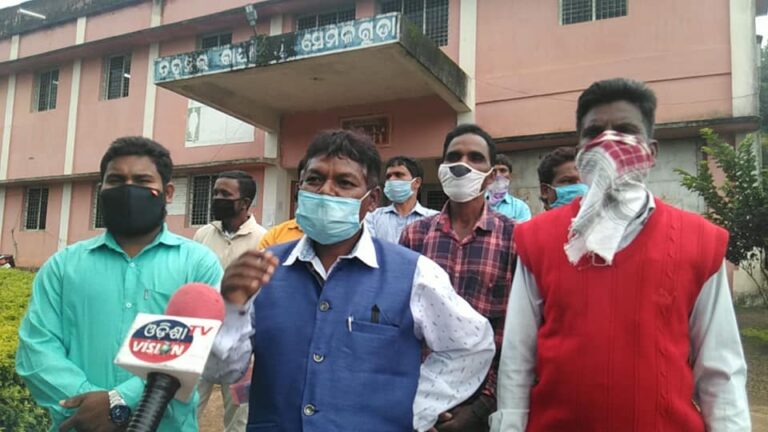
On World Indigenous Day, the Koraputia Jan Surakhya Sangh demanded the undivided Koraput region in Odisha, consisting of Koraput, Malkangiri, Rayagada, and Nabarangpur districts be declared a separate state for development and justice of the Adivasi communities in the region. Image courtesy: http://youngworld2020.blogspot.comThe organisation has outlined the demands of the organization as follows:
We demand immediate recognition of community forest lands in the name of respective Adivasi villages under FRA
We demand complete implementation of all provisions of PESA Act
We demand that the displaced families of HAL, NALCO, Upper Kolab, Machchkund, Indravati, and Balimela dams be compensated adequately along with employment assurance for sustainable livelihoods
We demand that all the lands which were acquired forcefully and fraudulently by the above projects and continue to remain unutilized be immediately returned to the original land-owning communities. Until the above demands are not completely recognized and resolved, all mining and extractive activities in the region are shutdown
We demand that except for government schools, all private educational institutions and initiatives be closed down on an urgent basis
We demand the immediate close down of all liquor brewing and selling units in undivided Koraput region
We demand that the revenue money which has been generated from mining and extraction activities be utilized strictly within the undivided Koraput region
We demand that all the expenditures made through the District Mineral Fund be publicly announced to the Adivasi peoples for greater transparency and accountability
We demand the immediate stopping of approving the conversion of farmlands to urban housing projects and other related estate constructions.
We demand immediate stopping of the sell-out of Adivasi lands, forests, waters, and other natural resources to corporations, state and privately owned.
We demand proper implementation of MGNREGA and all other employment generation programs of the government.
We demand according of Hill Tribes status to all indigenous communities of undivided Koraput region.
They also condemned the government for spending taxpayers money in the building of the Ram Mandir and statues, instead of investing in healthcare and education facilities, especially in the Koraput region.
The Koraputia Jan Surakhya Sangh has in the past, resisted the exploitative mining activities of Vedanta in Danga Deula hill in Koraput district of Orissa.
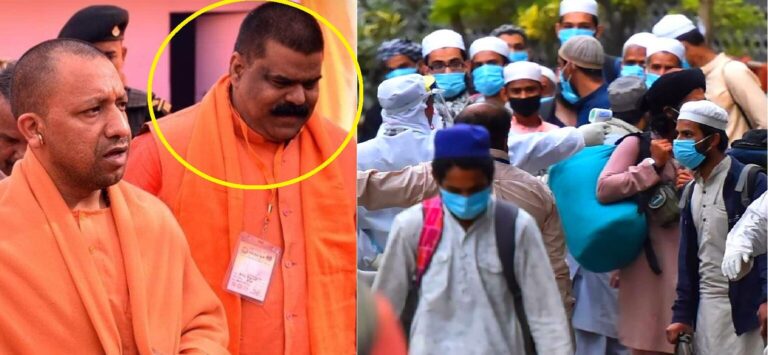
‘Ajju Hindustani’, a leader of the Hindu Yuva Vahini, who had declared prize money of 11,000 rupees to “catch” members of Tablighi Jamaat, passed away due to Covid-19. His mother and sister also passed away due to COIVD-19. Hindu Yuva Vahini is a right-wing Hindu organization founded by Yogi Adityanath, which operates outside of the BJP in Uttar Pradesh, as his personal force. Ajju Hindustani or Ajay Srivastav was a member of the Hindu Yuva Vahini and was one of Yogi’s favorite members. He was locally known as ‘Yogi’s Hanuman’. Ajju Hindustani announces that Hindu Yuva Vahini will award 11,000Rs to whosoever will bring jamaatis to the administrationThe Tablighi Jamaat meeting took place in mid-March much before COVID19 lockdown or COVID scare was there. Even after the organisers of the meeting informed the Delhi government about their situation during the lockdown, no action was taken. But the media blew the news when the Modi government was getting lot go flak for its harsh lockdown and migrant crisis. In Tablighi Jamaat, the media got a perfect villain to cover up all the central government´s failure. What followed was a massive coordinated attempt supported by law enforcement and media narratives to blame and demonize Muslims for the spread of the Coronavirus. This was at a time when the government had not enforced any rules to deal with the pandemic and international flights were still being allowed. A number of fake news items were run, about how Muslims were demanding biryani in hospitals, harassing nurses, and making obscene gestures and spitting, that they were terrorists, and so on and so forth. All of these news items were debunked. Ajju Hindustani was one of the most vocal leaders of this communal campaign and claimed that Muslims, be it Tablighi Jamaat attendees or Rohingya refugees, had created a plot to spread the disease.
Not only had he announced a reward of 11,000 rupees for anyone who could give the Hindu Yuva Vahini any information regarding Tablighi Jamaat attendees, but he also claimed that havans and pujas will curb the spread of Covid-19 and the ghee used in puja will cure the disease. After Ajju was found to be COVID positive on July 19, he also conducted one of these pujas for himself. Well, the ritual did not work, and he passed away on July 30th. Unfortunately, his mother and sister also passed away due to Covid-19, and various other members of his family also got infected by the virus as well. It is important to recognize the inequality of narratives about a Muslim gathering that took place much before any lockdown versus the numerous pujas, establishment of temples, and so on that have been conducted even as the numbers of COVID infections and deaths are on the rise. As we see some of the biggest promoters of violent Islamophobic rhetoric contract the disease one by one, it is becoming clear that this is a disease that is not the responsibility of the oppressed communities of the country.
Farmers and workers protested across the country on the anniversary of the Quit India Movement on August 9, against the corporatization of agriculture and large-scale privatization promoted by the Modi government.
Protests took place in Delhi, Haryana, Patna, Chhattisgarh, and in various places in Uttar Pradesh, Tamil Nadu, Jharkhand, Odisha, Karnataka, and Maharashtra.
The day was observed as ‘Save India’ Day by the All India People’s Front and people’s organizations across the country. Issues raised included but were not limited to universal employment, education, and health, workers’ rights, cash transfers of 5000 rupees for all families below taxable income, free treatment for patients of Covid-19, environment conservation, and payment of wages for Anganwadi and Asha workers.
Workers Protests in Delhi and Patna
Protestors gathered in large numbers at Jantar Mantar in Delhi and raised their voice against the anti-farmer and anti-worker policies of the government. Some of the organizations present were AIKSCC, INTUC, AITUC, HMS, CITU, SEWA, AIUTUC, and leaders from banking and insurance organizations. The workers’ unions pointed out that although some industrial units have opened after the lockdown, all workers have not been given work, and those who are able to retain their jobs are being given reduced work. Further, the wages for the lockdown period have also been withheld. While employment is already at its peak, the government has now decided on the disinvestment and mass privatization of public sector undertakings. Public companies like Indian Railways, BPCL, BHEL, and ONGC, which have been extremely important for workers and for keeping the country self-reliant, are about to be auctioned off to capitalists.
From the Protest Gathering (Delhi)
In solidarity with all workers, peasants women, youth and students in the country who have participated in the national protest day against dilution of labour laws, privatisation, unemployement, NEP and other anti-people policy of the Govt. pic.twitter.com/HXoug2uKvr
Workers across different sectors have been rising up in protest against the privatization of the country. Railway workers are extremely dissatisfied, coal workers have announced a strike, scheme workers across the country have been struggling for their rights as well. During the pandemic, private hospitals have already shown their profiteering agendas, and if the same happens to all other sectors, it will be the poor labouring classes of the country that will suffer the most. The government is doing its best to divide and distract the people with communal agendas, all while labouring people’s rights are constantly eroded. Trade unions in Patna also carried out a protest rally that started in Golambar and ended at the Dak Bungalow, where they addressed the assembly and demanded a stop to the mass privatization of different sectors in the country. They condemned the ‘Atma Nirbhar’ policies as being an attempt to sell the country and called upon the workers of the country to resist privatization. They demanded that the plan to privatize public sector undertakings and sell public property and services to corporates be stopped immediately, that Adivasi communities be given ownership over water, forest, land, and mineral resources, and that their displacement in the name of development projects be stopped, MGNREGA workers be given 600 rupees for their work, and public health services are made universal. Various other workers’ groups including ASHA workers, midday meal cooks, municipality workers, and workers groups across Bihar had started a ‘Jail Bharo Abhiyan’ in resistance to the Modi government’s campaign to sell the country. Protests took place in various districts across the state. The Eastern Railway Employee Union also protested against the privatization of the Indian Railways at the Patna Junction.
Farmers Protest in Haryana and Chattisgarh
Farmers in Haryana carried out a tractor protest rally against the three anti-farmer ordinances announced by the government. The protest rally began in Kharkhari Makhwan village and reached the SDM office in Tosham, where the protestors burnt copies of the ordinances.The government has introduced three ordinances, the Essential Commodities Act (Amendment), 2020, The Farmers’ Produce Trade and Commerce (Promotion and Facilitation) Ordinance, 2020, and The Farmers (Empowerment and Protection) Agreement on Price Assurance and Farm Services Ordinance, 2020. According to Yogendra Yadav, member of AIKSCC and founder of Swaraj India, the purpose of these laws is to remove the existing restrictions on stocking food produce, to end the monopoly of the Agricultural Produce Market Committees (APMC) and allow anyone to purchase and sell agricultural produce, and to legalize contract farming, so that big businesses and companies can cultivate vast swaths of land on contract.
एम एस पी-सरकारी खरीद से हाथ खींचने कम्पनी ठेके पर खेती जमाखोरी-कालाबाजारी बढ़ाने वाले तीनों किसान विरोधी अध्यादेश वापस लो!
आज स्वराज अभियान के संस्थापक सदस्य @_YogendraYadav ने किसानो के साथ तोशाम (हरियाणा) में विरोध प्रदर्शन में हिस्सा लिया और अध्यादेश की प्रतिलिपियां जलाई। pic.twitter.com/PxpV9tA56f
The government should cancel farmer’s debt for this year’s Rabi crops for the duration of the pandemic, and continue KCC for the Kharif crop.
The MSP for every crop, vegetable, and fruit should be increased by 50 percent of what it is now.
All three anti-farmer ordinances should be taken back.
The rate of Diesel should be halved.
The Electricity (Amendment) Bill 2020 should be canceled.
The losses suffered by farmers this year should be compensated for.
This year, the guaranteed number of work-days under MGNREGA should be increased to 200 days.
The government should ensure full ration for every citizen for the entire duration of the Coronavirus pandemic.
There should be a stop put to the selling of land belonging to farmers and Adivasis across the country to companies.
Twenty-five farmers, workers, Dalits, and Adivasis organizations also came out in protest across Chattisgarh against privatization, and anti-people policies of the Central government in the ‘Atmanirbhar’ campaign. They warned that the privatization policies will soon lead to erosion of Minimum Support Prices, and in the name of ‘Atmanirbhar’ campaigns, the government is destroying and selling the natural resources of the country. All of these policies will lead to the displacement of the masses, large scale health problems, and destruction of the environment. The protestors in Chattisgarh also raised their voice against the rising food shortages in the state, especially during the migrant crisis. Even as health services are inaccessible to the people of the state during the increasing transmission of Covid-19, the Congress government is busy with the Bodhghat project and the auctioning off of coal blocks.
It is clear that on the 78th Anniversary of the Quit India Movement, the people of India rose up to present strong opposition to the erosion of democratic values and social justice that the current government has been attempting to carry out.
The film, directed by Anu Menon and released on Prime Video last week, is a biopic on the internationally renowned math genius and ‘human computer’, Shakuntala Devi (1929-2013), who was born and brought up in Bangalore. The movie focuses on portraying Devi as a strong, independent woman who defied convention and lived life on her own terms. It must be praised for depicting Devi with all the flaws and complexities of her personality, instead of simply praising her for her exceptional mind. However, there are some moments where the movie is overtly preachy, and some other aspects that it seems to completely ignore.
Marriage, Motherhood and Intergenerational Trauma
A central theme in the film is the notion of motherhood. We see that Devi’s drive to be independent and strong-willed comes from her anger towards her mother, who was timid and submissive to her father. She is so determined to never become submissive like her mother that she instead becomes overbearing and self-centered like her father (whom she accuses of being selfish and callous). After Devi gives birth to a daughter, Anu, she has a hard time balancing her desire to travel the world doing math shows on the one hand and attempting to be a ‘good’, attentive mother to Anu on the other hand. Her husband is supportive of her career and is more than willing to take care of their daughter at home while she travels; not that a man must be praised for doing this, but it does show that her marriage was not an unaccommodating or ‘unfair’ arrangement.
The film does a good job of showing us how childhood traumas and dysfunctional parent-child relationships are re-enacted and continued inter-generationally.
However, Shakuntala Devi wants it all; she wants to travel the globe but also wants to be with her daughter. She asks her husband and child to tag along with her on her trips, which her husband is understandably not enthusiastic about. To this she responds, ‘if I was a man, wouldn’t his wife and child be expected to follow him around for his career?’. But this is not (and should not be) a convincing argument to the audience. If we are trying to break out of an oppressive, unequal marriage structure, then a simple reversal of roles is obviously not the solution; this doesn’t change anything for better.
Even if we did take the ‘what if’ scenario seriously, one would imagine that a man would be okay with travelling the world and not being able to constantly enjoy his child’s company at the same time. Neither a man nor woman can ‘have it all’; but the crucial difference is that patriarchal society places unreasonable expectations on women to be the ‘perfect’ mother/wife and prioritize this over their career, while a man is allowed to prioritize his career over family. This social conditioning makes Devi feel undue guilt for being an ‘absentee’ mother and in her attempt to be a better one, she in fact ends up damaging her relationship with her daughter.
The movie repeatedly uses this argument of ‘If I was a man, would [fill in the blank] not be acceptable?’. While this does make viewers reflect and rethink their gendered presumptions and biases, there are some moments in the film where this argument falls flat. For example, this does not justify Devi dragging her daughter along with her on world tours when the child is in need of a stable childhood and schooling. It does not justify her expectation that Anu and her husband should continue to live with her in London instead of living separately in another country.
This portrayal of ‘genius’ implies that exceptional talent is not valuable or worthy unless it can be monetized. Her intellect is instrumentalized and completely transformed into a form of ‘capital’. It simply becomes another means of making a profit
The film does a good job of showing us how childhood traumas and dysfunctional parent-child relationships are re-enacted and continued inter-generationally. It shows how easily we can become that which we hate and, in turn, inflict our suffering on others. Anu recognizes this cycle of damage and explains that she does not want to become a mother because of it.
Monetization of “Genius”
However, one problem that the movie doesn’t recognise is the monetization of talent. From an early age, her father uses her exceptional math abilities to make money and as an adult, she continues to do the same. Devi’s constant focus on doing hundreds of shows around the world and growing rich from them is portrayed as unproblematic; as simply her being an ‘ambitious’ woman. But this portrayal of ‘genius’ implies that exceptional talent is not valuable or worthy unless it can be monetized. Her intellect is instrumentalized and completely transformed into a form of ‘capital’. It simply becomes another means of making a profit.
Shakuntala Devi was no doubt a gifted mind and a formidable personality, who took on a patriarchal world where women’s intelligence is often underestimated and overlooked. However, we must also ask; was it maths that she really loved or was it the fame and attention that she valued more? Surely recognition is important, but why should it be everything? Why is there so much emphasis on her ‘genius’ being publicized and attributed celebrity status? Most mathematicians and scientists, many of the brightest minds in the world, live and die in anonymity after all.
The film, however, places more emphasis on the performance of her talent and popular praise rather than on her genius itself.
Devi’s longing, in the movie, to travel around the world and gain praise seems to be driven for the most part by her ego rather than her passion for maths. We must be careful not to equate egotism and selfish ambition with the notion of being a strong, independent woman.
The main takeaway from Shakuntala Devi should be its critique of motherhood – how women who have children are socially conditioned to assess their self-worth in terms of how good of a mother they are, more than anything else. Their individual identity is often subordinated to their role as a mother; this is not the same for men who become fathers. The movie must be applauded for clearly bringing out this disparity and for competently tackling a complex issue such as motherhood and its relation to gender equality, individual identity, and childhood trauma.
Noted Author, Activist and Feminist Scholar, Dr. Ilina Sen, aged 69 passed away this day (9th August 2020) after a long battle with Cancer.
Though she is best remembered for her activism with mine trade workers’ unions against corporatization and tribal rights, she has been an ardent scholar as well. She authored many books including Inside Chattisgarh: A Political Memoir, Sukhvasin: The Migrant Woman of Chattisgarh, A Space within the Struggle. Her contribution to feminist scholarship is notable as she has been an active participant of the Women’s Movement in India since the 1970s and has written extensively about political participation and livelihood of women. She has also served as the Head of the Department at the Mahatma Gandhi International Hindi University (MGAHV).
She was the Convenor of the 13th Indian Association for Women’s’ Studies National Conference on ‘Revisiting Marginalities, Challenging Hegemonies: Re-envisioning Gender Politics’ which was organized at her university campus in Wardha, Maharashtra. She was a Member of the Executive Committee of the Indian Association of Women’s’ Studies between 2008-2011 and President of the committee between 2011 -2014.
Dr Ilina and her spouse Dr Binayak Sen established Rupantar, a Non-Governmental Organization that provided alternative health care to people in remote areas. They trained, deployed, and monitored community health workers across 20 remote villages in Chattisgarh. This has been lauded as a successful model to provide healthcare in remote areas. Over the years, the NGO branched out to address other social issues including food security, violence against women, and alcohol abuse.
Dr. Ilina had also been a powerful voice against Salwa Judum and the civilian vigilante groups popularly known as Koya Commandos in Chattisgarh. She noted in one of her interviews that “Salwa Judum for its agenda of ground-clearing. It was also a movement to get rid of the people because the government wanted to give the mineral-rich land to mining corporations. Salwa Judum had led to huge abuses of human rights, including sexual violence against women. “Anyone who tried to take a position against that was persona non grata in state of Chhattisgarh…anyone who opposed the Salwa Judum was branded a Maoist sympathizer.”
An interview of Dr. Ilina Sen about her works, activism, academic engagement, and comments about the present-day women’s movement in India can be accessed here.
Read About: Poland Opposition protests against Homophobic President with rainbow masks





 The blast and the impending crisis added to the rising discontent in the country, which had led to