

Umar Khalid Bail Plea Rejected by Delhi High court

0
The Delhi High Court on Tuesday denied bail to Umar Khalid in the 2020 Delhi Riots case.  A division bench of Justice Siddharth Mridul and Rajnish Bhatnagar passed the order. “We don’t find any merit in bail appeal, appeal is dismissed,” the Court ordered. Khalid had approached the High Court challenging the dismissal of his bail application by the Karkardooma court in March this year. The Court had reserved its verdict on September 9 after hearing arguments from Senior Advocate Trideep Pais and Special Public Prosecutor Amit Prasad. The arguments in the High Court went on for more than 20 days. He was arrested by the Delhi Police in September 2020 and charged with criminal conspiracy, rioting, unlawful assembly as well as several sections of the Unlawful Activities (Prevention) Act (UAPA). He has remained in jail since then. He was speaking against the Citizenship Amendment Act (CAA) and National Register of Citizens (NRC). The bench relied on Umar Khalid presence in several WhatsApp groups which were formed for the purpose of coordinating protests against Citizenship Amendment Act (CAA) and National Register of Citizens (NRC). It further observed that a Whatsapp group “CAB TEAM” was formed consequently on December 8, 2019, whose members included Sharjeel Imam, Umar Khalid, Yogender Yadav, Nadeem Khan, Khalid Saifi. Arguments on Khalid’s bail had started in April. During the very first hearing, the judges remarked that they found his speech at Amravati obnoxious and inciteful. The judges also said that the speech might be innocuous in isolation, but could have been a bugle call for something larger.

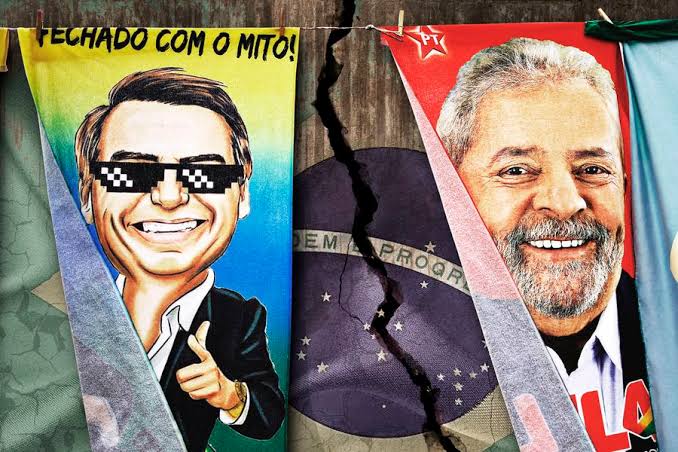
Lula Vs Bolsonaro: Will this be the last Brazilian election?
0
On 2 October, the Brazilian elections were held. Polls predict that Former President Luiz Inácio Lula da Silva, representing the Brazil of Hope alliance will emerge as the new President, beating out incumbent President Jair Bolsonaro. The election is important for the entire world. In an era where climate change has become a critical issue, Brazil, as home to the Amazon rainforests will play a critical role in protecting the world from the effects of climate change. A victory by Lula would be the latest in the third Pink Wave victories. Brazil’s swing to the left would be a major victory for progressive politics in Latin America. The election would also be a swing away from the pro-military politics of Bolsonaro, which is critical in maintaining democracy in Brazil. The election will be held in two rounds. If no candidate secures more than 50% of the vote, there will be a second round run-off election to determine the winner. Most predictions show a win for Lula.

Bolsonaro tells supporters to resist election results

The election has become even more complicated when on 7 September 2022, Bolsonaro alarmed the world with two inflammatory speeches. He told his followers to take to the streets and protest if he is not voted back to power in the next election. These speeches were made in Brasilia (the nation’s capital) and Sao Paulo (the largest city in Brazil). In these speeches, Bolsonaro began spreading conspiracy theories saying that the elections are being fixed against him. He claimed that the Electronic Voting Machines were rigged against him. He would be ready to use the military to protect his position. He threatened Supreme Court Chief Justice Luiz Fux and said that he does not respect judgements by the Supreme Court. He also said that only God could remove him from office, and he would only leave office dead or arrested, but he will never be arrested. Each demonstration was attended by 1-2 lakh people, and many smaller cities in Brazil also saw demonstrations by Bolsonaro supporters.
Bolsonaro Protests
Brazil’s President Jair Bolsonaro. Source: REUTERS/Adriano Machado

Democracy or Military

Brazil has been under military rule since 1964 after an American-sponsored coup d’état. The military regime was brutal. The army relied on torture to suppress political dissidents. They received training from the American and British governments and used their training to root out communist elements in Brazil. Even after the transition to democracy, the Brazilian Armed Forces remain a powerful force in the government. The Brazilian military still controls many leadership positions within the state. Many of the reforms after the transition left the police and the armed forces untouched. Brazil has the second largest Army in the Americas, only after the United States. Like the United States, the military has strong economic ties with the police. To justify their presence, starting from the 1980s, Brazil’s armed forces, and later police, changed focus from cracking down on communists, to cracking down on drug gangs. Since the return to democracy, Brazilian police have begun to use military-level equipment and receive military training. Among former colonies, most militaries were formed to control the local population, not to protect the country from enemies. In some cases, the military occupies a small section of the country and remains an occupying force. In some cases, the military is part of the state. In some cases, the military stands waiting to take over the government in times of instability. When achieving independence, many independence leaders have tried different strategies to manage the volatility a strong military can pose. Sometimes they have been successful in establishing control by a civilian government, but not always.

If the military is a threat to democracy, then who supports the Military?

Support from the military comes from two directions. First, internationally, colonizing powers find militaries easier to negotiate with than civilian governments. Within a country, military regimes get support from the rich and middle classes. Military governments, and promilitary politicians like Bolsonaro, are usually pro-corporate and get a lot of support from corporate-owned media. The propaganda from corporate-owned media can swing support from the masses in times of elections. Even if the population is aware of the dangers of such right-wing leaders, media messaging makes certain types of debates and nuances impossible. Subtle differences of opinion in the population can be manipulated to make progressive candidates appear monstrous. Repeated messages can be used to excite fears. For those who support left-wing politicians, such messages can lose confidence. For those who support right-wing politicians, such messages can give confidence.
The Brazilian Army Command presents the military contingent that will work on the security of the 2013 FIFA Confederations Cup in Brasilia on June 13, 2013. The security forces will be formed personnel from the Army and the Paramilitary Police. AFP PHOTO/Beto BARATA. (Photo credit should read BETO BARATA/AFP/Getty Images)
Bolsonaro also has strong support from the Brazilian middle class. Many see him as a source of stability. Despite his horrific mishandling of the COVID19 Pandemic, political and economic scandals before the Pandemic, and his clear mishandling of the economy, his macho and aggressive style appeals to a group of people who do not want to make compromises on their social position. Even if they are a technical minority, Bolsanro has managed to get lakhs of people to come to his rallies, and millions to support him. Though he is behind Lula in the polls, he is still expected to have gotten 30-40% of the vote. Bolsonaro has strong support among religious voters, who see him as a conservative force. As a pro-military candidate, Bolsanaro is seen as hard on drug use and a symbol of traditional values. Playing into the frustrations of the middle class, Bolsanaro has also promoted many conspiracy theories to explain discrepancies in his policies and behaviour, making him impossible to pin down.

A Tense Future

Across the world, when the ultra-right wing party comes to power through elections, progressives ask if that would spell the end of democracy. Given Bolsanaro’s closeness to the military and the massive showing at his rallies, the future is worrying. Author is a mathematician and political observer based in Bangalore. 

Karnataka: RSS permitted to organise Camps in Moraji Desai Schools, Dalit Organisations Protest
0
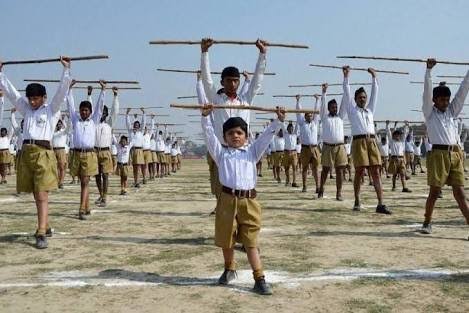
Bidar: The union of Dalit Organisations protested against permissions being granted to conduct RSS camps in several Moraji Desai schools across Karnataka administered by the Department of Social Welfare. They protested at the office of the District Commissioner and demanded that such permissions granted must be repealed with immediate effect. A 9-day Sangh Parivar training camp is being organised at Kamta’s Moraji Residential School. The Dalit leaders alleged that the students are deliberately misguided in the name of Co-Curricular activities. Ex-minister Bandeppa Kashempura has also voiced against the conduct of RSS camps within schools. “The RSS which used to conduct its camps elsewhere have now started entering government schools and are troubling students’ education” he alleged.

What is the camp about?

The Minister of Social Welfare Department, Kota Srinivasa Pujari had granted permissions to organise camps in the month of October at Moraji Residential Schools that aimed to, “Inculcate amongst boys and youth, through Physical-Mental and Personality development, ideas about Yogasana and thinking about the nation.” It is alleged that the RSS has obtained permissions in the garb of training youth in Yogasana and inculcating thinking about the nation. State SFI General Secretary Vasudeva Reddy stated that “The Minister himself handing over the government schools to RSS functionaries for the conduct of RSS camps is a move to convert schools into RSS Training Camps, which is highly condemnable.” In the camp being organized by Prerna Pratishthana based in Kolar, Hindu Sanghatan activists from Chikkaballapura and Bengaluru Rural districts are participating. Apart from Kolar, the camp began on October 7th at the the Moraji Desai Residential School in Sirasi taluk of Uttara Kannada district.

Karnataka Hijab ban: Supreme Court bench delivers Split Judgment

0
The Supreme Court on Thursday delivered a split verdict in the challenge to the Karnataka government order (GO) effectively empowering government colleges in the State to ban the wearing of hijab by Muslim girl students in college campus [Aishat Shifa vs State of Karnataka]. Justice Hemant Gupta who headed the bench upheld the government decision while Justice Sudhanshu Dhulia struck it down. “There is divergence of opinion. I have held against the appellant. I dismiss the appeal,” Justice Gupta said. Justice Dhulia, however, allowed the appeal and quashed the Karnataka government order. “One thing which was topmost (priority) for me was education of girl child. A girl child in (many) areas does household work and chores before going to school and are we making her life any better by doing this (banning hijab),” Justice Dhulia said. Consequently, the matter will now be heard by a larger bench of the top court. “In view of divergent opinion, let the matter be placed before the Chief Justice India of for appropriate directions,” the bench directed. A girl child in (many) areas does household work and chores before going to school and are we making her life any better by doing this (banning hijab). Justice Sudhanshu Dhulia Justice Gupta, in his judgment, framed eleven questions. He held that wearing hijab is not a part of essential religious practice (ERP) under Islam and the State government order serves the purpose of access to education. He, therefore, dismissed the appeals. Justice Dhulia, however, held that venturing into ERP was not needed and the High Court adopted a wrong approach. “It was just a question of choice. I have held the ratio in Bijoy Emmanuel squarely covers the case,” Justice Dhulia ruled.

Hijab Ban: Muslim Girls Deprived of Right to Education, says PUCL Report

The challenge before the Supreme Court is against a Karnataka High Court decision from March 15 upholding the Karnataka government order. The Karnataka High Court had on March 15 upheld a Karnataka government order (GO) effectively empowering college development committees of government colleges in the State to ban the wearing of the Islamic headscarf in college campuses. The petitioners – Muslim girl students from various colleges in Karnataka – had approached the High Court after they were denied permission to attend classes on account of wearing hijab. A three-judge Bench of then Chief Justice Ritu Raj Awasthi and Justices Krishna S Dixit and JM Khazi held that: – Hijab is not a part of essential religious practices of Islam; – Requirement of uniform is a reasonable restriction on the fundamental right to freedom of expression under Article 19(1)(a); – The government has the power to pass the GO; no case is made out for its invalidation. One of the pleas before the top court argued that the High Court “failed to note that the right to wear a Hijab comes under the ambit of ‘expression’ and is thus protected under Article 19(1)(a) of the Constitution.” It is also contended that the High Court failed to take note of the fact that the right to wear Hijab comes under the ambit of the right to privacy under Article 21 of the Constitution of India. With regard to uniform, the pleas state that the Karnataka Education Act, 1983, and the Rules made under the same, do not provide for any mandatory uniform to be worn by students.

Prohibition, A Public Policy Disaster in Manipur: How and Why
0
While it has been a trend for some time, but particularly consequent upon the Government’s decision to lift Prohibition, Manipur is right now in a situation of public policy disaster. Under this, the government has failed to convince the people about rationale of the decision; in fact, it has utterly failed to articulate one. There is mass resentment, mass protest and mass anguish. On the other hand, the inefficiency of the government and inability to frame a policy by following the principles of policy formulation have been critically exposed. A kind of social pessimism has been generated in a context of rising unemployment and price increases. First, it has been established beyond doubt that the decision to lift Prohibition is not a product of deliberated and shared discussions within the government. The Draft Liquor Policy is a sure testimony of this lack of shared deliberation and articulation to mature a will of the government. Second, the decision is not founded on discussions with Experts has been established beyond doubt despite the colossal claims of the government. There is no sign in either the initial announcement of the decision or the Draft Policy document of the government having consulted any “independent, non–interest-based, non-profit organizations that produce and principally rely on expertise and ideas to obtain support and to influence the policymaking process.” If any such consultation had taken place, there definitely would have been reflections of the values and morality behind the decision at least in the draft policy document coming as it does as a response to the public outcry against the decision and the heightened social pessimism spirit on the government. Now it is fairly established that the decision to lift prohibition was neither a product of the application of mind by the government as a holistic machinery nor an outcome of consultation with a think-tank. In this background, I recall an interesting book titled Special Interest Politics by two leading contemporary Economists, Grossman and Helpman (MIT, 2001). They define Special Interest Group as: “An interest group may be considered ‘‘special’’ if its members covet policies that would not be considered desirable by the average citizen. Thus, any minority group of citizens that shares identifiable characteristics and similar concerns on some set of issues might be termed a SIG. . …… We ask, From what features of the political landscape do special interest groups derive their power and influence? What determines the extent to which they are able to affect policy outcomes?” It is a group in society which try “to gain favourable treatment from the government based only on their voting behaviour.” This is “any identifiable group of voters with similar preferences on a subset of policy issues.” In the absence of any sign of shared government commitment and consultations with Expert groups, there is every fear if the recent decision has been the outcome of pressure by some Special Interest Groups. Special Interest Groups are present in every polity, but the issue is why it has gone wrong in the recent case in Manipur. We all are aware of the social struggle of the 1970s and 1980s to have Prohibition in Manipur. The movement was founded on real world experiences of the households and community in terms of lost individual peace and social tranquillity. After the prohibition, the shared progression in terms of globally proven capability of our boys and girls has been sound and loud. Further, the recent worsening of poverty and inequality and rising unemployment of youths have been real. Even further, the public do feel internally the uneasiness caused by the lack of a final picture of the social contract prevailing in Manipur. In these circumstances, any decision on lifting prohibition must be founded on Morality, Shared Social Values, Appropriate Understanding of the Community Culture and clear enunciation of the subsequent mechanism. Lifting prohibition in Manipur is not something like the establishment of a school in an area previously lacking education facilities. Further, lifting prohibition necessarily implies introduction of a new facet of the market mechanism. This new facet is very different from the normal dimensions of the market, and has huge cultural and demographic implications. The decision is not being taken in a post-industrialisation society like the case of Mumbai, but in a context of a society struggling for smooth modernisation. Manipur has been very unfortunate on this last aspect. Now the decision on prohibition can never be healthily founded on the pressure of the Special Interest Groups whatever their influence could have been in the voting process. The Interest Groups too on their part should be alive to the cultural, social and demographic realities of Manipur. Let us recall what the Constitution of India strikes right in the beginning: “WE, THE PEOPLE OF INDIA, having solemnly resolved to constitute India into a [SOVEREIGN SOCIALIST SECULAR DEMOCRATIC REPUBLIC] and to secure to all its citizens: JUSTICE, social, economic and political; LIBERTY of thought, expression, belief, faith and worship; EQUALITY of status and of opportunity; and to promote among them all.” From the part four of the Constitution, the Directive Principles of State Policy define what should be the nature of engagement and functioning of the government. In other words, India follows the principles of a Welfare State wherein none “permits natural or social contingencies fully to determine the life chances of its members. All have programmes whose explicit purpose is to protect adults and children from the degradation and insecurity of ignorance, illness, disability, unemployment and poverty.” Being a polity following the principles of a Welfare State and given the prevailing socio-eco-cultural realities of Manipur, the lifting of Prohibition in the way it is being envisaged is an undefendable step. Author is the visiting Professor at The Centre for Economic and Social Studies (CESS) Hyderabad. Views are personal.

Hate speeches sullying atmosphere, need to be stopped: Supreme Court

0
Hate speeches are sullying the atmosphere in the country and need to be stopped, the Supreme Court said on Monday. The remark was made by a bench of Chief Justice of India (CJI) UU Lalit and Justice S Ravindra Bhat during the hearing of a plea alleging that no action was being taken by government authorities against such speeches. “You are correct that entire atmosphere is getting sullied by these hate speeches and that it needs to be stopped,” the bench remarked. The petitioner Harpreet Mansukhani, appearing in person, said that hate speech was given to make India a Hindu rashtra before 2024 general elections. “Hate speech has been turned into a profitable business. A party funded Kashmir Files and then I have proof how it was funded and then made tax free,” she said. The petitioner also alleged that he has cited confessions of senior BJP leaders claiming that minorities were killed. “Retired army chief, presidents etc wrote to the PM saying this but there was no response. Regarding such an earlier case, Justices Chandrachud and Hima Kohli also sought a status report regarding implementation of the Tehseen Poonawalla judgment,” Mansukhani submitted. The bench initially said that normal criminal law proceedings have to be undertaken in such cases. “Normal criminal proceedings have to be undertaken in these cases. We have to see who is involved and who is not,” CJI Lalit remarked. The petitioner, however, maintained that there needs to be some directions to prevent such conspiracies resulting in such hate speeches. “Every time a hate speech is given it is like an arrow which never return,” he contended. “For a court to take cognizance of this we need factual background. We need some sample of cases. Otherwise it is a random petition,” the CJI said. The petitioner then said that he will file an affidavit citing instances of hate speeches and whether crimes were registered on not. The bench agreed and adjourned the case for November 1. Source: Bar&Bench

Isha Foundation shifts to Nandi Hills: Illegalities and Environmental Violations Galore
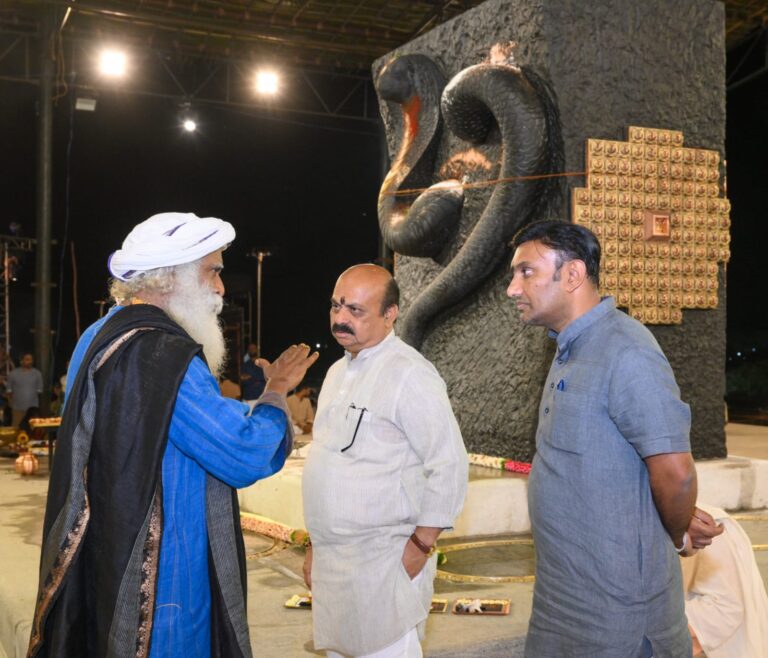
The Isha Foundation headed by Jaggi Vasudev (popularly known as Sadhguru), has been mired in controversies for the illegal establishment of its base at an ecologically sensitive area at Ikkarai Boluvampatti in Coimbatore and is now shifting its base to Avalagurki village in the foothills of the Nandi Hills. Nandi Hills is a famous tourist destination in the Chikkaballapur district of Karnataka.  

On 8th October 2022, the Naga Mantapa was unveiled at the Isha Foundation’s new location in Chikkaballapur. In the background, a 112-feet tall bust of the ‘Adiyogi Shiva’ is seen to be under construction and is expected to be open to the people on the Makara Sankranti to be celebrated on January 15, 2023. Located in Avalagurki village, 70 km away from Bengaluru, this is the second center of the Isha Foundation after the Isha Yoga headquarters in Coimbatore Tamil Nadu.

Media outlet News18 has reported that “Spread over 100 acres and surrounded by hillocks on all four sides, the latest facility of Isha Foundation is expected to be fully functional in 2-3 years. The Chikkaballapur center will be a replica of the Coimbatore campus including the 112-feet Adiyogi Shiva statue, 8 Navagraha temples along with a unique Bhairavi temple, say officials at Isha Foundation.”

However, citizens have raised important concerns about the environmental impact of the project. In a detailed report published on eedina.com, LC Nagaraj has explained the ecological significance of the areas surrounding Nandi Hills and that the construction of the center by Isha Foundation is clearly in violation of the laws including the Thippagondanahalli Ordinance-2004 and the issuance of No Objection Certificate.
In the report, he notes that “Many streams which originate from the foothills of Nandi hills join together to become the Chitravati stream which ultimately flows into the ʼParagoduʼ reservoir located in Bagepalli taluk. The reservoir was built by the Government of Karnataka to provide drinking water for the surrounding areas.
These water channels flowing from various valleys of Nandi Hills are located in the area and are marked with blue color.  The 112 feet high statue alongside the Yogashala and the road connecting the same to NH – 7 is being built near Hanumathapura village which is located amidst water channels depicted by the thick blue in the above-provided picture.”
The author further states that “It is said that Sadguru Jaggi Vasudev purchased 10 acres of land belonging to farmers to build all this and install Adiyogi’s statue in this area where water flows are congested. It is said that these lands are next to common grazing lands. The area of ​​rainwater flow between the hill ecosystem and agro-ecosystem is called Ecosystem flow. All these are naturally formed pits providing for the flow of rainwater and the region is made of ​​many such pits. Blocking or diverting the flow of such natural flows of rainwater, is a violation of the law as per the ‘Thippagondanahalli Ordinance -2004’ and the issuance of a No Objection Certificate (NOC) by the concerned Gram Panchayat for the construction of Sadguru Yogashala is also a violation of the law. The flow of water into Paragodu Reservoir is understood only when one understands that the streams move towards the Paragodu Reservoir only after filling the many lakes found in its path and that this environmental flow is playing an important role in increasing the groundwater level. Therefore, it must be ensured that the water flow remains uninterrupted.
It must be noted that all these developments are taking place while the infamous Isha Foundation is still fighting its case at the Madras High Court against the notice issued by the Tamil Nadu government regarding the construction of buildings in Velliangiri hills in Coimbatore between 2006 and 2014 without obtaining the necessary environmental clearance. Providing an update on the case before the Madras High Court, noted environmental researcher Nityanand Jayaraman informed gaurilankeshnews.com that the hearings have been adjourned for now after the Union government stated that the environmental clearances weren’t required in the case of Isha foundation since it was an educational institution.
A picture of the initial stage of demographic pressure in the area where the Pinakini stream flows towards Gauribidanur taluk and Chitravati streams flow towards Bagepally and Paragodu reservoir through Shidlaghatta in the lush green area North of Nandi Hill in Chikkaballapura district.

Kumarswamy, Kanimozhi, oppose language discrimination on notification of CGL exam

0
Former Karnataka Chief minister Kumarswamy and Tamil Nadu MP Kanimozhi have opposed the union government’s SSC notification for conducting Combined Graduate Level Examination-2022 in Hindi and English Language only. These issues were brought to their notice by kannada activists by tagging them on twitter. Both of them have tweeted their opposition and displeasure over language discrimination.  Kumarswamy has tweeted “The Staff Selection Commission (SSC) of the Center is conducting the examination for the selection of 20,000 posts in Hindi-English only. Selected candidate can be sent to any state. Examination in any regional language including Kannada is not allowed. Do we need more proof of Hindi imposition, language discrimination?” It seems that the government is hell bent on to suppress the regional languages. It seems that there is more impatience and hatred towards southern regional languages including Kannada. It seems that a they are going to bury the three language formula” He has also urged the government to conduct the exams only after kannada language is included for the test. Or else the those who get selected will be at the mercy of union government. DMK’s Kanimozhi has tweeted “I strongly oppose the Union Government’s announcement that only English and Hindi will be used in CGL examinations administered by the Staff Selection Commission for Union Government departmental positions. The Indian Union’s sovereignty is rooted in its pluralism. On the contrary, trying to impose singularity on everything is going against the democratic spirit.” Karnataka MLA MB Patil, MP Prajwal Revanna also have voiced concern over this move by union government and have urged them to conduct exams in kannada and stop discrimination based on Langauge. Arun Javagal, a kannada activist has tagged many politicians around this issue and has urged them to raise their voice.  Kannada activist arun javagal tweets    

Gauri Lankesh’s Mother and Sister Join the Bharat Jodo March
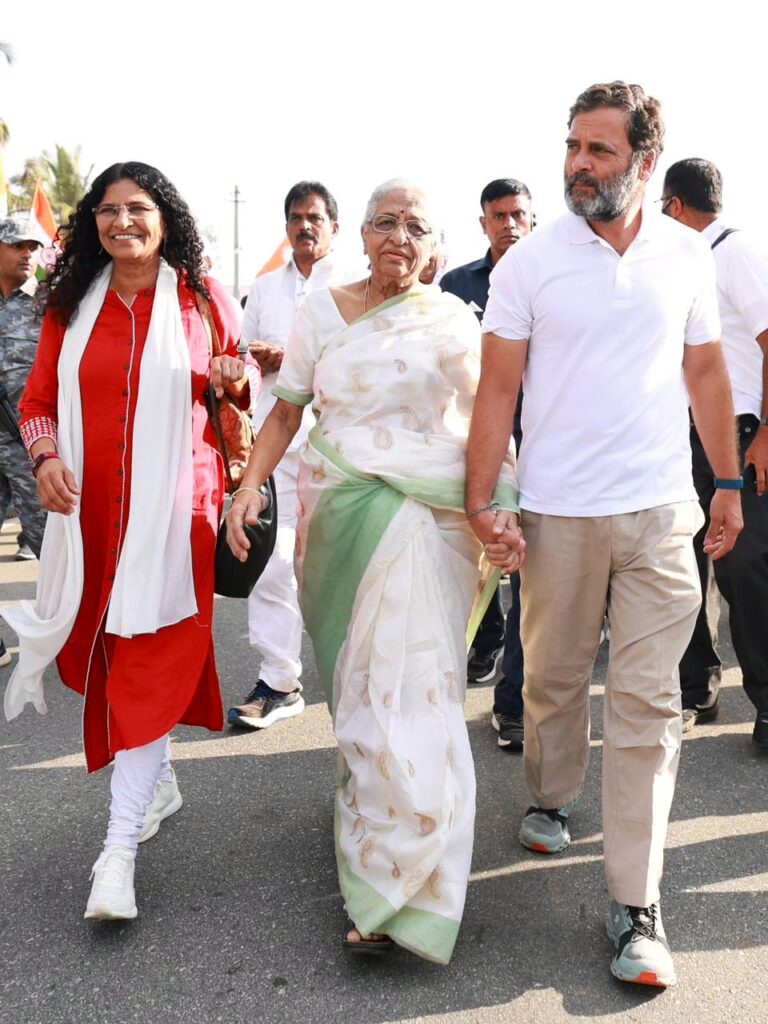
Bengaluru: Indira Lankesh and Kavitha Lankesh, mother and sister of the slain journalist Gauri Lankesh, joined the walk with Rahul Gandhi on Friday as they participate in Congress’ Bharat Jodo Yatra. Rahul Gandhi tweeted about Gauri Lankesh and how Gauri represent the true spirit of India. His tweet- Gauri stood for Truth. Gauri stood for Courage. Gauri stood for Freedom. I stand for Gauri Lankesh and couples others like her, who represent the true spirit of India. Bharat Jodo Yatra is their voice. I can never be silenced. Mother-daughter duo joined the march at Bhuvanahalli village of nagamangala taluk in Karnataka. Kavitha Lankesh is a filmmaker based in Bangalore. Kavitha Lankesh’s documentary film -Gauri based on the life of her sister and slain activist-journalist Gauri Lankesh, has bagged the ‘Best Human Rights Film’ award at the Toronto Women’s Film Festival 2022. Additionally chosen for the South Asian Film Festival of Montreal, the documentary is also being considered for various films festivals across the globe, including Doc New York, International Documentary Film Festival of Amsterdam, and Sundance Film Festival, according to a report by The Indian Express. Urging everyone to participate in the yatra, Congress stated that the rally is meant to provide an alternative to the “politics of fear, bigotry, and prejudice” and to the economics of livelihood destruction, increasing unemployment, and growing inequalities. Bharat Jodo Yatra  will cover a distance of 511 kilometers across 21 days in Karnataka, the party’s state president D K Shivakumar said on Monday. The Yatra had taken a break of 2 days due to Ayudh Puja and Dusshera celebrations.

Fears of increased global oil prices as OPEC+ decides to cut oil production

0
In a summit held at Vienna on Wednesday, OPEC+ countries have decided to cut 2 million barrels per day in oil production from November. This has the potential to escalate the shadow wars over global oil prices. The global oil markets were already under stress due to existing American sanctions on Venezuela, and Iran, and the newly imposed sanctions against Russia due to its military confrontation in the Ukraine war. This collective decision by Saudi and Russia is about to trigger the immediate rise of prices in global oil markets. A 2 million barrels per day cut represents 2% less oil in the global supply chain. This decision comes at a juncture when Europe especially Germany is facing a severe energy crisis due to sanctions on Russian oil on which it is heavily dependent.  Some European countries have already begun to ration energy supply with fast approaching winter. OPEC+ refers to the 13 members of the Organization of Petroleum Exporting Countries (OPEC) and 11 other non-OPEC members including Russia. OPEC holds 80.4% of the world’s proven oil reserves, while 11 non-OPEC nations represent 9.7% of proven oil reserves. Together they have the capability to disrupt or enhance the supply of crude oil on a global scale. This decision is said to be jointly taken by Saudi Arabia and Russia against the rules dictated by America. America due to its shale fracking is rising as a global energy powerhouse and is trying to sell its oil to Europe at 8 to 10 times higher. The move to cut oil production by OPEC+ has been termed as shortsighted by the west and the US administration. The west and especially America is accusing OPEC of Aligning itself with Russia and weaponizing Oil. This decision of Saudi to defy America’s orders is also seen as Saudi asserting itself in spite of being a staunch American ally in the middle east. This also foils America’s plan to price cap Russian Oil and sell its own oil to Europe at exorbitant prices due to the Ukraine Crisis. On September 27th the two main undersea gas pipelines to Germany and Europe- Nord Stream 1 and Nord Stream 2 were blown in the Baltic sea in an alleged sabotage attempt. Now it only remains to see what course of action will America take against the OPEC decision. India is enjoying a record low price oil supply from its traditional ally Russiain spite of sanctions against it. The current NDA government has been selling oil to its citizens at higher prices compared to the same price dynamics during the previous UPA regime. America recently sanctioned an Indian firm trading with Iranian petrochemicals. All the signs indicate the volatility and unpredictability of International oil markets and the geopolitics associated with them. The shadow wars being waged by rich countries to suit them are crushing the poorer countries which are already facing food shortage and famine due to Russia and NATO confrontation in Ukraine.
