Gauri Lankesh News spoke to S.R. Hiremath, an anti-corruption activist on the occasion of the 45th anniversary of the Emergency in India. Below is the excerpt from the interview-
I have lived in the US for almost 11 years. I quit my job to dedicate myself to the upliftment of the economically and socially backward masses. Along with like-minded peers, on January 1, 1974, we started an organisation called “India Development”. To be able to aspire and achieve any humanitarian development, it is important to have an environment that understands and respects the democratic aspirations and values.
India played a significant role in the liberation of Bangladesh. Post that, we witnessed the emergence of Indira Gandhi’s totalitarianism and dictatorship. The empowerment of democratic institutions holds the key to uphold democratic ideals.
One of the early instances where we witnessed the arrival of the dictatorial trends of Indira Gandhi was when she appointed only such judges who would act on her words and pass such judgements to the key positions in Judiciary. People like AK Rai were chosen over three other top mosy Judges of the Supreme Court including – KS Hegde, father of Justice Santosh Hegde.
In those years, when I was in America I was observing the New York Times. I observed that a 6-page report on Jayaprakash Narayan (JP). At around the same time, UR Ananthamurthy also visited Chicago unexpectedly. We all met up with him and tried to understand what was happening in India. The Allahabad Court in June had suspended Indira Gandhi’s Lok Sabha membership. It shook the government. A few other incidents also added to the emergency being imposed by Indira Gandhi. Basically, efforts were made to make our Constitution irrelevant by imposing a state of emergency. We then staged protests near the Indian embassy office at Washington. For voicing out the truth, our passports were canceled.
In today’s scenario, the courts have not shown any intent to understand and resolve the plight of our migrant workers. Even then the situation was the same. Judges who passed pro-people judgements were transferred. It was a situation where fundamental rights were being taken away. These really are dark days under Modi’s first and second term of governance. These times are atleast twenty times worse than the times of the emergency. Incarceration of intellectuals like Anand Teltumbde who uphold the constitutional principles of equality, brotherhood, and fraternity is a much larger attack on democracy than what was done under India Gandhi’s regime. Resistances must be built against such attacks on democracy and it must stem out of in-depth studies and research.
This government has stretched the working hours much longer and has also by suspended the labour laws for almost three years. We must confront these moves with the ideals set forth by Buddha, Basavanna, and Dr. Ambedkar. During the emergency, Jayaprakash Narayan(JP) had called on the youth under the popular slogan of Sampoorna Kranti or Total Revolution. This country needs young people inspired by the ideals of the Constitution to provide any meaning to our independence. JP brought all the opposition parties together to build a new one. However, the Janata Party broke down into fractions before his very eyes. This as well seems like a historical blunder.
The RSS, which did not even participate in the freedom struggle is today trying to take the country back to non-democratic ideals with its dangerous ideology. They are working to suppress the movements which uphold the Constitutional values and our National Flag. Congress was the reason for the genesis of economic inequality in India. But the BJP is taking it much further and deeper. However, we must move towards economic equality as proposed by Gandhi and E.F. Schumacher. We must take to annihilate caste as per the values put forth by Dr. Ambedkar. In my opinion, the soul of this country lies with its self-sacrificing saints. They have spread the meaning of life and our civilizational values and heritage to our people. Political parties should walk through this path. However, today’s political parties have failed to retain people’s confidence in them.
Edited by: Anil Kumar Chikkadalavatta
(Taken from the long interviews of SR Hiremath with Author & Publisher Basavaraja Sulibavi. The interview is available on the website naanugauri.com for viewing)
Translated into English by Shashank SRAlso Read: How Democracy was Detained in Assam
The Karnataka government led by a senior RSS whole-timer, B.S. Yediyurappa is going to honour Hindutva icon, VD Savarkar by naming two of the newly built major flyovers in Bengaluru and Mangaluru after him. There was a huge uproar against this decision of the RSS-BJP government as many pro-Kannada organisations with opposition parties and liberal-secular organizations questioned the logic to ignore so many freedom fighters, social reformers, and others from within the state. Since the renaming ceremony was taking time, the RSS strong-arm outfit, Bajrang Dal strung a banner reading “Veera Savarkar Melsethuve (flyover)” in Kannada on the flyover at Mangalore. They also wrote “Bajrang Dal” in saffron paint on the divider of the flyover.It would be a sad day not only for Karnataka but the whole country if a seasoned collaborator of the British rulers and Jinnah led Muslim League is glorified in any way. Let’s hear from the horse’s mouth what Savarkar did as a collaborator of the enemies of India.
SAVARKAR’S HATRED FOR THE TRICOLOUR
Savarkar, like the RSS, abhorred every symbol of the Indian people’s united struggle against the British rule. He refused to accept the Tricolour (at that time there used to be a charkha or spinning wheel in the middle of it) as a national flag or flag of the freedom struggle. In a statement issued on September 22, 1941, for the benefit of Hindu Mahasabha cadres, he declared, “So far as the flag question is concerned, the Hindus know no flag representing Hindudom as a whole than the ‘Kundalini Kripanankit’ Mahasabha flag with the ‘Om and the Swastik’ the most ancient symbols of the Hindu race and policy coming down from age to age and honoured throughout Hindusthan. It is actually sanctioned and owned by millions on millions of Hindus today from Hardwar to Rameshwaram and flies aloft on every Hindusabha branch office at thousands of centres. Therefore, any place or function where this Pan-Hindu flag is not honoured should be boycotted by the Hindu sanghatanists at any rate…The Charkha-Flag [before the present national flag it used to be the one] in particular may very well represent a Khadi-Bhandar, but the Charkha can never symbolize and represent the spirit of the proud and ancient nation like the Hindus.” [Bhide, A. S. (ed.), Vinayak Damodar Savarkar’s Whirlwind Propaganda: Extracts from the President’s Diary of his Propagandist Tours Interviews from December 1937 to October 1941, na, Bombay, 1940, p. 470-73.]
Read More:Karnataka government drops naming of flyover after “Veer” Savarkar
What HM and RSS cadres did to the freedom fighters who dared to carry Tricolour would be clear from the following words of a well-known socialist leader N. G. Goray who was witness to an incident in 1938 when the Hindutva cadres tore up the Tricolour and attacked those who were carrying it: “Who attacked the May Day procession? Who assaulted men like Senapati Bapat and [Gajanan] Kanitkar? Who tore up the national flag? The Hindu Mahasabhaites and the Hedgewar boys did it all…They have been taught to hate the Muslims in general as Public Enemy Number 1, to hate the Congress and its flag…”[Nauriya, Anil, ‘The Savarkarist syntax’, The Hindu, September 18, 2004, Delhi.]It is to be remembered here that the British rulers were persecuting the freedom fighters who publically carried the Tricolour in the same manner.
BACKSTABBING NETAJI SUBHASH CHANDRA BOSE
When Netaji after escaping from India (January 16, 1941) was trying to secure foreign support for the liberation of the country and trying to organise a military attack on the northeast of the country which finally culminated in the formation of Indian National Army, it was Savarkar who offered full military cooperation to the British masters. While addressing the 23rd session of Hindu Mahasabha at Bhagalpur in 1941, he said: “The war which has now reached our shores directly constitutes at once a danger and an opportunity which both render it imperative that the militarization movement must be intensified and every branch of the Hindu Mahasabha in every town and village must actively engage itself in rousing the Hindu people to join the [British] army, navy, the aerial forces and the different war-craft manufactories.” [Savarkar, V. D., Samagra Savarkar Wangmaya: Hindu Rashtra Darshan, vol. 6, Maharashtra Prantik Hindusabha, Poona, 1963, pp. 460-61.]To what extent Savarkar was willing to help the British would be clear by the following words of his: “So far as India’s defence is concerned, Hindudom must ally unhesitatingly, in a spirit of responsive co-operation with the war effort of the Indian government [British] in so far as it is consistent with the Hindu interests, by joining the Army, Navy and the Aerial forces in as large a number as possible and by securing entry into all ordnance, ammunition and warcraft factories…Again it must be noted that Japan’s entry into the war has exposed us directly and immediately to the attack by Britain’s enemies. Consequently, whether we like it or not, we shall have to defend our own hearth and home against the ravages of the war and this can only be done by intensifying the government’s war effort to defend India. Hindu Mahasabhaits must, therefore, rouse Hindus especially in the provinces of Bengal and Assam as effectively as possible to enter the military forces of all arms without losing a single minute.” [Ibid., p. 460.]Savarkar spent the next few years in organizing recruitment camps for the British armed forces which were to slaughter the cadres of INA in different parts of North-East later. The Madura conference of Hindu Mahasabha concluded with the adoption of an ‘immediate programme’ which stressed: “to secure entry for as many Hindus recruits as possible into army, navy and the air forces”. [Ibid., p. 439.] He also informed them that through the efforts of Hindu Mahasabha alone, one lakh Hindu’s were recruited in the British armed forces in one year. It is to be noted that during this period RSS continued inviting Savarkar to address the RSS youth gatherings for motivating the latter to recruit into the British armed forces.
SAVARKAR DECLARED INDIA IS NOT ONE NATION
The documents available in the Hindu Mahasabha archives are shocking and make it very clear that Savarkar, like the Muslim League, believed that India is not one nation but consisted of two nations as claimed by Jinnah and the Muslim League. While delivering the presidential address to 19th Hindu Mahasabha session at Ahmedabad in 1937, Savarkar declared: “As it is, there are two antagonistic nations living side by side in India, several infantile politicians commit the serious mistake in supposing that India is already welded into a harmonious nation, or that it could be welded thus for the mere wish to do so…India cannot be assumed today to be a Unitarian and homogenous nation, but on the contrary, there are two nations in the main: the Hindus and the Moslems, in India.”[Samagra Savarkar Wangmaya: Hindu Rashtra Darshan (Collected works of Savarkar in English), Hindu Mahasabha, Pune, 1963, p. 296.]
SAVARKAR JOINED HANDS WITH THE BRITISH RULERS AND MUSLIM LEAGUE IN SUPPRESSING QUIT INDIA MOVEMENT
He not only kept aloof from the freedom struggle but also helped the British rulers in suppressing any challenge to their interests. During 1942’s Quit India Movement when the whole country was facing brutal repression of the colonial masters Savarkar declared: “The Hindu Mahasabha holds that the leading principle of all practical politics is the policy of responsive co-operation. And in virtue of it, it believes that all those Hindu Sanghatanists who are working as Councillors, Ministers, Legislators and conducting any municipal or any public bodies with a view to utilize those centres of Government power to safeguard and even promote the legitimate interests of the Hindus without, of course, encroaching on the legitimate interests of others are rendering a highly patriotic service to our Nation. Knowing the limitations under which they work the Mahasabha only expects them to do whatever good they can under the circumstances and if they do not fail to do that much it would thank them for having acquitted themselves well. The limitations are bound to get themselves limited step by step till they get altogether eliminated. The policy of responsive co-operation which covers the whole gamut of patriotic activities from unconditional co-operation right up to active and even armed resistance will also keep adapting itself to the exigencies of the time, resources at our disposal and dictates of our national interest.” [Italics as in the original][V. D. Savarkar, Hindu Rashtra Darshan, vol. 6, Maharashtra Prantik Hindusabha, Poona, 1963, p. 112.]
HINDU MAHASABHA LED BY SAVARKAR RAN COALITION GOVERNMENTS WITH JINNAH LED MUSLIM LEAGUE
The Hindu Mahasabha under his sole leadership ran coalition governments with the Muslim League in the 1940s. Publicly defending this collusion with the Muslim League, Savarkar in his presidential speech to the 24th session of Hindu Mahasabha at Kanpur in 1942 declared: “In practical politics also the Mahasabha knows that we must advance through reasonable compromises. Witness the fact that only recently in Sind, the Sind-Hindu-Sabha on invitation had taken the responsibility of joining hands with the League itself in running coalition Government. The case of Bengal is well known. Wild Leaguers whom even the Congress with all its submissiveness could not placate grew quite reasonably compromising and sociable as soon as they came in contact with the HM and the Coalition Government, under the premiership of Mr Fazlul Huq and the able leadership of our esteemed Mahasabha leader Dr Syama Prasad Mukherjee, functioned successfully for a year or so to the benefit of both the communities.”[Samagra Savarkar Wangmaya: Hindu Rashtra Darshan (Collected works of Savarkar in English), Hindu Mahasabha, Pune, 1963, pp. 479-80.]
SAVARKAR WANTED NEPAL KING TO RULE INDIA IN CASE THE BRITISH DECIDED TO LEAVE INDIA
Savarkar even preached that it was legitimate to have the King of Nepal as ‘Free Hindusthan’s Future Emperor’ if the British leave India. His advice to the British rulers was very clear: “If an academical [sic] probability is at all to be indulged in of all factors that count today, His Majesty the King of Nepal, the scion of the Shisodias[sic], alone has the best chance of winning the Imperial crown of India. Strange as it may seem, the English know it better than we Hindus do…It is not impossible that Nepal may even be called upon to control the destiny of India itself. Even Britain will feel it more graceful that the Sceptre [sic]of Indian Empire if it ever slips out of her grip, should be handed over to an equal and independent ally of Britain like His Majesty the King of Nepal than to one who is but a vassal and a vanquished potentate of Britain like the Nizam.“ [Italics as in the original][Bhide, AS, (ed.), Vinayak Damodar Savarkar’s Whirlwind Propaganda: Extracts from the President’s Diary of his Propagandist Tours Interviews from December 1937 to October 1941, na, Bombay, 1940, pp. 256-57.]Savarkar may be a ‘Veer’ or brave for the Hindutva camp but the fact is that he wrote more than six mercy petitions and got remission of almost 40 years out of 50 years’ conviction. If RSS-BJP is so sure of Savarkar’s patriotic credentials, let them make these writings of Savarkar public so that people of Karnataka and rest of the country can reach an objective conclusion.Link for Savarkar’s shameful mercy petitions: Here
Housing and Land Rights Network (HLRN) has brought to light and condemned incidents of forced evictions across the country during the Covid-19 Lockdown. In its press release dated 17th June 2020, HRLN stated that such forced evictions during the harsh lockdown have resulted in extensive loss of lives and livelihoods. Such moves are also in violations of Human Rights the press note states.
Incidents of Forced Evictions:
HLRN has recorded at least 22 incidents of forced evictions and demolition of houses during the lockdown period across the country between 16th March and 16th June. These incidents have been undertaken by both Central and State government authorities. The noted reasons for such evictions include ‘Beautification Projects’, Smart city projects, Land and Forest clearances. It has been estimated conservatively that at least 13500 people have been adversely affected through such measures.
In many cases, people have been rendered Such evictions stand in grave violation of Human Rights on multiple grounds and cannot be justified during the ongoing pandemic outburst which has put health and economy under such acute distress. This has put the lives of the people evicted in grave danger as are exposed to an increased risk of contracting Covid-19 and also to climatic extremities like heat and rain. These evictions have occurred across states and Union Territories including Chattisgarh, Tamil Nadu, Andhra Pradesh Karnataka, Rajashthan, Maharashtra, Odisha, Manipur, J&K, MP, Delhi, and Telangana.
It was noted that in most of these cases, due processes were not followed. They were not served notices in advance and alternative housing arrangements were also not made for the people evicted. Forced evictions are a gross violation of human rights according to the UN. Forced evictions and demolition of houses stand in violation of multiple human rights, including the right to life, health, adequate housing, food, water, and sanitation.
Earlier, UN Special Rapporteur on Adequate Housing had earlier urged all states to stop evictions for whatsoever the reason until the end of the pandemic and for a reasonable period of time thereafter. Being evicted from one’s home during Covid-19 would be a ”potential death sentence”. UN Committee on Economic, Social, and Cultural Rights also had urged states to impose a moratorium on evictions during the pandemic. Several Indian courts like the High Court of Allahabad and Bombay had directed the state authorities not to evict people or demolish their houses during the lockdown.
State uses the lockdown period to its advantage:
These forced evictions and demolition of homes have happened during the lockdown and right after it ended. It seems that the lockdown has been advantageous to the states as they made good use of curfew-like situations. The lockdown had left people with restrictions on movement and no access to legal remedies which made it easier for the governments to continue with its forced evictions.
HLRN’s effort to reach out to the governments:
On 13th March, HLRN through press release called upon the Government of India to take note of this grave issue. On 18th March, it had written to the Ministry of Housing and Urban Affairs. It demanded MHUA impose a national moratorium on forced evictions and ensure that no one is rendered homeless. The ministry had heard the demands and forwarded it to all state governments on 29th April 2020. Through this, the ministry had asked the state governments to frame policies to protect those without adequate housing. Despite all these efforts, authorities at all levels including the Indian Railways have committed these grave Human Rights violations.
In the backdrop of this alarming situation, HLRN has called on the state at all levels to immediately:
Impose a national moratorium on evictions, for any reason, until 31st December 2020.
Provide compensation for loss of housing and personal belongings amongst others and provide adequate alternative housing to the evicted housing
Investigate all forced evictions that have taken place during the pandemic in accordance with the laws.
Ensure the provision of adequate services of water, sanitation, and access to food and livelihood sources to the poor.
Uphold the human right of adequate housing for all and recognize its importance to health. Develop solutions to provide adequate housing to homeless and other inadequately-housed persons.
The COVID-19 induced lockdown has not just brought the country to a halt but also brought with it many challenges. We all witnessed how the migrant workers were stripped of their dignity in their mass movement from the cities to their natives.
Another such challenge that the young generation is facing is that of Online education. One that neither the teachers, not the students were prepared for!
From 24th March 2020, the school and college students are being `homeschooled’ from through Zoom and online classes that have replaced traditional classrooms due to COVID.
There are many who advocate that online classes will transform education as we know it, the overall picture is not all that rosy, especially in India, where problems like lack of technology, digital training, and network bandwidth are posing challenges for many families and teachers.
Education in Kashmir amid the social and digital lockdown
The union territory of Jammu and Kashmir has been under lockdown since August 5th, 2019 post the announcement of the abrogation of Article 370. Add to this the COVID induced lockdown which has compounded the miseries of the student-teacher community in J&K.
Along with the total shutdown in J&K, the internet was also shut down, which was later restored but only to 2G internet.
Repeated demands to restore 4G Internet in the backdrop of the COVID 19 crisis to make online education easier have gone to deaf ears. Students were the worst-hit owing to the ban on the high-speed internet.
As soon as the lockdown was imposed, the Education Department switched to online classes for students across Jammu and Kashmir. But for the teachers and students alike, 2G internet has rendered them helpless.
According to a report by the Newsclick, the teachers are frustrated by the slow internet speed as live videos are impossible and it takes days to upload video lessons. Students also find classes boring as it takes hours to play and prefer to skip classes.
Due to such lag in studies university students in J&K are demanding that the University do mass promotion of students to the next semester
On 4th June 2020, Students from Central University of Kashmir (CUK) pursuing various degrees including Law, Science, Urdu, and some professional degrees protested outside the Campus in Ganderbal.
The protesting students were seeking mass promotion to next semester as according to them they could not attend classes due to the lockdown since August last year.
They said that they are mentally disturbed due to the ignorant attitude of University authorities who are not paying heed to their demands.
Gazi Khan, a law student, told the Press Trust of Kashmir that we tried our best to bring our issue to the notice of DM Ganderbal but we didn’t get the desired response from them. “Our demand is genuine as most of the universities in India have granted mass promotions as per guidelines, however, CUK doesn’t follow the same”, he said.
“We the Kashmiri students are suffering from last 10 months as our two semesters are pending still due to clampdown after the abrogation of article 370 and now due to Covid-19 lockdown”, he further added. “The education field has suffered a lot and students were not able to study that is why we demand mass promotion”, he said.
Another student Nadia Raseed exclaimed on behalf of students federation of CUK that they have been constantly in lockdown besides that they had appealed higher authorities but at the end instead of granting mass promotion in our favor, authorities decided to hold exams and students haven’t studied enough so that they can appear in the examination. “The majority of students are in depression. We sincerely request authorities kindly grant mass promotion in favor of students”, she said.
“Students of Maulana AzadMemorial (MAM) college boycotted their classes and held a protest demonstration on the main road outside the college, blocking traffic for half an hour on Saturday morning”, official sources said. “They also raised anti-government slogans during the protest demonstration”, they said.
“Similar protest demonstrations were held in Science college at canal road and Women’s college at a parade in the city”, the sources said.
A group of about 20-25 activists of the J&K National Panthers Party (JKNPP) also held a dharna near exhibition ground on the issue.
Reports from Kathua district said that lawyers suspended their work in courts in the main town afternoon in support of the student’s demand.
ALSO READ: Kashmiri photojournalist Masrat Zahra wins top photojournalism award
Pitfalls of Online classes
Turning teaching materials into digital format at short notice has been a challenge as only a few teachers have strong digital skills or connectivity. In addition to that, both teachers and students are facing internet connectivity issues.
Switching to remote classes from traditional classes became a challenge for many students. Students are having problems communicating with the teachers properly as it is usually being done in traditional classes. The bond between students and teachers aren’t there. Students from different social background and not every student has access to a laptop or an internet connection. It is not possible for such students to attend online classes. Neither government nor schools and colleges have facilitated students with the necessary equipment or internet connection.
Times of India, a widely circulated and popular newspaper and digital media outlet has apologized for its usage of the wrong photo of a couple for an unrelated story.
TOI had carried news about a man killing his wife and mother-in-law and then shot himself dead on 23rd June in the morning. With the article, the newspaper has shared the picture of a couple who shared the same name but totally unrelated to the incident.
TOI had published the article on both print and online mediums. This misreporting by TOI was busted when Shilpi and Amit Agarwal (the couple whose photo was used) posted a video on Facebook to point out that they are doing fine. In their video, Shilpi and Amit Agarwal clarified that they were doing well and happy and that the article was misrepresented. They also wanted the media house to correct the mistake at the earliest.
This is what the journalism has come down to in India. Whatever small amount of trust I had on TOI and on Indian journalism has just gone down the drain. We (Amit Agarwal & Shilpi Agarwal) are doing totally fine and this incident is nowhere related to us. This has really shocked our family and friends and caused a chaos this morning for us.TOI, please fix this asap with a correction and formal apology. Once again, we are fine and thanks to all the loved ones who are concerned about us. We are happy and together like never before 🙂 #incorrectnews #timesofindia #fakenews #TOINewslink: https://timesofindia.indiatimes.com/city/kolkata/man-kills-estranged-wife-in-bluru-mom-in-law-in-kol-shoots-self/articleshow/76519987.cms
After the video from the couple became viral, later in the day, TOI updated its article online at around 2.45 PM and has issued an apology- “We had inadvertently uploaded a wrong photo in this story. We sincerely apologise for this error.”
However, incidents like these bring to the fore the issue of unethical, unprofessional, and irresponsible reporting by the media outlets in recent years.
In a mad rush of “Breaking News” and being the fastest to break a story, many times the reporters do not care to verify the source of information or the full story from the point of ethical reporting.
Thank youu, Arun. This was an error that shouldn’t have happened. Period! Can well imagine what the couple has gone through because of this horrendous mistake. I want to personally apologise to them. We relied on an official source that the world relies on. Learnt our lesson 🙁
The rampant misreporting and disinformation is not new but the fast and disposable way for news reporting has been troubling, to say the least.
The recent incident of wrong reporting of the accidental death of a pregnant elephant was spun out of control and ended up blaming a whole community and state of Kerala for the death of the elephant.
Rajesh Kalra, Chief Editor of Times Digital has publicly apologized for the mistake carried out by his outlet in response to a tweet made by Arun Bothra. However, one can only imagine that one apology will change the ways of the media or will make them reflect on their irresponsible behaviour.
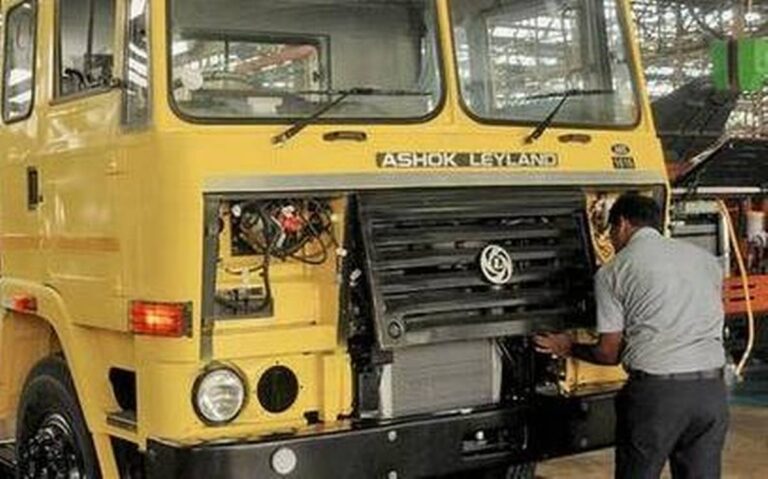
Ashok Leyland, the country’s second-largest commercial vehicle manufacturing company has suddenly fired 5,800 workers from the Pantnagar plant in Uttarakhand.The company fired 4,500 permanent and 1300 contract workers on May 30 without any notice period. Even before the term of four years completed for the temporary employees, the company has already fired them without any notice. The company paid salaries to these employees on 16 June, though they were fired on 30 May itself.
Manoj Singh Rawat, a laborer working in the plant, said that as per the company rules all workers are made to sign a contract working for four years with the company at the beginning of their employment. But by the recent action, we can see that the company has not followed its own rules. The company has also fired most of the workers who had been employed for only one or two years.
Interns turned into Workers
This plant at Pantnagar employs about 6,500 workers, of which 4,500 are permanent. According to this, the company has dismissed and got rid of all the permanent workers.Manoj Singh Rawat who works there said, “The company started after the lockdown impositions were relaxed, the work was going well, but on the evening of May 30, an announcement was made by the company management. It said that the company was going through a recession and they will not be able to handle the burden of so many employees, so they were dismissed from work. ” However, they also added that ‘if the situation of the company improves by October, November, then they will be called back to work’.The workers say that the company is getting their work done by the workers who survived the retrenchment. Apart from this, the students who were doing a diploma from the company are being made to work by putting them into the production line.
Abolition of labor laws are boosting such companies
Incidents of retrenchments, shutdown, layoffs have increased rapidly in all parts of the country after the withdrawal of the Modi government’s order to pay salary during the lockdown.One after the other, most companies are dismissing the workers by giving recession as the reason.The way the Modi government was abolishing labor laws for the last six years and making arrangements to provide free workers to companies in the name of fixed-term employment (FTE). In the absence of any protection to the workers, companies used the lockdown as an excuse for the workforce reductions. Once again Narendra Modi has appealed to ‘turn the crisis into opportunity’ but it is not difficult to guess from whom this appeal is being made, from the owners or the workers.The Supreme Court has also refused to mediate or give any decision related to this matter, though the companies have been expelling people who have been permanent employees and have served the company for the last two or three decades. On the other hand, the unions have proved to be so ineffective during these times. What is emboldening the companies into making such illegal evictions is the main question?‘Aapka Jeet Hamare Jeet’ is the slogan of Ashok Leyland. But it seems that the company is seeking its victory in the defeat of the workers.Ashok Leyland is the second largest name in the world of commercial vehicle manufacturing, which is a company of Hinduja Group. It was started by Raghunandan Sharan in 1948.
After Karnataka Medical education minister, K. Sudhkar’s, father tested positive for coronavirus on Monday, today his wife and daughter have also tested positive for being infected with coronavirus. In his tweet, he also confirmed that he and his two sons have tested negative.
Test results of our family members have come. Unfortunately, my wife and daughter have tested positive for #Covid19 and are undergoing treatment. My two sons and myself have tested negative. I am grateful to everyone for their best wishes and prayers.
His father, Keshava Reddy, 82, who is former Chikkaballapur Zilla Panchayat, tested positive on Monday along with a cook and domestic help who worked at their house according to a report from the Newsminute websiteAccording to the family, his father is said to have contracted the virus from their domestic help, who worked at their house in Sadashivanagar. After his father tested positive on Monday, Eight people, including the security personnel and the family members, had been home quarantined. While his father, who showed symptoms of cough and fever, is admitted at a private hospital, the two staff members are being treated at Victoria Hospital. The cook is 40 years old and the domestic help is 26 years old.
My 82 years old father has been admitted in hospital with complaints of fever & cough. He has undergone Covid19 test as well. We anxiously await results. Need your prayers and blessings..
Earlier in April, the medical education minister, K. Sudhakar, along with two other ministers were quarantined after a journalist who came in contact with them tested positive for the coronavirus infection. The camera person from a Kannada news channel had come in contact with K. Sudhakar, Deputy Chief Minister C N Ashwath Narayan, and Home Minister Basavaraj Bommai. Also Read: Bangalore Quarantine Centres: No food, No water, and No hygieneWith the state’s daily growth rate of coronavirus positive cases rising to 4 percent, several containment zones in Bangalore are in lockdown again. Karnataka Chief Minister, Yediyurappa said “Stringent lockdown to be in place in areas like KR Market, Siddapura, VV Puram, Kalassipalya, and surrounding areas. Adjoining streets of positive cases’ residences also will be sealed,” after a meeting with top government officers in Bengaluru.
Teesta Setalvad, an Indian civil rights activist and journalist, has been honored with the reputed Honorary Doctorate from the University of British Columbia (UBC). Teesta Setalvad is the secretary of Citizens for justice and peace (CJP ). CJP is an organization that was formed to fight for justice for the victims of communal violence in the state of Gujarat in 2002.
— University of British Columbia (@UBC) June 22, 2020
CJP is a co-petitioner seeking a criminal trial of Narendra Modi and sixty-two other politicians and government officials for alleged complicity in the Gujarat riots of 2002. Teesta, with her husband Javed Anand, is the co-founder and co-editor of the magazine Communalism Combat which fosters communal harmony by attacking entities propounding communal violence. She is also the General Secretary of People’s Union for Human Rights (PUHR).She is one of the 10 prominent personalities who have received this honour in 2020. Given the Covid-19 outbreak, she couldn’t be present at the ceremony that was supposed to be held in Vancouver at the end of May. But, the university has now decided to announce the names of the awardees by later tonight and conduct the ceremony on a later date. Teesta Setalvad is a “civil rights activist, author, and award-winning journalist in India who played a prominent role in the campaign for justice for the victims of the 2002 massacre of thousands of Muslims in the state of Gujarat. As a secularist, she has worked in the field of human rights and law to expose majoritarianism and religious fanaticism, both in India and in other parts of the world, and has been influential on issues related to the rights of women, religious minorities, Indigenous persons and the LGBTQ community.”
She has earlier won many reputed awards. Few among them are PUCL Journalism for Human Rights Award 1993, Chameli Devi Jain Award for Outstanding Women Media person 1993, and Padma Shri in 2007 awarded for Public Affairs in Maharashtra by the Government of India. The nine others chosen to award the honorary doctorate, 2020 include Tantoo Cardinal, C.M, a celebrated Canadian actor of Cree and Métis descent, Lawrence Hill, Canada’s most respected authors, and musician Doug Johnson among others
Safoora Zargar, Anti-CAA Activist and Student at Jamia Millia Islamia was granted bail this day. She was granted bail on the third day hearing of her fourth bail plea.
The Delhi High Court today accepted her bail plea on ‘humanitarian grounds’. She is 23 weeks pregnant.
Safoora’s bail applications were rejected three times earlier. She had been taken to custody under a case, which alleged her connection with the Delhi Riots. She was imprisoned at the Tihar Jail from April 10 under the most stringent of laws, the Unlawful Activities Prevention Act.
Delhi Police earlier made case for rejection of her bail plea on grounds that 39 deliveries had taken place in Delhi Prisons over the last decade.
Safoora was part of the protests against the Citizenship Amendment Act in various parts of the national capital and organising anti-CAA protests in the Jafrabad area, where the majority of participants were women.
In the earlier bail hearings, Zargar’s counsel argued that she was only holding legitimate and peaceful protests against the Citizenship Amendment Act in accordance with her constitutionally guaranteed fundamental right to speech and expression. Even assuming the prosecution case to be true for the argument case, there is no ground to invoke the stringent provisions of UAPA, the counsel argued in the alternative.
Read More about Safoora’s case: Safoora Zargar, Student activist, bail plea denied the third time
The moment I heard of Sushant Singh Rajput’s death, I thought of calling some common friends that and ask them why did he do it? But I didn’t call anyone. Whatever they could have divulged, it would have just satisfied my curiosity and nothing else. What exactly were the circumstances? what was his mental state, what all pressures he had, what could he have done; I didn’t, I shouldn’t try to reflect on these either as I am neither an expert in that field nor am I, survivor.
But I have spent more than 14 years in the same industry, I too have gone through some of the pressures, so I shall share some of my random memories.
I went to Bombay (now Mumbai) some twenty years ago. I did not know a single soul in the industry. Naturally, I got acquainted with some freshers who had come from different parts of the city. Some left the city just too soon. Those who couldn’t understand the working methodology of the Mumbai film industry started criticizing it and soon became cynics. And these are the ones who could afford to stay in Mumbai, the rest left to their hometown without making anyone know of their exit. And some others kept trying to adjust themselves with the industry.
The many Sushant Singh´s of Bollywood
I used to work as an in house casting director in a production company that produced TV serials. Initially, for a couple of months, my bosses would simply reject the actors that I would shortlist for roles. And slowly I got to know what kind of faces they were looking for and I started giving them what they were looking for. But, I didn’t know the reason for selecting them, I didn’t know what made these selected faces stand apart. I was curious, I wanted to know the reason. And it didn’t take long for me to know the answer.
The answer was that I had started to selecting those actors who came to the office in their cars.
In the Mumbai heat, someone who took the famous crowded train to Andheri then walked or took the bus was someone I couldn’t even give a chance for an audition. Bloody poor! (Well, don’t say it loud; its Mumbai we don’t speak of such things.)
Sushant Singh with Indian cricketer MS Dhoni
I and my group of friends were also in the same category of people who would take local trains and walk to an audition. Whenever we would hear of an audition, many like us would come to the director´s office to mark our presence. Slowly, the reality also dawned on us that we would not become a `Hero´ and would end up taking any role and continue the struggle. Some would join the theatre and find their mental grounding.
Even in the ‘Bollywood Industry’, the world of advertisement is comparatively democratic. And the world of TV is relatively simpler than the core film industry. Though one has to face a lot of hardships, yet there would a chance to audition for the roles and get shortlisted. Sushant Singh Rajput was the kind who are tailormade for TV.
Though one would hear many stories by TV and film actors claiming to come from a poor background and made it big in the Indian Tinseltown, in my long experience, I have not come across any person from the lower or middle class becoming a Hero. Even actors like late Irfan Khan, Nawazuddin Siddiqui, Manoj Bajpayee and Rajkumar Rao came from prestigious institutions that made it relatively easier for them to enter the acting scene. The National School of Drama had developed a reputation and when the students from these prestigious institutions land in Mumbai, they have a team of seniors who are ready to train them and make connections. Even then, many from those institutions can’t survive for long.
Those who did make it..or did they?
If this is the story of those who couldn’t make it, the story of those who could break the barrier and make it big is entirely different.
Mostly those who can’t make it, wouldn’t even know what it is like to be a star. This reminds me of something a senior told me once; Om Puri, a great actor Indian film industry has seen, he goes and acts in a Hollywood movie called Charlie Wilson’s war with world-famous actor Tom Hanks. After the shooting gets completed, Om Puri is invited to Tom Hanks home as a guest. Well, there’s nothing strange or special about him, a co-actor being invited to a star’s house but what’s interesting is, Would actors like Om Puri ever be invited to a Bollywood star’s house? The answer is No! These people will always be outsiders, those who do character roles, those who did art movies.
At the same time, directors like Sanjay Leela Bhansali, who is known for his craft and is a hugely celebrated person in the film industry makes a new movie, he casts Anil Kapoor’s daughter and Rishi Kapoor’s son.
And JP Datta, another immensely successful director makes a new film, and with the lead pair of Amitabh Bachchan’s son and Rajkapoor’s granddaughter. Many such production houses have acted as launch pads for the sons and daughters of the mummies and daddies and Bollywood.
The system is normalised in the film industry that while you are there nobody finds it unusual. I used to be so angry with these directors and ask why do these big directors have to launch star sons and daughters. But that’s the system there, if one has to survive there, he has to follow the unspoken rules.
No hero or a heroine can talk openly or give an interview; all their interviews are planned in advance where the actors will only give an interview just before the release of their film. So, the interview will be around the film and how great the co-actors, directors, and producers are. You should talk about ‘Positive’ aspects. If they were to think of breaking this rule, a hanging sword called ‘Boycott’ will always be staring at them.
If you look at the actors who have attained stardom in the last 2 or 3 decades, a large majority of them are star sons or closely belonging to the film industry. As this system exists its doesnt just make it difficult for outsiders to survive but it doesnt also tolerate outsiders.
After Sushant´s suicide, condolence messages were pouring from the film fraternity. A Bollywood star suggested instead of these obligatory hypocritical condolence messages, we should do silent mourning and introspect about what has happened. The irony is the star was Saif Ali Khan, another Starson.
#MeToo movement exposed sexual harassment and abuse which is rampant and normalised in the industry. We can just hope that The death of Sushant Singh Rajput would expose exploitations, the unfair rules, the dark world of Bollywood. Only if people choose to speak.
The author has written the experience of his struggling days in Bollywood.






 Though one would hear many stories by TV and film actors claiming to come from a poor background and made it big in the Indian Tinseltown, in my long experience, I have not come across any person from the lower or middle class becoming a Hero. Even actors like late Irfan Khan, Nawazuddin Siddiqui, Manoj Bajpayee and Rajkumar Rao came from prestigious institutions that made it relatively easier for them to enter the acting scene. The National School of Drama had developed a reputation and when the students from these prestigious institutions land in Mumbai, they have a team of seniors who are ready to train them and make connections. Even then, many from those institutions can’t survive for long.
 No hero or a heroine can talk openly or give an interview; all their interviews are planned in advance where the actors will only give an interview just before the release of their film. So, the interview will be around the film and how great the co-actors, directors, and producers are. You should talk about ‘Positive’ aspects. If they were to think of breaking this rule, a hanging sword called ‘Boycott’ will always be staring at them.
If you look at the actors who have attained stardom in the last 2 or 3 decades, a large majority of them are star sons or closely belonging to the film industry. As this system exists its doesnt just make it difficult for outsiders to survive but it doesnt also tolerate outsiders.
After Sushant´s suicide, condolence messages were pouring from the film fraternity. A Bollywood star suggested instead of these obligatory hypocritical condolence messages, we should do silent mourning and introspect about what has happened. The irony is the star was Saif Ali Khan, another Starson.
#MeToo movement exposed sexual harassment and abuse which is rampant and normalised in the industry. We can just hope that The death of Sushant Singh Rajput would expose exploitations, the unfair rules, the dark world of Bollywood. Only if people choose to speak.
The author has written the experience of his struggling days in Bollywood.
