Udupi, Karnataka: Since last week, six Muslims female students of Government PU College for girls in Udupi have been protesting after the college authorities issued an order to ban wearing of headscarf in the classes.
The girls are saying that it is an assault on their right to wear a headscarf.
In a video which has now gone viral, the protesting girls said that “ last year, the girls of the Science Department were coming to college wearing headscarf. But now we are not allowed to wear it. We should be allowed to wear scarf”, they said.
The girls said that for three days they have been coming to the college wearing headscarf, but they have not been allowed to enter the class and their attendance is also not recorded.
“ Therefore we are sitting outside the classes as a mark of our protest”, the girls said.
The girls said that the school authorities are asking to bring parents along to sort out the issue, but even after bringing them to the college, the authorities are not talking to them.
The girls said that they remove Burqa at the campus premises itself but wear only headscarf. But principal Rudregowda has ordered the girls to even remove the scarf.
gaurilankeshnews.com team contacted the principal for his response but he could not be reached.
Meanwhile, reacting to the incident, one of the social activists has said that there is nothing wrong in wearing a headscarf. The college management should not ban wearing of headscarf, he said.
“ The college management is claiming that no girl in the past was coming to college wearing a headscarf. But it does not mean that other girls too should not wear that. It is the decision of an individual and the college should respect it”, he said.
He questioned that if wearing headscarf is banned for Muslim girls, then girls of others communities who wear Bindi on their forehead should also be banned.
Demanding the banning of Maharashtra Ekikaran Samiti (MES), a delegation of pro-Kannada organizations submitted a memorandum to Governor Thawarchand Gehlot at Raj Bhavan on Friday.
The delegation led by Karnataka Rakshana Vedike State President, T. A. Narayanagowda submitted a memorandum where it said that the MES should be banned for frequently creating trouble in Belagavi district.
The memorandum said that MES has been raising the issue of Belagavi and demanding its inclusion in Maharashtra. Stating that as per Mahajan Committee report, Belagavi is an intrinsic part of Karnataka. Belagavi became part of Karnataka after the division of linguistic areas in Maharashtra and Karnataka.
Despite knowing this fact, MES has been raking up the issue and trying to create tension in Belagavi district. It is also creating a divide between Kannadigas and Marathas living peacefully in Belagavi.
Accusing the leader of Maharashtra of floating MES in Belagavi only to keep the issue of Belagavi alive, the memorandum said that the political parties of Maharashtra such as Shiv Sena are funding MES.
Stating that MES has been instigating violence and trouble in the border district, the memorandum said that the objective is only to create enmity between Kannadigas and Marathas for their political gains.
Asserting that there is no right in demanding the inclusion of Belagavi in Maharashtra, the memorandum said that Belagavi is very much part of Karnataka. In no case, it can be given to Maharashtra.
Yet, Maharashtra has been relentlessly conspiring to gain control over Belagavi. Though in the past, Maharashtra used its power to get a committee set up for the reorganization of the States based on the linguist areas. The Committee was headed by Meharchand Mahajan. The committee however recommended that Belagavi should remain with Karnataka.
After the report was submitted to the government, Maharashtra refused to accept it. Since then, Maharashtra has been making every effort to keep the issue alive and creating tension in Belagavi.
It has also resorted to attacking Kannadigas living in Maharashtra.
When Maharashtra failed to take Belagavi legally, it started using wrong means and pressure tactics to achieve its ill-purpose. Creation of MES is one the means Maharashtra has adopted, the memorandum said.
MES has been holding events such as Maratha Mela in Belagavi where provocative statements are being issued against Karnataka.
This is leading to hatred between the Marathas and Kannadigas of Belagavi. The tension between two communities is getting reported frequently in Belagavi.
Now, with many Marathas of Belagavi having realized the intentions of MES, they have started to reject the organization. Frustrated with this, the MES is resorting to unlawful activities such as burning the Kannada flag and damaging the statue of Sangolli Rayanna. They have also damaged vehicles in Kolhapur bearing Karnataka registration.
The incidents have intensely hurt the sentiments of Kannadigas.
Since MES is primarily responsible for these unlawful acts, the Government should take strong decision to ban MES, the memorandum said.
Other members including B. Sannirappa, Dinesh Kumar and Arun Jawagal were present.
It is now a century since the Irish poet W. B. Yeats responded to the Easter uprising in 1916 leading to violence and death of many young men with the memorable lines: “everything changed, changed utterly, a terrible beauty is born.” His lines apply quite aptly to our times. If the first two decades of the twenty-first century left the world changed in many fundamental ways, 2021 has further accelerated the pace of the change. The public discourse may not have highlighted the changes; but that does not mean that they did not take place. In fact, the serious disconnect between reality and its perception too is part of that change.
If the Corona virus was a new virus, the experience of epidemic was in no way new to humans. There have been in the past other epidemics, plagues and natural disasters. Yet, the amount of attention paid in the public sphere to the Pandemic world over was something unprecedented. The TV space has remained predominantly occupied over the last two years, 2020 & 2021, by discussion related to public health and government regulations. However, there have been other issues deserving an equal degree of attention. These include: the political eco-system that is no longer conducive to the 20th century ideas of democracy; the siege of the human intellect by artificial intelligence; defeat of western forces by Taliban in Afghanistan; and most importantly the extreme degeneration of the environment. It was during this year that the fate of the Brexit was finally sealed, conclusively leaving broken the promise of turning the world into a global village. Covid has already made the world more disconnected than ever before, as nation after nation brought in area restrictions on free movement of people even within their own countries.
President Donald Trump speaks about the coronavirus in the Rose Garden of the White House, Tuesday, April 14, 2020, in Washington. (AP Photo/Alex Brandon)
Despite the end of the Donald Trump presidency in the US, the political eco-system continues to consolidate orthodoxies and conservatism in an extreme degree. Democracy, where it still survives, showed signs of an unfathomable fatigue in 2021. Civil liberties remained curtailed through most part of the year. Fundamentalists and their non-state armies achieved greater success in capturing social spaces and institutional havens. Violence of a shockingly brutal variety and terrorism of many shades became the every-day narrative. State surveillance and invasion of citizens’ privacy were the order of the day. The free-wheeling capital and the tax-evading digital currencies, together, have widened the gap between the super rich and the larger part of the humanity. While, in most countries the employment statistics hit the rock bottom, the wealth of the wealthy few has risen beyond ordinary comprehension. The inter-locking between artificial intelligence and the human intellect continued to alter the business of being human. Natural languages kept approaching the condition of a collective aphasia. Literature continued to move closer to media creating a new heady amalgam of the natural and the digital, the post-truth. The arts, cinema and theatre scene remained lack-lustre. These are reasons for one to remember 2021 as an eminently forgettable year.
The 2021 highlighted the nature of the crisis within which ideas, ideologies and nations are trapped. In the past, identity was a question of race, religion, nation, gender and language. In 2021, identity is getting increasingly aligned with technologies; and communication and digital technology satraps more powerful than States. Donna Haraway, has commented “in the late twentieth century, our time, a mythical time, we are all chimeras, theorized and fabricated hybrids of machine and organism, in short, we are Cyborgs. The Cyborg is our ontology; it gives us our politics.” In 2021, her words sound truer than before. It was this year when robots started receiving citizenship identity numbers, a step towards their being counted as political entities in near future. The out-sourced memory of humans, now held by machines, is substantively non-temporal, all of it having a static relation with the present moment. It is as if history, or rather the idea of history, has come to a dead-end. At this juncture of the temporal-stasis, the human intellect appears to have started moving not ahead but sideways, into a new culture of man-machine-mind.
In tune with these global changes, India witnessed the unfolding of clashes between the State and the international IT corporate; weakening of the federal structure of the country and increased attacks on the principles embedded in the constitution; continuously falling employment, coupled with sharp rise in fuel and gas prices; greater internal militarisation of sub-regions and clashes between the armed forces and citizens; turning back to hoary past in search of reasons to feel proud about being Indians and a miserable performance on the front of science and medicine; death by shortage of Oxygen, both medical and environmental and denial by the state as well as the fudging of data. If in this year of darkness on all horizons, one could see a silver lining, it was the glorious non-violent struggle of the farmers leading to the repeal of the farm laws. It kept one’s faith in people’s movement as a path to social transformation alive. Another, silver lining was the performance of sports persons in the Olympics and in other competitive sports. However, these are silver-lines amidst deepening darkness. The end of a year is normally the time to celebrate Christmas. The Christmas 2021 was the time when churches were being vandalized and prayer meetings were being attacked by hinudtva fundamentalists, quite clearly supported by the state. One likes to hope that 2022 will usher in a change. However, only electoral victories cannot be seen as sign of any change. The minds of the young generation in India have been filled with the poison of hatred and contempt. Sections of the middle class still have the arrogance coming out of their relative affluence. And the political class is clueless as to the future that most Indians wish to see for themselves. All of us have to be working on many fronts for changing this condition, through 2022 and much beyond it. Let me wish all those who are keen to work towards that change, a year of fulfilment.
Author is a renowned thinker, writer and cultural activist based in Karnataka.
References
Haraway, Donna. ‘A Cyborg Manifesto’, Simians, Cyborgs, and Women: The Reinvention of Nature. London: Rout ledge. 1991.
Yeats, W. B. ‘Easter 1916.’ In Selected Poems. Edited with an Introduction and Notes by Timothy web. London: Penguin. 1991.
Two aspects of the Covid pandemic dominated 2021. First, the Delta variant of Covid, which was detected first in India in October 2020, spread across the world leading to unprecedented waves of Covid spread across the world. The second was the issue of vaccine politics. 2020 was marked by the race for a vaccine to stop the pandemics, but 2021 opened up to the world that the limits of science will be politics. Companies in different countries would lobby against each other, using their countries to negotiate access and legitimacy of vaccines in different countries. The imbalance in power lead many countries to overstock vaccines, while many poor countries were deprived of adequate access to vaccines.
Second Wave in South East Asia
Many countries in South East Asia have experienced growing political polarization during the pandemic. Most notably this resulted in the coup détat in Myanmar early in 2021. There has been growing support for stronger government action in controlling Covid, corruption and the economy in Cambodia, Indonesia, Thailand, and the Philippines this year. Many of the countries in Southeast Asia were considered successes in the management of Covid, however, the second wave turned out to be far more deadly.
Environmental politics
Environmental politics had become increasingly focused on Global Warming. Though the pandemic exposed the concerns of deforestation and resource shortages in 2020, 2021 saw a refocus on Climate Change as a dominant issue. The UN Climate Change Conference 2021 (COP26) showed the importance of the large economies of China, the United States, India, and the European Union in mitigating the effects of climate change.
Recovering the economy
Economically, the global economy shrunk in 2020, while in 2021 it began to grow again, though this has still to show in employment rates, which remain high. The majority of the world’s population now have to see that the recovery is not meant for everyone, but only those at the top. Inequality continued to rise in 2021, with the data industry dominating the accumulation of wealth and power. Amazon, Alphabet, and Reliance all made substantial gains in 2021. Demand for online coordination, retail, and internet-based delivery made 2021 a huge bankroll for these companies. Across the world, these
companies have grown to unprecedented levels, except for those companies based
in China, where powerful anti-trust laws were implemented against the Big Data
companies. With scandals over hate speech and genocidal violence growing across
the world, there has been some discussion on the consequences of unchecked
monopoly power of such industries.
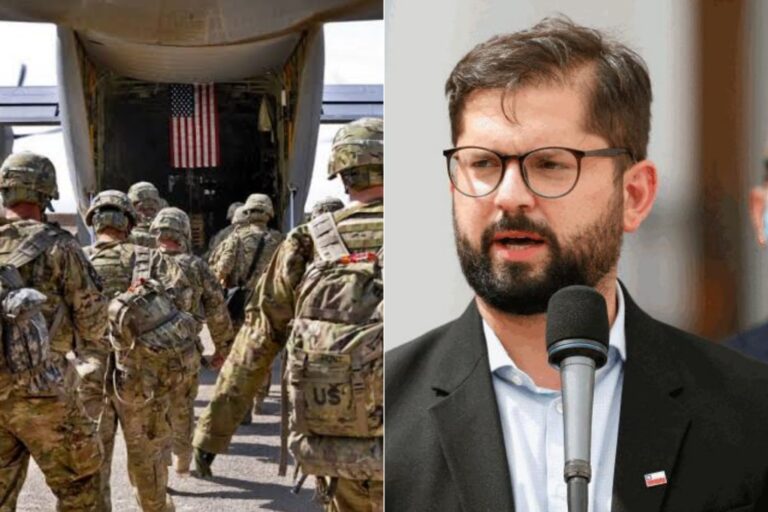
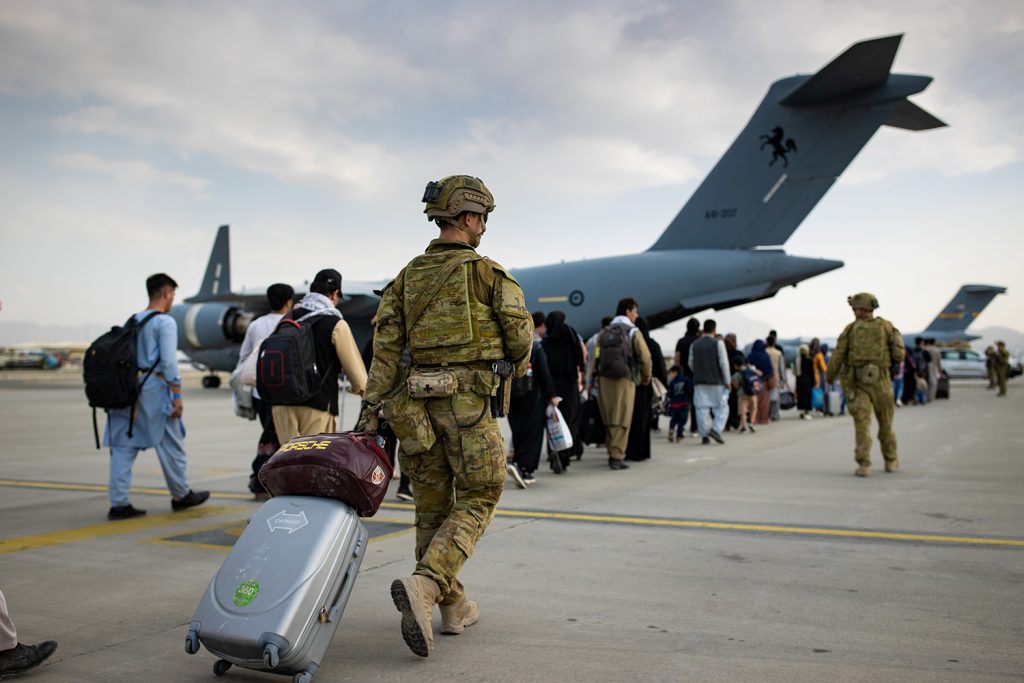
America’s withdrawal from Afghanistan signalled a subtle change in American military strategy. The continued occupation of Afghanistan had two important functions. First, it was a strategic place, being between Chinese, Russia and Iranian spheres of influence. It also was an inevitable direction for NATO to continue to justify its existence in the post-Cold War era. The withdrawal and the movement towards the Pacific with the AUKUS alliance mean that the American military establishment might change the focus away from a global network of allies and occupied and towards a direct blocking of China’s sphere of influence.
American troops leave Afghanistan
France also withdrew its military from the Sahel region in the Saharan region, meaning that energy monopoly is becoming less of a concern to the global powers. There has been a strengthening of radical militant Al Quada offshoots from western Africa to Afghanistan. Notably, Idris Deby of Chad was killed by militant forces after his fourth election victory as President of Chad.
2021 also saw heightened tensions in Eastern Africa, with civil war breaking out in Ethiopia, and developing conflicts over the control of the Nile.
Arab Spring 2.0
2021 also marked a decade from the Arab Spring, and in Northern Africa and the Middle East, mass protests have continued the resurge.
Many have called the period from 2018 to 2021 the second wave of the Arab Spring, where people have come with more developed demands, including changes to the constitution, revision of relationships their countries have had with colonial powers and a more nuanced perspective on religious fundamentalism.
A new generation of Left in Latin America
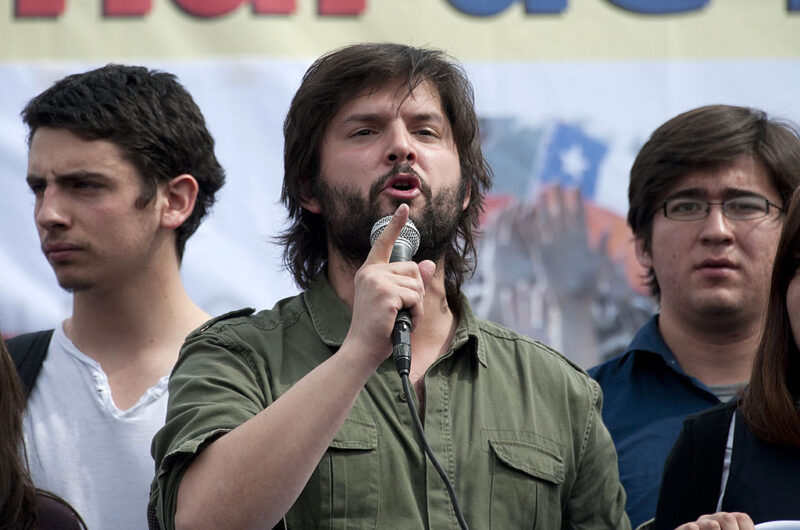
Student leader Gabriel Boric delivers a speech during a protest to demand Chilean President Sebastian Pinera’s government to improve public education quality in Santiago, on August 28, 2012. AFP PHOTO/Claudio SANTANA (Photo credit should read CLAUDIO SANTANA/AFP/GettyImages)
Latin America has seen a broad movement towards left-liberal politicians and parties in 2021, most notably in Peru, Honduras and Chile. In 2022, Brazil’s elections will come, and there is an expected return of Lula. Across Latin America, leftist electoral politics is balanced by mass protests outside. In recent years, mass movements have focused on areas of feminism, police violence, and public welfare.
Looking to 2022
2021 has been a year of disillusionment in terms of politics. While 2020 has been a time of fear and breakdown, 2021 served a harsh truth of the established order to people across the world. While many countries have seen mass demonstrations leading to substantial changes in their country, it hasn’t been seen as the end-all change that was seen as years past. This year, people are learning that the growing wealth inequality means that a lot of the suffering of the Covid pandemic was unnecessary and requires deep introspection and change in the way things are done.
As 2022 dawns, movements across the world will need to go beyond disillusionment and towards new forms of resistance. As the struggles of 2020 and 2021 have shown, resistance creates alternatives. Resistance means not accepting how things are, nor following a path of how they should be, but looking for new ways to challenge the path we are on. Be it regarding tensions in Eastern Africa, growing militancy in the Sahel, mass movements in the Middle East, electoral politics in South America, or the polarization seen in South East Asia, movements across the world see a new future where the old ways are not possible.
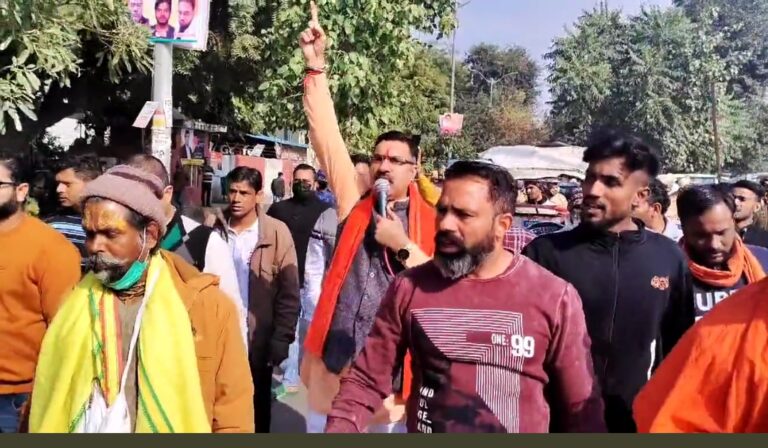
Right-wing groups in Gurugram are protesting the arrest of the Hindu ‘Godman’ Kalicharan Maharaj. Kalicharan was arrested by Raipur police on Thursday. He is booked under sections of promoting enemity between different groups and under obscene act in public.
The members of the group demanded immediate release of Kalicharan and chanted slogans like”Nathuram Godse amar rahe” and “Desh ke Gaddaro ko Goli maaro saalo ko”
Right-wing groups in Gurgaon are protesting the arrest of religious leader Kalicharan by Raipur police; demanding his immediate release. The same group has been spearheading protests against namaz in open spaces in Gurgaon. People raising chants of "Nathuram Godse amar rahe" pic.twitter.com/LLsvQuTE1I
On Sunday, Dec 26th Kalicharan Maharaj used derogatory words against Mahatma Gandhi and hailing Nathuram Godse for killing the father of the nation. Today early morning 4AM, he was arrested by the Raipur Police. He was arrested in Khajuraho.
The FIR against Kalicharan Maharaj was filed at Tikrapara police station in Raipur on a complaint by former mayor of Raipur Pramod Dubey.
The same group has been spearheading protests against namaz in open spaces in Gurgaon. People raising chants of “Nathuram Godse amar rahe”
On Sunday, speaking at the Dharam Sansad held at Ravan Bhata ground in Raipur, Kalicharan Maharaj alleged that “the target of Islam is to capture the nation through politics.”
The group is now proceeding to DC office to submit a memorandum demanding release of religious leader Kalicharan. The group has declared a reward of Rs 22 lakh to any police officer who arrests MP Asaduddin Owaisi for his alleged speeches.
Kalicharan Maharaj’s remark at Raipur Dharam Sansad came just days after a religious assembly in Haridwar made headlines over provocative and communal speeches made by Hindu religious leaders against minority communities during the event.
This is not the first time that Kalicharan has made provocative speeches.
On December 19, he made derogatory comments about Christians and Muslims at an event in Pune, prompting the police to register a case against him and five others.
The Central government has extended the application of Armed Forces Special Powers Act (AFSPA) in Nagaland for another six months.
In a gazetted notification issued on Thursday, the Central government said that given the disturbance and dangerous conditions prevailing in the State, use of armed forces in the aid of civil power is necessary.
The entire State was thus declared a ‘disturbed area’ under the Act with effect from December 30, 2021.
The Armed Forces Special Powers Act gives powers to the army and military forces to maintain peace and security, including the right to fire at and search anyone or place.
The Chief Ministers of Meghalaya, Manipur, Nagaland and regional parties across the northeast had called for the AFSPA to be repealed in wake of the shooting of civilians at Mon district in December 4 this year.
Nagaland Chief Minister Neiphiu Rio had even announced the formation of a committee on Sunday to look into and give a report in 45 days on the withdrawal of the Act from the entire northeast.
Bengaluru: In a shocking incident, the supporters of BJP MLA of C. V. Raman Nagar, Raghu have beaten up and thrashed the members of Aam Aadmi Party (AAP) right inside Jivan Bima Nagar police station on Tuesday.
The incident took place in the presence of the police when the members of AAP were holding a protest against the corruption taking place in the Social Welfare Department.
The member of AAP alleged that they were protesting against the illegality in allotment of tenders by the Social Welfare Department.
The members were staging a protest at Tippesandra main gate.
The police that rushed to the spot, took the protestors to the police station.
At that time, the supporters of BJP MLA barged into the police station and attacked AAP activists, the office bearers alleged.
Charan Aivanard, media department staff of AAP has complained that the BJP workers beat up AAP workers and also the media staff of the party along with some local residents.
Expressing anguish over the incident, Aivanard called the incident as government sponsored hooliganism.
“ They beat me up, they snatched away my mobile phone and deleted all the data. They hurled abuse at me. All this was happening in the presence of police”, he charged.
Informing about the incident, Former MLA and AAP leader, H. D. Basavaraju told media persons that the police arrested five AAP workers who were protesting at Tippesandra.
“At that time, the supporters of Former Corporator, Chandrappa Reddy, MLA Raghu’s personal assistant Unnikrishnan and others began hitting the AAP workers in the presence of the police”, he said.
He alleged that the police have not arrested any person even after the incident took place right inside the police station.
He claimed that even the police personnel have recorded the incident on their mobile phones.
They should be used as evidence and action should be taken against the accused, he demanded.
Speaking on the occasion, Mohan Dasari, Bengaluru City President said that MLA Raghu is directly responsible for the incident.
“After realizing that he will get exposed in the corruption, he let loose his men to hit us. The police are keeping mum because of the fear of MLA”, he remarked.
D. S. Nagabhushan, one of the prominent Kannada writer’s book titled ‘ Gandhi Kathana’ has been selected for the Kendra Sahitya Academy Award.
The Academy announced the names of various books in different categories selected for the award for this year.
The ‘Yuva Puraskar’ award of the Academy has gone to Lakshminarayana Swamy’s book ‘Togala Cheelada Karna’.
For the ‘ Bala Puraskar’ award, the book of the writer Basu Bevinagidad titled ‘Odi Hoda Huduga’ has been selected.
While Rs. 1 lakh cash and citation is given to the main award, other two awards have a cash prize of Rs. 50,000 and a citation.
Writers Kamala Hampana, Jagdish Koppa and Vijaykumar were the juries for Yuva Sahitya Awamy. For Bala Sahitya Award, T. P. Ashok, Malati Pattanshetty and S. Diwakar were the juries.
For the main award, Boluvar Mohammed, Amaresh Nugadoni and Sabiha Bhumigowda were the juries.
The book selection process was monitored by Kendra Sahitya Academy Advisory Committee Coordinator, Sarju Katkar.
The awards will be given in New Delhi in February . President of Academy and veteran writer, Chandrashekhar Kambar has congratulated the winners.
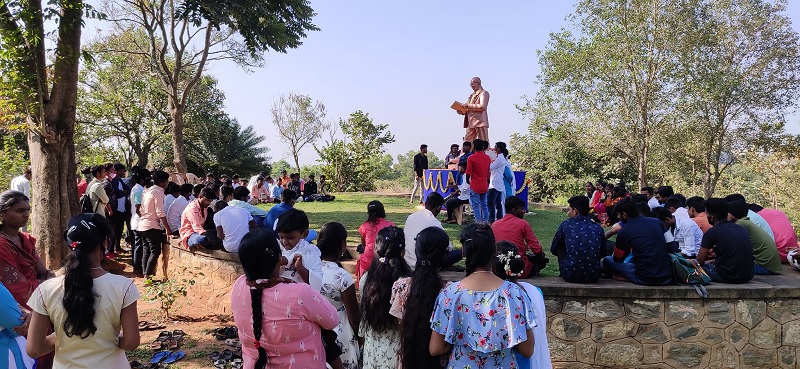
The cultural event, ‘ Nelada Pada,(Song of the Soil), Desi Yuva Samskritika Utsava’ organised by Karnataka Vidyarthi Sanghtane (KVS), student organisation at Spurti Dhama in Bengaluru exhibited the pluralistic nature of Indian society.
The event was organised on account of the birth anniversary of Kannada poet Kuvempu who is also called Rashtrakavi.
The programme was flagged off with the slogan ‘Arive Ambekdar, Guruve Ambedkar’ (Consiousness is Ambedkar and Ambekdar is teacher).
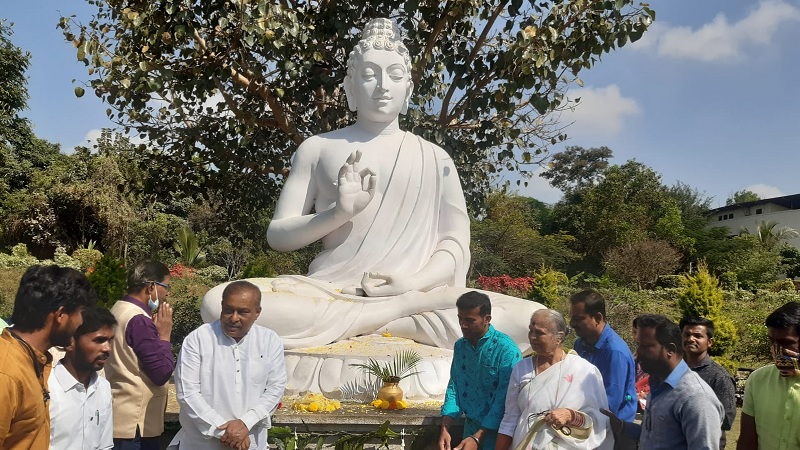
A march was taken out which was led by noted music director, Hamsalekha and veteran journalist, Dr. Vijayamma from Ambedkar statue to Buddha statue.
Various folk artists also participated in playing traditional music.
The event held in the scenic and tranquil environment of Spurti Dhama.
Speaking on the occasion, KVS State Convener, Sarovar Benkikere recalled the contribution of Farmers’ who led a massive protest against three farm laws of Modi government.
The members of Alai team of Baraguru village presented a traditional ‘ Moharram Alai Dance’ that showcased Hindu-Muslim harmony.
As the stage was all set, Singer Chintan Vikas sung Kuvepu’s poem, ‘O nanna chetana, aagu ni aniketana’ in a different composition to officially launch cultural events.
The even primarily focused on the multi faceted, diverse and pluralistic nature of the country through music, dance, poems and songs.
It sent a clear message among the youth to fight against all fascist forces that are hell-bent destroy the strongly rooted and intrinsic ethos of India.
The members of women folk group of Mandya district enthralled the audience with their splendid performance.
Singing in their traditional dialect, they gave a call to people to get united to protect and preserve the traditional culture which is gradually getting diminished.
The members of Nada Jhenkara of Dharwad district presented a mesmerizing song ‘ Yelli Kanelli Kaniro Namma Yellawwa’.
Heartwarming presentation of Jenukuruba community
The marvellous performance of the Jenukuraba adivasi community members who had come from villages in Kodagu district attracted the audience immensely. These adivasis come from the villages that have no basic amenities such as roads, electricity and water.
Elated and rejoiced with their performance, Hamsalekha offered a cash prize of Rs. 25,000 to the group. He also promised to bring their performance to Zee Kannada entertainment channel.
Later in the noon, folk singer Y.G. Uma and Nada Manilankur presented their art.
Spurti Dhama president, Mariswamy, noted singer,M. D. Pallavi, young director, Mansore, B. M. Giriraj and others were present.




 In tune with these global changes, India witnessed the unfolding of clashes between the State and the international IT corporate; weakening of the federal structure of the country and increased attacks on the principles embedded in the constitution; continuously falling employment, coupled with sharp rise in fuel and gas prices; greater internal militarisation of sub-regions and clashes between the armed forces and citizens; turning back to hoary past in search of reasons to feel proud about being Indians and a miserable performance on the front of science and medicine; death by shortage of Oxygen, both medical and environmental and denial by the state as well as the fudging of data. If in this year of darkness on all horizons, one could see a silver lining, it was the glorious non-violent struggle of the farmers leading to the repeal of the farm laws. It kept one’s faith in people’s movement as a path to social transformation alive. Another, silver lining was the performance of sports persons in the Olympics and in other competitive sports. However, these are silver-lines amidst deepening darkness. The end of a year is normally the time to celebrate Christmas. The Christmas 2021 was the time when churches were being vandalized and prayer meetings were being attacked by hinudtva fundamentalists, quite clearly supported by the state. One likes to hope that 2022 will usher in a change. However, only electoral victories cannot be seen as sign of any change. The minds of the young generation in India have been filled with the poison of hatred and contempt. Sections of the middle class still have the arrogance coming out of their relative affluence. And the political class is clueless as to the future that most Indians wish to see for themselves. All of us have to be working on many fronts for changing this condition, through 2022 and much beyond it. Let me wish all those who are keen to work towards that change, a year of fulfilment.
Author is a renowned thinker, writer and cultural activist based in Karnataka.




 The members of Alai team of Baraguru village presented a traditional ‘ Moharram Alai Dance’ that showcased Hindu-Muslim harmony.
As the stage was all set, Singer Chintan Vikas sung Kuvepu’s poem, ‘O nanna chetana, aagu ni aniketana’ in a different composition to officially launch cultural events.
The even primarily focused on the multi faceted, diverse and pluralistic nature of the country through music, dance, poems and songs.
It sent a clear message among the youth to fight against all fascist forces that are hell-bent destroy the strongly rooted and intrinsic ethos of India.
The members of women folk group of Mandya district enthralled the audience with their splendid performance.
 Singing in their traditional dialect, they gave a call to people to get united to protect and preserve the traditional culture which is gradually getting diminished.
The members of Nada Jhenkara of Dharwad district presented a mesmerizing song ‘ Yelli Kanelli Kaniro Namma Yellawwa’.
