The recent FIR lodged against JNU student, Sajid Bin Sayed, for his tweet on Kashmir is the latest instance of the right wing’s repression of free speech. This is one of the many cases where students and activists who have raised the concerns of marginalised groups have been targeted and arrested. In a majority of these instances, FIRs have been filed against the students or activists on the basis of complaints made by BJP members.
Ironically, people who have expressed solidarity with minority groups have been charged with instigating communal tensions and promoting breach of peace, while no action has been taken against politicians who have explicitly encouraged violence.
The Delhi police registered an FIR earlier this month against Sajid Bin Sayed, a scholar at JNU, for his tweets on Kashmir which allegedly defame the Indian Army and the Rashtriya Swayamsevak Sangh (RSS).
Sayed had tweeted: “Indian Military execute systematic genocide of Kashmiris which is devised by RSS. The BJP govt should stop their territorial greed and be ready to accept Kashmiris’ right to self-determination guaranteed by UN. It’s high time to intervene in the issue by international bodies. #Kashmir”.
He had highlighted some facts which the right-wing does not like to hear:“Kashmir is the most militarised place in the globe where human rights violations mountain every other day. The government plots ethnic cleansing in Kashmir like illegal state Zionist Israel executes in Palestine but still they couldn’t succeed as they dream”, Sayed wrote. The claims of Kashmir being the most militarized place in the world, along with the parallel between Kashmir and Palestine, are based on undeniable material facts and have been long recognized by actors all over the world.
Of course, this is not the first time that those who have been vocal about Kashmir have been targeted by the state. In January, Nalini Balakumar, a student, was charged with sedition for holding a ‘Free Kashmir’ poster at an anti-CAA protest in Mysore University. Similarly, the Mumbai police also had launched an investigation against a woman who held a ‘Free Kashmir’ placard at a protest at the Gateway of India. The police took cognizance of this after BJP politicians Devendra Fadnavis and Kirit Somaiya raised strong objections to such ‘separatist’ views.
#WATCH Mumbai: Poster reading, 'Free Kashmir' seen at Gateway of India, during protest against yesterday's violence at Delhi's Jawaharlal Nehru University. #Maharashtrapic.twitter.com/i7SeImYxCE
In the recent incident too, Sayed has been accused of “provocation with an intent to cause a riot” and “provoking a breach of peace” for making the above statements on Twitter after a BJP employee, Tajinder Yadav complained.
Tajinder Yadav is the general secretary, Mehrauli district of the Bharatiya Janata Yuva Morcha, BJP’s youth wing. Yadav himself stated that “the police have been helpful in taking down my complaint and quickly registering a case”.
This is in direct contrast to the delayed response and inaction of the police against BJP leaders like Union Minister Anurag Thakur, who have made statements which are much more explicitly incendiary. In the backdrop of the anti-CAA protests at the beginning of the year, Anurag Thakur, while campaigning for the Delhi elections had raised slogans saying; “Desh ke gaddaron ko, goli maaro… (shoot the traitors)”. However, no significant action has been taken against him for inciting violence.
Similarly, one day before the North-East Delhi communal violence broke out, BJP leader Kapil Mishra had made hate speeches while addressing a rally of pro-CAA supporters. With the Deputy Commissioner of Police standing right beside him, Mishra threatened: “DCP is with us. I’m making one thing clear on all our behalf—we will hold our peace until Trump leaves. After that, if roads are not cleared out, we won’t even listen to you [police]… we’ll have to hit the streets”.
Despite this direct provocation and the subsequent violence which it triggered, no action has been taken by the police against Kapil Mishra. Yet, students and activists have been arrested for posts on social media which have not triggered or encouraged any unlawful activities.
In one of the most glaring instances of such skewed punishment for ‘free speech’, a children’s school in Bidar was charged for sedition when it staged a play which was critical of the CAA and which allegedly made “objectionable” remarks on Prime Minister Modi. After a local ABVP member Neelesh Rakshyala filed a complaint with the Bidar police, two Muslim women (a student’s mother and a school teacher) were arrested and jailed for “allowing the play”. Even the children were intimidated by the police, with over 85 children of the school being repeatedly interrogated by the police.
The high degree of concern shown by the police over a school play is disproportionate to their lack of attention towards the explicitly incendiary and provocative statements made by BJP members and other right-wing elements. Such contrasting treatment of the exercise of ‘free speech’ shows that only certain types of speech that oppose the fascist agenda are being punished under the law while other forms of hate speech against vulnerable and minority communities continue unchecked.
The National Investigation Agency (NIA) arrested Associate Professor of English at Delhi University MT Hany Babu, in connection with the Elgaar Parishad case popularly known as ‘Bhima Koregaon Case’ this day (28th July 2020).
The NIA in its official statement has mentioned that he will be produced before the NIA Special Court at Mumbai on 29th July and will seek police custody for custodial investigation.
NIA in its statement has accused Hany Babu to be a “propagator of Naxal activities” and a co-conspirator along with others accused in the case.
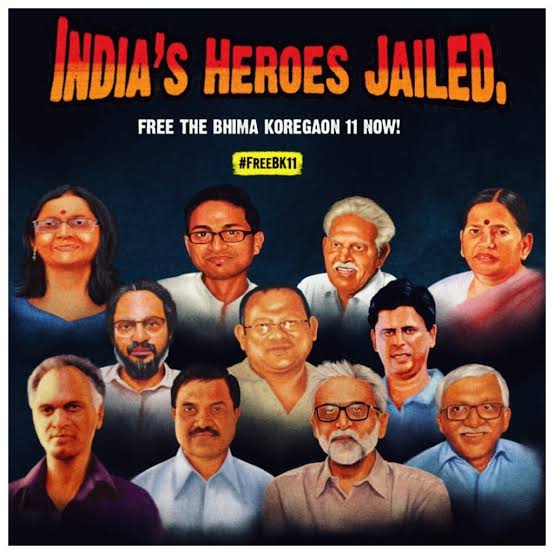
The other accused include India’s well-known Public Intellectuals including Prof Anand Teltumbde, Prof GN Sai Baba, Shoma Sen, Surendra Gadling, Gautam Navlakha, Sudha Bharadwaj, Rona Wilson, Mahesh Raut, Arun Ferreira, Sudhir Dawal, Vernon Gonsalves and Varavara Rao.
The NIA Statement has also noted the following about the case:
“This case arose out of Vishram Baug P.S. Pune Cr. No. 04/2018 regarding inciting people and giving provocative speeches during Elgar Parishad organized by the activists of Kabir Kala Manch at Shaniwarwada, Pune on 31.12.2017, which promoted enmity between various caste groups and led to violence resulting in loss of life & property and state-wide agitation in Maharashtra. During the investigation, it was revealed that senior leaders of CPI (Maoist), an organization banned under the Unlawful Activities (Prevention) Act, were in contact with the organizers of Elgar Parishad as well as the accused arrested in the case to spread the ideology of Maoism/Naxalism and encourage unlawful activities.”
His arrest comes amidst the pandemic despite his co-operation with the agency in the investigation. The Investigation Agency on July 11th had issued summons to Hany Babu to appear before it on July 15th. Babu had opined that being asked to travel to Mumbai in the midst of the pandemic was harassment when reacting to it.
Dr Hany Babu Musaliyarveettil Tharayil, aged 54, is a resident of Gautam Buddha Nagar in Uttar Pradesh. He is a well-known anti-caste crusader. He was the Convenor of Committe for Release of Political Prisioners arrested by the National Investigation Agency. However, enormous support has flown in for the lecturer-cum-activist on social media, from students’ organizations and civil rights activist amongst others.
Prof. Hany Babu has been arrested by NIA in Bhima Koregaon case. Rise in Rage against this arbitrary arrest of academicians! We must stand united against this BJP led witch-hunting of student activists and academicians must stop!#ReleaseHanyBabupic.twitter.com/cyhLrmSD2O
HANDS OFF OUR TEACHER: Release Prof. #HanyBabu! Since 23 July, DU Eng dept's Prof. Hany had been cooperating with NIA's investigation in the false Bhima Koregaon witch-hunt. He has been reportedly been taken in today for 'propagating Naxal activities'. #WithHanyBabupic.twitter.com/6ZnsSwswxV
Delhi University Associate Professor M.T Hany Babu has been arrested by NIA with falsely implicated charges regarding #BhimaKoregaon case. Dare to resist the state intimidation and persecution of academicians and student activists.#ReleaseHanyBabupic.twitter.com/zDnIAcOGaI
@HanyBabu, Associate Professor @DelhiUniversity and convenor of Committee for the Release of Political Prisoners arrested by National Investigation Agency in the Bhima Koregaon Elgar Parishad case today. He’s the 12th person arrested in this case.#ReleaseAllPoliticalPrisoners
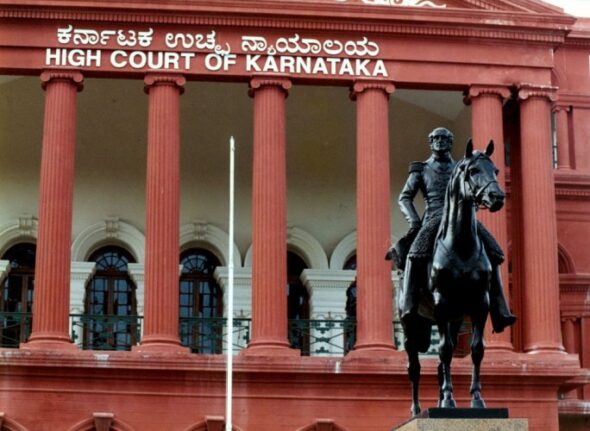
In its interim order today, Karnataka High Court asked the State of Karnataka to reconsider its decision of conducting the KCET(Karnataka-Common Entrance Test) Exam on 30th and 31st July 2020.
The order was passed by a bench of Chief Justice Abhay Oka and Justice Sandesh.
The bench passed its interim order while considering a batch of three Public Interest Litigations (PIL) filed against the Karnataka Examination Authority (KEA’s) decision to conduct the KCET exam on 30th and 31st July by:
A group of students and the NSUI(National Student Union of India – the student wing of the Indian National Congress) which pleaded the Court to set aside the notification dated May 13 to conduct the KCET Exam on 30th and 31st July. It had further pleaded that the exam is held only after the completion of NEET and JEE exams after consulting various stakeholders including parents and students.
Advocate Pradeep and S Hanumantegowda had pleaded for canceling KCET 2020 and the marks scored in standard 12 be considered for preparing the rank list for admission to professional courses in the state.
Advocate Abdullah Mannan Khan had pleaded for postponement of examinations till the end of the Covid-19 pandemic and had also urged the state government to provide medical facilities to students and their families.
The Karnataka High Court expressed its disappointment that the petitioners had not either approached the court early or had approached the authorities before taking it to the court. However, considering the drastic rise of Covid-19 cases in the state, the plight of students in more than 6000 containment zones and lack of public transport facilities, the bench ordered the state government to place on record the decision about the issue by 2.30 PM on 29th July 2020 after reconsidering the issue once again.
Earlier, on May 13th, KEA had notified that the KCET examination would be conducted in July even though the guidelines issued by the Ministry of Home Affairs (MHA) had held that all schools and colleges shall remain closed till July 31.
The High Court bench also noted that the KCET Examination was unlike SSLC examinations where it could be conducted later on.
However, amidst these happenings, it’s the students who are at the receiver’s end with no clarity whatsoever about whether examinations would be conducted or not until the very endth moment.
Read About:Politics of Water: Dynamics of Caste and Gender in Water Scarcity
Malaysian court finds former PM Razak guilty of corruption on charges linked to 1 of world’s biggest financial scandals – the billion-dollar looting of 1MDB state investment fund.
Former Malaysian Prime Minister Najib Razak was found guilty Tuesday in his first corruption trial linked to one of the world’s biggest financial scandals – the billion-dollar looting of the 1MDB state investment fund.
The British-educated Najib, who faces a total of 42 charges in five separate trials linked to the 1MDB fiasco, took power as Malaysia’s sixth prime minister in 2009. He set up 1MDB when he took office to ostensibly accelerate Malaysia’s economic development.
But the fund accumulated billions in debt, and U.S. investigators allege that at least $4.5 billion was stolen from it and laundered by Najib’s associates to finance Hollywood films and buy hotels, a luxury yacht, artwork, jewelry and other extravagances. More than $700 million from the fund allegedly landed in Najib’s bank accounts.
Najib’s wife and several officials from his party and the previous government have also been charged with graft.
Najib denies any wrongdoing and calls the prosecutions a political attack on him. The spectacular fall from grace of the political blue blood, whose father and uncle were Malaysia’s second and third prime ministers, was hailed in 2018 as a victory for democracy.
Najib’s first trial began in April 2019 over seven charges related to the transfer of 42 million ringgit ($9.8 million) from SRC International, a former 1MDB unit, into his bank accounts through intermediary companies.
He remains influential in his party and reinvented himself on social media from being an out-of-touch elitist to a working-class leader – an image he uses to promote his political comeback.
Najib’s second trial, the biggest and most complex, involving 25 graft charges over the alleged flow of $731 million of 1MDB funds into his bank accounts, is ongoing.
In the home male arroganceSets my cheek stinging,While in the streets caste arroganceSplits the other cheek open.-Challapalli Swaroopa Rani
One of the globally faced problems is of climate change at a larger level and water scarcity in particular. ‘Scarcity’ need not be unilateral and natural but can also be
multifaceted and manufactured.
Lyla Mehta in her ethnographic work on water scarcity in the region of Kutch, Gujarat – ‘The Politics and Poetics of Water: Naturalising Scarcity in Western India’, marks a shift from perceiving and understanding scarcity as just natural in its occurrence, exploring the connotations of it being socially mediated as a result of socio-cultural, political and institutional processes. I considered Mehta’s work as the core reference for understanding water scarcity in the region of Bundelkhand, Uttar Pradesh.
The region has encountered severe periods of lack of rainfall and droughts. It is also to a great extent divided along the lines of caste and gender. The marginalized are denied access to resources and are the most affected during times of scarcity. Thus, water and scarcity of water cannot be understood in isolation, devoid of its socio-cultural, economic, and political structure of the society. I attempted to gauge the primary role of women who are perceived as natural collectors of water, the effect it has on the wellbeing of the women, especially the position of marginalized Dalit women with an intersectional approach. Also, I attempted to understand the prevalent practices of discrimination in the village society that impacts the location of a Dalit household in terms of access to water resources.
My interactions with both, affluent and marginalized communities in villages of Mamna and Bangra in the Hamirpur District (one of the 250 backward districts of India) in terms of their socio-cultural and political location revealed that there is the existence of a palpable differentiation in the experience of water scarcity along the intersections of – caste, class, and gender. This brings forth the relational aspects of water, where scarcity is socially and politically constructed along with diverse knowledge systems of water scarcity and social differentiation.
In the context of the relational aspect of water, it is important to look at the location of the Dalit household to understand the denial of the access and usership of water resources. Though the situation of the water resources is quite different in both villages, caste-based discrimination was common between them. Discrimination is practiced by the upper castes. The two main subcastes Chamars and Basors within the SC community face the brunt of being discriminated against and are the bearers of the untouchability in various forms. However, a similar model of discrimination is practiced even within subcastes. The Chamars are traditionally involved in leather works are placed above on the social ladder. The Chamar subcaste from the SC community discriminate against Basors who traditionally make baskets or rear pigs and occupy the lower position and face stigma. Basors continue to face the double brunt of systematic injustice and discrimination at the hands of both – the upper-castes and Chamar communities. Thus, the sub-caste divisions and the locational disadvantages associated with it also affects one’s access to water as a natural resource whose scarcity is not natural.
Picture Courtesy: Jahnvi Dwivedi
It is to be noted that one’s social location in terms of caste and gender affects access, affordability and usership of water. Shouldering the responsibility of water collection in general and in the added times of scarcity solely has pushed women to further marginalities in addition to their immense burden completing household chores and providing labour at agricultural fields. They experience sleepless nights when water isn’t available for days and they constantly feel helpless and uncertain having. Amongst these, women face added brunts due to the prevalence of untouchability. Though Dalit men in few instances might help women fetch water, this practice is rear. Also, men never head load water. Most of the upper castes are not directly affected by the scarcity of water. They control the land and water resources making it difficult to challenge power structures.
Policy frameworks that incorporate a decentralized model of water governance through community participation only augment the burden on women. Since women are seen as the natural collector and preserver of water due to the widely prevalent association of women and water, scarcity of water for domestic purposes affects women which also reinforces the gendered division of labour.
Models of Jal Sahelis incorporated elsewhere and in both the villages along with its organization and expected role of Jal Sahelis to own-up the task of water management calls for a critical analysis. While few Jal Sahelis report development of agency and mobility, it is mostly seen as a burden because the work is voluntary and is not paid for. Even within the organization of Jal Sahelis, caste and subcaste discrimination is widely practiced where women from the OBC communities (Other Backward Castes) and Chamar communities occupy top positions. Although Basors are part of the organization, they are pushed below.
Individuals from the Dalit community, particularly from the Basor community asserted their caste identities. They understood that it is not their fault to be born in the caste which is assigned by the society due to the kind of labour they or their caste group engaged is in. Though Chamars are discriminated against by the dominant castes, they discriminate against the Basors. Both Chamars and Basors share a sense of fear to collect water from the resources controlled and hegemonized by Upper Castes. There is a sense of awareness that denial of access to water and other resources is a manifestation of caste-based discrimination. However, this is deeply internalized and naturalized that the power structures remain unchallenged.
Naturalization of water scarcity and gender-based division of labour concerning water remains uncontested even when caste-based denial of access to water is challenged. This has led to gender remaining subtle but one of the most impenetrable dimensions of difference in relation to water. Inconspicuousness and invisibility of women in formal decision-making structures of ownership and legal provisions of water and land arrangement are striking because the autonomy of women even if in fragments would disturb the patriarchal social structure. Gender is not seen as a distinct area of difference and mostly is avoided under the larger umbrella of caste issues, as participants somewhere view it as caste-based and not gender-based discrimination. Thus, the perceived and prime category of discrimination in the village arise due to caste differences and not because of gender. Gender inequalities pertaining to water remain to be taken for granted.
Therefore, when water as a resource is controlled by the dominant communities, scarcity of water feeds not just into the established social structures of caste and gender but further excludes, marginalize, and segregates the already marginalized caste and sub-caste groups and women belonging to these communities. One cannot get out these structures until and unless its core and existence are not seen critically. The socio-cultural and political set-ups translate the natural scarcity of resources into a manufactured scarcity to maintain the caste hegemony vis a vis alienation of particular communities and this must be questioned.
– Jahnvi Dwivedi holds a Master’s Degree in Women’s Studies from TISS-Hyderabad. Views are Personal.
Faculty, Research Scholars and Alumni of Central and State universities, IITs, IISc, IISER and other institutes across the country have come together to ask the Government of India, the Supreme Court of India and the National Human Rights Commission (NHRC) to release the political prisoners arrested in Bhima Koregaon case and in Anti -CAA protests and repeal the draconian UAPA.
“When injustice becomes law, resistance becomes duty.”
While the entire world fights the pandemic caused by COVID-19, many intellectuals and activists are still languishing in jails and many more are being arrested till the present day. On one hand, norms of “social distancing” are being propagated by the government and on the other hand, we find prisoners being cramped in twice or thrice of the capacity of the jails under inhuman conditions. Though the Supreme Court has directed to release some prisoners in view of the COVID-19 situation and empowered state governments to form high-power committees to decide upon this matter, political prisoners who were arrested on the false charges of inciting violence in the Bhima Koregaon celebrations in 2018 are still behind the bars. While the real perpetrators of violence (Hindutva leaders Milind Ekbote and Sambhaji Bhide) are roaming free, all the eleven arrestees (called BK11, the short description given at the end) on whom fabricated charges of planning to attack the Prime Minister and carrying out anti-national activities were filed under the pretext of being ‘urban Naxal’. They are actually those who have challenged and fought against the injustices of the State and have worked relentlessly to protect the rights of workers and peasants as well as the most marginalized people of the country, including Dalits and Adivasis. These activists are writers, poets, professors, lawyers, and students who chose not to live just for themselves and their families but for the cause of humanity by fighting against exploitation.
On top of that, to completely silence the voices of dissent, the present fascist government is using the “opportunity” of the pandemic to arrest many more political activists. Anand Teltumbde and Gautam Navlakha were arrested on 14th April while others arrested during the lockdown are those who were active in the anti-CAA protests. These include Dr. Kafeel Khan, Pinjra Tod activists, Natasha and Devangana, students of Jamia Milia and AMU, Safoora Jargar, Sharjeel Usmani, Meeran Haidar and many others. Putting these activists behind bars when the country is facing the world’s third largest number of COVID-19 cases is same as putting their lives under threat!
With their crowded, unhygienic, and poor conditions, Indian prisons are easy prey to the spreading of COVID-19. Varavara Rao, the 80-year-old revolutionary poet and political activist who is one of the arrestees in the Bhima Koregaon case, and Akhil Gogoi and Sharjeel Imam, who were active in anti-CAA protests, have already been tested positive for COVID-19. Their testing itself has happened after a lot of pressure put by their family members and other democratic voices of the country. Gautam Navlakha and Anand Teltumbde who are in the same prison as Varavara, also runs the risk of contracting the virus too. While Varavara Rao was in Taloja jail, his condition was getting worse and after speaking to his family over the phone, Vernon Gonsalves, the co-accused helping him, told them that he was hallucinating, and could not carry out even basic functions like brushing his teeth on his own. On repeated demands and protests by the people, he was shifted to JJ Hospital. Here he was tested COVID positive so he was shifted to the state-run St. George hospital which has poor medical facilities. After facing public pressure, the authorities finally shifted him to Nanavati Hospital. He also received head injury and stitches on his head at JJ Hospital. All the information regarding his medical procedure is not being informed to the family and only known to them later by secondary sources. The attitude of ignorance by the authorities is a cause of extreme worry for people concerned for him.
In 2017, six activists Mahesh Tirki, Pandu Narote, Hem Mishra, Prashant Rahi (IIT-BHU alumni), Vijay Tirki and GN Saibaba were arrested on the fabricated charges of ‘waging war against the State’. G. N. Saibaba, professor at DU who has always worked for the rights of the oppressed, is 90% disabled and suffers from several life-threatening ailments. The continued negligence of his medical condition by the jail authorities, even in this time of pandemic, is extremely inhuman as well as unlawful (Article 21 of the Indian Constitution guarantees the right to life to all citizens, including prisoners).
While the Bhima Koregaon arrestees are languishing in jail in extreme conditions as an undertrial under the UAPA (a draconian law which is in violation of civil and human rights and is used by the State to target activists working against the corporate loot and exploitation of marginalised) and most of them for more than two years, it is important to note that Article 14(3)(c) of the International Covenant on Civil and Political Rights (ICCPR), to which India is a state party, says that an accused person has the right to be tried without undue delay and those criminal proceedings should be started and completed within a reasonable time. Also, most of them are above the age of 60 and have fairly high chances of contracting the virus.
We can clearly see that the government is continuously attacking activists, writers, poets, lawyers, students, and professors who are critical of the anti-people agendas of the government and who are courageously fighting for the oppressed. The stifling of dissenting voices is an attack on the very democratic spirit of our country. As socially conscious citizens associated with some of the best institutions of our country, the duty to make our society more equitable and just rests on our shoulders. Hence, we must raise our voice in solidarity to demand the release of all political prisoners.
The Coordination of Science and Technology Institutes’ Student Associations (COSTISA) includes Ambedkar Periyar Phule Study Circle, IIT Bombay, Ambedkar Periyar Study Circle, IIT Madras, Concern, IISc, Confluence, IISER Mohali, Science Education Group, IIT Kharagpur, Students For Change, IIT BHU
COSTISA can be contacted at their Facebook page here
The COSTISA demands are as follows:
1) PROVIDE IMMEDIATE PROPER MEDICAL TREATMENT AND MEDICAL BAIL TO VARAVARA RAO AND G. N. SAIBABA.
2) RELEASE ALL POLITICAL PRISONERS ARRESTED IN THE CASE OF BHIMA KOREGAON AND ANTI-CAA PROTESTS. RELEASE ALL OTHER POLITICAL PRISONERS IN VIEW OF THE COVID-19 SITUATION.
3) REPEAL THE DRACONIAN UNLAWFUL ACTIVITIES PREVENTION ACT (UAPA).
—-
Short description of BK11:
Surendra Gadling is a senior advocate in Nagpur, specializing in cases involving marginalised population and providing legal support to them.
Shoma Sen is an English professor in Nagpur University and a renowned scholar in women’s studies.
Rona Wilson is a research scholar from JNU and secretary of the Committee for the Release of Political Prisoners (CRPP).
Sudhir Dhawale is the founder of Republican Panthers, a cultural activist and editor of the journal ‘Vidrohi’.
Mahesh Raut is a researcher in TISS and has been a Prime Minister Rural Development Fellow where he worked with Adivasis.
Vernon Gonsalves is a social activist and writer. Arun Ferreira is an advocate and writer, and a leading member of the Indian Association of People’s Lawyers.
Sudha Bharadwaj, an IIT Kanpur alum is an advocate and activist working for Adivasis and workers; she was the general secretary of the People’s Union for Civil Liberties.
Gautam Navlakha is a journalist and human rights activist, specializing in Kashmir.
Anand Teltumbde is an ex-professor of IIT Kharagpur, professor at Goa Institute of Management, and working on human rights and Dalit rights.
Varavara Rao is an 80-year-old revolutionary poet, writer, and public intellectual.
Leader of Opposition and Ex-CM of Karnataka Siddaramaiah today participated in a peaceful protest along with KPCC (Karnataka Pradesh Congress Committee) President DK Shivakumar, other leaders and workers of the Congress Party at the Raj Bhavan.
Indian National Congress had called up its cadre at the Governor’s Offices in each state to protest against the BJP’s habit of toppling democratically elected governments all across the country. This call to ‘Save Democracy, Save Constitution’ was made by the Indian National Congress in the backdrop of BJP’s attempt to destabilize and topple the government in the state of Rajasthan.
ರಾಜಸ್ತಾನ ಸರ್ಕಾರವನ್ನು ಅಸ್ಥಿರಗೊಳಿಸಲು ಬಿಜೆಪಿ ನಡೆಸುತ್ತಿರುವ ಹುನ್ನಾರದ ವಿರುದ್ಧ ಇಂದು ಕೆಪಿಸಿಸಿ ವತಿಯಿಂದ ಹಮ್ಮಿಕೊಂಡಿದ್ದ…
In a series of tweets, Siddaramaiah has expressed that BJP’s attempt to destabilize the Congress government in Rajasthan is an anti-democratic and unconstitutional move. He has also noted that even the Governor of Rajasthan is also involved in this heinous scheme by siding with BJP and failing his duty by not acting in accordance with the decision of the Cabinet. He has also alleged that the Governor, Kalraj Mishra was acting as a puppet of the central government supporting the BJP in the state.
Siddaramaiah also took to jibe CM of Karnataka BS Yeddiyurappa, by naming him as the ‘Father of Operation Kamala (Lotus)’ and that it was Yeddiyurappa who first introduced the idea of operations and surgeries which is prevalent all across the country today. He also attacked Prime Minister Narendra Modi about this apathy towards addressing the issue of Corona when thousands of people are dying due to the non-availability of treatment.
He also raised concerns about police functioning at the behest of the government than to provide security to people. He urged the Police to not trouble peaceful protests and to act in accordance with the rules. He noted that it was the right of all citizens to protests against injustice in a democracy.
It was in 2008 that the word ‘Operation Kamala’ was coined when Yeddiyurappa-led BJP formed the government in Karnataka after falling short of the majority by 3 seats in the state assembly elections by circumventing the Anti-Defection Laws. BJP has practiced ‘Operation Kamala’ widely all across the country by attempting to capture power by dislodging elected governments at least 11 times in the last 6 years. BJP also has actively used other government agencies like CBI, IT Department, Enforcement Directorate to attack leaders from other political parties.
Coronavirus cases in India have crossed 14 Lakh mark with more than 32 thousand people succumbing to the deadly virus. Amid this time India’s lack of healthcare services across the nation is evident. Every day a new video or post goes viral on social media where people are wailing due to negligence of medicos.
Despite the lockdown imposed across the nation that lowered India’s Q4 GDP to 3.1%, the COVID-cases in the country rose exponentially making it the world’s third worst-affected country by the deadly virus.
In a state like Bihar, where the elections are to be held soon, the lack of medical facilities is such that they neither have the required amount of life functioning supporting-machineries nor enough ambulances for carrying the mortal remains of the virus victims. Mani Bhushan, son of a COVID-19 patient claimed that a dead body was not removed from the corona-ward of NMCH (the dedicated hospital in Bihar for COVID-patients) for two days as there were only two ambulances dedicated to carry COVID-19 victims.
In Mumbai, doctors did not want to treat patients claiming they were not having enough PPE kits and were also lacking ancillary staff and nurses. In a report published by the Times of India nearly 35 % of the doctors in the city were under the senior citizen bracket, and thus not eligible to work.
Many doctors and nurses in various parts of the country claimed they were being disturbed by their neighbours and landlords for the fear of spreading of coronavirus.
The pharmaceutical sector amid the lockdown are in the rat race of making vaccines for the disease. According to media reports, ICMR forced to launch a vaccine named Covaxin by August 15. The vaccine which is being produced by Bharat Biotech India (BBIL) in collaboration with ICMR’s National Institute of Virology faced many backlashes globally. Many Bioethics said that putting a vaccine under a time frame without even going for the first phase of human trials may do more harm.
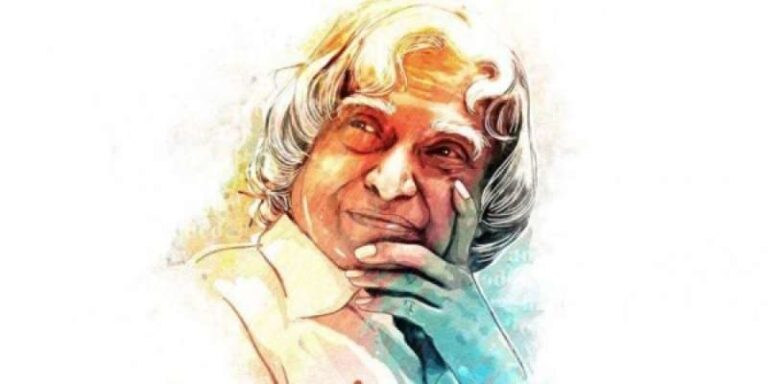
Amid the time of despair, where many healthcare workers are struggling with social stigma, ostracisation, lack of healthcare infrastructure, and faulty PPE kits, the quotes of APJ Abdul Kalam can be considered as a motivation for them to keep serving humanity.
On the fifth death anniversary of Kalam let us remember his belief on the duty of the healthcare professionals and the empathy that the society lacks towards them.
The ‘People’s President’ believed that doctors do God’s work by saving lives. He wanted doctors to treat those who can’t afford to pay their fees on a part-time basis and expected them to treat at least 20 rural patients a year. Kalam said that doctors should follow the motto, ‘Let my brain remove the pain of suffering humanity and bring smiles’.
He also considered nursing to be a noble profession. Apart from taking care of at least 20 rural patients a year, Kalam hoped that a nurse would treat every patient with kindness and care. He said that a nurse’s job is to remove the pain of patients with care and bring a smile to them.
Kalam believed that pharmacies should provide cost-effective, safe medicines to the people. Kalam said, “The pharmacists must know that at each stage of making drugs from development to marketing, a single flaw knowingly or unknowingly will result in loss of human lives.”
In a climate of challenges, Kalam’s words should continue to encourage the Covid-19 heroes and our nation.
The writer is a journalist based in Bangalore. Views are personal.
On the 19th of July, 2020, The United Arab Emirates launched its maiden mission, The Hope Probe to Mars in an attempt to further develop capabilities in the technological and scientific scope and reduce their reliance on oil. The plans were first announced in 2014, with the UAE setting up a space program in 2017.
The country itself lacked the expertise and base of the other exploring countries. The development of the project was done with the assistance of eminent United States educational institutions. The rocket took off from Japan’s Tanegashima Space Center and will commence a seven-month mission. The mission will revolve around the collection of atmospheric data by orbiting the planet.
The entire project would cover around 494 million kilometers. After the launch on the 19th, the probe launched the solar panels that would assist in powering the system and establish radio contact with mission control back home. The mission follows eight active missions, either orbiting or landing on the planet. The UAE has an ambitious plan in place to make a settlement on Mars by 2117.
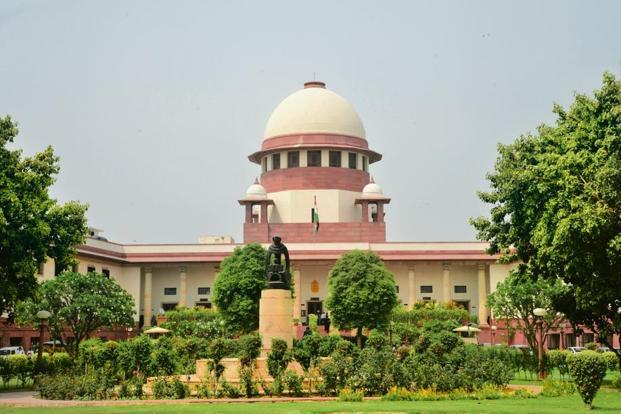
In light of the recent contempt proceedings initiated against Advocate Prashant Bhushan by the Supreme Court for his tweets on the CJI, many former government officers, activists, and academics have released a statement expressing solidarity with Bhushan. They have expressed concern over the stifling of criticism and stated; “An institution as important as the Supreme Court of a country must be open to public discussion without the fear of retribution or action of criminal contempt”.
The offence of contempt of court criminalizes any expression/act which ‘tends to scandalise’ or ‘lower the authority’ of any court. It has been argued that criminal contempt, on the ground of scandalising or lowering the authority of a court, is necessary for the effective administration and deliverance of justice as it ensures that the sanctity of the courts is preserved. However, it has also been recognised by scholars and activists that this offence is sometimes used as an excessive and arbitrary constraint on the freedom of speech and expression. Moreover, it has been used to shy away from questions on the transparency and accountability of the judiciary.
Whenever questions on the impartiality of law and the judiciary are raised, there is a troubling pattern of activists and their lawyers being charged with ‘contempt of court’. This provision has often been used against Left critics and activists; from EMS Namboodiripad to Arundathi Roy to, most recently, Prashant Bhushan.
The eminent lawyer, Ram Jethmalani, had argued that the power of courts to punish for contempt imposes “a fetter on a citizen’s fundamental right to freedom of speech and would have to be invoked and exercised with utmost caution so as not to infringe upon such a fundamental right” (emphasis added). However, the judiciary has been extremely alert in picking up activists for casting any allegations on the sanctity of the courts.
Harsh Mander, IAS, and social activist
When Harsh Mander had approached the Supreme Court seeking FIRs to be registered against BJP leaders like Kapil Mishra for hate speech (which instigated communal violence), the Court instead asked for transcripts of a speech Mander had made at an anti-CAA protest. After the Solicitor General claimed that Mander had made a speech which “brings the Court into disrepute”, the Chief Justice of India (CJI) without even hearing the speech, reprimanded Mander stating: “If this is what you feel about the Court, then we will have to decide what to do about you”. “Till we sort this out we will not hear you”, the Court told Mander, refusing to hear his petition on the hate speech by BJP leaders.
This hostility towards activists extends to the lawyers representing them too. For instance, in Karnataka, bar associations had passed resolutions that they will not represent students accused of sedition. In such a situation, the lawyers who do take up these cases risk facing hostility from their own colleagues, let alone other political forces.
In a similar incident, two social workers from Jan Jagaran Shakti Sangathan (JJSS) and the rape survivor they were assisting were also charged with contempt of court by a Magistrate in Araria, Bihar and sent to jail. This excessively harsh treatment towards citizens and public-interest minded actors is an increasingly worrying trend.
Selective Hearing
The recent statement issued by former officials and activists in solidarity with Prashant Bhushan also pointed out; “In the past few years, serious questions have been raised about the reluctance of the Supreme Court to play its constitutionally mandated role as a check on governmental excesses and violations of fundamental rights of people by the state”.
Over the past year, we can trace some important milestones – the abrogation of Article 370 (Kashmir), the Ayodhya verdict, the Citizenship Amendment Act (CAA), North-East Delhi riots, and the COVID-19 migrant workers crisis.
It has almost been a year since the abrogation of Article 370, yet petitions challenging its constitutional validity have not been heard. The CAA too has been challenged as unconstitutional, but despite months of nation-wide protests, the Court has placed this legal issue on the back-burner. In the Ayodhya case, however, the Supreme Court conducted daily hearings for over five weeks. Perhaps this should offer us hope; where there is a will, there is a way.
When the North-East Delhi communal violence erupted in late-February, Justice Muralidhar of the Delhi High Court heard urgent petitions at midnight and passed orders that the Delhi Police must ensure safe passage to injured victims. He stated; “In this city, we shouldn’t allow another 1984 [anti-Sikh riots], not under the watch of this court”. The next day, Justice Muralidhar was transferred out of the Delhi High Court.
In these pandemic-stricken times too, criticism of the courts’ inaction and apathy towards migrant workers has come from its own quarters; from former judges and eminent lawyers. We must take this as a reminder that fair criticism of the judiciary is essential and necessary in a democracy, as it plays a vital role in impressing upon the judiciary their duty to ensure the fundamental rights of all persons.









 Over the past year, we can trace some important milestones – the abrogation of Article 370 (Kashmir), the Ayodhya verdict, the Citizenship Amendment Act (CAA), North-East Delhi riots, and the COVID-19 migrant workers crisis.
It has almost been a year since the abrogation of Article 370, yet petitions challenging its constitutional validity have not been heard. The CAA too has been challenged as unconstitutional, but despite months of nation-wide protests, the Court has placed this legal issue on the back-burner. In the Ayodhya case, however, the Supreme Court conducted daily hearings for over five weeks. Perhaps this should offer us hope; where there is a will, there is a way.
 When the North-East Delhi communal violence erupted in late-February, Justice Muralidhar of the Delhi High Court heard urgent petitions at midnight and passed orders that the Delhi Police must ensure safe passage to injured victims. He stated; “In this city, we shouldn’t allow another 1984 [anti-Sikh riots], not under the watch of this court”. The next day, Justice Muralidhar was transferred out of the Delhi High Court.
In these pandemic-stricken times too, criticism of the courts’ inaction and apathy towards migrant workers has come from its own quarters; from former judges and eminent lawyers. We must take this as a reminder that fair criticism of the judiciary is essential and necessary in a democracy, as it plays a vital role in impressing upon the judiciary their duty to ensure the fundamental rights of all persons.
