Rural and agricultural workers stopped trains across Punjab

0
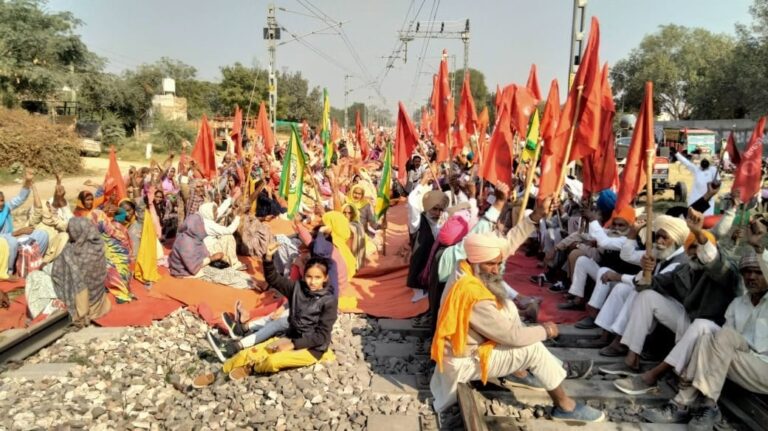
Farmers and Farm Unions struggle has achieved an historic victory. The union government have accepted most of their demands, including the complete withdrawal of the three contentious farm laws. The farmers have left for their homes vacating the borders of Delhi, which they have been occupying for over a year. But this historic victory means very little to the thousands of rural and agricultural laborers, who are mostly Dalit, in Punjab. The Dalit and poor rural and agricultural labours, and the small marginalised farmers are being exploited and oppressed as before. Their struggle for fair wage, ownership of land and other demands continue as before. A report on a protest (Rail Roko) program by the Samyukt Morcha (united front) of the rural and agricultural labor unions in Punjab, pressing for their demands. On a call of the Samyukta Morcha (united front) of the rural and agricultural labor organizations of Punjab, hundreds of agricultural and pendu laborers stopped trains at 10 places in Punjab, including Manan Wala (Sri Amritsar Sahib), Phillaur (Jalandhar), Jethuke, Sangat Mandi and Rampura (Bathinda). Thousands of laborers, including a large number of women, gathered at Giddarbaha (Shri Muktsar Sahib), Jaito (Faridkot), Ajit Gill (Moga), Sunam (Sangrur) railway stations, for the Rail Roko Program from 12 noon to 4 pm on !2 December. The leaders and members of the organizations involved in the protest included Punjab Khet Mazdoor Union, Krantikari Pendu Mazdoor Union (Punjab), Dihati Mazdoor Sabha, Mazdoor Mukti Morcha Punjab and Punjab Khet Mazdoor Sabha. Addressing the gathering, the speakers underlined the anti-people policies of Punjab and the Central Government, criticizing the betrayal of promises made by the Punjab government to the rural and agricultural laborers, they said that the Channi led congress government is also adopting the same tactics and policies as the previous governments have done. To resolve the demands of the agricultural workers, Channi government had on 23 November held a meeting with the leaders of the Samyukta Morcha in Chandigarh and assured them to consider their demands. As was decided,  land measuring 5 marla (one marla is equal to 272.25 square feet), one-fourth share in cooperative society and loan of up to fifty thousand rupees will be provided to the landless and needy. Along with this, in view of the skyrocketing inflation, the government was also to ensure that food items were made available at affordable prices to them. The leaders said that the Chief Minister Charanjit Singh Channi, by not keeping those assurances, has proved that like other political leaders, he too is playing an important role in strengthening the power of the state by taking the side of the capitalist classes. The Dalit and poor farm labourers  are being exploited and oppressed as before. The farm-labor leaders said that these anti-labour moves would not be allowed to succeed at any cost. The oppressed working class, deprived of its rights and divided along caste lines for centuries, is being mobilized on a large scale. They stressed on the following demands of rural and agricultural laborers :
  • A plot of land of 10 marla be allocated to each needy laborer and grant Rs. 50,000 to them to build their homes on it.
  • Ensure availability of work for the whole year to all the eligible workers through MGNREGA, pay Rs.600 daily wage and control corruption in NREGA.
  • Old age and widow pension of Rs.5000 per month.
  • Write off all government and non-government loans, including those with micro-finance companies, on the heads of laborers and poor farmers. Bring in new law to eliminate debt and provide government loans at low interest to the needy.
  • The government should make available one-third of panchayat reserved land on cheap contracts to the landless.
  • Strengthening of the Public Distribution System, kitchen utensils at affordable price to the landless laborers; supply of cooking gas at half the market price, free electricity, water, education and health and permanent government employment to all educated boys and girls of laborers.
The speakers said that this struggle will continue till the process of privatization of public enterprises is not stopped and the social and state oppression of Dalits does not end. Along with this, the government will have to make the land ceiling law effective, and the land in excess of the ceiling will have to be distributed among the landless laborers. Once, under pressure from agricultural labor unions, the Punjab Congress government had issued orders to extradite the excess land but it also withdrew the order. This reflects the government’s defense of the interests of the landlords, who are the pillars of all the ruling class political parties, including the Congress. The protest meetings were also addressed by leaders of other fraternal organizations and affiliated unions. Samyukta Morcha leaders Tarsem Peter, Devi Kumari, Jora Singh Nasrali, Sanjeev Mintoo, Bhagwant Singh, Darshan Nahar and Kulwant Singh declared that if the state government still does not accept and implement the demands, it better get prepared to face the next phase of workers’ struggle, the outline of which would be laid out at the provincial meeting of the Morcha on 15 December. They alleged that though the Congress Party had changed the chief minister to pacify the anger of the people due to the failure of their four-and-a-half years rule, there has been no change in its anti-worker and anti-people policies. The report was first published by groundxero.com

Glimpses of Indian Farmers Victory March After Repeal of Farm Laws

Glimpses of Indian Farmers Victory March After Repeal of Farm Laws
0
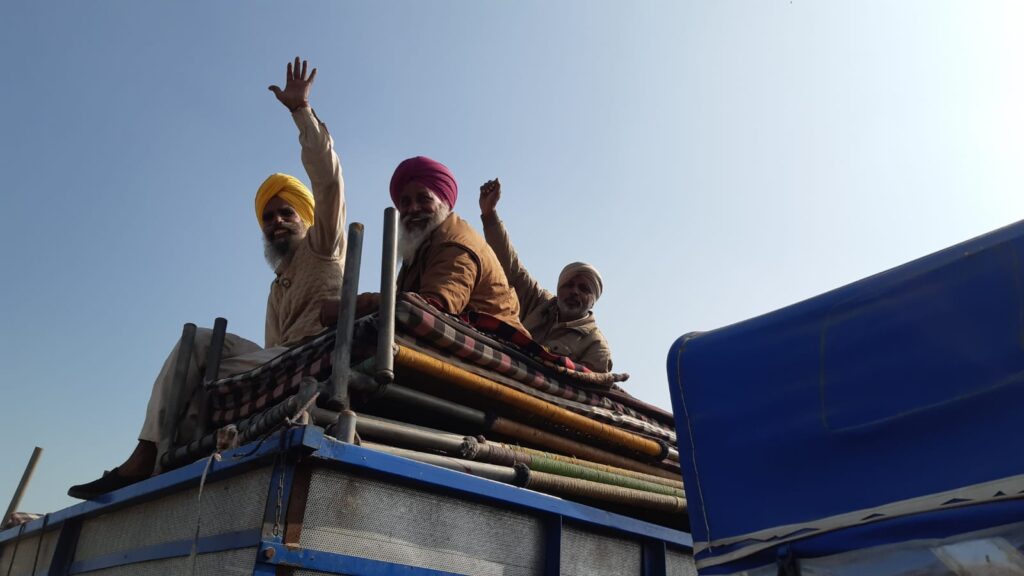
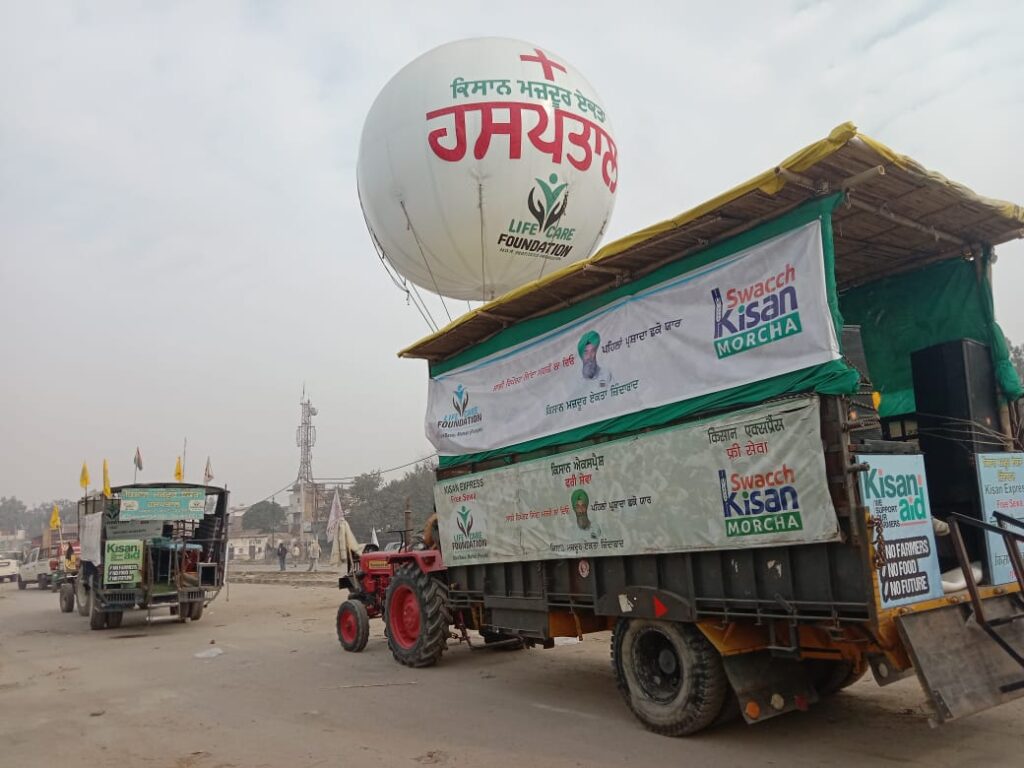
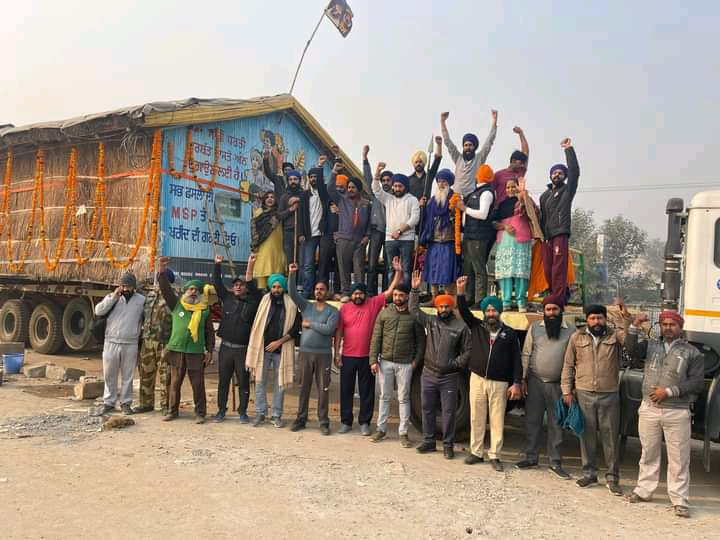
After one year of historic movement at Delhi border against the controversial farm laws, farmers are finally returning to their homes. The week after the repeal of farm laws went into negotiations regarding compensations for the ones who lost their lives in the year long struggle as well as legal guarantee of Minimum Support Price (MSP). With this farmers can go home with peace and dignity, the same way that they have continued the struggle with all the hardships.
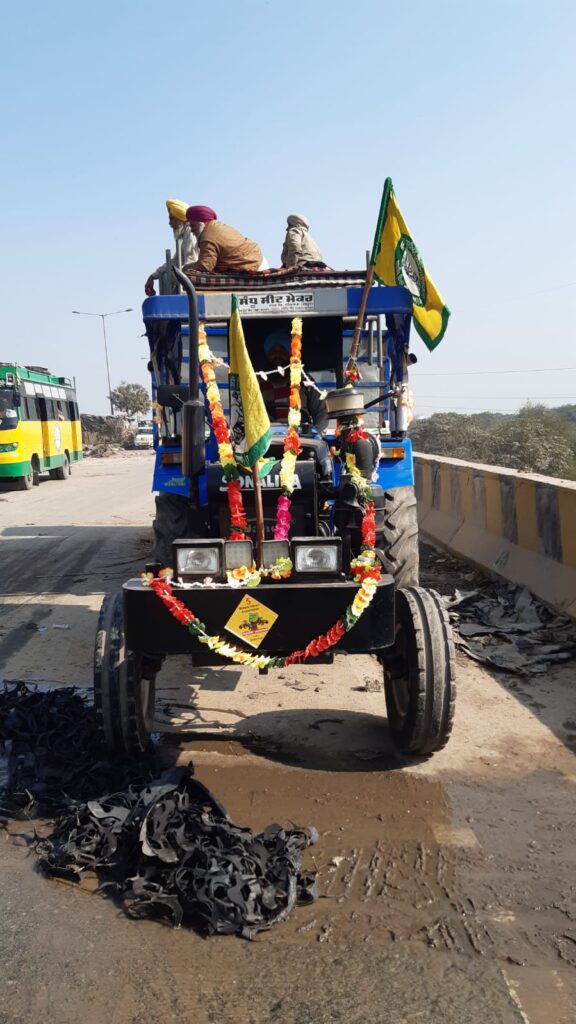
Farmers Fateh March starts
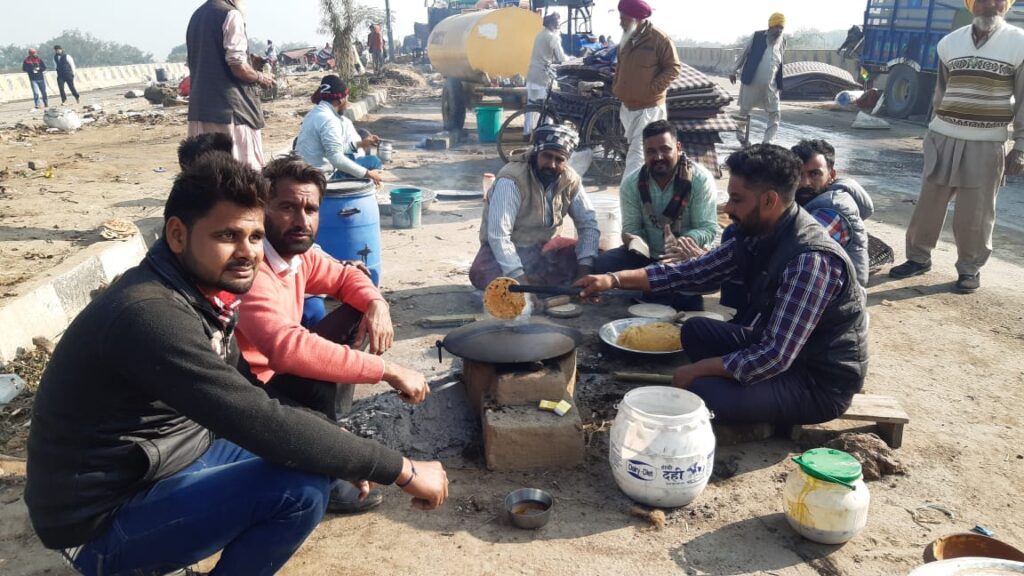
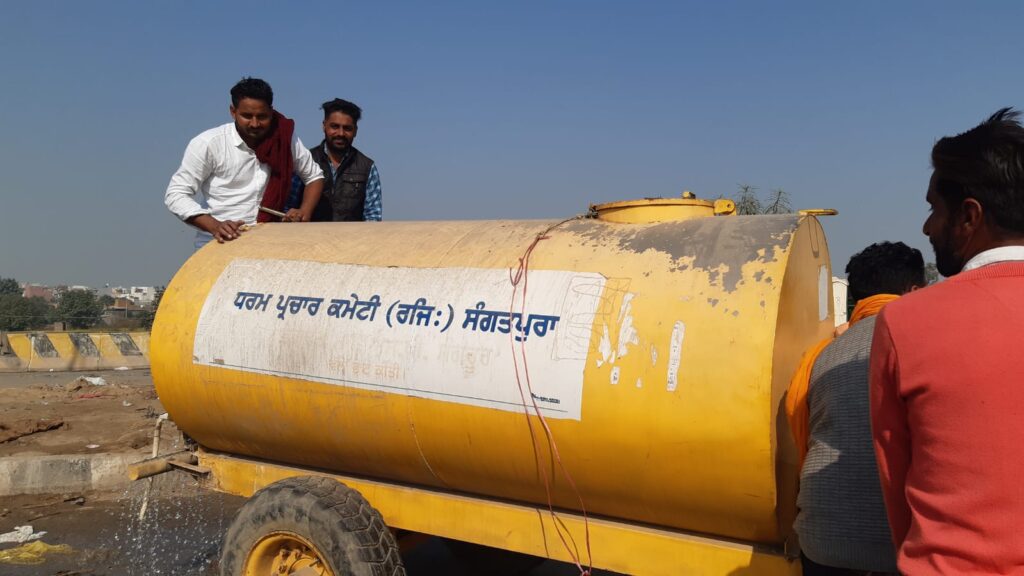
last time making morning food at Tikri, 11th Dec
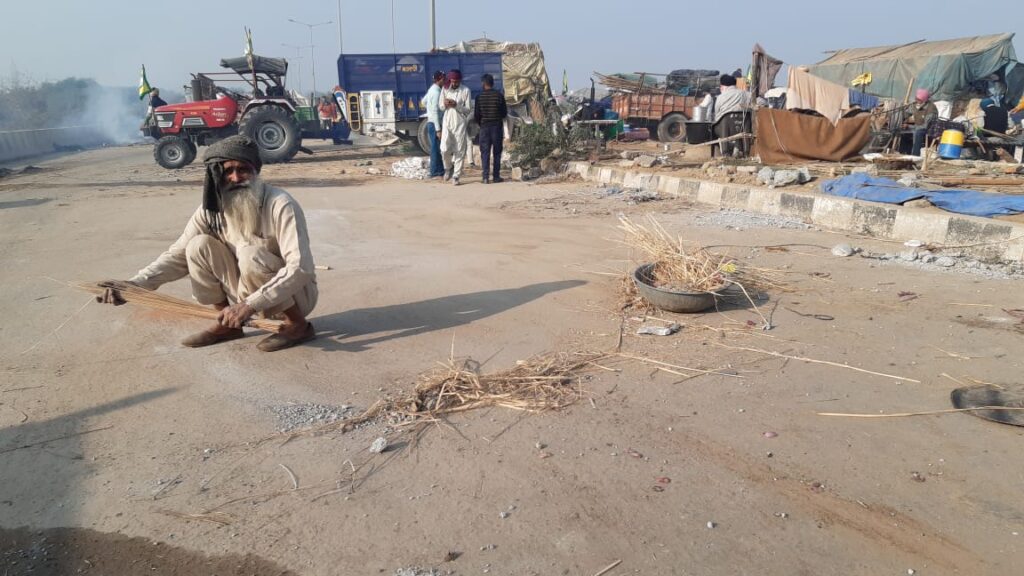
Farmers started the cleaning work at Tikri
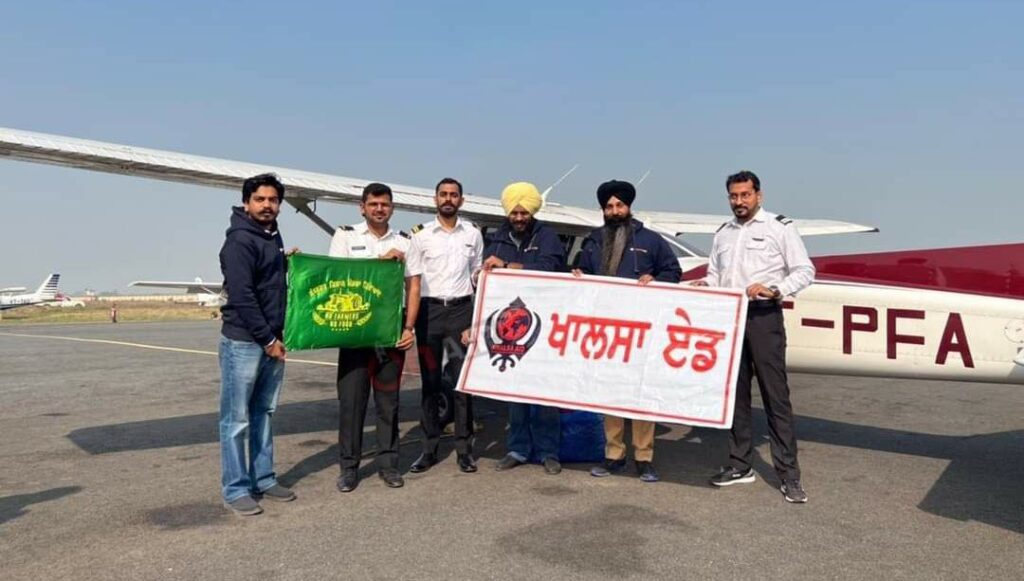
Helicopter ready for flower shower to welcome farmers returning from Delhi borders
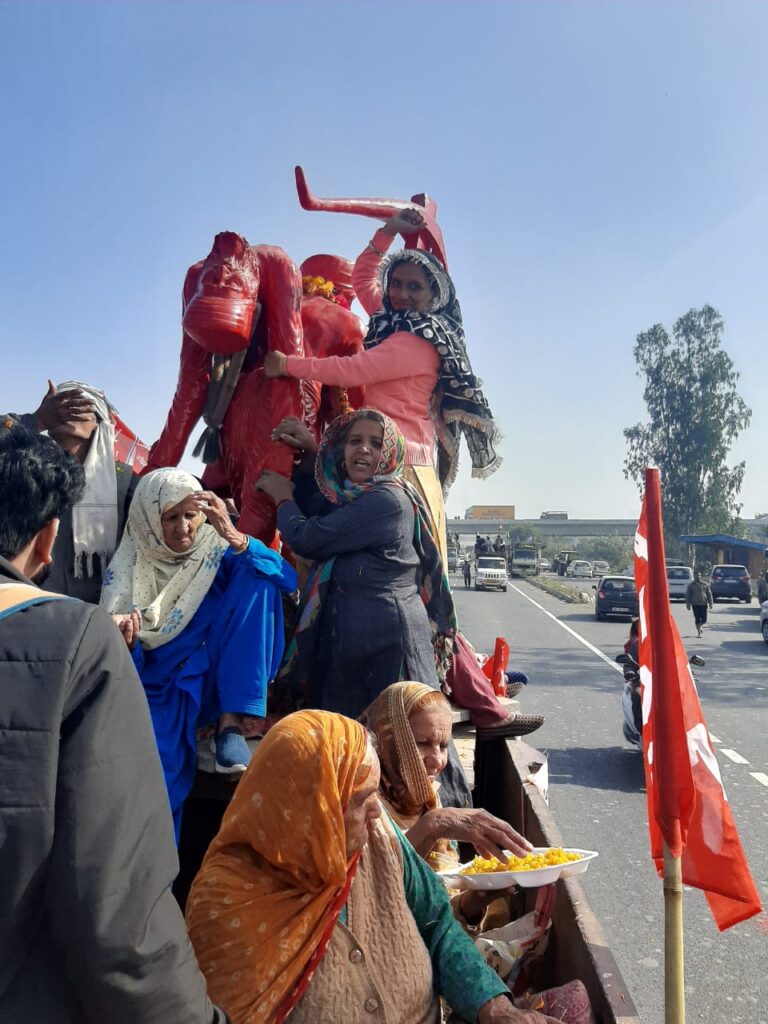
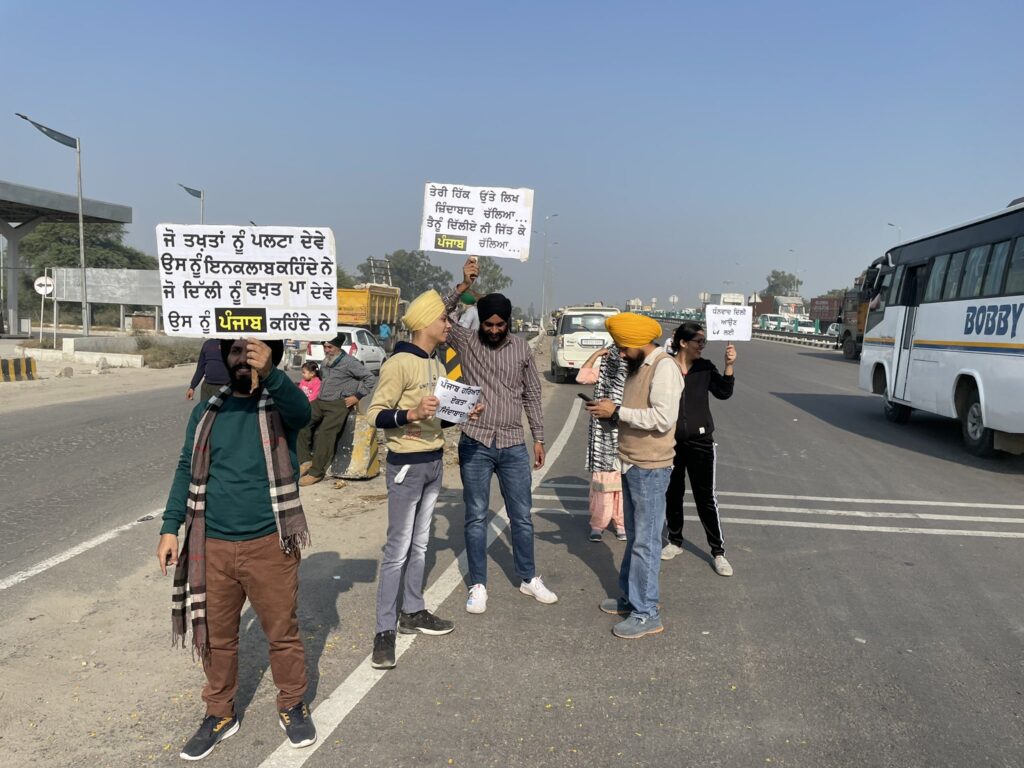
Punjabis from Delhi wished all the best to farmers on NH-44. Farmers are heading back to their homes in Punjab and Haryana.
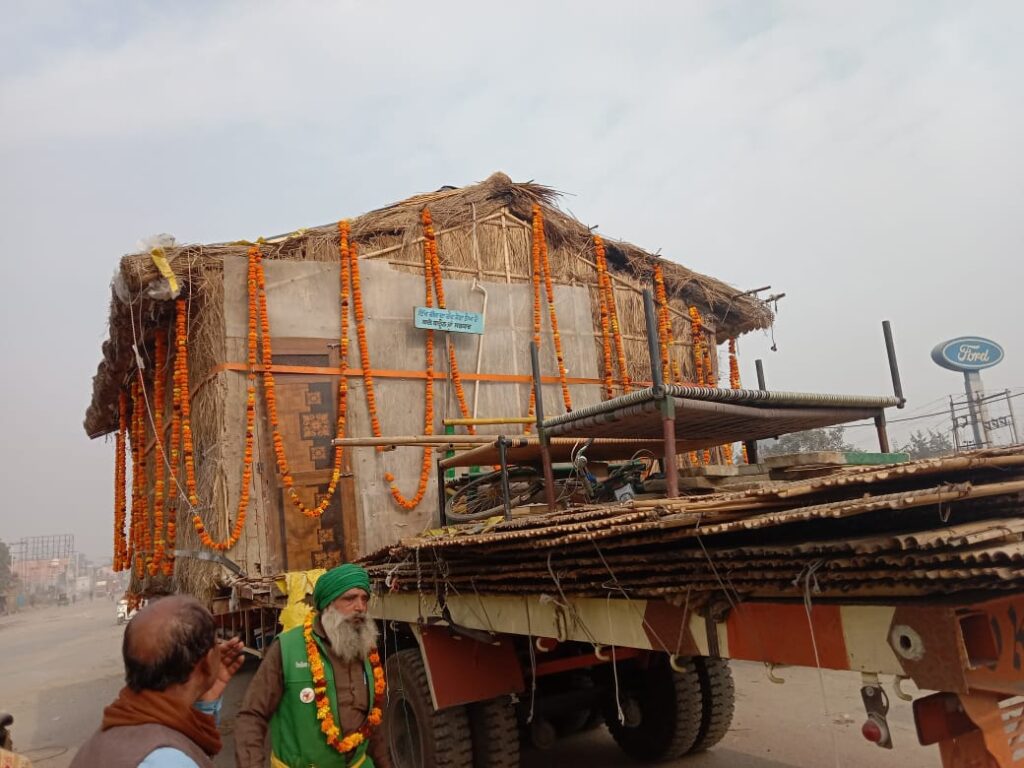
One farmer put his whole hut on to truck and taking it to Punjab with him
Kisan Chowk at Tikri Border
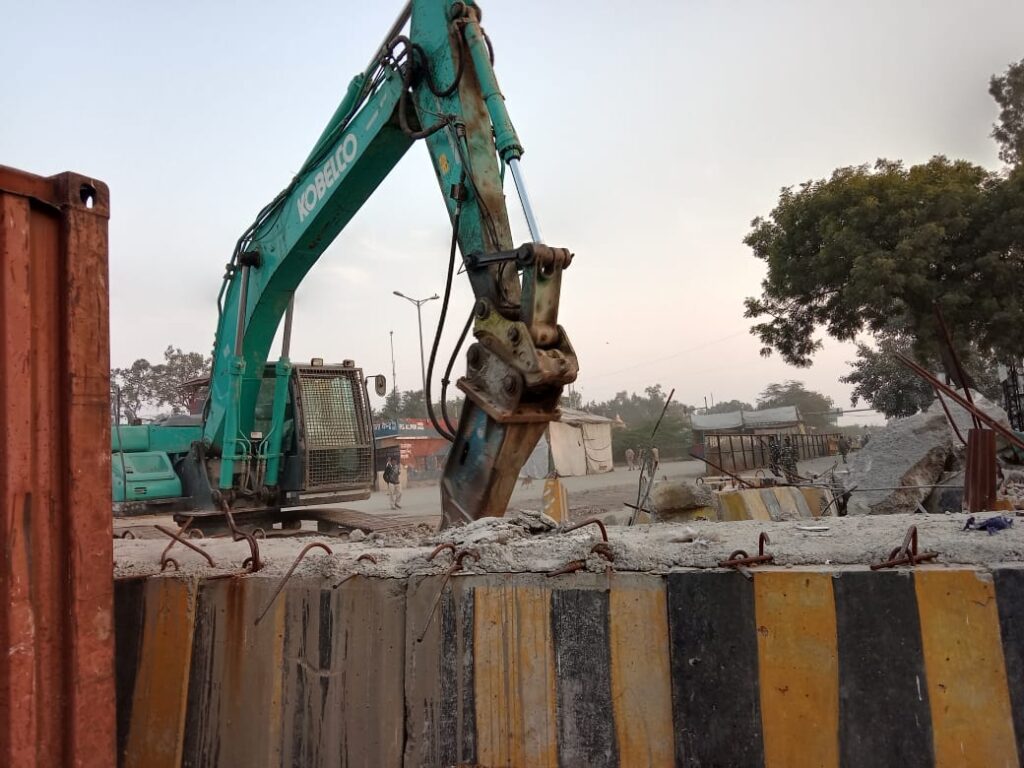
Delhi Police Start removing constructed cement barricades at Singhu border
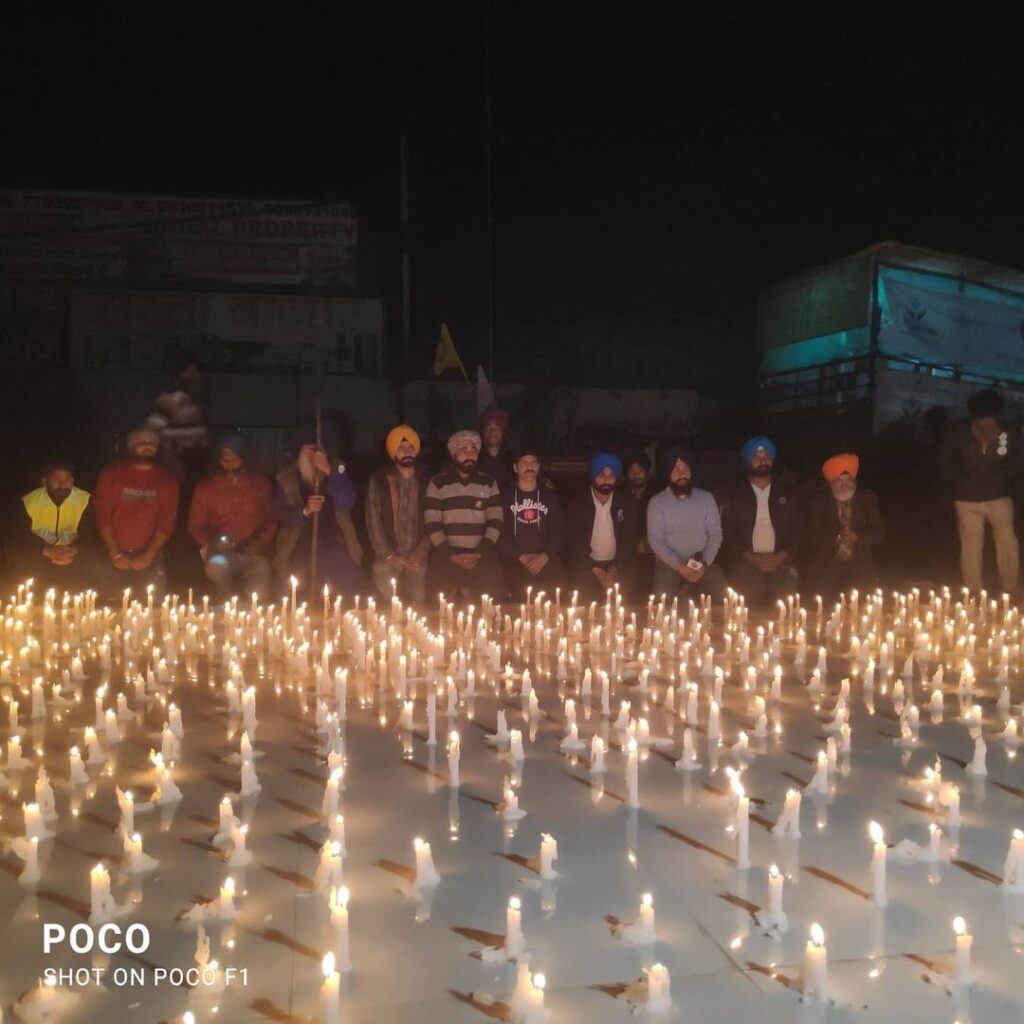
Life care foundation, the founder group of Kisan Majdoor Ekta Hospital at Singhu Border paid tribute to martyrs of this movement at the exact location of the earlier hospital.
 
Last Batch of protesters at Singhu Border
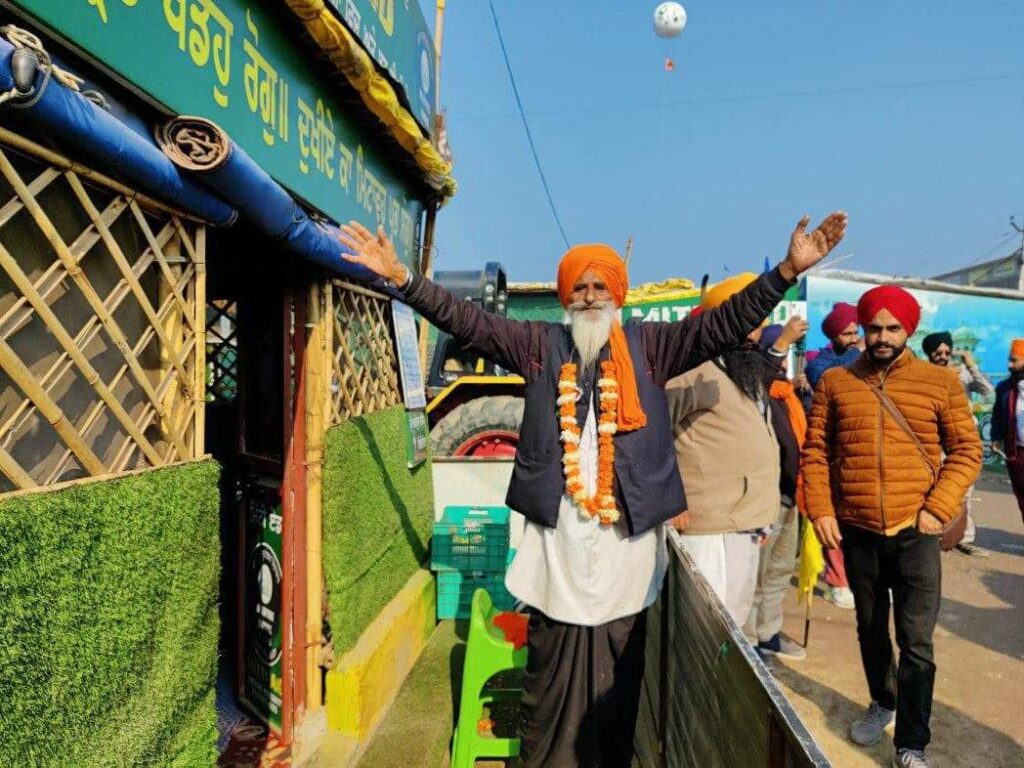
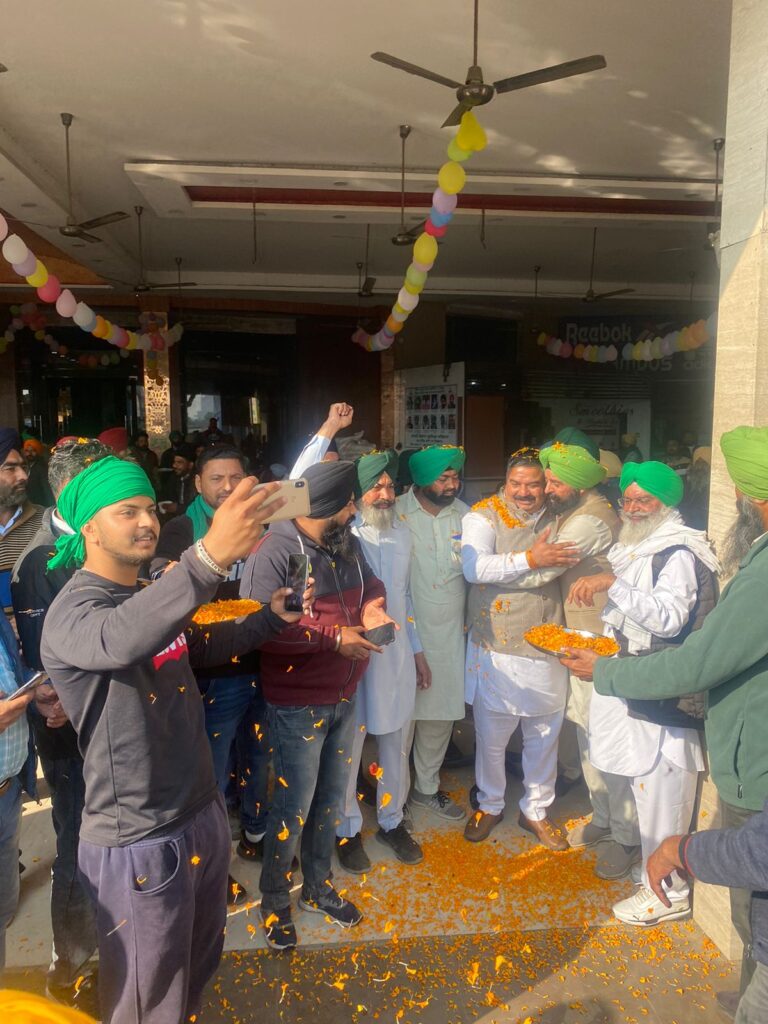
Dr. Darshan Pal, one of the founding members of Samyukt Kisan Morcha has not left the Singhu border since the day the protest march started at Delhi borders. He was given a grand welcome when he reached Shambhu border. Residents of the Sonipat District showered flowers and distributed sweets to acknowledge the victory of returning farmers.   Photos Courtesy: Samyukt Kisan Morcha and journalist Sandeep Singh

Chile Legalises Same-Sex Marriage in a Historic Vote

0
Chile’s center-right President Sebastián Piñera signed into law a bill legalizing same-sex marriage on Thursday, days after it was approved by Congress in a historic vote. The law “puts all love relationships between two people on an equal footing,” Piñera said at a ceremony at La Moneda government palace together with LGBT activists, representatives of civil society, legislators and officials. Lawmakers passed the law Tuesday, in a milestone for the conservative South American nation after a decade-long legal battle and with the country delicately poised ahead of a crossroads election this month. “Today is a historic day, our country has approved same-sex marriage, one more step forward in terms of justice, in terms of equality, recognizing that love is love,” Minister of Social Development Karla Rubilar said after the vote. “All couples who so wish, regardless of their sexual orientation, will be able to live love, marry and form a family with all the dignity and legal protection they need and deserve,” Piñera said. Civil unions have been permitted in Chile since 2015, which affords same-sex partners many but not all the benefits of married couples, like the right to adoption. The vote culminates a process that began in 2017, when the first bill was introduced, backed by then-President Michelle Bachelet. Chile is now poised to join over 20 countries globally with legal same-sex marriage, including Argentina, Brazil, Colombia, Costa Rica and Uruguay in Latin America. “It is hard to believe that today we are taking this step,” said Rolando Jimenez from LGBT rights group Movilh, one of the major backers of the bill and which helped spearhead Chile’s push to legalize same sex marriage for more than a decade. Chile has long had a conservative reputation even compared with its deeply Catholic Latin American peers. Still, a strong majority of Chileans now support same-sex marriage and Chileans have shown signs of moving left on social and cultural issues in recent years. Also Read: Chile’s Constitution and the Independent voice

Paresh Mesta Case Resurfaces Again In Run-Up To Uttara Kannada MLC Polls

As the ongoing campaign for the upcoming Member of Legislative Council (MLC) polls gains momentum in Uttar Kannada district, Paresh Mesta, a late fisherfolk’s name is surfacing in the rallies time and again.

Former Minister R. V. Deshpande has questioned where Rs. 50,000 that he provided to Kamalakar Mesta, the father of deceased Paresh Mesta. He said that after the death of Paresh, on humanitarian grounds, he had met the family and provided Rs. 50,000 to Kamalakar Mesta in his personal capacity before the last assembly polls.

“ He later said in public that he does not require the money. If he really did not want the money, then why did he not return it to me till date”, Deshpande wondered.

It may be noted that Paresh Mesta (18) was found dead suspiciously at a lake in Honnavar town in December 2017. His parents had alleged it was not a case of drowning but he was murdered. After his death, the local community members, various organizations, and BJP workers had staged protests in Kumata, Sirsi, and other towns in the district, demanding justice. However, the protests in the town Kumata and Sirsi turned violent, following which the state government had ordered a CBI probe.

Meanwhile, during one of the campaigns in the ensuing Member of Legislative Council (MLC) polls in Honnavar, Deshpande said that he does not really wish to get the money back as he will be happy if the family of the deceased has used it. He stated that “ I would think that my small contribution has helped the family. But the BJP leaders had apparently forced the father to give a statement that he does not want the money”, he said.

Deshpande said that after the death of Paresh, the BJP had created a hue and cry against the death and demanded an investigation. “ The then Congress government ordered a CBI investigation, but today, even after nearly four years, we have no idea what happened to the investigation despite the fact the BJP is ruling in the State and at the Centre”,  Deshpande alleged.

In Picture: RV Deshpande | PC: twitter.com

It may be noted that many people alleged the BJP of using the death of Paresh to further its political interests in the region. While the BJP leaders reportedly forced the father of Paresh to refuse the money, it is also alleged that the money was later taken away by some middlemen.

However, now with former Minister RV Deshpande wondering where the money has gone, the suspicion that it has been gobbled up by middlemen is gaining strength.

While Ex-Minister RV Deshpande raised the issue of Paresh, Former Member of Legislative Assembly (MLA) of Congress, Satish Sail also challenged the BJP that if the party had a real concern for Hindutva and the fishermen, then it should have given the Member of Legislative Council (MLC) ticket to Kamalakar, father of Paresh and made him an MLC.

In all the campaigns for Uttar Kannada MLC polls, Sail is posing the same question to the BJP.

“ In the last assembly polls, BJP won in three districts of Coastal Karnataka by raising Paresh’s issue. At that time, they used the death of Paresh to become a political tool to win votes. They raised the issue intensely in the entirety of the coastal districts. They even wanted the then Congress government to order a CBI probe. The Congress government acceded to it and handed over the case to the CBI. But today, even after four years, the BJP which is ruling in the State and in Centre has failed to give justice to Paresh. This means that they used the death of Paresh only for political gains and not to seek justice”, Sail charged.

He said that at that time, Former District In-charge Minister, R. V. Deshpande not only offered money but also assured to provide a job to the family member in KDCC bank. “However, the BJP leaders pressurized the family not to accept the offer. They used the family for political gains and later disowned them”,  he said.

He alleged that the BJP only knows playing politics in the name of Hindutva but has no real concerns for the Hindus.

Farmers’ Movement to Intensify, Decision To Be Taken Tomorrow: SKM

0

Maha Parinirvana Diwas of Dr Babasaheb Ambedkar celebrated by Samyukta Kisan Morcha across the country

At the call of Samyukta Kisan Morcha, farm organizations across the country celebrated Maha Parinirvana Diwas of Dr. Babasaheb Ambedkar, the architect of the Constitution of India, and took the oath to protect the Constitution of India. SKM stated that the Constitution of India, drafted under the leadership of Dr. Babasaheb Ambedkar has given every citizen the right to live a life with dignity, which the SKM is fighting to ensure.

Haryana Home Minister’s statement against farmers objectionable: Farmers protest against Dushyant Chautala in Haryana

SKM said that at a time when talks are going on between the Haryana government and the farmers’ organizations, the statement of the Haryana Home Minister shows their irresponsible and anti-farmer mentality. The SKM is not indulging in politics and is fighting to protect the farmers’ interests. Meanwhile, news of a protest being organized against Dushyant Chautala has also been received. Meanwhile, several BJP leaders have made statements that, after the decision to withdraw the three laws, the farm movement will not be influential in the upcoming assembly elections. This is completely baseless. SKM said that legal guarantee of MSP, withdrawal of electricity amendment bill, removal of the clause for a penalty of the farmers from the air pollution bill, arrest and dismissal of Union Minister of State for Home Ajay Mishra Teni, withdrawal of fake cases imposed on farmers and rehabilitation of martyr families, and issues like martyr memorial, etc. remain unresolved. These issues will influence Mission UP and Uttarakhand.

SKM thanks the citizens living near Delhi borders for their cooperation

SKM thanked the citizens residing near the borders of Delhi who have continuously supported the farm movement since 26th November 2020. The citizens living near the morchas were constantly instigated by the ruling party and the media against the farmers, but they have stayed by our side and have helped the farmers’ movement, which will be remembered by the farmers forever.

No communication from the union government so far

Samyukta Kisan Morcha (SKM) said that the 5-member committee has not received any communication from the Union Government so far to discuss the issues mentioned in its letter to the Prime Minister dated 21st November 2021. In such a situation, the future program of intensified movement will be announced by the SKM through its meet at the Singhu Morcha, tomorrow (7th December).

Need To Intensify The Movement

There is a need to intensify the movement for the legal guarantee of MSP, for the withdrawal of the fake cases imposed on farmers all over the country, and for the rehabilitation of the martyrs, farm organizations said

NGO Launches Free Ambulance Service In Memory of Gauri Lankesh

0

In the memory of noted journalist Gauri Lankesh, the Karnataka Chapter of Akhil Bharata Shramik Kendra, a Non-Government Organisation (NGO) has launched a free ambulance service mainly to serve the migrant workers from North Karnataka and North India.

The service was flagged off at 11:00 AM on Saturday, 4th December from Press Club of Bengaluru by Kavita Lankesh, film director and sister of Gauri Lankesh, informed Kaleemullah, one of the functionaries of the NGO.

Kavitha Lankesh, Kaleemullah, Human Rights Activist Akkai Padmashali, Social Activist Che Balu, State Working President of Karnataka Rajya Raitha Sangha (KRRS) Veerasanghaiah, Kannada Journalist Nazia Kouser and others were present when the service was flagged off.

During the release of the ambulance facility, he said that due to the Covid-19 pandemic, many poor people are unable to avail health facilities easily. Hundreds of migrant workers from North India and North Karnataka are living in the sheds around the Mahadevpura area of the state’s capital, Bengaluru. Since these people do not have easy access to better healthcare facilities, the NGO decided to provide free ambulance service to these people in order to save their lives during any medical emergency, mainly during the Covid pandemic.

The release said that throughout her life, Gauri strove for the welfare of poor, needy, and oppressed people through her newspaper. She remained vocal also in fighting against the injustice being meted out to the vulnerable sections of society. Speaking on the occasion Kaleemullah informed that “When Gauri was killed, we had voiced out that Naanu Gauri – Naavellaru Gauri (I am Gauri, We all are Gauri). Hence, we have named the service after her. She was always fighting to secure the rights of the poor and the marginalized. We are organizing many such programs in her name. Tomorrow, around 200 people will also donate blood. It is a small initiative to keep her alive in the memories of people, Kaleem said speaking on the occasion.

Progressive Artists & Thinkers Demand Removal of Rangayana Director Cariappa

0

Despite the Mysuru-based repertoire, Rangayana has postponed its Annual Theater Festival ‘Bahurupi’ which was scheduled to be held between December 10 and 19. However, the controversy surrounding the repertoire and the allegations against its director, Addanda Cariappa does not seem to die down.

The order states that the annual theater festival has been postponed in the context of the Covid-19 pandemic.

This prestigious repertoire based out of Mysore City is hitting the headline for all the wrong reasons in recent times, more so after Addanda Cariappa took charge of the same in December 2019. Recently, a controversy has erupted after Rangayana invited controversial right-wing ideologue, Chakravarti Sulibele as one of the speakers for the prestigious Bahurupi Annual Theater Festival.

Recently the media reported about the matter and asked for the reason behind inviting such a controversial man to the prestigious event, but Cariappa who kept defending the decisions and showed scant regard to the opposition posed for such a decision. He also replied in a rude manner while defending the decision.

After the reports got published and it snowballing into a major controversy in the field of theater, in Karnataka, many organizations and progressive people are raising their voices against Addanda Cariappa as they have demanded his removal from the post of Director of Mysore’s Rangayana.

The members of various progressive organizations recently joined and staged protests near Rangayana. They have voiced out that, a man who does not believe in pluralism, should not become director of Rangayana, a repertoire which was established with the very purpose of giving scope to vary belief of pluralism and socio-cultural diversity of the country.

Condemning the decision of inviting Chakravarthi Sulibele and BJP activist, Malavika Avinash, they said that such people strongly propagate the ideology of dividing the society and have no respect for the Indian Constitution.

Criticizing the adamant nature of Addanda Cariappa,  the members said that becoming director does not mean that he can run Rangayana as per his whims and fancies. Considering all these aspects, the members have announced to boycott Bahurupi event.

In his regard, they have also written an open letter where they have shared their views and demand of removing Cariappa from his post.

The letter explicitly mentions that for many reasons, Bahurupi is a significant programme. They have held that the place is a platform for the culmination of various cultures, beliefs and languages through theater and that the event organized here, helps in uplifting the socio-cultural values and strengthen the social fabric of the religiously and culturally diverse country such as India.

The artists and theater lovers across the country watch every event carefully as the theater is given the opportunity to widen their view of socialism and creativity.

This is the reason why many renowned artists of the country have remained associated with it for so long.

Expressing anguish over the invitation extended to people like Chakravarthi Sulibele and Malavika Avinash, the letter said that the invitation to such people harms the basic principles of Rangayana as these people do not believe in the ideology of a diversified India.

Since these people openly support a particular political party, therefore, they should not be invited to Bahurupi, mainly because they have no contribution to the field of theater, art and culture.

Known for creating communal divide with his inflammatory speeches all across the state of Karnataka, Chakravarthi Sulibele is not suitable to be invited as guest speaker. Making it clear that Rangayana is not merely an institution that belongs to Kannadigas, but also statutory body, the director of the Institution must never make any attempt to push ideology of any political organization into it and should work only to take forward the basic principles of Rangayana no matter which political party is ruling the State. It should not become a platform to spread communal hatred, the letter stated.

Asserting that Rangayana has witnessed numerous artists, writers and thinkers in over three decades of its establishment, but it is unfortunate that after Addanda Cariappa took over as the director, it has become a political tool of a party. “ In order to appease his political masters, Cariappa is breaking the treading of Rangayana which never invited politicians to the events”, the letter stated.

The letter has been signed by P Mallesh, Kalegouda Nagawar, N Diwakar, KP Suresh, NS Gopinath, MM Ramesh, Madhav Khare, KS Shivaram, BG Nandish, V Purushottam, Rajesh, V Lakshminarayan, Ratirao, Panditaradya, GP Basavaraju, VN Lakshminarayana, Anand, MF Khalim, Khadar Ahmed, Jagdish Suryna and L Jagannath.

While many progressive thinkers have expressed ire over the invitation to Chakravarthi Sulibele and Malavika, the junior artists of the play ‘Parva’ have also expressed their reservations. They have written letters to Addanda Cariappa to share their views and oppose the invitation to Chakravarthi Sulibele and Malavika Avinash.

Describing Bahurupi festival as the crown of Rangayana, the letter said that the event should invite only those people who believe in giving respect to various cultures and religious beliefs.

While calling Chakravarthi Sulibele as a man who spread canards and false information, they said that Malavika Avinash is officially a member of a political party.

The letter says that junior the artists vehemently opposed the invitation to these two people.

Farmers’ Movement: A Beginning To Solve All Contradictions – Part 2

This is the second part of a two-part article by Prof. Amit Bhaduri. The brightness has faded. The next election in UP, the most populous state in the country with maximum representation is around the corner. The BJP has lost badly state elections in West Bengal in the east and, in Tamil Nadu in the south of India. Central and North Idia is now the battlefield, and the farmers’ movement has crystalized in many areas there. BJP intends to build a huge temple in the name of the Hindu-God Rama and hopes its religious strategy of building a Hindu Rashtra would work in this traditional Hindu heartland. Against this divisive religious ideology of the BJP can the farmers offer anything, because many of them are also traditionalist Hindus? Many confessed they had voted for BJP in the last election for that very reason, and there had been Hindu-Muslim riots. Daylight simply began to go out for BJP when the farmers too came forward with their political understanding of why these laws were so important for the government. Soon after the movement began, the farmers clearly identified big specific corporate interests that were driving the farm laws. They simply put the cat out of the bag among corporate fed pigeons – the politicians with Modi leading them, the media, the market liberalizers, and even the IMF- World bank type economists who adorn all governments. They named the two biggest industrialists from Gujrat, close friends and associates of the prime minister as the intended main beneficiaries of these laws. Some evidence was on the ground, the silos as potential grain warehouses of Adani, making inroads into the retail food market and preparation for on-line bulk trading by Ambani. The farmers’ minimalist ideology was potent and alive, derived from their life experience. They were not afraid to state it simply and openly. It was not a party-line dictated from the top. Many tend to confuse the farmer’s peaceful movement of ideological originality with the Gandhian or Anna Hazare type anti-corruption movement. This is wrong. That the movement is peaceful does not make it Gandhian. Unlike Gandhi and his view of  Trusteeship of the wealth of the country with industrialists as its in charge, the farmers took an open anti-big business stance in agriculture. That there is corruption in a prime minister selling out Indian agriculture for the profit of two corporations does not make it a part of any silly anti-corruption movement which looks only at individual money-making through illegal transactions as corruption. Mr. Modi was actually intending to change the laws to make everything legal! This movement is unique in its tenacity, and staying power, in its ability to forge unity across class, caste, gender, and religion with a straightforward ideology that goes to the heart of the matter. This is why it could not be crushed. And it is now history, the government failed to crush it. However, it opens up probably the most important question of our era. Can movements born out of the shared life experience of a vast number of people replace political parties and create potent, alive transformative, pro-people politics with ideologies relevant to the particular movement? Political parties have repeatedly shown they are not capable. They are in the game of competitive electoral politics where money is crucial; catering to public prejudice is essential; a spade cannot be called a spade because in representational politics image is more important than reality, the ability to create illusion and hypnotize the public, and make them oblivious of ugly reality is the aim of the game. Speaking well is more important than acting. Media and advertisement are crucial aids for replacing reality with image, and for that the support of big money from big industrialists is indispensable. The cohesion of the party requires organizational discipline imposed from the top; the central leadership sets the line, and the followers follow. Vote banks created by manipulation of religion and caste to create a majority are at the core of democratic elections as we know it now. The farmers’ movement showed that these distortions can be corrected to a large extent, that they can be overcome in course of a movement. The farmers did not tell people to vote for this opposition party or that. They opposed BJP’s anti-farm policies, were disgusted by Modi’s imperial arrogance, repelled by his politics of creating religious division, and his lack of decency in dealing with them. He did not once regret the death of 670 farmers at the protest; he maintained silence over the suspected involvement of his minister’s son in the killing of four farmers by crushing them under a car, even when the minister himself had threatened them openly earlier in a public meeting.

Also Read: How to Fight Fascists? : Farmers’ Movement Shows the Way

People have been invited to vote on the basis of their shared experiences. They have been invited to judge policies that support only corporate interests. They have been made aware of the anti-democratic and anti-constitutional intentions of the government. Movements have also earlier put or removed political parties to power. The Aam Admi (AAP) party in Delhi rode to power entirely on the shoulder of an Anna Hazare-led anti-corruption movement that prided in not having an ideology! Since then, it has become a creature of retaining power by any means as its only ideology. The once-mighty CPM(Communist Party Marxist) which prided on its Marxist ideology in West Bengal was arrogant enough to ignore the life and death question of the peasants. Then the civil society stood up with the peasants, and the Trinamul Congress captured that popular mood to ride to power. It has nearly obliterated CPM from West Bengal politics, along with shattering the BJP recently in the last election. The Congress party had earned rich dividends, won popular support, and removed BJP from power in the general election of 2009 when it passed the Right to Information and nationwide rural employment guarantee act, but since then it has increasingly proved it believes in a secular liberal democracy only so long as the family dynasty is not disturbed. BJP is arrogant in its belief that clever exploitation of the Hindu-Muslim religious divide will deliver its victory in elections, and tries to be clever by half by hiding all the ugly, divisive issues of the Hindu caste society, its oppression of Dalits, scheduled caste, and suppression of tribal rights. The farmer’s movement has so far acted as an antidote to many of these pathologies from which political parties in democratic India suffer. Unemployment is an overwhelming issue but is made relevant only during elections. No political party has even tried to figure out seriously a plan to tackle it. Poverty, child malnourishment, destruction of livelihood, and nature in the name of economic growth and development become transient issues highlighted only at election times.  All parties contribute to these ugly tendencies when in power, and they all oppose when in opposition. The farmers’ movement spelled out the name of the game clearly. It is meant to hand over the economic control of the country to a few large corporations and keep the poor undemanding and submissive by throwing occasional charity at them. There are some differences, mostly of degree. Mr. Modi has surpassed all in practicing this ideology most ruthlessly with single-minded devotion. The farmers’ movement forced open to the public this scheme of things.  Not all contradictions have been solved by this movement, but a beginning has been made thanks to the understanding by India’s farmers. What is more, they have made people, ordinary poor people gain confidence that things can be altered once they too understand, unite and persist. In a way, it is frightening for the entire political class because it will not be business as usual. The farmers’ movement has established this as our newly gained reality beyond the political rhetoric of a dysfunctional democracy. Prof. Amit Bhaduri is an economist and a consistent critic of mainstream neoclassical economic theory, relentlessly exposing its logically flawed foundations. He is currently an internationally selected professor (of clear fame) at Pavia University, Italy, and visiting professor in the Council for Social Development, New Delhi.

Farmers’ Movement: A Beginning To Solve All Contradictions – Part 1

0
This is the first part of a two-part article by Prof. Amit Bhaduri. A monster of not an entirely known shape has recently been injured, but how badly is not fully known. That only the future will tell. The monster, they say is a creation of Indian majoritarian democracy gone rogue. That monster, some say was born out of repeated attempts at perverting the Constitution by means fair and foul, constitutional and unconstitutional. The monster also kept changing its shape. It appears in empty legal forms hollowed out of truth and were presented as laws needed for defending the land against unlawful activities by internal and external terrorists. The monster propagated a version of pathological nationalism meant to silence all opposition, all dissent, and smooth out all differences of opinion by force where necessary. In the meantime, its presence was felt in every corner of the country as it kept destroying poor people’s livelihoods in the name of economic growth and development, in the name of abolishing black money and corruption. That monster operates in a land of multi-party democracy where electronic images have replaced the real, where the advertisement is the news and real news is subversive. The serious blow that was dealt with this multi-headed monster was not sudden. Strength to deliver this blow was gathered with extraordinary stoic courage and tenacity by a very large number of Indian farmers who had originally gathered and settled in temporary tents, tractors, and trollies on the border of the capital city of Delhi through winter, summer, and rain. They had not been allowed to enter the city. And yet, they acted peacefully with remarkable patience and just waited to be heard. They had found unacceptable the three farm laws the government had recently passed in the parliament and had dubiously hurried through in the upper house with voice votes because they might not have had a majority needed there. The government first tried to disperse them, treating them as rioting mobs with water cannons, tear gas, and so on. And when this did not work they barricaded the farmers on the roads leading to the main entrances in Delhi. The government tried to make a show of talks with the farmers. With altogether 11 rounds of meetings spread over several months, it avoided altogether any discussion of why the farmers wanted the three laws repealed. The deadlock continued, but the farmers had worked out a new strategy by then. The government had encircled them with barricades and police; now it was the farmers’ turn to encircle the whole area at different points with more and more farmers peacefully joining the farmers’ movement from surrounding villages. The government kept on accusing the farmers of being Sikh separatists, anti-nationals and left-wing extremists, Naxalites, and Maoists. A friend joked: Mao had told, ‘encircle cities with villages’. The farmers are doing precisely that without ever having heard of Mao. This is metaphysical justice for our Prime Minister Modi and his Home Minister Amit Shah who had absurdly accused them of being Maoists. Farmers organized all this, but without a trace of violence. Typically, the entire family of mostly self-employed peasants participated in the movement from nearby villages. They did work on the farm by rotation. Women came every evening after the day’s work, and their number swelled along with their determination, often beyond everybody’s imagination. They had far greater staying power than daily wage earners in farms and factories. Their stoic, tenacity of daily routine now directed at furthering the movement became formidable, unimaginable for the government which was ready only for a violent showdown. It was gradually losing nerve. In many of these areas, especially in Haryana adjacent to Punjab, patriarchy is very strong in the villages; the upper castes dominate the village councils, ‘Khap Panchyats’, and dreadful caste domination prevails. Agricultural laborers mostly Dalits supported the farmers’ movement because they realized that these laws were soon going to replace with private trade and profiteering the public system of distribution of grains which was their sustenance. Media persons visiting these areas reported in amazement that traditional divisions are breaking down not only on the Delhi border but elsewhere; class, caste, gender, and religion are all getting fused into a grand movement with a single objective: repeal the farm laws and ensure minimum support price for trade-in several agricultural produce. The isolation of the government and BJP was almost complete by now as farmers simply began to boycott BJP workers in villages, surrounded public places when BJP politicians were scheduled to speak. The ruling party members were immobilized and needed police protection to move around.
Farmers’ Tractor Rally | PC: Outlook India
An unintended consequence of the Modi-Shah regime just some months before the farmers’ movement had been the spontaneous mobilization of Muslim women in thousands against the Citizenship Amendment Act (CAA) which was openly aimed against the Muslim minorities. Such unintended consequences that drew women into the movement turned out to be a most potent medicine working against Modi-style surprise announcements by surprising him instead, although it usually caught the political opposition unprepared. Such a surprise announcement had earlier been very successful when Modi had declared  Demonetisation and sudden severe lockdown without preparation and warning. Even just before the farm laws, the Modi government rushed through the parliament anti-labor laws and faced relatively little resistance, as most party-based large trade unions proved incapable of putting up effective and sustained resistance. In this background, the emboldened government passed the three farm laws basically preparing to hand over the official procurement and the food distribution system of the country to two of its closest corporate allies from Gujrat, the two biggest private industrial houses in India. The farmers had started putting up almost temporary townships on some entry points to the capital of Delhi, quietly prepared for a long struggle. Now they were spreading out to several areas with new local leadership and initiatives emerging. Their leadership was their very own without accepting advice or guidance from any political party. Instead, opposition political parties felt compelled to support this massive movement. It was a collection of thirty-six farmers’ unions that came together with different perspectives and membership, continuously engaged in debates and discussions among themselves, and united like a rock once a decision was taken. Quite unknowingly they showed to the world what democratic centralism can actually mean and achieve in practice. The movement remained open and transparent, peaceful against all provocations, and invincible because it had total support from all who were in the movement. It transformed the notion of party discipline imposed from the top into voluntary participation with self-imposed, coordinated discipline for a cause. This historic farmers’ movement started about a year ago on 26th November 2020 and had its first strategic victory on 19 November 2021 when the Prime Minister of India suddenly appeared on the TV to announce his retreat, his intention to withdraw the three farm laws. His sudden announcement earlier on Demonetization in 2016 was officially meant to eradicate black money. This was a few months before the U.P state elections. It gave his party, the BJP a tremendous comparative edge in terms of monetary resources because it had inside information, whereas, opposition parties were caught unaware and became immobilized. The PM was then at the peak of his popularity, and able to sell himself as the White Knight, fierce fighter against black money, even if his earlier promise before the election of depositing rupees fifteen lakh in every citizen’s account by bringing back black money from abroad had vanished in thin air. And yet, the poor people suffered gladly the hardship because they still believed in their prime minister, and BJP won the U.P election with a massive majority. That was 2017. Prof. Amit Bhaduri is an economist and a consistent critic of mainstream neoclassical economic theory, relentlessly exposing its logically flawed foundations. He is currently an internationally selected professor (of clear fame) at Pavia University, Italy, and visiting professor in the Council for Social Development, New Delhi.

Veteran journalist Vinod Dua Succumbs to Post-Covid Complications

0
Veteran journalist Vinod Dua who was aged 67 passed away today informed his daughter Mallika Dua. He was suffering from post-covid health complications and had been admitted to the ICU of a private hospital in Gurugram from November 29th.
The 67-year-old journalist, a pioneer in broadcast Hindi journalism with stints in Doordarshan was known for his committed journalism with NDTV and was awarded the Ramnath Goenka Excellence in Journalism Award and the Padma Shri in 2008.
Taking to social media, his daughter Mallika Dua, bidding an emotional farewell to her dad wrote: “There will never be another like you. My first and best friend. My Papaji. Very few live as large and glorious a life as you did. Always up for a good time. Always ready for a challenge. Loved a good fight. Always there for his children. A self-made, lion-hearted legend who roared in rebellion till his last breath. He feared nothing, least of all death. Thank you for being the BEST dad in the world. I’m sure you and mama are eating chapli kebab and discussing “Mallika itna kyun ladti hai sabse. Kaise manage karegi”. The most courageous, irreverent, compassionate, and funny man I know. What a guy. An ordinary boy born in Nabi Karim who took on the high and mighty and won, till the end. Padmashree Vinod Dua. Even at your weakest, you gave Indian Journalism a landmark judgment. No journalist will be randomly slapped with a sedition case because Vinod Dua fought that fight for them, as he always has. Heaven is just so f***ing lucky, it has my whole entire life. We won’t live in fear and grief forever. We will live with pride and gratitude because look at the extraordinary parents we got. I wouldn’t trade my destiny for anything. It gave me Vinod and Chinna. Nobody gets double lucky. Bohot Umda”. Further, she has informed that the cremation would take place on December 5 at Lodhi Crematorium at noon.
Mallika Dua’s Instagram Post Informing of her father’s death
Last May when the Covid-19 outbreak was at its peak during the second wave, both Vinod Dua and his wife were admitted to the hospital as they were diagnosed to be Covid positive. The journalist’s health has suffered ever since and he has been in and out of hospitals.
Condolences have started pouring in from the fraternity of journalists and politicians amongst others.
The Mumbai Press Club has tweeted ” India today lost fearless and one of the legends of journalism Vinod Dua. The RedInk Award for Lifetime Achievement in Journalism for 2017 was bestowed on him for his extensive and versatile contribution in different journalism formats. May his soul rest in peace. #VinodDua”