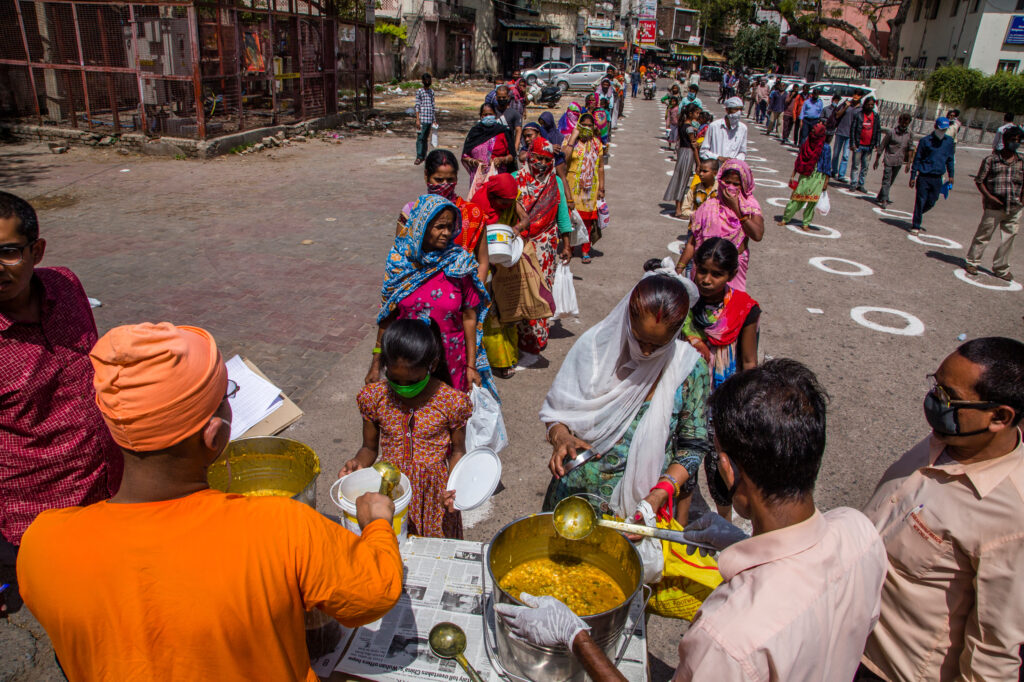
Uma Devi, the school headmistress of the Mulbagal Someswara Palaya Bale Changappa Government Kannada Model Higher Primary School in Kolar district has been suspended after a video of some students offering namaz in a classroom on Friday went viral.
After the video became viral, members of the Hindu outfits held protests inside the school on Sunday. After this incident the Kolar district administration then ordered an inquiry which led to the suspension of Uma Devi.
According to the report by Indian Express, Block Education Officer Girijeswari Devi has said- “We had sent a four-member team to the school to conduct an inquiry and found that the headmistress has made a mistake by giving students permission to conduct namaz in the school on Friday.”
“Muslims students are given permission to offer namaz during the break and usually they come back after that. But there is no permission to conduct prayers on the school campus, hence we suspended the headmistress,” she said. “There is no provision to offer any kind of religious prayers in government schools…. Hence this action had been taken.”
The headmistress had earlier said that she had not given permission to the students to offer namaz in the classroom. “Students offered namaz themselves in my absence,” she had said.
Also Read: Preventing Six Muslim Women from attending classes is Violative of Fundamental Rights: PUCL Karnataka
A public interest litigation (PIL) petition has been filed before the Delhi High Court seeking postponement of the upcoming assembly elections in five States in view of the rising wave of the Corona virus’ Omicron variant.
The assembly elections in the States of Uttar Pradesh, Punjab, Manipur, Uttarakhand and Goa are scheduled to start from next month and will continue till March. The results of the elections will be declared on March 10.
The petition before the High Court has been moved by Congress leader Jagdish Sharma through advocates Rudra Vikram Singh and Manish Kumar.
The plea sought a direction to the Election Commission to defer the elections for a few months while also seeking a mandatory quarantine of people returning from poll-bound States.
The plea prayed that a direction be issued to the Central government and the State of Delhi to submit details of their plans as to how they will deal with the shortage of Oxygen and distribute essential supplies and services during the third wave of the pandemic.
Petitions seeking postponement of elections were earlier moved before the Allahabad and Uttarakhand High Courts by other persons. Both these Courts, had, however, refused to defer the elections.
Badami, Karnataka: Former Chief Minister and Leader of the Opposition in Assembly Siddaramaiah turned furious after one of his followers tried to felicitate him with Saffron Pete(turban used to felicitate in Karnataka) in Badami on Tuesday.
The incident occured when Siddaramaiah was the chief guest for the inaugural ceremony of a new building of Kataraki Gram Panchayat. When one of the followers tried to facilitate Siddaramaiah with saffron shawl, he refused and threw it away.
This behaviour from former chief minister stunned all the gathered people during the inaugural ceremony in Kataraki village. The man who had tried to facilitate with saffron shawl disappeared from the crowd within minutes of the incident occurred.
Interestingly, when another follower rushed to present sheep to Siddaramaiah, he blessed the follower but refused to accept it.
Siddaramaiah was on two-day tour to Badami from Monday. He had laid foundation stone for the various development works in the segment on Tuesday.
It may be noted that, a couple of years ago, when a priest tried to put kesari tilak in one of the functions in Badami, he had refused and had lashed out at preist. This has attracted lot of criticism by the saffron party leaders.
Siddaramaiah is an atheist and has been a staunch critic of RSS, its symbolism and their divisive politics. Since saffron is the color that has been appropriated by RSS and BJP as a secular leader, Siddaramaiah naturally did not want to be associated with the color.
To
The Honourable Chief Minister And All Legislators
Government of Karnataka,
We are a group of senior scientists, writers, academics, artists, and lawyers, and we write with concern about Karnataka’s deteriorating governance and the frequent violence against religious minorities. Over the past few months, the state has witnessed the brutal killing of youths in several districts, rampant ‘hate speeches’, public threats and disruptions of worship by religious minorities, ‘honour killings’, ‘moral policing’, misogynistic statements by legislators, and incidents of hostile and violent encounters between various religious groups. These trends have been encouraged by the callous and un-constitutional statements made by Legislators and the inability of the state machinery to rein-in fringe anti-social groups.
Such trends go against the long history of Karnataka as a progressive state that facilitated social harmony of a plural society and initiated model welfare programs for all sections of the population. The state’s cultural history celebrates the plurality of cultures and religious tolerance and our icons have long been Basavanna, Akkamahadevi, Kanakadasa, Purandaradasa, and Shishunala Sharifa. Our litterateurs, ranging from Bendre to Kuvempu, have celebrated a “Karnatakatva” that is based on multi-cultural identities that blend together to make a harmonious and rich social fabric.
We note with both sadness and alarm that these traditions of tolerance and shared well-being are being torn asunder. Instead, the state is losing its identity on multiple fronts. On the fiscal, administrative, and political fronts Karnataka is losing its federal strength. Recent legislations such as the ‘cow protection’ and ‘anti-conversion’ Acts are pogroms against the economic and cultural rights of religious minorities. No longer are harmony, peace, and tolerance the hallmarks of the state. It also needs to be stressed that if the above issues are not addressed, even Karnataka’s reputation as a business destination is bound to be impacted negatively as all types of economic activity depend upon an atmosphere of social peace and harmony.
As elected representatives, it is the responsibility of the Chief Minister and all legislators to deliberate on all legislations, programs, and policies in a democratic and open manner. Implementing received ideas and suggestions that seek to assert only narrow, sectarian agendas will only be antithetical to the interests of the state and its people.
We call upon you all to seriously review these negative trends in the state and to ensure that the rule of law, the principles of the Constitution, the rights of all citizens, and the basic norms of humaneness prevail. It will be your abilities to address these challenges that will be the yardstick with which posterity will assess you.
On this special day, as we celebrate our national status as a ‘Republic’ and as a state within this federal republic, we write this with hope that you will initiate a period of social harmony, just legislations, and democratic functioning of the state machinery.
Sincerely
Signatories:
Prof. Vinod Gaur (former Secretary, Dept of Science and Technology, Geo-Physicist)
Flavia Agnes (Lawyer and Author), Mumbai
Prof. Janaki Nair (Historian)
Prof. Vidyanand Nanjundiah (Scientist)
Prof. Sharadchandra Lele (Ecologist)
Dr. Ramachandra Guha (Historian and Commentator)
Prof. Rameswari Varma (Economist, and Theatre personality, Mysuru)
K.P.Suresha (Poet, Essayist, and Translator)
Prof. Mahesh Shah (Scientist)
Purushottam Bilimale (Writer, Literary Critic, New Delhi)
Prof. Prajval Shastri (Astro-physicist)
Prof. Satish Deshpande (Sociologist, New Delhi)
Almitra Patel (Environmentalist)
Dr. Yellappa Reddy (Forester and Environmentalist)
Aroon Raman (Writer and Industrialist)
Rammanohar Reddy (Editor, The India Forum)
Prof. Renee Borges (Ecologist)
Balan Nambiar (Artist)
Ammu Joseph (Journalist, Writer)
Dileep Kamat (Community Organiser)
Prof. Tejaswini Niranjana (Writer and academic)
S.G. Vasudev (Artist)
Prof. Govind Rao (Economist)
Harish Narasappa (Advocate)
Major General S.G. Vombatkere (VSM, Retd)
Nagesh Hegde (Environmentalist, Journalist)
Prof. Subramony Mahadevan (Scientist)
Prof. Mary E. John (Independent Scholar)
Vivek Shanbhag (Writer, IT professional)
Prof. Sharath Ananthamurthy (Physicist)
Prof. V.K. Natraj (Economist, Educationist)
Bezwada Wilson (Human Rights’ Specialist)
Pushpamala (Artist)
Prof. A.R.Vasavi (Social Anthropologist)
Udupi, Karnataka: Six Muslim women have been prevented from attending classes since 31 December because they have chosen to wear a headscarf in Government Women’s PUC college in Udupi.The college refusal to allow six Muslim women from entering their class is a violation of their fundamental rights.
They have been subjected to harassment and subjected to the indignity of trying to follow the lectures from outside the classroom.
The Government PU College comes within the definition of state under Article 12 of the Constitution and is duty bound to ensure that it does not violate the fundamental rights of the concerned students to education, to equal treatment, expression of their religious faith and to the right to dignity.
By not allowing the students to enter the classroom the management of the Government PU women’s college in Udupi has violated the basic right of the Muslim girls. Article 15(1) prohibits non-discrimination on the grounds of religion and sex and this provision is violated by the arbitrary ban on the right of Muslim women’s to access education and express their identity.
As interpreted by the Supreme Court Article 21 guarantees the right to live with dignity and the prohibition of the use of the hijab violates the right to dignity of the Muslim women students as the dress is an intrinsic part of the expression of their identity as Muslim women.
Article 21-A guarantees right to education and this prohibition of Muslim women from attending classes violates the right to education.
Most importantly article 25 gives the freedom to practice, propagate and profess religion and since the hijab is an essential aspect of the Islamic faith. The prohibition of the wearing of the hijab hits the constitutional guarantee under Article 25.
In 2005, the then Prime Minster Dr. Manmohan Singh had set-up high level High Level Committee for preparation of report on the Social, Economic and Educational Status of the Muslim Community of India led by Justice Rajindar Sachar, popularly known asSachar committee report which had also highlighted the issue of hijab. Testimonies documented by the Committee indicated how in corporate offices hijab wearing Muslim women were finding it increasingly difficult to find jobs. Muslim women in burqa complain of impolite treatment in the market, in hospitals, in schools, in accessing public facilities such as public transport and so on .
Today by prohibiting Muslim students from accessing their right to education, a more far reaching attack on the rights of Muslim women has been launched. It has to be resisted.
PUCL – Karnataka demands that the Government to:
1.Immediately allow the students to enter the classroomand in consultation with students’ special classes be taken for them.
2. Protect the Right to equality, non-discrimination, education, religious expression and dignity as fundamental rights of the concerned students.
3. Urge the Human Rights Commission and Minority commission to register suo moto complaints against the principal and management of the college for violating fundamental rights of the concerned students.
The Supreme Court on Tuesday issued notice to the Central government and the Election Commission of India (EC) on a plea seeking directions to Election Commission of India to seize election symbol and deregister political parties, which promise/distribute freebies using public funds before elections.
The petitioner, BJP leader Ashwini Kumar Upadhyay also sought a direction to be issued to the Central government to enact a law in this regard.
A Bench of Chief Justice of India (CJI) NV Ramana and Justices AS Bopanna and Hima Kohli said that the petition raises a serious issue.
“It is a serious issue and freebies budget goes beyond regular budget. Even though it is not a corrupt practice but it creates a uneven playing field,” the CJI remarked.
However, the Bench also pointed out how the petitioner had selectively named parties and States in the petition.
“You have named only two in affidavit,” the CJI said.
“You have been selective in your approach,” remarked Justice Kohli.
The plea before Supreme Court sought directions to Election Commission of India to deregister political parties, which promise/distribute freebies using public funds before elections.
The Court nevertheless proceeded to issue notice in view of the legal issue raised in the plea.
The plea cited the following examples from the upcoming Punjab Assembly elections:
1. Aam Aadmi Party promised ₹1,000 per month to every woman aged 18;
2. Shiromani Akali Dal (SAD) promised ₹2000 to each woman to lure them.
3. Thereafter Congress not only promised ₹2000 per month and 8 gas cylinders per year to every house wife but also promised a Scooty to every collage going girl, ₹20,000 after passing 12th class, ₹15,000 after passing 10th class, ₹10,000 after passing 8th class and ₹5,000 after passing 5th
4. For UP Assembly elections, Congress promised a smartphone to every girl studying in Class 12, a Scooty to every girl pursuing graduation, free public transport for women, eight free gas cylinders per year to every housewife, free medical treatment up to ₹10 lakh per family
Distribution of money and promise of freebies has reached alarming levels, the petitioner contended.
“If the integrity of electoral process is compromised then the notion of representation becomes vacuous,” the plea said.
Upadhyay has also prayed for directions to declare that promise/ distribution of irrational freebies from the public fund before election to lure voters is violative of Articles 14, 162, 266(3) and 282 of the Constitution and analogous to the ‘bribery and undue influence’ under Sections 171B and 171C of the IPC.
The petitioner also prayed for directions to ECI to insert an additional condition in Paras 6A, 6B and 6C of the Election Symbols Order 1968 mandating that “political party shall not promise/distribute irrational freebies from the public fund before election”.
Senior Counsel Vikas Singh, representing the petitioner said that there are States which have debt burden of ₹3 lakh per person and yet freebies were being offered.
“EC framed guidelines without any teeth. Every party is doing it. Who will pay the money. Look at Punjab,” he said.
“Why are you naming one State,” the CJI asked.
CJI raised objection to only naming one state and two parties when all political parties indulge in promise of freebies.
In an airstrike carried out by Saudi-led coalition last week at least 70 people were killed and more than 130 injured. One airstrike hit a prison in Yemen. Another airstrike on the same day hit a telecommunications building in the strategic port city of Hodeidah, causing a nationwide internet blackout in the country. At least three children were killed in that attack.
The attacks come in the context of an escalation in the Yemen conflict earlier last week after a Houthi-led attack on Abu Dhabi, the capital of the United Arab Emirates. The UAE, a Saudi ally and member of the Saudi-led coalition fighting the Houthis (who have the backing of Iran), have attempted to ease tensions with Iran in recent years, but regional instability highlights the complex nature of the UAE’s diplomatic rapprochement.
As the events of this week point to an escalation of hostilities, the Biden administration’s plans to end the war in Yemen and advance in the “pivot to Asia” seem distant at best. While earlier in 2021 Biden revoked the Trump administration’s designation of the Houthis as a terrorist group and ended support for what he called “offensive operations” by the Saudi-led coalition, recent moves by his administration tell a different story.
In a press conference on Wednesday, Biden said: “Ending the war in Yemen takes the two parties to be involved to do it. And it’s going to be very difficult.” The comments come a month after his administration approved $650 million in arms sales to Saudi Arabia through Congress under the pretext that the weapons were for “defensive purposes.” In Wednesday’s press conference, Biden also signaled that he was considering re-designating the Houthis as a terror group which could exacerbate Yemen’s humanitarian crisis by making it harder for aid to reach the country.
The Roots of the Crisis in Yemen
Yemen, which is one of the Arab world’s poorest countries, has been the site of a devastating civil war which has roots in the processes of class struggle opened up by the Arab Spring. The uprisings in Yemen in 2011 led to the fall of the country’s long-time authoritarian president, Ali Abdullah Saleh, who was succeeded by his vice president, Abdrabbuh Mansour Hadi.
In 2015, after an agreement was forged between Hadi’s government and the International Monetary Fund (IMF) to reduce oil subsidies to pay the country’s debts, mass protests forced the resignation of Hadi and led to the takeover of the Yemeni government on behalf of the Houthis, a Shia rebel group backed primarily by Iran. As the Houthis advanced in their offensive, a full blown civil war broke out between the supporters of the government of Hadi and the Houthis.
While Yemen is strategically important because it sits on a strait linking the Red Sea with the Gulf of Aden, (through which much of the world’s oil shipments pass), above all the conflict is part of the regional power struggle between Shia-ruled Iran and Sunni-ruled Saudi Arabia. With the weakened influence of the United States in the region in the aftermath of its adventuristic interventions in Iraq and Afghanistan, Iran began to position itself more and more as a regional power to fill the power vacuums left by the United States.
With Iran’s backing of the Houthis in Yemen, Saudi Arabia decided to intervene militarily in Yemen in 2015 to save its backyard from the influence of its chief regional rival with the help of eight other mostly Sunni Arab states and importantly the material and political support from the United States, the United Kingdom, and France.
For the United States, the conflict in Yemen was an important opportunity to ramp up lucrative arms deals with Saudi Arabia to secure profits for the vast military-industrial complex of U.S. imperialism. In many ways, Yemen also became a hallmark of Obama-era foreign policy. What the Obama administration dubbed the “Yemen model” provided a blueprint for the United States’ strategic plans to shift to confronting China by committing as few resources as possible to insurgent conflicts in the Middle East and the use of drone warfare rather than U.S. ground troops so that the conflicts were out of sight and out of mind.
In fact, in many ways Yemen has become a “forgotten war” among the U.S. populace but without a doubt, the savage drone campaign unleashed by the Nobel Peace Prize winning Obama that killed nearly 700 people is not to be forgotten by the Yemeni people. And for us socialists, it’s a brutal reminder of the bipartisan nature of U.S. imperialism.
And beyond the outright military support for the Saudi-led coalition, since the start of the war, the United States and the rest of the coalition has reinforced a heinous economic and humanitarian blockade which primarily affects the population of Yemen. Today, despite the millions invested in the reactionary war, the Saudi-led coalition has been unable to impose a puppet regime or prevent the advance of the Houthis and other insurgent Islamist groups like the Islamic State which now control the capital Sanaa and the majorityt of North Yemen.
The World’s Worst Humanitarian Crisis
The United States continues to wreak death and destruction in Yemen, bringing about an unimaginable level of suffering for the Yemeni people. In December 2020, the United Nations reported that the conflict had caused an estimated 233,000 deaths, including 131,000 from indirect causes such as lack of food, health services, and infrastructure. Tens of thousands of Yemenis have been killed or wounded as a direct result of the fighting, including more than 10,000 children.
Four million people have been forced to flee their homes and more than 20.7 million — 71 percent of the population — are in need of some form of humanitarian assistance or protection for their survival. At least 5 million people are on the brink of famine and almost 50,000 people are already experiencing famine-like conditions. An estimated 2.3 million children under the age of five are acutely malnourished, including 400,000 who are at risk of dying without treatment, according to the UN.
One out of every two people in Yemen also do not have access to safe water, which has left the country struggling to deal with the largest cholera outbreak ever recorded. This has resulted in 2.5 million suspected cases of cholera and about 4,000 related deaths since 2016. The war-torn nation has also become the breeding ground for a dengue fever epidemic since 2019.
That’s all without mentioning the effects of the Covid-19 pandemic in a country with a nearly collapsed health system. Only half of Yemen’s 3,500 medical facilities are fully functioning and 20 percent of districts have no doctors — meaning at least 20 million people lack access to adequate healthcare.
In the face of this tragic scenario, it’s clear that U.S. imperialism has no interest in ending the catastrophe in Yemen nor in any of the other countries in the region, as the recent withdrawal and subsequent humanitarian crisis in Afghanistan showed. Moreover, workers cannot depend on reactionary bourgeois forces of any kind to find a way out of the crisis in Yemen. Instead, the struggle for peace in Yemen must rely on the power and methods of the working class, in the spirit of the masses who took to the streets in Yemen in 2011 and with support from the international workers’ movement in the tradition of the antiwar movements of the past.
In solidarity with the struggle of the Yemeni people, working people around the world should immediately denounce the bombings and arms sales which merely serve capitalist profiteering at the expense of human lives. We should call for an end to the criminal blockade which prevents the delivery of urgently needed food and medical supplies to the Yemeni masses. And we must defend the Yemeni people’s right to self-determination in the face of foriegn interference which denies an independent path forward out of this horrifying conflict.
The year 2022 began with the news that the Union Home Ministry had cancelled the foreign contribution licences of 5968 non-governmental organisations including most famously Mother Theresa’s Missionaries of Charity.
Many of these organisations were doing charitable, educational and cultural activites. They included IIT Delhi, Jamia Milia Islamia, Nehru Memorial Museum and Library, Oxfam India, India Islamic Cultural Centre, India Habitat Centre and Lady Shri Ram College for Women among scores of other organisations.
The cancellation of this permission to receive foreign funding has constitutional implications. The Constitution recognizes the right to form associations. A crucial component of this right is the right to secure financial resources for the work that your organisation proposes to do. The right to associate is meaningless, if your financial viability is restricted.
The Home Ministry by broadly targeting these institutions and organisations which work in cultural, charitable and educational fields is impoverishing India both literally and metaphorically.
Article 13 of the UN Declaration on Human Rights Defenders recognizes the right of both individuals and organisations to ‘solicit, receive and utilize resources for the express purpose of promoting and protecting human rights and fundamental freedoms through peaceful means.’ While the right to seek funding from abroad can be subject to reasonable restrictions on constitutionally recognized grounds such as ‘national sovereignty ’, it cannot be an arbitrary restriction of this right.
With respect to the internationally respected Missionaries of Charity, the media reports indicate that the cancellation of the license was based on the ‘adverse input’ of an ‘allegation of conversion’ against the Director of one home. Leaving aside how true this allegation is, when Missionaries of Charity has over 60 centers around the country, this cancellation of the license of Missionaries of Charity seems to be an over reaction which can’t be justified as a ‘reasonable restriction’ of the right of the Missionaries of Charity under the constitution to form associations.
The adverse international reaction including a severe criticism of the decision in British parliament. This seems to have prompted a rethink within the Home Ministry which has silently restored the license of the Missionaries of Charity. Hopefully the Home Ministry will rethink its decision to not renew the licenses of many other organisations as well.
What is troubling about this decision by the Home Ministry is the targeting of educational, charitable and cultural activities. If we go by the cancellation of the license of the Missionaries of Charity, it is the targeting of charitable activities among the ‘poorest of the poor’, including the homeless, elderly, leprosy patient and the dying. If we see the activities of the India Islamic Cultural Centre, the organisation aims to ‘promote the true face of Islam which is more tolerant, liberal, progressive, rational’. The organisation also aims to ‘promote mutual understanding and amity among the people of this country’. The Nehru Memorial Museum and Library has been the go to center for many researchers on issues pertaining to both colonial and modern India.
The Home Ministry by broadly targeting these institutions and organisations which work is cultural, charitable and educational fields is impoverishing India both literally and metaphorically. If the state in India has never been a real welfare state, the task of providing support to the most needy has historically been performed by charitable organisations. During the second wave of the COVID-19 it was Muslim and Christian charitable organisations which were at the forefront of the crisis response. These forms of charity must be supported with more resources, not starved of the existing resources that they have. In fact, when the government abandoned the migrant labour during the unplanned lockdown, it was the charity of both individuals and organisations which ensured that people did not starve. The union government must realise that India did not face a full fledged crisis only due to the remarkable spirit of charity that thousands of individuals and organisations showed.
Homeless migrant workers in New Delhi wait in food lines.
The targeting of the India Islamic Center is similarly short sighted. A grouping which aims at a progressive interpretation of Islam is denied the right to access resources to function. A vital opinion maker from within Islam is sought to be silenced. The targeting of the Nehru Memorial Museum again indicates a narrow mindedness which fails to appreciate the role of history in the life of a people and the importance of encouraging historical research.
Some groups on the radical side would argue that any form of foreign funding is wrong as it fulfils other agendas. There are two responses to this argument.
Firstly, the basis of restricting foreign funding should be on constitutional grounds not mere apprehensions of control of agenda etc. To the extent that the denial of funds is based on arbitrary biases and prejudices ( Like the denial of license to the Missionaries of Charity was alleged conversion in one home) that is unconstitutional. The grounds on which the license to access funds is denied must come within the constitutional parameters of the reasonable restrictions under Article 19(4).
Secondly, the point remains that India does not have a well developed secular charitable tradition. Charity in India is largely bounded by religion and caste. The biggest donations still accrue to temples with Tirupathi Devasthanam being a prime example of ‘religious’ and not ‘charitable’ or ‘cultural’ or ‘educational’ giving. Babasaheb Ambedkar had lamented the lack of what he called ‘public conscience’, by which he meant a ‘conscience which becomes agitated at every wrong; no matter who is the sufferer.’ Till we have within India such a public conscience which results in the creation of resources for charitable, educational and cultural activities, without being bound by religion or caste, secular organisations will be forced to turn to foreign funding.
The author is a lawyer and the founding member of Alternative Law forum based in Bangalore.
Ouagadougou, Burkina Faso: President Roch Kabore of Burkina Faso has been detained at a military camp by mutinying soldiers, Reuters reports.
According to a report by the medium, the President’s arrest was confirmed by four security sources and a West African diplomat.
Report came after soldiers staged mutinies at several army barracks on Sunday, prompting fears of a coup in the conflict-hit country, according to Al-Jazeera. Later on Sunday, heavy gunfire was heard around the president’s residence in the capital Ouagadougou.
Soldiers at several army bases across the West African country rebelled on Sunday, demanding the sacking of the military top brass and more resources to fight a bloody jihadist insurgency.
Later in the day gunshots were heard near Kabore’s private residence in the capital Ouagadougou, and witnesses reported seeing a helicopter above it.
“President Kabore, the head of parliament and the ministers are effectively in the hands of the soldiers” at the Sangoule Lamizana barracks in the capital Ouagadougou, a security source said, with another source confirming the arrest.
The situation was tense and confused in the capital, where mobile internet had been cut on Sunday, making it difficult to verify rumours of a coup in progress.
An AFP journalist said around 10 hooded troops had posted themselves in front of the national broadcaster RTB on Monday, but it was not immediately clear if they were from the mutineers or had been sent in by the government.
Kabore, first elected in 2015 before winning re-election five years later on campaign vows he would prioritise the fight against the jihadist insurgency, has faced rising public anger about the failure to stop the bloodshed.
A group of protesters supporting the soldiers set up makeshift roadblocks on several main streets in the capital before being dispersed by police, AFP journalists said.
There have been several coups or attempted coups in Burkina Faso. In neighbouring Mali — where the insurgency began before crossing the border — the military toppled the civilian government in 2020.
The rebellious troops presented a list of demands, which emphasised the need for a better anti-jihadist strategy, but did not mention trying to oust Kabore.
“We want adequate resources for the battle” against Islamist extremists, a soldier from the Sangoule Lamizana base in Ouagadougou said in a voice recording received by AFP.
The disaffected soldiers also wanted top generals to be “replaced”, better care for wounded troops and more support for the families of soldiers killed in battle, the spokesman for the mutinous troops added in the anonymous recording.
Talks between representatives of the soldiers and Defence Minister General Barthelemy Simpore failed to make headway, a government source said.
On Saturday before signs of soldier mutinies, police used tear to disperse banned protests against the government’s anti-jihadist strategies, arresting dozens.
Then on Sunday, demonstrators set fire to the headquarters of the ruling party.
Before reports of the president’s arrest, the government had denied an “army takeover”.
The turmoil in Burkina Faso comes after successful military coups over the past 18 months in Mali and Guinea, where the army removed President Alpha Conde last September.
The military also took over in Chad last year after President Idriss Deby died on the battlefield there.
A Delhi court has framed sedition charges against JNU student Sharjeel Imam for allegedly making provocative speeches in New Delhi’s Jamia area and at the Aligarh Muslim University against the Citizenship Amendment Act (CAA).
Imam has been booked under several cases, including a UAPA case in connection with the Northeast Delhi riots. For the speech he gave at Aligarh Muslim University on January 16, 2020, he was booked for sedition by police of five states — Assam, Uttar Pradesh, Arunachal Pradesh, New Delhi, Manipur — and arrested from Bihar.
The charges have been framed under Indian Penal Code sections 124A (sedition), 153A (promoting enmity grounds of religion, race), 153B (making statements provoking breach of peace) and 505(2) (statements made which are alarming, false intention to create disharmony) and Section 13 (punishment for unlawful activities) of the Unlawful Activities (Prevention) Act.
In his speech, Imam had purportedly asked the protestors to “cut off Assam from India” by occupying the “Muslim-dominated Chicken’s Neck”.
The comment was widely perceived as secessionist, but Imam later claimed that he had called for peaceful protests to “block roads going to Assam” – “basically a call for chakka jam”.
In November, Imam got bail in the case but continued to be lodged in Tihar jail since he has also been charged in the Delhi riots conspiracy case and the Jamia protest violence case.
The Delhi Police have claimed in the First Information Report that there was a larger conspiracy that led to the violence that erupted in the national capital in February last year, in which 53 people, mostly Muslims, were killed.




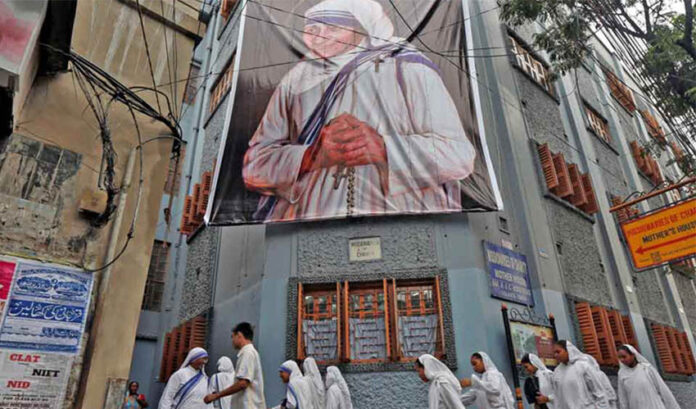
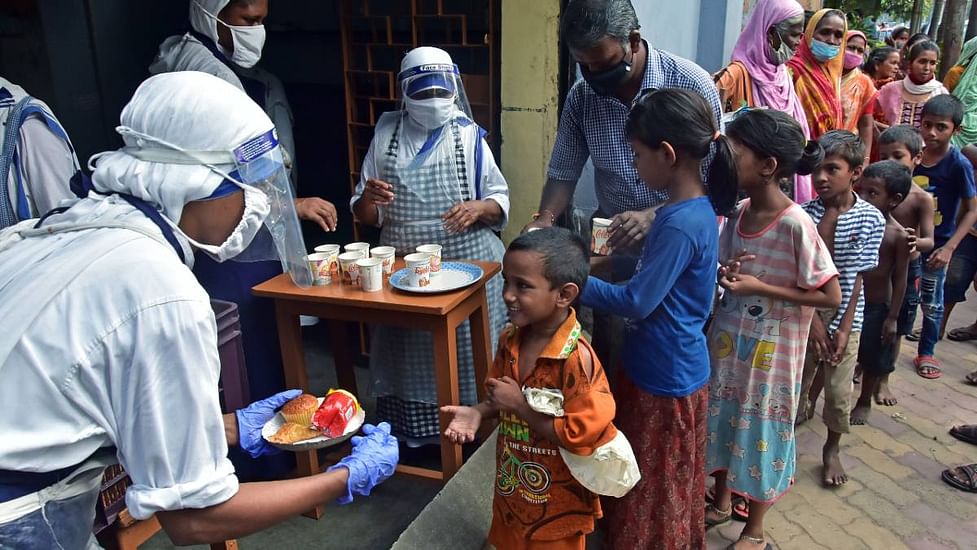 What is troubling about this decision by the Home Ministry is the targeting of educational, charitable and cultural activities. If we go by the cancellation of the license of the Missionaries of Charity, it is the targeting of charitable activities among the ‘poorest of the poor’, including the homeless, elderly, leprosy patient and the dying. If we see the activities of the India Islamic Cultural Centre, the organisation aims to ‘promote the true face of Islam which is more tolerant, liberal, progressive, rational’. The organisation also aims to ‘promote mutual understanding and amity among the people of this country’. The Nehru Memorial Museum and Library has been the go to center for many researchers on issues pertaining to both colonial and modern India.
The Home Ministry by broadly targeting these institutions and organisations which work is cultural, charitable and educational fields is impoverishing India both literally and metaphorically. If the state in India has never been a real welfare state, the task of providing support to the most needy has historically been performed by charitable organisations. During the second wave of the COVID-19 it was Muslim and Christian charitable organisations which were at the forefront of the crisis response. These forms of charity must be supported with more resources, not starved of the existing resources that they have. In fact, when the government abandoned the migrant labour during the unplanned lockdown, it was the charity of both individuals and organisations which ensured that people did not starve. The union government must realise that India did not face a full fledged crisis only due to the remarkable spirit of charity that thousands of individuals and organisations showed.